


 Sapa Tours & Activities
Mu Cang Chai or Sapa: Which One Delivers Comfortable Travel Joy?
Mu Cang Chai or Sapa is the quiet-or-complete question. Mu Cang Chai is raw terrace country — fewer tourists, golden harvest slopes, basic services. Sapa is the full mountain trip: trekking, Fansipan, markets, hotels at every budget. Here is how they actually differ.
| Factors | Mu Cang Chai | Sapa |
|---|---|---|
| Location | About 300 km Northwest of Hanoi, quiet and remote, less touristy | About 315 km northwest of Hanoi, near the China border, easier to reach and more tourist-friendly |
| Weather & Seasons | Best time: Sept–Oct (rice harvest), mild and cool | Best time: Spring & Autumn, mild climate with 4 distinct seasons |
| Nature & Highlights | Famous for golden terraced rice fields, Khau Pha Pass, peaceful scenery | Known for Fansipan Peak, Muong Hoa Valley, Ham Rong Mountain |
| Activities | Trekking through remote villages and rice terraces, peaceful and authentic | Diverse trekking routes, ethnic village visits, cultural immersion |
| Local Culture | Mostly Hmong, simple traditional lifestyle, less crowded | Multi-ethnic (Hmong, Dao, Tay, Giay), lively markets, rich culture |
| Accommodation | Cozy homestays and guesthouses, fewer options | Wide range from luxury hotels to budget homestays |
| Food | Rustic mountain dishes with fresh herbs and grilled meats | Diverse ethnic foods, markets with local specialties, plus upscale restaurants |
7 Key Differences between Mu Cang Chai or Sapa
Seven differences separate these two — and by the last one, you will know which mountain is yours.
1. Location & Accessibility
Mu Cang Chai hides about 300 km northwest of Hanoi — bus or car only, seven to eight hours of winding road. That difficulty is the filter: few make the trip, so the terraces stay quiet and the villages stay themselves.
Sapa sits slightly farther — around 315 km northwest, near the Chinese border. But it travels far more easily: overnight train or sleeper bus to Lao Cai, then a short hop up the mountain. Full tourist infrastructure waits at the top. On pure logistics, Sapa wins without breaking a sweat.
Going by bus? These are the operators we put our own guests on:


Prefer rails? The train options run just as deep — pick the cabin that fits your budget:


2. Weather and Seasons – When’s the Perfect Time to Visit?
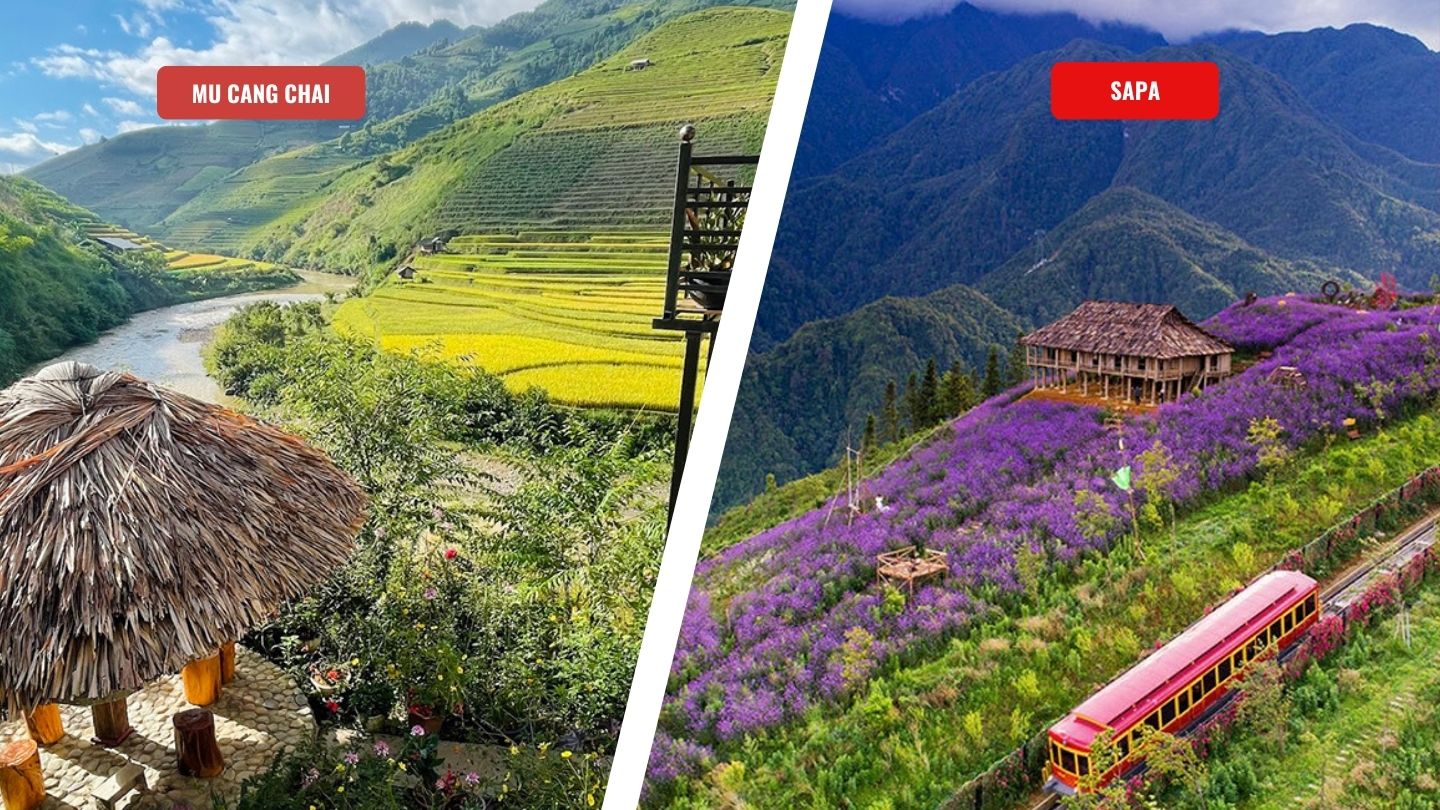
Mu Cang Chai runs a mild, cool climate with sharply drawn seasons. The month that matters is September to October: harvest time, little rain, and the slopes turning gold — the exact view these hills are famous for. Outside that window the weather cools or clouds over, and the show quiets down.
Sapa weather also has 4 distinct seasons and a mild climate. The best months to go are spring (March to May) and autumn (September to November). In spring, the weather is fresh and cool, with colorful flowers everywhere. Autumn brings mild temperatures and beautiful fall colors in the fields and forests. Winters are cold and foggy, while summers can be rainy, so these shoulder seasons are best for outdoor fun and exploring local life.
3. Nature and the Spots Worth the Drive
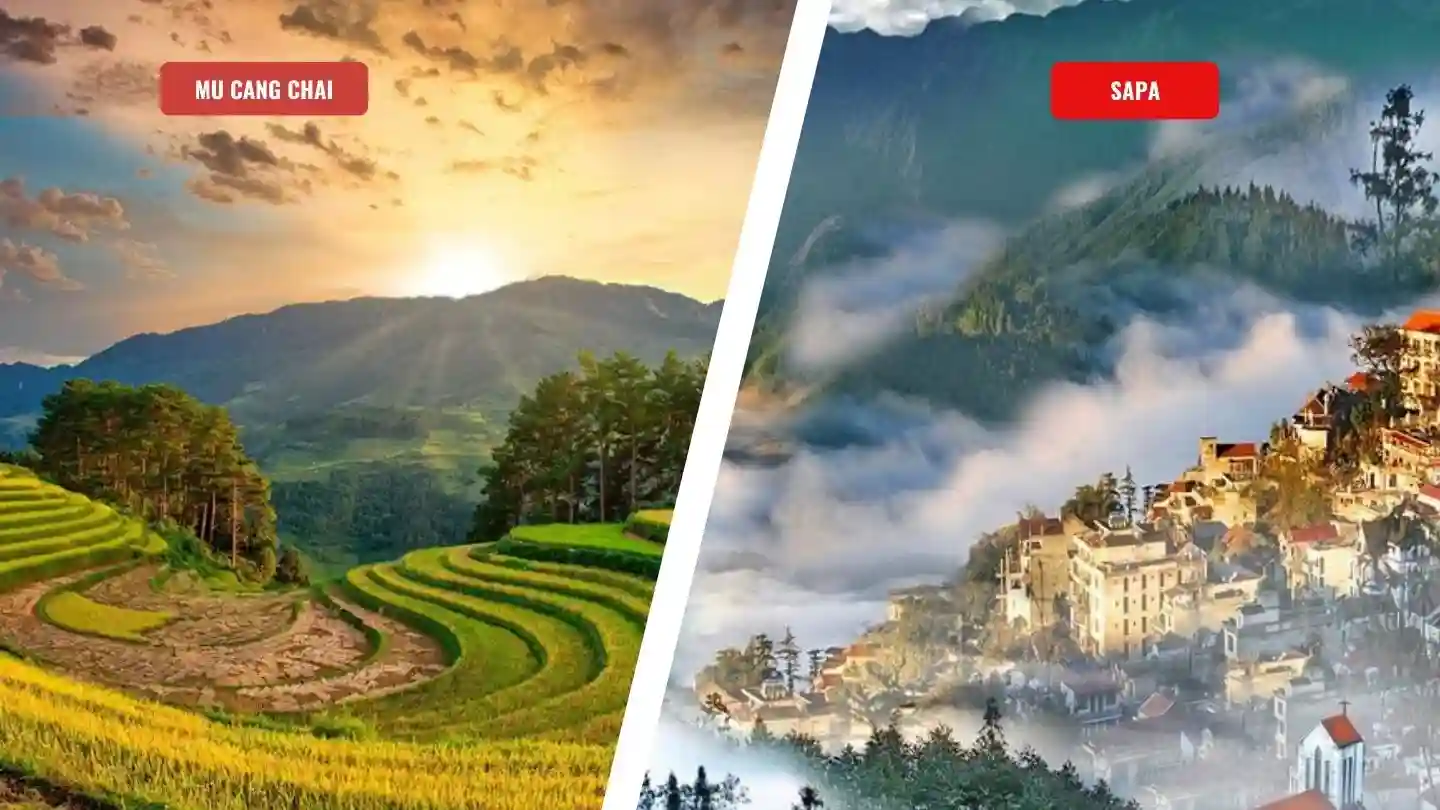
Mu Cang Chai is known for its terraced rice fields, at their best in harvest season when the slopes turn gold. The region features the rugged Khau Pha Pass and a quiet, pristine environment — wild, rustic country that belongs on every nature-lover’s list.
Sapa is famous for attractions like Fansipan Mountain, Mount Ham Rong, Ta Phin Village, and Heaven’s Gate. The mountain scenery, the ethnic-minority cultures, and the cool climate make Sapa a hard-to-skip destination. It offers a perfect blend of natural beauty and cultural exploration.
4. Fun and Unique Activities You’ll Love
Trekking is where the two really differ. Sapa’s trails run through deep valleys, terraced fields and high forest — and through living villages, so the walk doubles as a culture lesson. Our trekking tours put a local guide in front and take the logistics off your plate.


Mu Cang Chai’s trekking is the lonelier kind: terraces without fences, villages without souvenir stalls, whole afternoons without another tourist. Slower, quieter, and for some travelers exactly the point.
5. Local Life and Culture – Meet the Heart of the Mountains
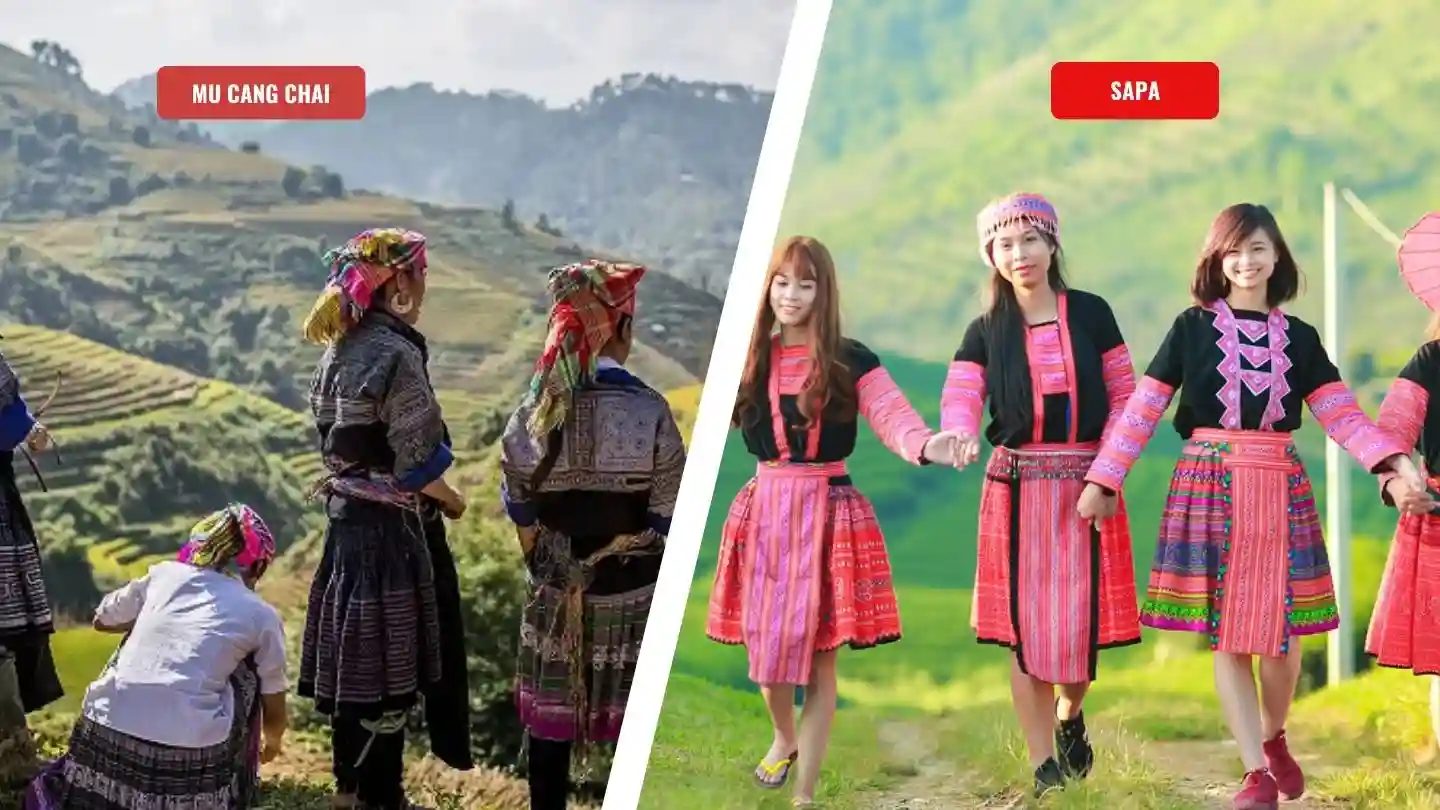
Mu Cang Chai is predominantly Hmong, and the old rhythms hold: rice farmed by hand, cloth woven at home, dinner cooked over fire. Nothing performs for visitors here – you simply walk through a working way of life.
Sapa layers 5 cultures — Hmong, Dao, Tay, Giay & Xa Pho – into one district. Villages like Cat Cat and Ta Van show the crafts and the farming up close, and the markets — especially Bac Ha on Sundays – put all four cultures at adjoining stalls.
6. Accommodation – Best Places to Rest After a Day of Adventure
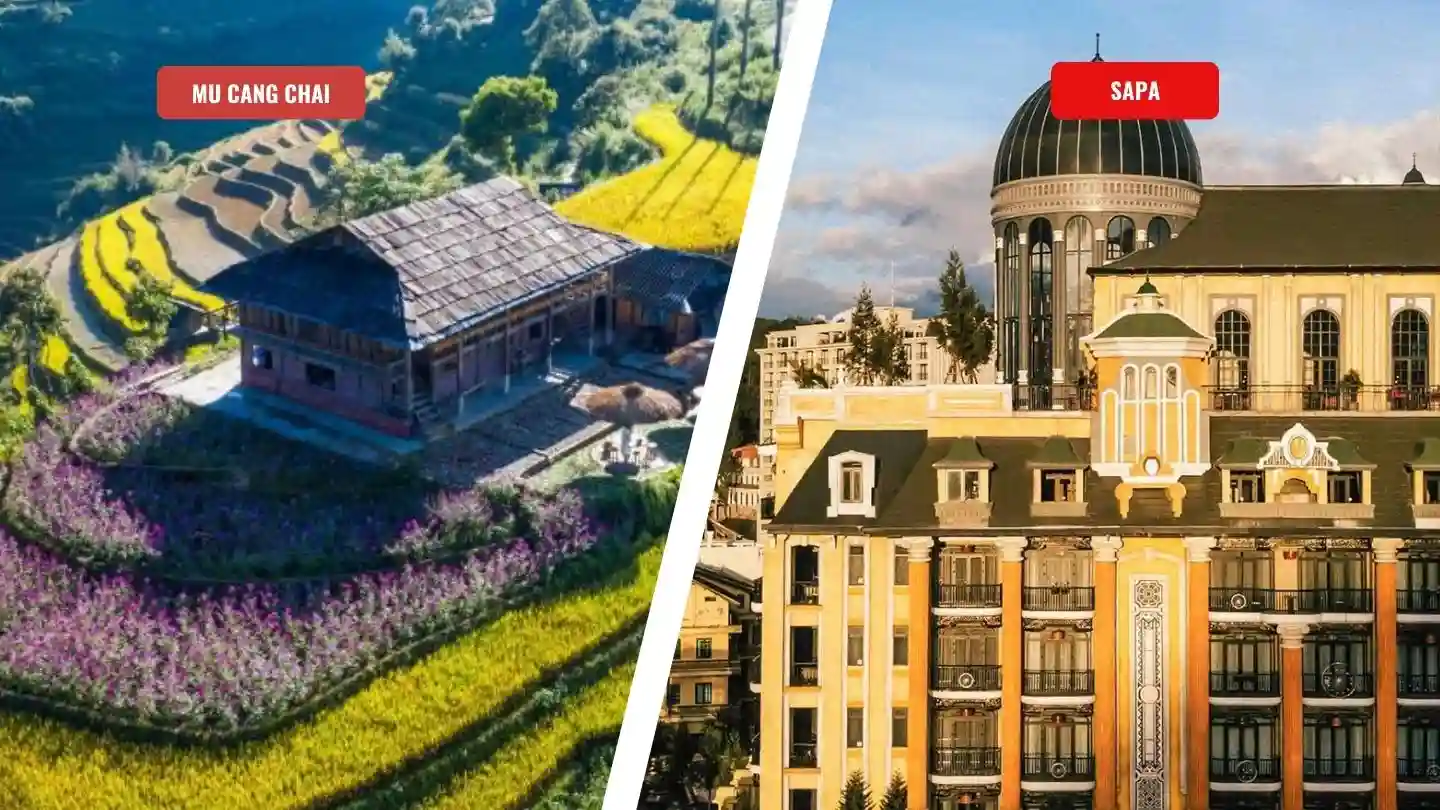
On beds, Sapa wins on depth: places to stay run from luxury hotels and resorts down to homestays and guesthouses — every budget covered, most views included.
Mu Cang Chai is famous for its terraced rice fields, especially around La Pan Tan and Che Cu Nha. It’s ideal for nature lovers and anyone curious about the lives of the Thai and H’mong people. The homestays and guesthouses here are simple and cozy, letting you soak up the peaceful mountain vibe and local culture fully.
7. Food and Flavors – Taste the Local Difference
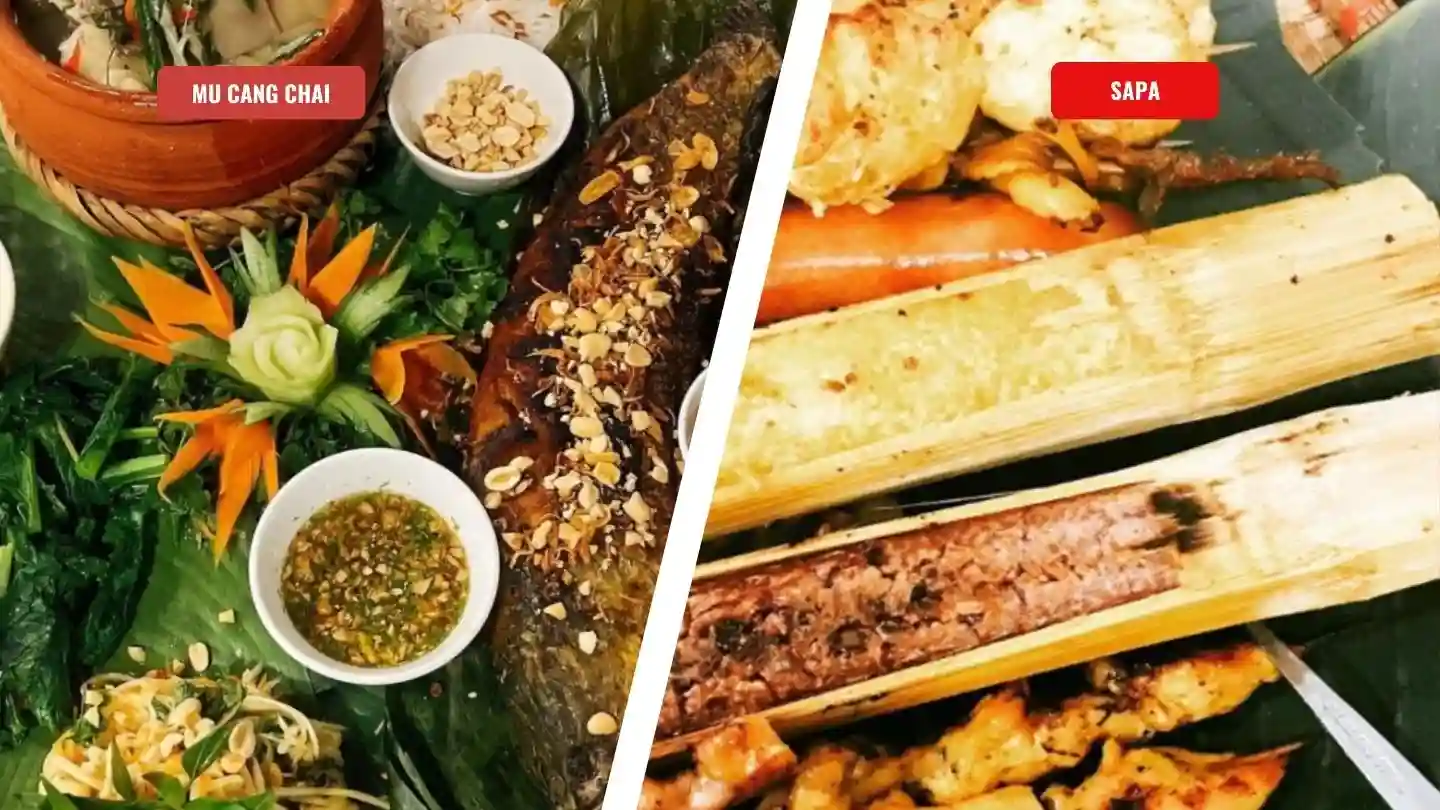
Sapa food reflects its four cultures: thắng cố stew, grilled pork skewers, valley-grown vegetables and mushrooms, sticky rice steamed in bamboo. Markets and street stalls handle the everyday; the town’s restaurants handle the celebration dinner.
Mu Cang Chai keeps it simpler: mountain herbs, grilled meats, and dishes built from whatever the valley grew or the forest gave. Rustic, honest cooking — home food, not restaurant food.
Sapa or Mu Cang Chai: Which Mountain Escape is Right for You?
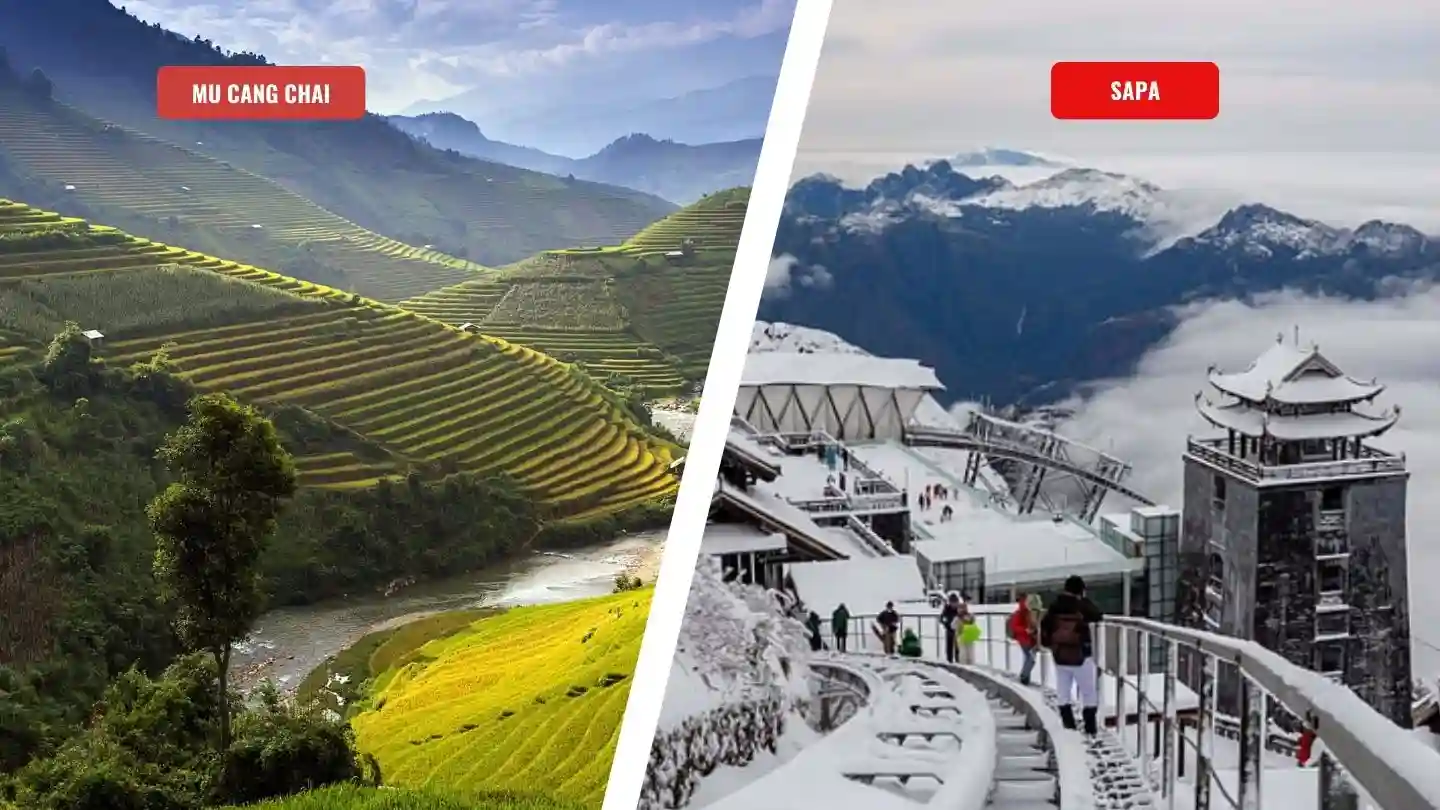
Both Mu Cang Chai or Sapa deliver – the question is only what kind of trip you are building.
If slowness is the luxury you are after, Mu Cang Chai is the pick. Harvest-gold terraces, hand-worked fields, and a countryside the tour buses have not found — Northern Vietnam with its guard down.
If you want culture, adventure and convenience in one base, Sapa has all three. Misty mountains, four ethnic cultures, endless trails — plus the cafés, markets and hotels that make traveling easy.
Can’t decide? Drive the passes and take both – quiet beauty first, full service after. They are half a day apart and better together.
Conclusion
Same mountains, two speeds. Mu Cang Chai gives you the terraces without the crowd; Sapa gives you the crowd because it has everything else. Photographers argue for the first, first-timers do better with the second — and the greedy simply drive the passes between the two.
→ Going the Sapa route? Time it with the best time to visit Sapa guide.
FAQs
Is Mu Cang Chai or Sapa better for photography?
Mu Cang Chai at harvest (September–early October) is the single best terrace shoot in Vietnam — and far less crowded. The rest of the year, Sapa’s variety wins.
How do I get to Mu Cang Chai from Hanoi?
Around 300 km — roughly a 6–7 hour drive or bus ride. There is no train line, which is a big part of why it stays quiet.
Can I combine Mu Cang Chai and Sapa in one trip?
Yes — they share the same northwest arc, linked by a spectacular half-day drive over the passes. Many photographers do Sapa first, then shoot the terraces on the way back.
When is the best time for both?
September to early October — harvest gold in Mu Cang Chai and peak terraces around Sapa. April–May is the quieter second window, with water-mirror fields.
Related Tours & Transport

Fantastic article much appreciated