


 Sapa Tours & Activities
Ham Rong Mountain: Stunning Views & Gardens Above Sapa
You’ve already seen Ham Rong. It’s the green wall behind the cathedral — the one you photographed on your first morning in Sapa without knowing its name. The locals call it the Jaw of the Dragon (Ham Rong Mountain).
The short version: it’s the mountain in the middle of town, and you can walk up it before lunch. What you find on the way up is not what most people expect.

What Ham Rong actually is
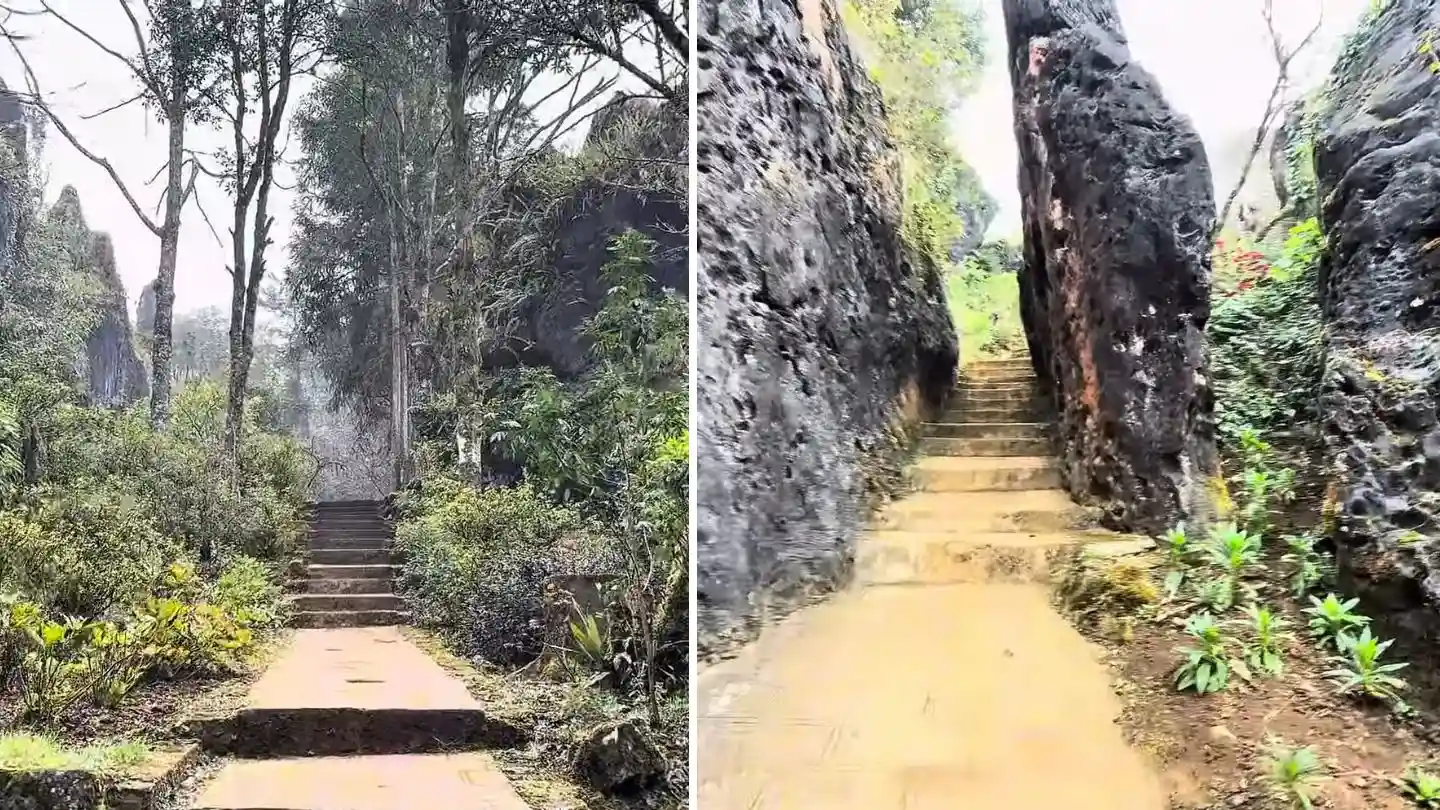
Let me set expectations, because the photos online oversell one half and hide the other. Ham Rong is not a wild mountain. It is a manicured park built into a hillside, from about 1,450 meters at the gate to 1,850 at the top.
Landscaped gardens fill the lower two-thirds, and then comes the view.
The slope runs about 30 degrees the whole way: steady, never alarming, but enough that your legs will know it. Some of what you pass is genuinely pretty; some is the kind of staged photo-garden you have seen in a dozen tourist towns. The top third is the reason to climb. Keep that in mind, and you will pace yourself for it.
The dragon’s jaw — the legend
The name “Ham Rong” means Jaw of the Dragon. Local legend tells of dragons caught by a flood as they fled west toward the Hoang Lien Son range. One made it to the sky. One was turned to stone mid-cry, its open mouth frozen into the rock you stand on. Look at the jagged limestone near the top, and you can see where the story came from.
It’s not just the views over Sapa that make Ham Rong special. According to the Vietnam National Authority of Tourism, the mountain was once highlighted by the Huffington Post as one of eight places worldwide known for spectacular sunsets.
The climb: gardens on the way, the view at the top
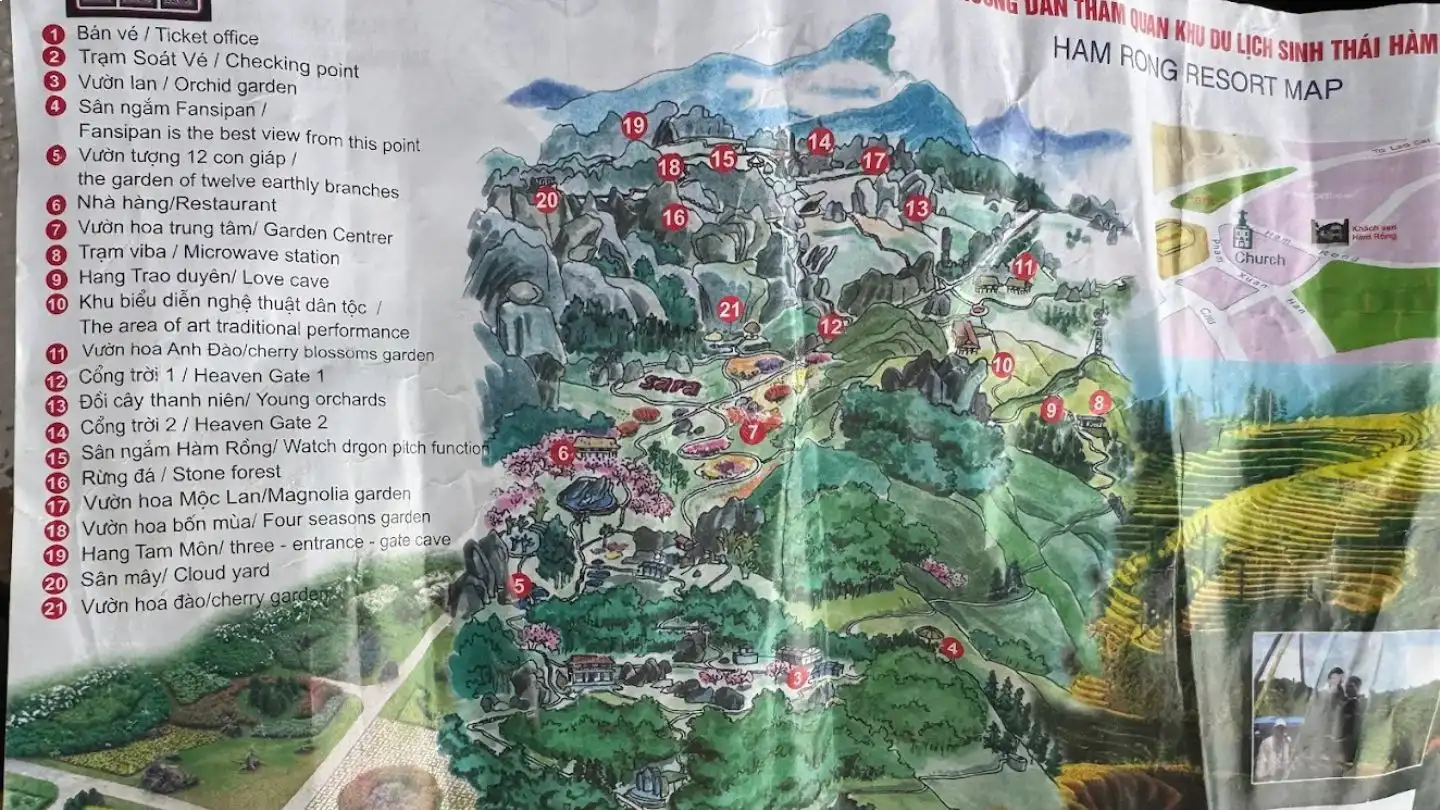
The path is all steps and stone, winding up through one garden after another. You pass through them more than you tour them, and you soon learn which to slow for. The Orchid Garden is the one, more than 200 species under shade cloth, some no bigger than a fingernail, quiet and cool, while most groups hurry past. The Peach Garden is worth a pause in spring, when the whole slope goes pink with blossom.
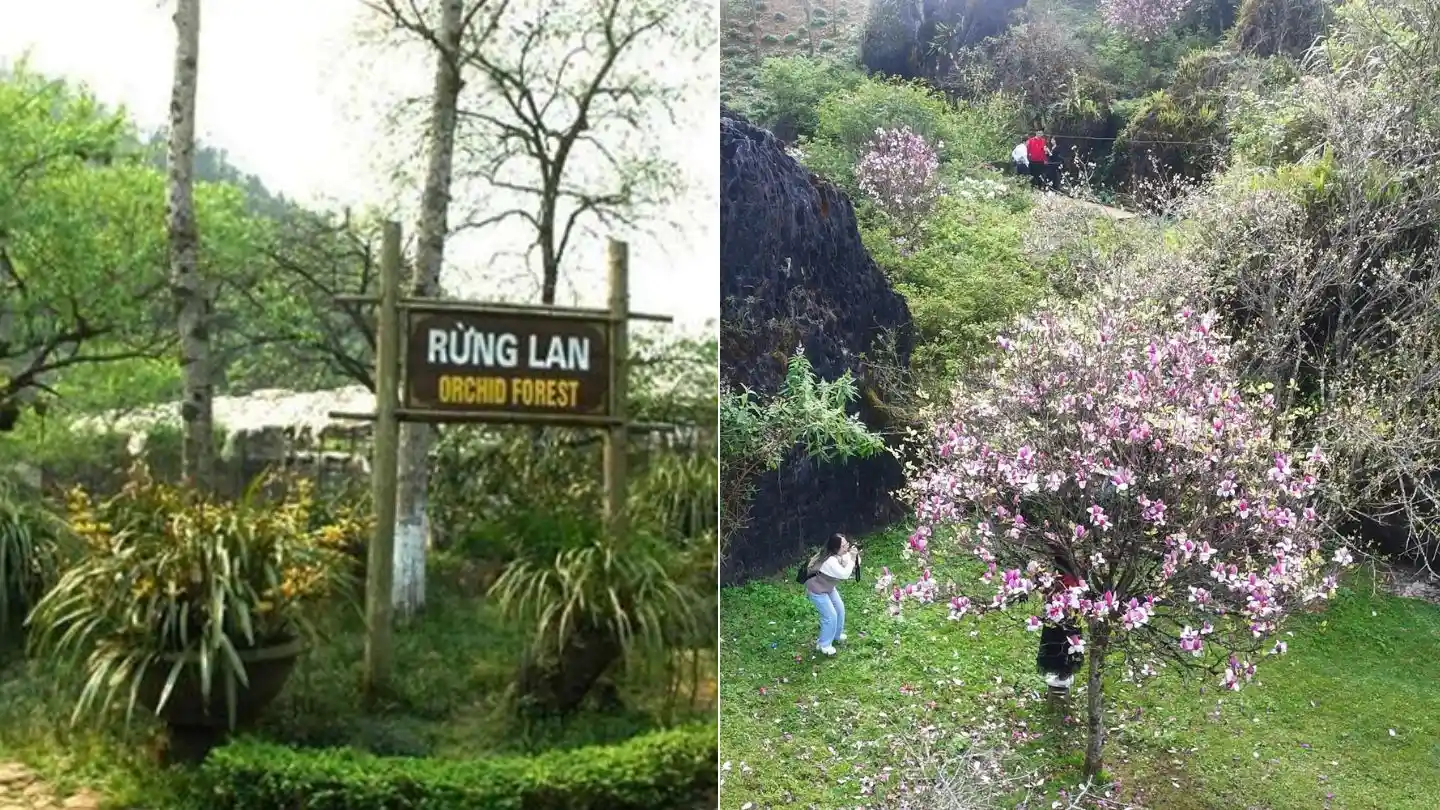
Higher up, the Stone Garden is the real surprise: tall limestone cliffs weathered into claws and spines. The rest — the zodiac statues, the flowerbeds trimmed into the word “SAPA,” the European-style central beds — is fine for a quick photo and not why you came.
Then the steps narrow and the gardens fall away. At around 2,000 meters, you reach the old Sapa Telecom Station, and on a clear day, there it is — Fansipan, the roof of Indochina, floating across the valley. A few more steps and you are at the Cloud Yard and Heaven Gate.

The first time I climbed it, the whole top was white — fog so thick I could not see the railing two arms away. I almost turned around. Then the wind shifted, and the cloud tore apart like wet paper. The whole of Sapa town dropped into view below me: rooftops, the cathedral I had started from, the terraced fields stacked into the far hills.

It lasted maybe a minute. Then the grey closed in again. Everyone at the rail let out the same quiet breath.
I’ll be straight with you, though: come on a fogged-in afternoon and you may climb the whole way to a wall of white that never opens. I’ve done that too. The view is the entire point here — let the morning decide whether it’s worth the ticket.
Getting there, tickets, and time

Where. Ham Rong’s entrance sits right in town, beside Notre Dame Cathedral and Sapa Square — about 3 km from most hotels, or a 15–20 minute walk from the center. There is nothing to arrange: you walk to the gate and buy a ticket.
Getting to Sapa itself is a separate question. We cover every option in the Hanoi to Sapa transport guide.
Tickets & hours.
Opening Hours:
- Summer: 6:00 AM – 6:00 PM
- Winter: 6:30 AM – 6:00 PM
Ticket Prices:
- Adults: 70,000 VND
- Children: 30,000 VND
- Children from 115 cm to 130 cm in height: 30,000 VND
How long. Most people spend 1.5 to 3 hours. Wear shoes with grip, because the stone steps turn slick with morning dew and rain. Dress in layers, too; the gate can be mild and the Cloud Yard cold and windy within the same hour.
When to visit Ham Rong Mountain

Across the drier months from October to April, you get the best odds of an unclouded view from the top, which is the whole reason to climb. Spring (March–May) is the showpiece for the gardens; around Tet (the Lunar New Year, late January or February), the peach blossoms draw as many locals as tourists.
Avoid the heart of the rainy season (June–August), when the steps run slick, and the panorama is often just fog. Whatever the month, go early — softer light, fewer groups, and the best chance the clouds have not closed in yet.
What to eat at the gate
At the foot of the mountain, women grill over charcoal all day — skewers of marinated meat, sweet potatoes crisp at the edges, eggs and corn. Cheap, hot, and after the climb down it tastes better than it has any right to. That is the right time for it: not before the steps, but after.
Is Ham Rong Mountain worth it?
On the right morning, Ham Rong gives you more views for less effort than almost anywhere in Sapa. On the wrong one, it is a staircase in the fog. Check the sky first.
FAQs
How difficult is the Ham Rong Mountain climb?
Although some sections are steep, the trail is relatively easy. It takes less than 30 minutes to reach Ham Rong Flower Garden and around 3–4 hours to complete the hike to the summit.
How high is Ham Rong Mountain?
Ham Rong Mountain is a 1,800-meter peak in the Hoang Lien Son Range, located just behind Sapa Town.
What is Ham Rong Mountain known for?
Ham Rong isn’t just a viewpoint. The mountain is tied to a local legend about a dragon-shaped peak, giving the area its unique name. Combined with flower gardens, mountain scenery, and cultural displays, it’s one of the easiest places to experience several sides of Sapa in one visit.
→ Planning the rest of your days? Browse more things to do in Sapa.
You will come down from Ham Rong Mountain with aching legs and a phone full of flowers. But a day later, walking past the cathedral again, you will catch yourself looking up at the green wall behind it. This time you will know exactly what is at the top — and how the whole town looks from up there when the clouds finally lift.
Related Tours & Transport
