


 Sapa Tours & Activities
Fansipan Mountain Guide: Cable Car, Hiking & Top Views

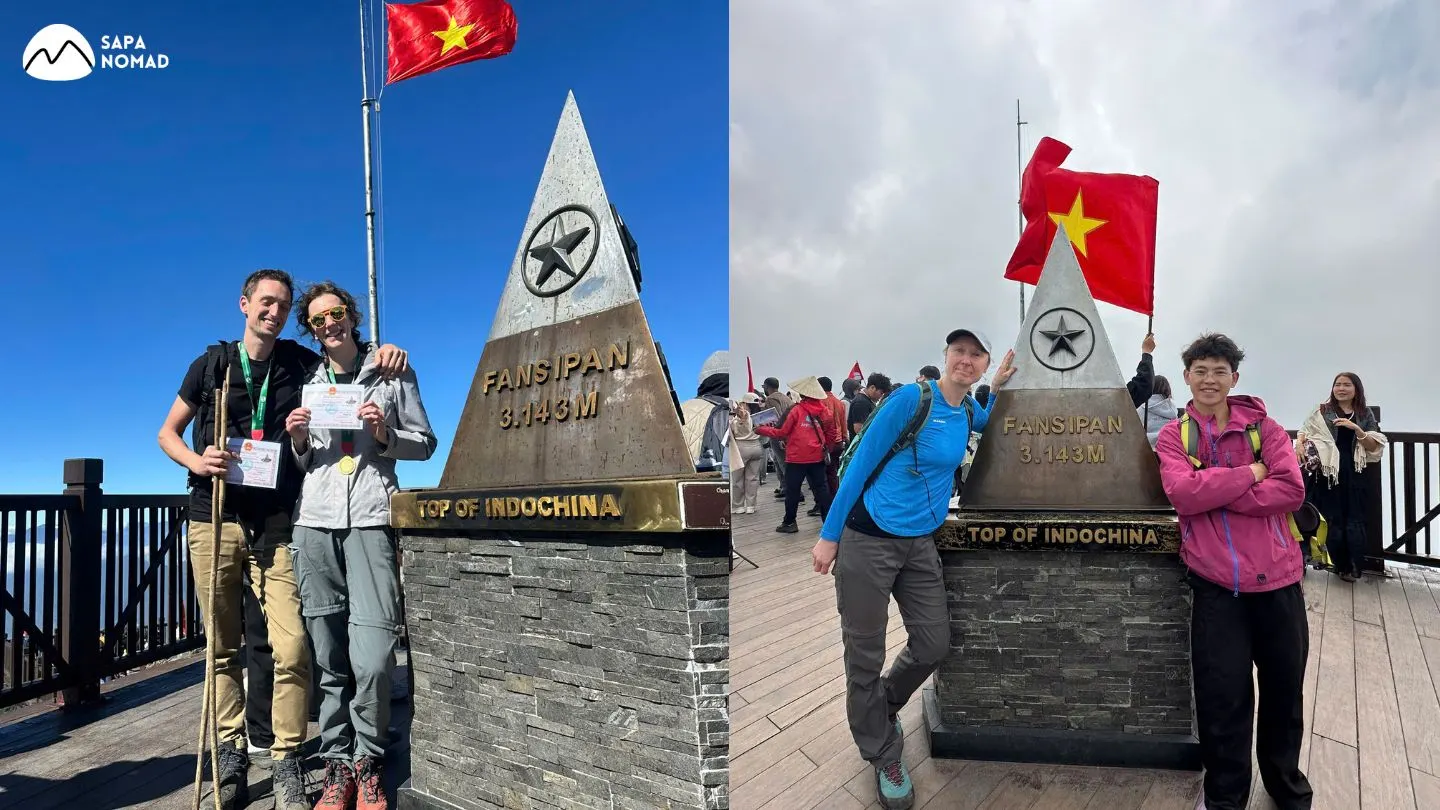
There’s a steel pyramid at the top of Fansipan Mountain with a number stamped on it. Almost everyone in Sapa wants the same photo beside it. What the photo never shows is how you got there.
Some people arrived twenty minutes ago in a glass cable car, coffee still warm. Others have been walking for two days, knees shaking, having watched the sun come up from somewhere below the clouds.
Same summit. Same view. Two completely different mountains. The first thing to decide about Fansipan is which one you want.
What Fansipan Mountain actually is
Fansipan Mountain is the high point of the Hoang Lien Son range, in the far northwest of Vietnam, on the border between Lao Cai and Lai Chau. At 3,147.3 m by the 2019 satellite survey — the figure used officially today — it’s the tallest mountain in Vietnam, Laos, and Cambodia.
The old French marker at the summit still reads 3,143 m (measured back in 1909), so you’ll see both numbers, and neither is wrong.
What matters more than the number is the air. At this height, the mountain makes its own weather: sun, fog, and cold rain can all cross the summit inside a single hour.
That one fact decides more about your visit than anything else. It’s why every honest piece of advice on this page ends the same way: go on a clear morning, and check the forecast the night before.
Cable car or hike — the only real decision
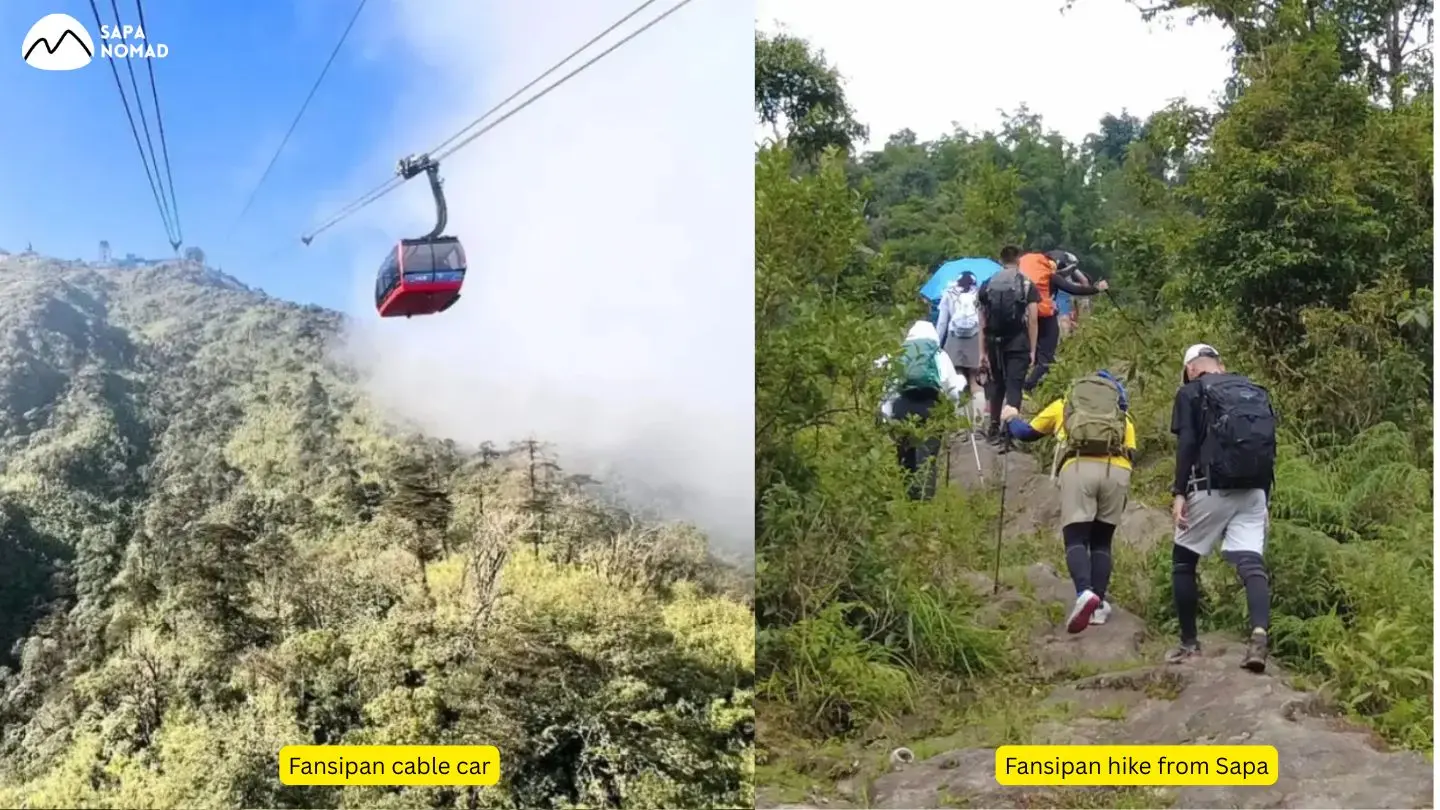
This is the whole choice, so let’s be plain.
The cable car lifts you from the valley to just below the summit in under twenty minutes, through any weather, with no fitness required. The hike takes one to two hard days on foot. It needs a permit and a licensed guide, and gives you the version of Fansipan that existed before the towers were built.
Neither is “better” — they’re for different people on different trips. Most travellers, honestly, should take the cable car and not feel bad about it.
Weighing the two seriously? We lay it out side by side — cost, time, who each one suits — in hiking or cable car to Fansipan. For cable-car fares, opening hours, and how to book without queuing, see the Fansipan cable car ticket guide. And if you want the mountain earned on foot, our guided hikes handle the permit and the route:


Here’s the honest beat the brochures skip. I’ve walked up the long way, and the part I remember isn’t the summit — it’s the dark before it.
You start the second morning around three, head-torch on, breath smoking in the cold. For the first hour, there’s nothing but the small circle of light at your feet and the sound of your own lungs. The forest is black on both sides.
Somewhere far below, the town is a scatter of orange dots; above, more stars than seem reasonable. Two days of climbing are already in your legs, and every step toward the marker is one you’ve paid for.
And the reward isn’t guaranteed. I’ve reached the top after all that and found it completely closed in with fog. Nothing to see but the same steel marker the cable-car crowd is photographing, the ones who came up warm twenty minutes earlier. We stood at the same rail, they and us, and the mountain handed everyone the same grey wall.
That’s the deal with the hike: you don’t do it for a view anyone can promise. You do it for the climb, the night on the mountain, and that hour before dawn when it’s only you, the cold and the dark — the quiet the cable car skips entirely.
Getting there, and the last 600 steps
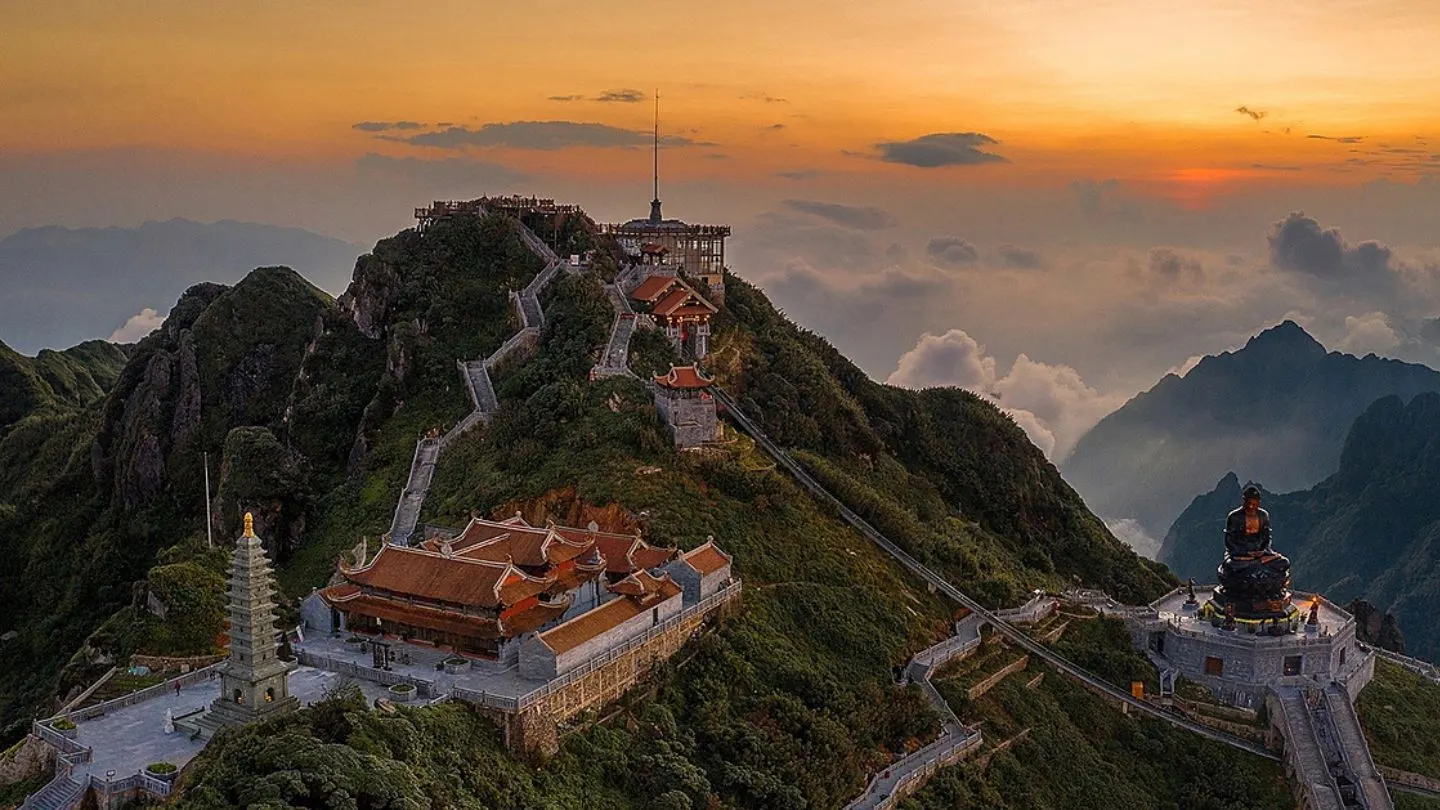
The cable car leaves from Hoang Lien Station, about 3 km from the town centre. You reach it by taxi, on foot, or on the little Muong Hoa mountain train that runs from town through Muong Hoa Valley. From the top cable-car station, the actual peak is another 600 stone steps up — about fifteen minutes on foot, or a short funicular on cold days and for older travellers.
The full step-by-step — every pickup point and timing — is in how to get to Fansipan Mountain.
The summit, the temples, the seasons
The top of Fansipan Mountain is a built complex, and you should know that before you go. A 21.5 m bronze Buddha, a tall belfry, paved temple paths, and photo plazas share the ridgeline with the marker.
Some travellers find it moving; others find it a theme park bolted onto a wild peak. Both reactions are fair — just don’t arrive expecting bare wilderness.
The mountain also changes completely through the year: azalea in spring, climbing roses around April, the famous “cloud river” of autumn, when white cloud flows below the peak. Then comes a bitter winter that can drop to near −9°C and frost the railings to crystal.
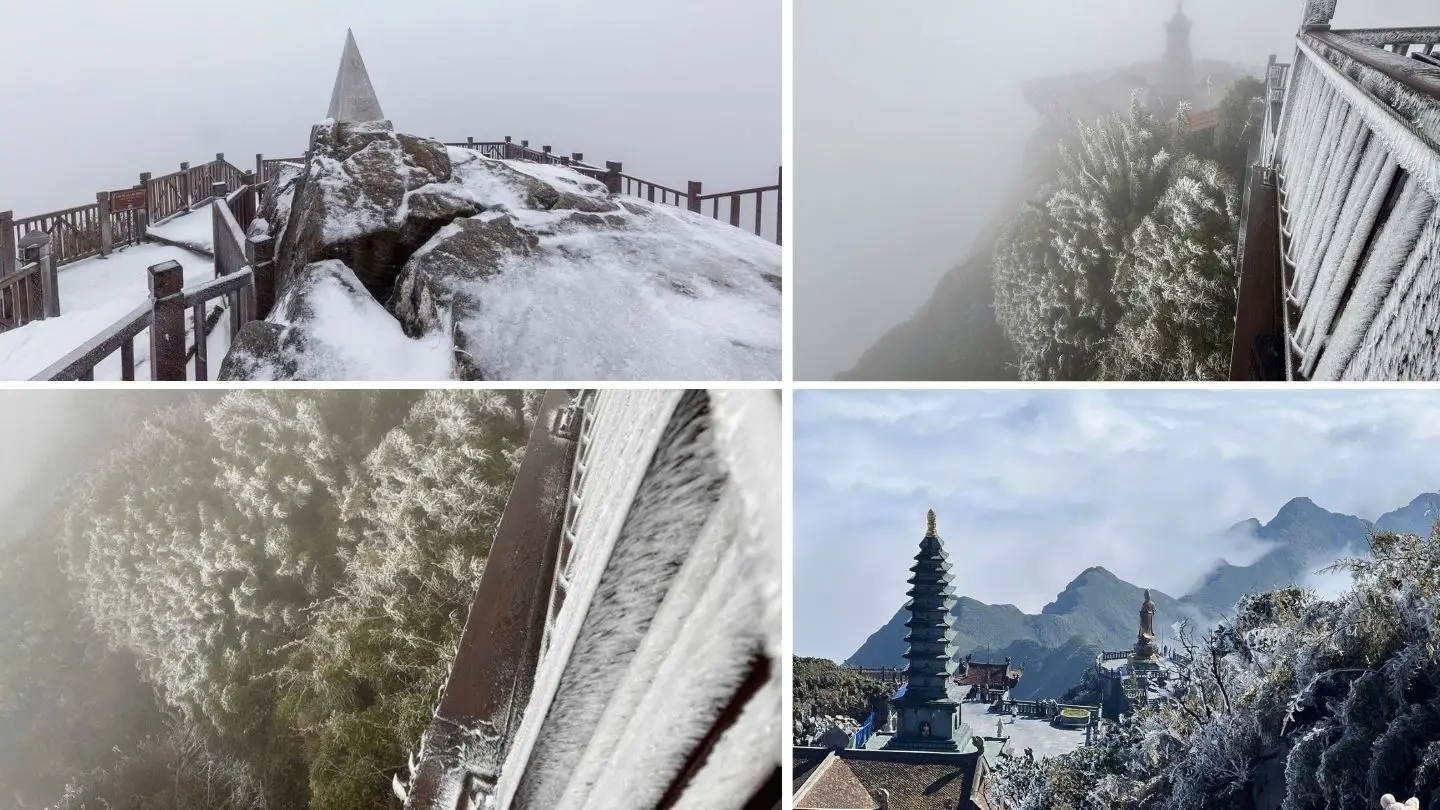
The full list of what to see, eat, and photograph up top — and which season suits you — is in what to do in Fansipan.
What it’s actually like up there
You come out of the top station into thin, cold air that catches in your chest. For a moment, you usually see nothing at all — just grey, and the shapes of other people leaning on the rail. Then the wind shifts.
The cloud tears open like wet paper, and the whole northwest of Vietnam drops away beneath you: ridge behind ridge behind ridge, green going to blue going to nothing, the valleys so far down they hold their own weather. It lasts maybe thirty seconds. Then the grey closes again, and everyone who saw it lets out the same quiet breath.
That gap in the cloud is the real summit of Fansipan — not the marker, not the statues. Nobody can sell you a ticket to the moment it opens, and nobody can promise it will.
You stand at the rail and wait, with strangers who are also waiting. When it comes, it doesn’t matter at all whether you rode up or walked. That’s the thing about the highest place in three countries: it levels everyone who reaches it.
Is Fansipan worth it?
→ Full guide: 25 Best Things to Do in Sapa: A Local’s Complete Guide (2026) →
FAQs
How high is Fansipan Mountain?
3,147.3 m (10,326 ft), by the 2019 satellite re-measurement — the official figure today. The older 1909 French marker at the summit still reads 3,143 m, so both numbers appear.
Should I take the cable car or hike Fansipan?
The cable car (15–20 minutes) suits almost everyone and runs in any weather. The 1–2 day hike is only for fit trekkers with a guide and permit who want the climb itself.
What’s the best time of year to go?
Spring and autumn give the clearest skies and the famous cloud-river views; winter is dramatic but bitterly cold. Whatever the season, pick a clear, dry morning.
Everyone leaves Fansipan Mountain with the same photo beside the marker — cable-car riders and two-day walkers, the same frame, the same number. Ask them a month later what they actually remember, though, and it’s never the number.
It’s the wait before it: standing in the cold, not knowing whether the mountain would show itself at all. No ticket and no trail can promise you that moment, which is exactly why it’s the one that stays.
Related Tours & Transport
