


 Sapa Tours & Activities
Sapa or Da Nang: Which to Visit? Honest Comparison
Sapa or Danang is mountains against beaches, plain and simple. Sapa is the cold, high, hard-walking north; Da Nang is sand, sun and big-city ease on the central coast. Nine categories, compared honestly — and a clear answer by the end.
| Criteria | SAPA | DA NANG |
|---|---|---|
| Culture & Museums | Few museums; cultural experience mainly through villages and markets. | Wide variety of museums like Cham Sculpture and Da Nang Museum. |
| Local Cuisine | Hearty mountain dishes like Thang Co with strong flavors. | Fresh, light seafood dishes like Mi Quang and Bun Cha Ca. |
| Nightlife | Quiet, cozy bars and lively night markets for a relaxed vibe. | Big-city nightlife with rooftop bars, cafes, and walking streets. |
| Accommodation | Cozy homestays and boutique hotels near nature and terraces. | Wide range from budget hostels to luxury beachfront resorts. |
| Hiking & Trekking | Excellent trekking through rice terraces and ethnic villages. | Limited hiking options |
| Beaches & Scenery | Mountain views and terraced fields — no beaches. | Beautiful beaches near the city, plus scenic Marble Mountains. |
| Shopping & Markets | Traditional markets full of handicrafts. | Modern malls and local shops but less traditional charm. |
| Getting There & Transport | More challenging; usually via overnight train or bus from Hanoi, mountain roads. | Easier with an international airport and various transport options. |
| Natural Landscape | Misty mountains and stacked terraces. | Urban landscape with beaches and some natural spots. |
Overview of Sapa & Da Nang
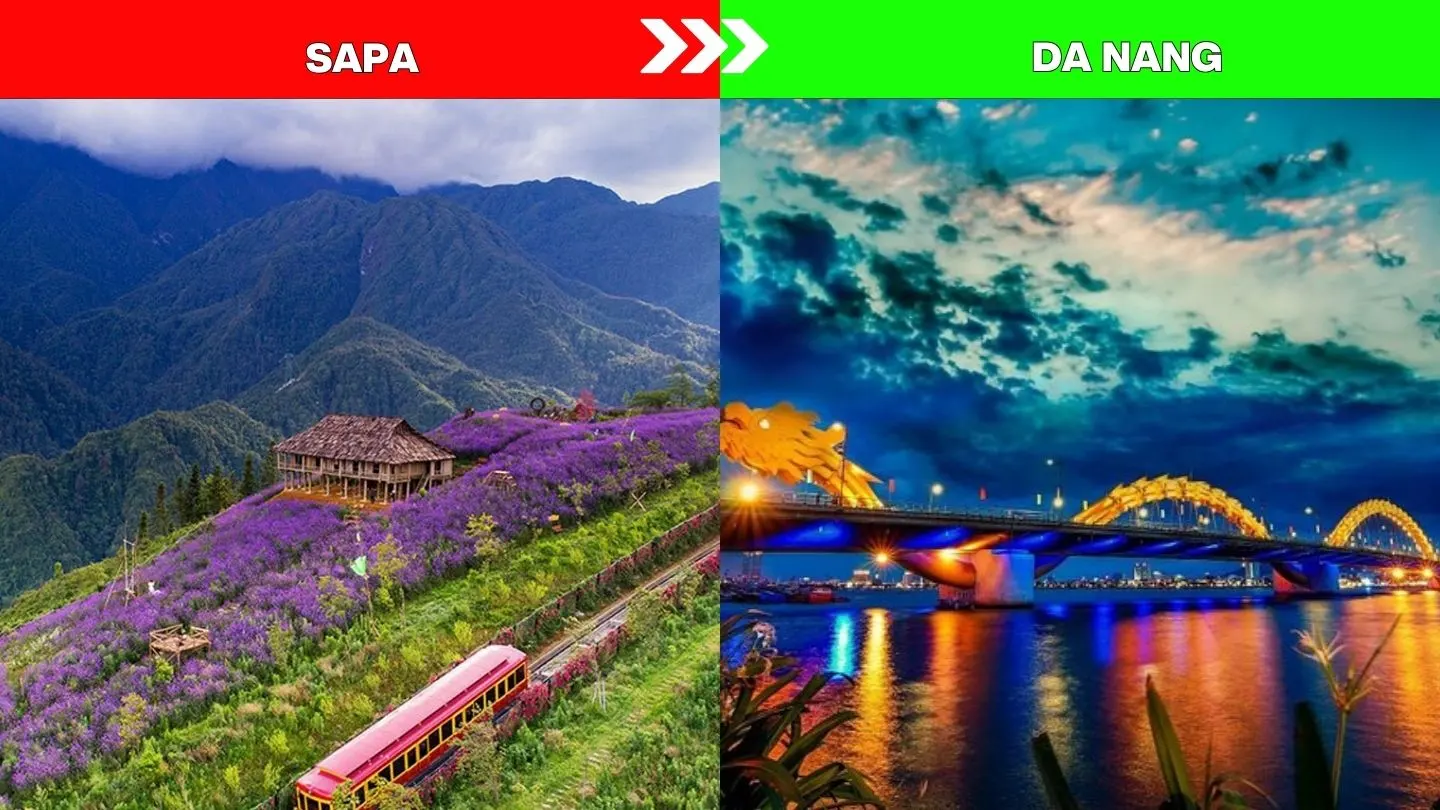
Sapa sits in the far north — mountain landscapes, terraced rice fields and ethnic minority cultures. It draws the travelers who want their scenery earned on foot.
Da Nang holds Vietnam’s central coast: My Khe and Non Nuoc beaches minutes from downtown. Add the Golden Bridge up at Ba Na Hills, and a modern city underneath it all. It draws the travelers who measure a holiday in beach hours.
Sapa vs. Da Nang: 9 Key Differences You Need to Know
Nine differences decide this one — here they are, one at a time.
1. Culture & Museums
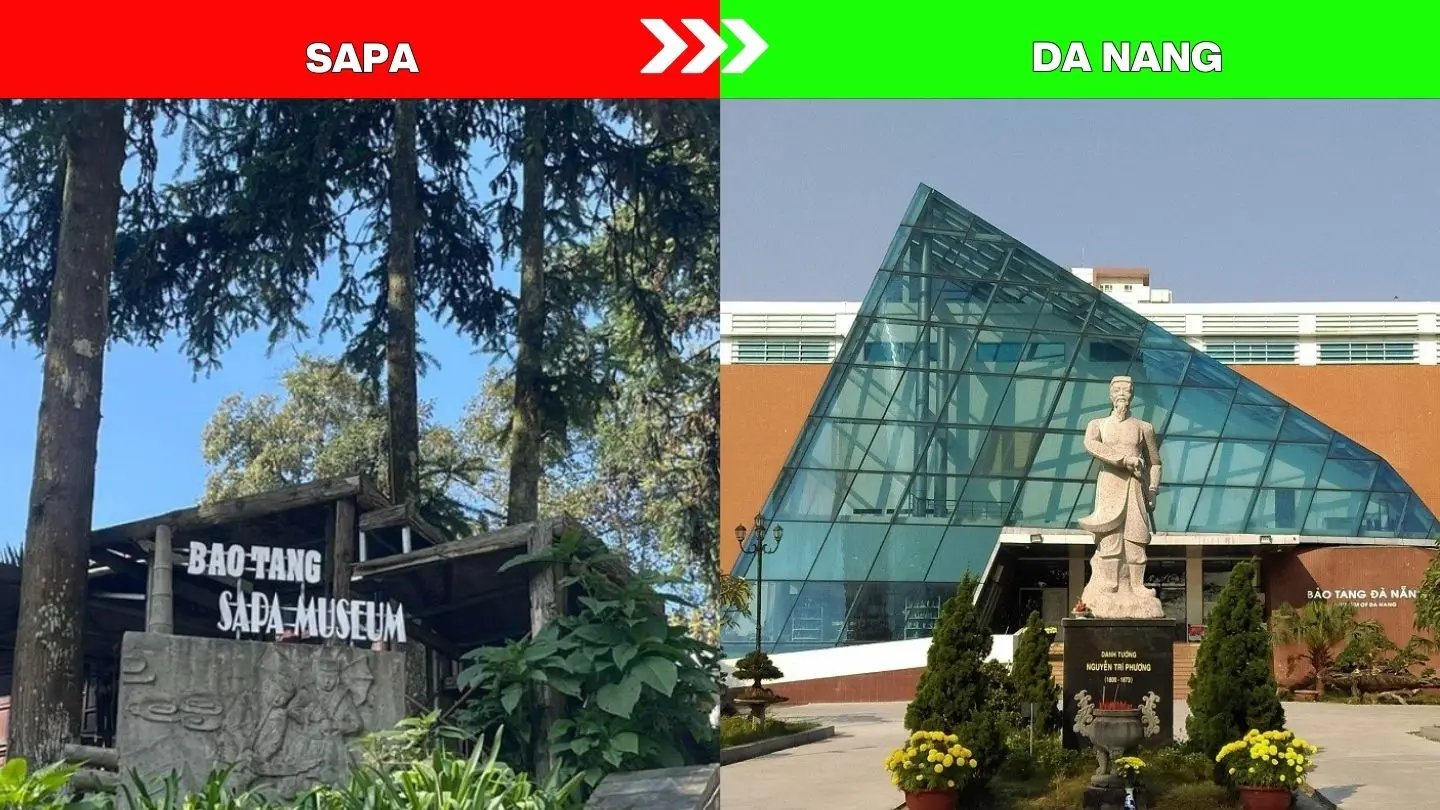
On museums and monuments, Da Nang simply has more shelves.
Sapa keeps one: the Sapa Culture Museum, a compact introduction to the region’s ethnic groups. The real exhibits are outside — villages, markets and the landscape itself, living history rather than museum glass.
Da Nang answers with an actual museum circuit: the Museum of Cham Sculpture (the world’s largest Cham collection) leads. Then the Da Nang Museum for city history, and the Museum of Military Zone 5 for the war years. Rainy-day insurance the mountains cannot match.
2. Local Cuisine

Both tables are worth sitting at — but they tell different stories.
In Sapa, the food is mountain fuel: local meat, fish and vegetables in generous portions. The Sapa food to be brave about is Thắng Cố — the Hmong herb-and-meat soup with a reputation. After a day on the trails, it earns its place.
Da Nang eats lighter and fresher: Mi Quang noodles, Bun Cha Ca with fish cakes, seafood straight off the morning boats. Classic central-coast cooking with the sea in view.
3. Nightlife

When it comes to nightlife, Da Nang definitely has the edge over Sapa.
Sapa does the low-key evening: a night market, cozy bars, and a backpacker crowd that keeps things warm without getting loud. Lights dim early here, and that suits the mountain.
>> Related articles:
- Is Sapa Vietnam Safe? Travel Smart AND Feel Great!
- What to Do in Sapa at Night? Best Things Worth Doing
Da Nang switches on after dark — rooftop bars, lounges, and Bach Dang Street turning into a walking street from 7 pm. More venues, later hours, bigger night.
4. Accommodation Options
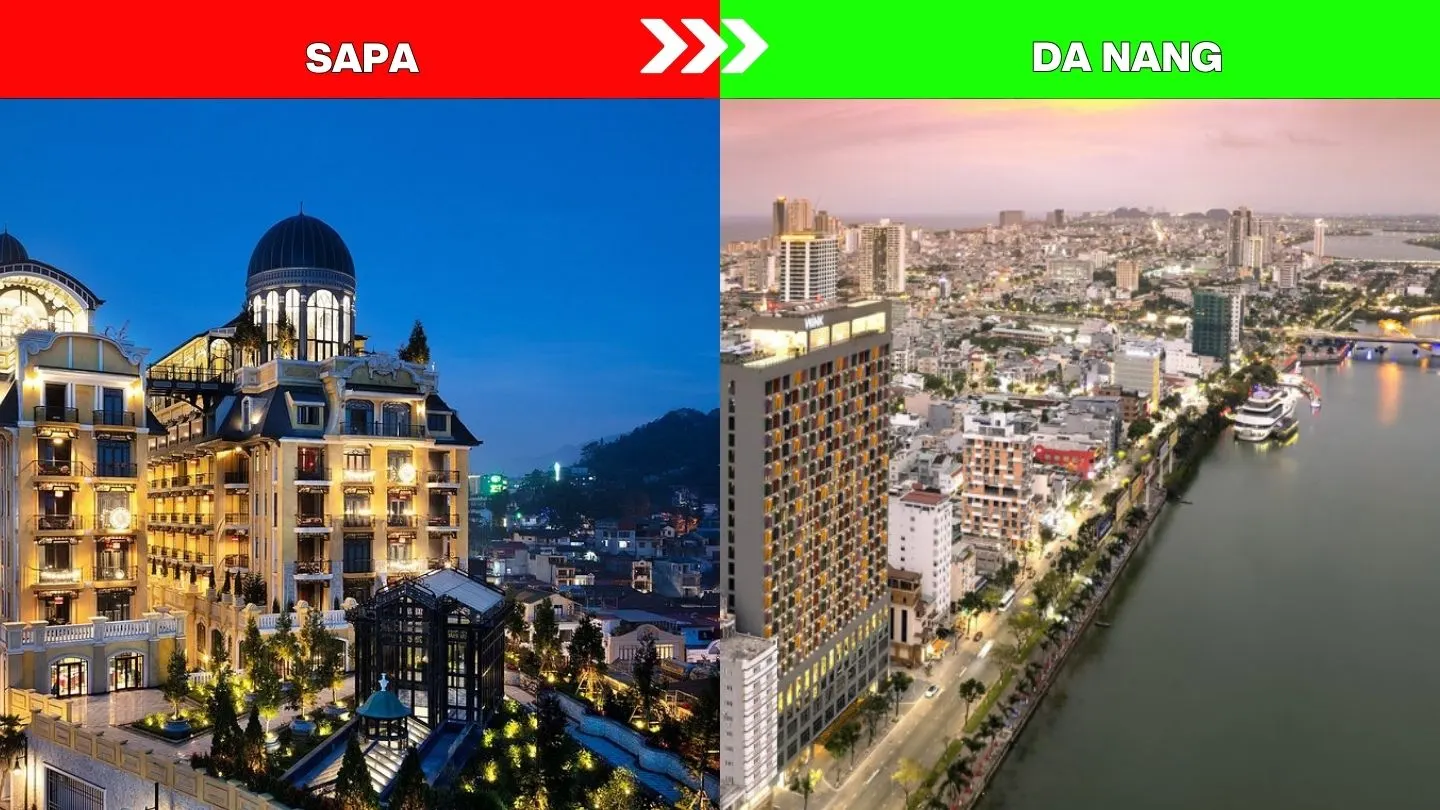
On beds, Da Nang runs deeper — hostel to five-star, including beachfront resorts where the ocean is the view from bed.
Sapa counters with character: homestays in villages like Ta Van and Lao Chai, where the view is terraces and the hosts cook dinner. Boutique hotels in town cover the comfort end.
Variety and convenience → Da Nang. Atmosphere and hosts you remember → Sapa.
5. Hiking & Trekking
On hiking the verdict is instant: Sapa is the trekking capital — routes through terraces, misty ridges and villages. Walk them with a local guide — safer, smarter, and the money stays in the valley.
Love nature and a bit of adventure? Our trekking tours are the easy way in — local guides, real villages.


Da Nang is not a hiking city. The Marble Mountains give you an hour of stairs and caves, and that is roughly the ceiling. Hikers should point north.
6. Beaches & Scenery
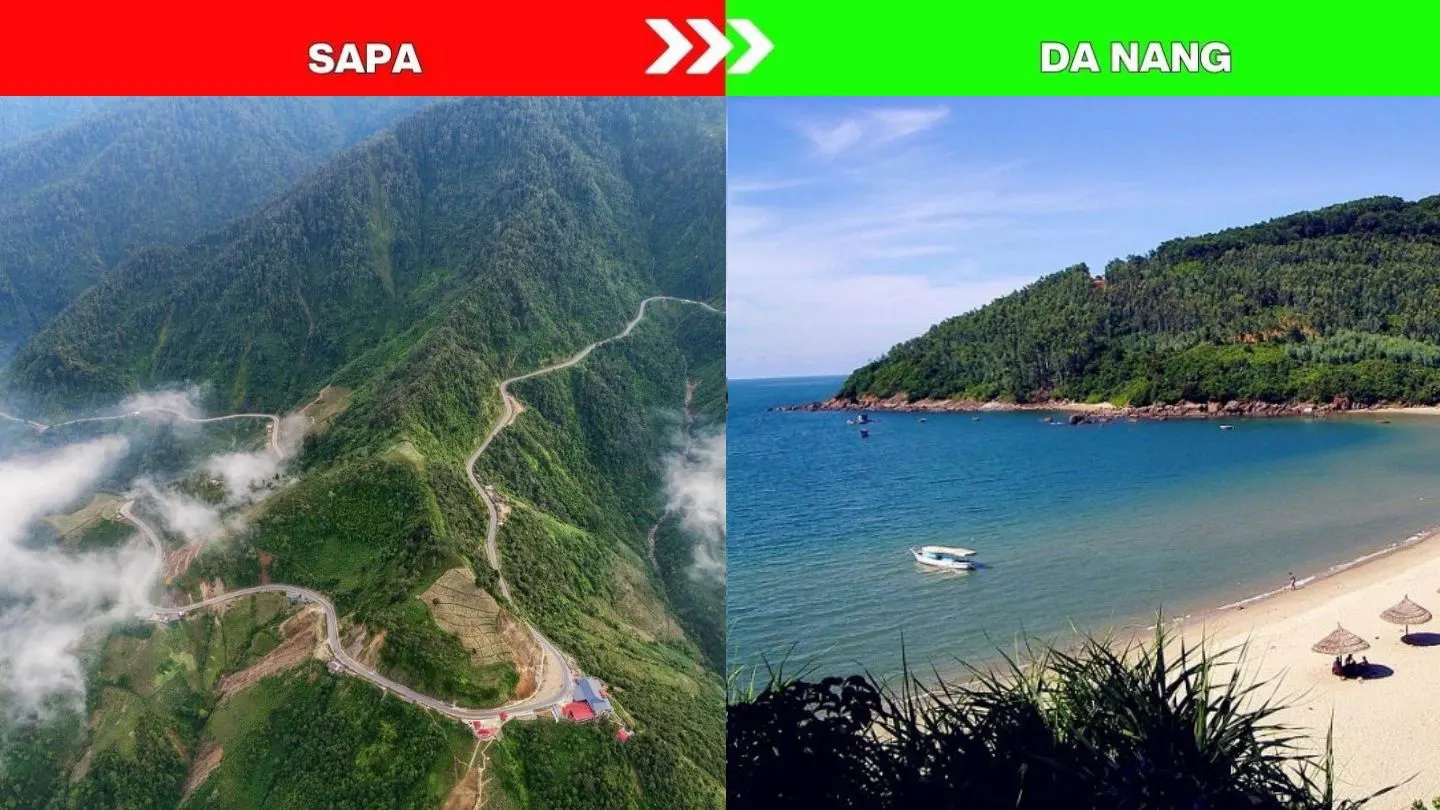
When it comes to beach days, Da Nang clearly wins over Sapa.
Sapa has no beach and pretends otherwise to no one. It trades in cool air, terraces and trails — the coast is a different country from up here.
Da Nang is the beach answer: sand within 10 minutes of downtown, and the quieter Son Tra Peninsula — luxury resorts, calmer water — when the city stretch fills up on weekends.
7. Shopping & Markets
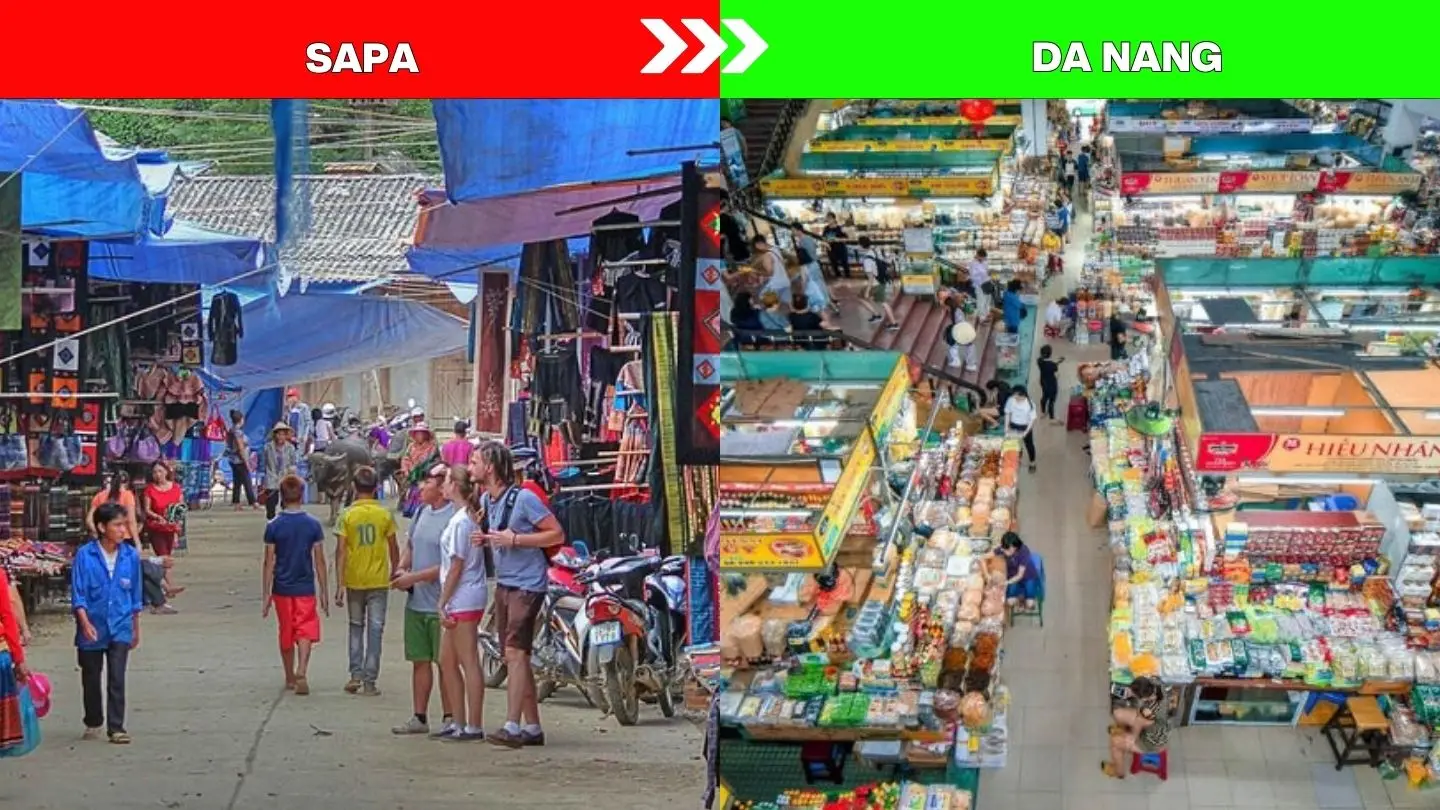
Shopping is Sapa’s quiet upset win. The Sapa markets and the weekly village markets trade in handmade textiles, crafts and mountain produce — things with a maker, not a barcode.
Da Nang’s shopping is more modern — malls and brand stores over market stalls. Interesting finds exist, but the market atmosphere Sapa is known for isn’t part of the deal.
8. Getting There & Transport
On logistics, Da Nang wins before the race starts. Hanoi to Da Nang is around 770 km, but a short flight takes just over an hour. If you’d rather travel overnight, the HK Open Tour VIP Cabin Bus is a comfortable option. Once there, Grab, taxis, and rental motorbikes make getting around effortless.
Hanoi to Sapa is closer at about 315 km, but the journey takes longer. The overnight train stops in Lao Cai, followed by another 35 km by road to Sapa, while sleeper buses travel directly into town.
These are the transport operators we book for our own guests from Hanoi to Sapa:


Call it honestly: Da Nang for convenience, Sapa for the journey that quietly becomes part of the story.
9. Natural Landscape
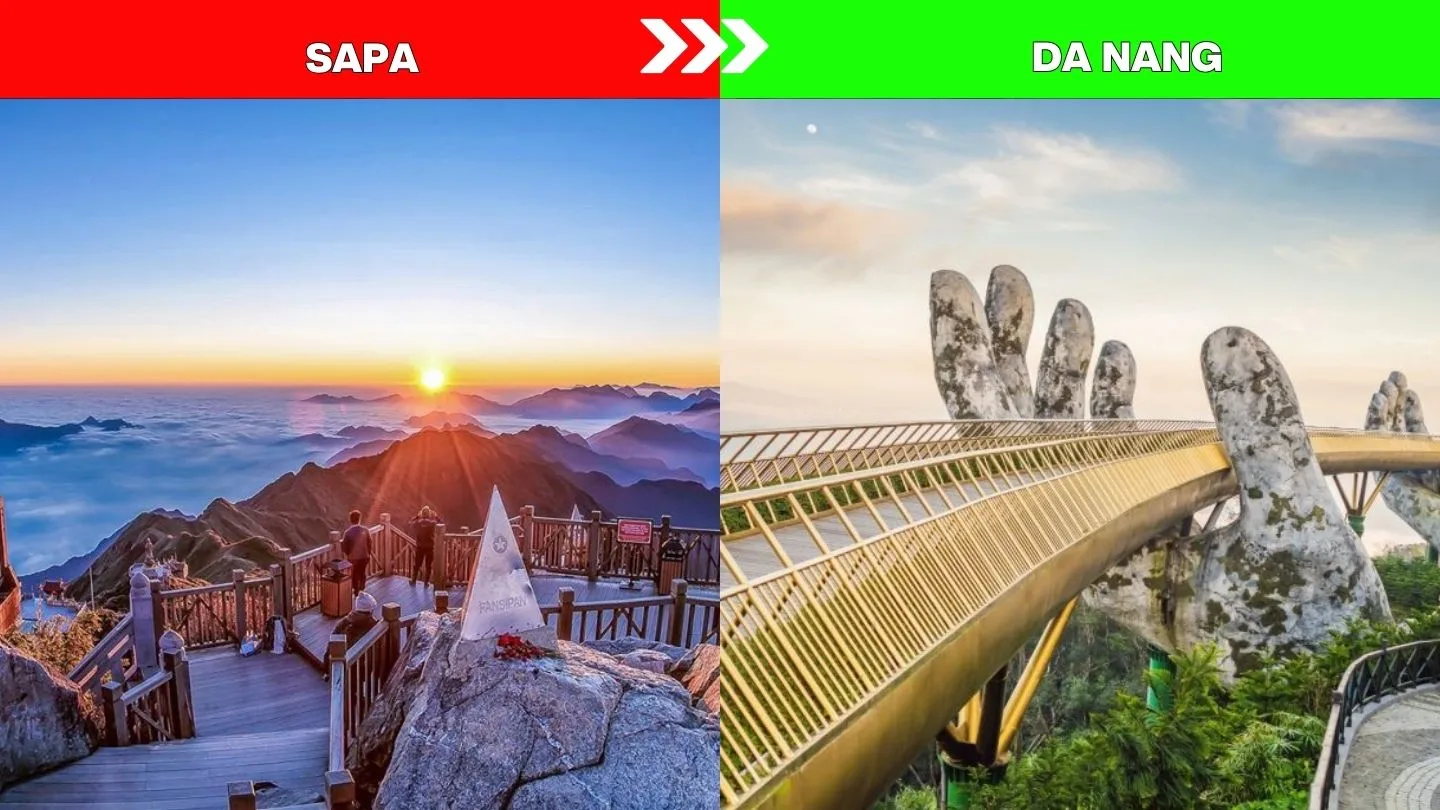
On pure landscape, Sapa clearly outguns Da Nang. Mountain views and endless Vietnam rice fields make the scenery itself the reason you come. Cool air and misty mornings do the rest — and the ethnic minority villages up in the hills complete the picture.
Da Nang, for all its city energy, is not really a nature destination — nice beaches, the Marble Mountains, and then the city takes over. For landscape that stops conversation, go north.
Which One Brings Perfect Getaways: Sapa or Danang?
So the getaway question answers itself. Sapa if you want cool air, quiet nature and village culture — the trip that slows your pulse.
Da Nang if you want beaches, city comfort and easy fun — the trip that fills the camera roll without effort. Nature and calm, or sun and motion: pick your holiday.
Conclusion
Altitude or ocean — you cannot have both in one town, and that makes this an easy call. Cool air, terraces and treks point you north to Sapa; sand, seafood and city comfort point you to Da Nang. Match the trip to the traveler and neither choice is wrong.
→ Going north? Plan it with the best time to visit Sapa guide.
FAQs
Can I combine Sapa and Da Nang in one trip?
Yes, with a flight in the middle: Hanoi → Sapa by bus or night train, back to Hanoi, then about an hour’s flight to Da Nang. Allow a week or more for the pair.
Does Sapa have any beaches?
No — Sapa is a mountain town at around 1,500 m, hundreds of kilometers from the sea. For sand, Da Nang’s My Khe beach is the one you want.
When is the best time for each?
Sapa: September–November and March–May. Da Nang: roughly March–August for beach weather. April–May overlaps nicely for both.
Which is cheaper, Sapa or Da Nang?
Broadly similar — both run from hostel to five-star. Sapa’s extras are treks and the cable car; Da Nang’s are resorts and theme parks.
Related Tours & Transport
