


 Sapa Tours & Activities
Pu Luong or Sapa: Which One Delivers a Truly Rewarding Escape?
Pu Luong or Sapa is small-and-close against big-and-high. Pu Luong is a quiet nature reserve four hours from Hanoi — bamboo forests, gentle terraces, almost no crowds. Sapa is the full mountain destination: higher peaks, four cultures, and every service a traveler could want.
| Aspects | Pu Luong | Sapa |
|---|---|---|
| Location & Access | 160 km from Hanoi, 4-hour drive, buses and motorbikes available | Farther from Hanoi, 5–9 hours by train, bus, or car |
| Ethnic Groups | Thai and Muong; traditional dress mainly on festivals | Diverse groups (Black Hmong, Red Dzao, Dzay) with daily traditional clothing |
| Ethnic Markets | Small, local markets (Pho Doan) | Large, lively markets (Coc Ly, Bac Ha) |
| Hiking | Quiet, peaceful trails, few tourists | Busy trails, more tourists and vendors |
| Terraced Fields | Gentle terraces, two rice crops/year | Dramatic terraces, one rice crop/year |
| Local Cuisine | Fresh rice-based dishes, simple flavors | Smoky, hearty mountain foods |
| Accommodation | Cozy homestays and nature lodges | Wide range from hostels to luxury resorts |
Overview of Pu Luong & Sapa
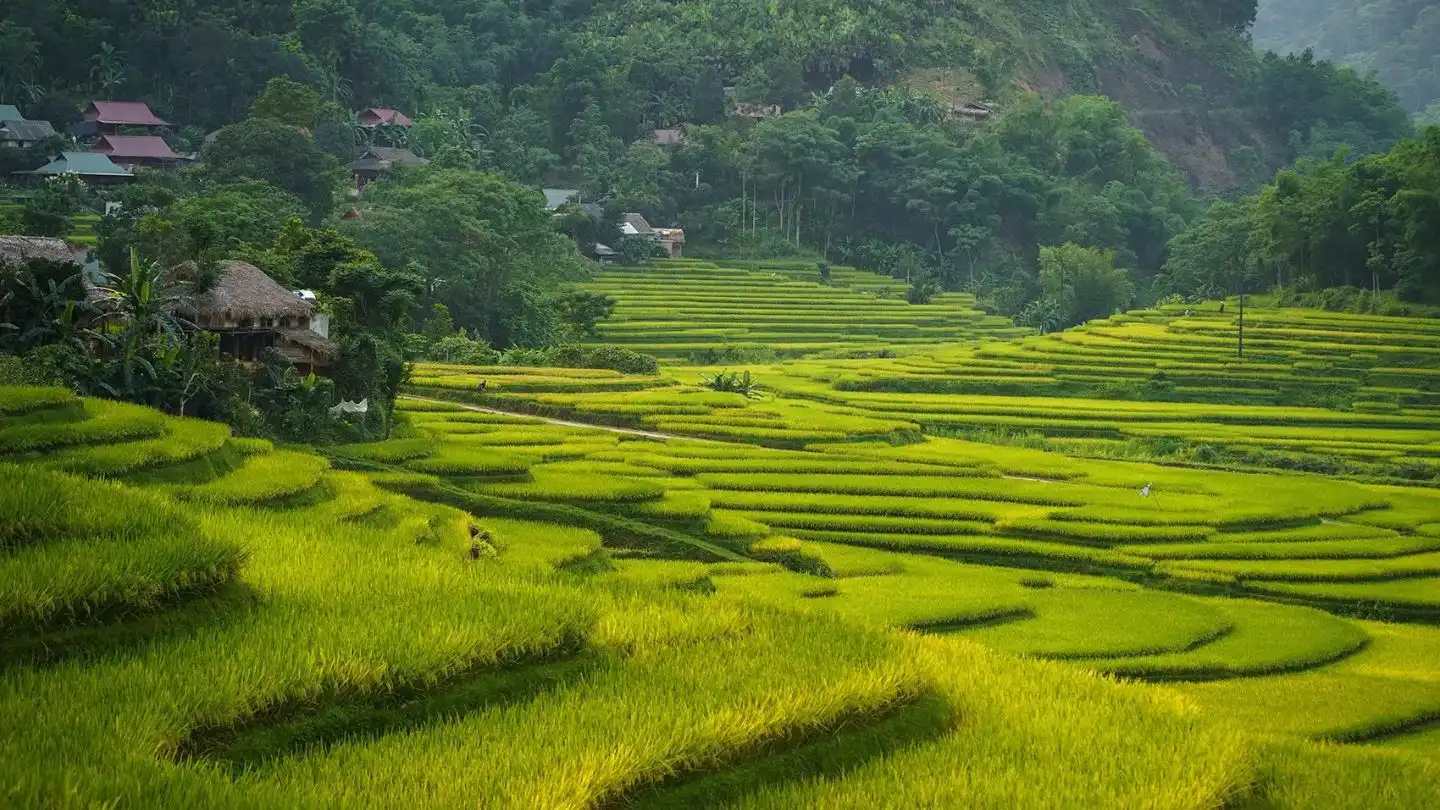
Pu Luong Nature Reserve hides in Thanh Hoa province, about 160 km southwest of Hanoi — a four-hour drive, which makes it the shortest mountain escape on this list. Inside the reserve: bamboo forest, limestone ridges, rivers, waterfalls and ethnic villages ringed by terraces. Days here are hikes, bicycle loops, swims and hammock hours.
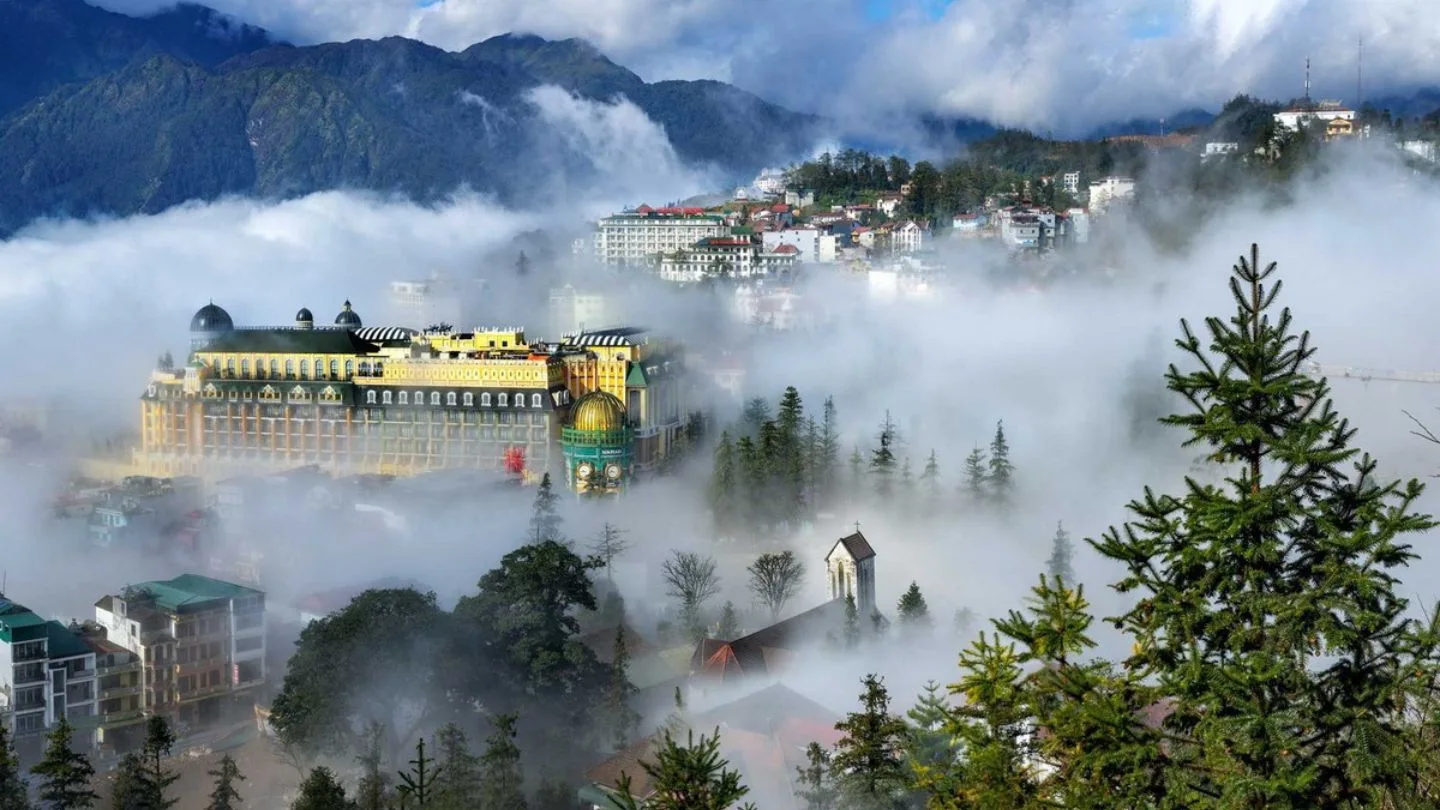
Sapa sits higher and farther — Lao Cai province, about 320 km from Hanoi, five to six hours by road. It has been the north’s signature mountain town for over a century, and it earns the status: cool air, big views, and a culture you can walk into.
6 Clear Differences Every Traveler Should Know Between Pu Luong or Sapa
Six differences separate them — and they line up cleanly.
1. Location & Accessibility
On access and infrastructure, Sapa is the more developed door — more routes in, more services once you arrive.
Pu Luong: about 160 km southwest of Hanoi in Thanh Hoa province, on the border with Hoa Binh. The drive runs around four hours; there is no train and no big-bus terminal — private car or limousine van is the way in.
Sapa: bus, train or private car. The overnight train to Lao Cai takes 8–9 hours plus an hour up the mountain; the express bus does it in one 6-hour run. More options, more departures, more flexibility.
Every route compared — Sapa Nomad keeps the full transport lineup with live prices.


2. Diverse Ethnic Group

On living culture, Sapa runs deeper. Traditional dress here is daily wear, not festival costume — you see it in the fields, at the market, on the school run.
Pu Luong is home to the Thai and Muong, who bring out full traditional dress mainly for festivals and special occasions. The culture is present but quieter — you meet it at dinner in a homestay rather than on every path.
3. Hiking in Sapa and Pu Luong
The trekking split is simple: solitude in Pu Luong, variety in Sapa.
Pu Luong’s trails run through green terraces, thick bamboo and clean air — and mostly through silence. On a weekday you can hike hours without passing another group.
Sapa’s mountains are bigger and its terraces grander, but the famous routes carry traffic — hikers, guides, vendors. In exchange you walk through four living cultures: the Hmong, Dao, Tay and Giay all call these valleys home.
Our hiking tours cover both ends — local guides, honest prices, routes matched to your legs.


4. Unique Ethnic Markets
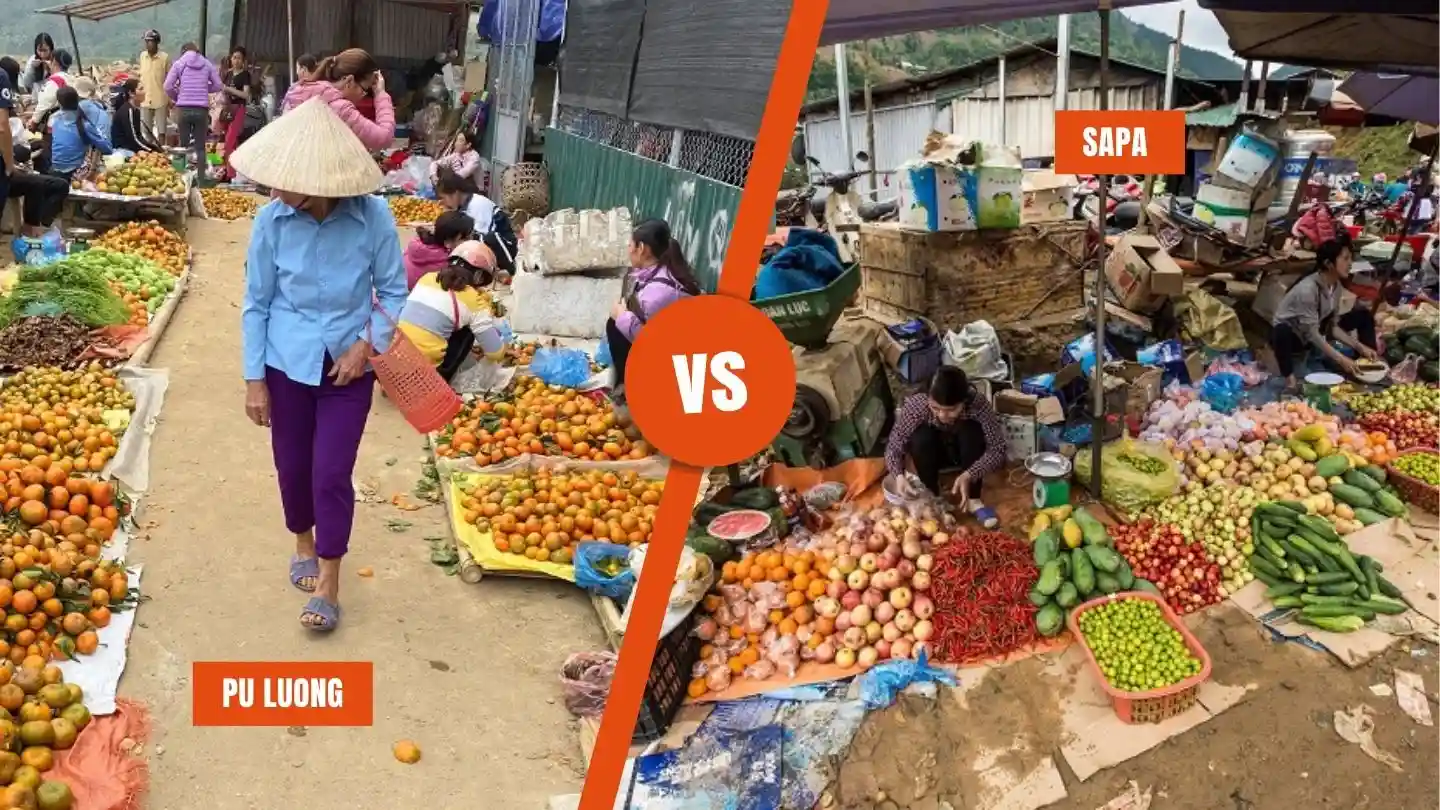
On markets, Sapa’s region wins big. The Sapa–Bac Ha corridor holds the north’s most famous market circuit: Coc Ly on Tuesdays, Can Cau on Saturdays, Bac Ha on Sundays. All three run huge and loud, full of traditional dress and livestock trading.
Pu Luong keeps one modest gem: Pho Doan market, Thursday and Sunday mornings. Sunday is the fuller show — but it is a local errand market, not an event. Charming, not spectacular.
5. Terraced Fields
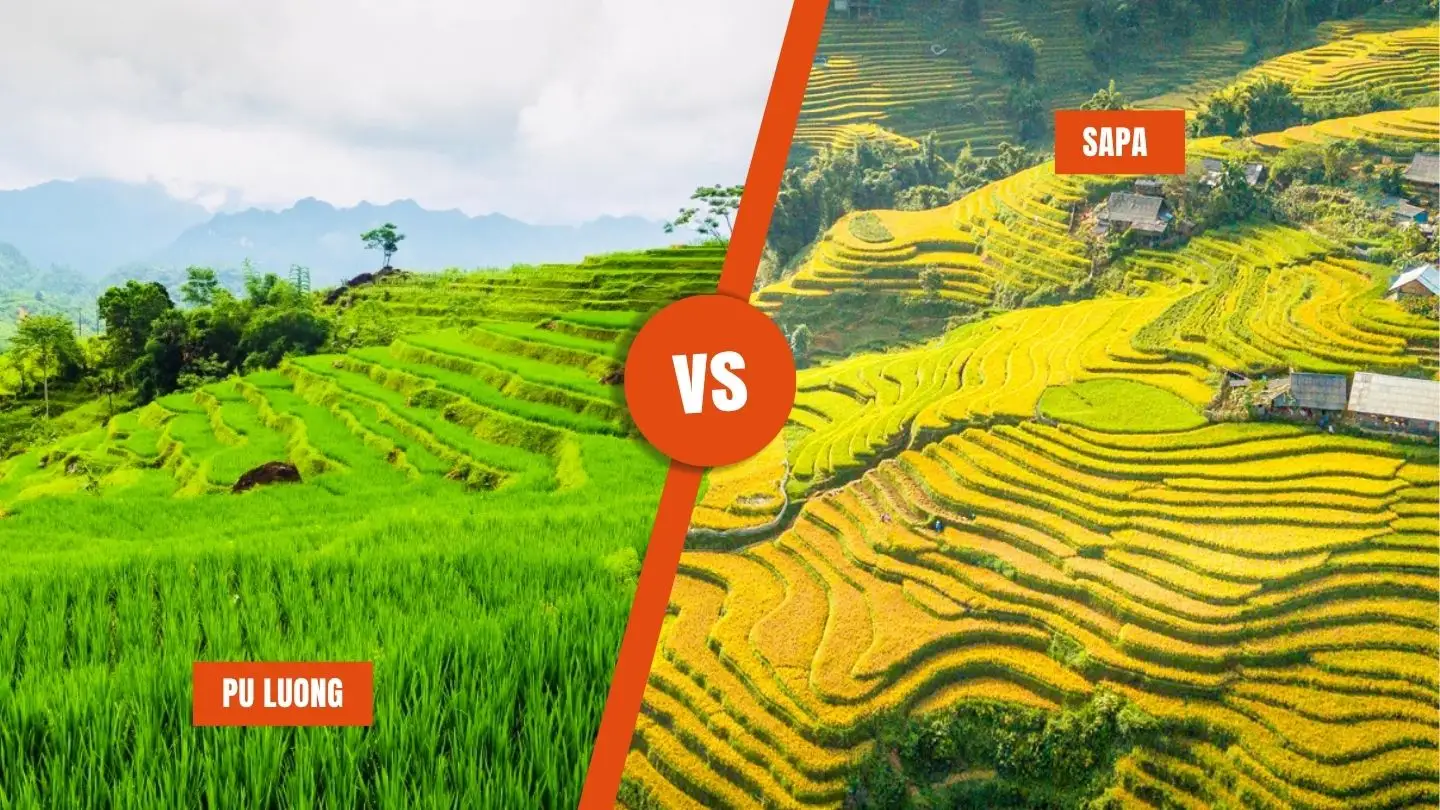
Pu Luong’s terraces roll gently — and they work twice as hard: two rice crops a year, harvested around early June and again late September to early October. Double the chances of catching green or gold, with bamboo water wheels and stilt houses in every frame.
Sapa’s terraces are the dramatic ones — carved high into steep mountainsides, the postcard version of Vietnam. But the altitude allows only one crop: green through summer, golden for two short weeks in September, brown the rest of the year.
6. Local Cuisine
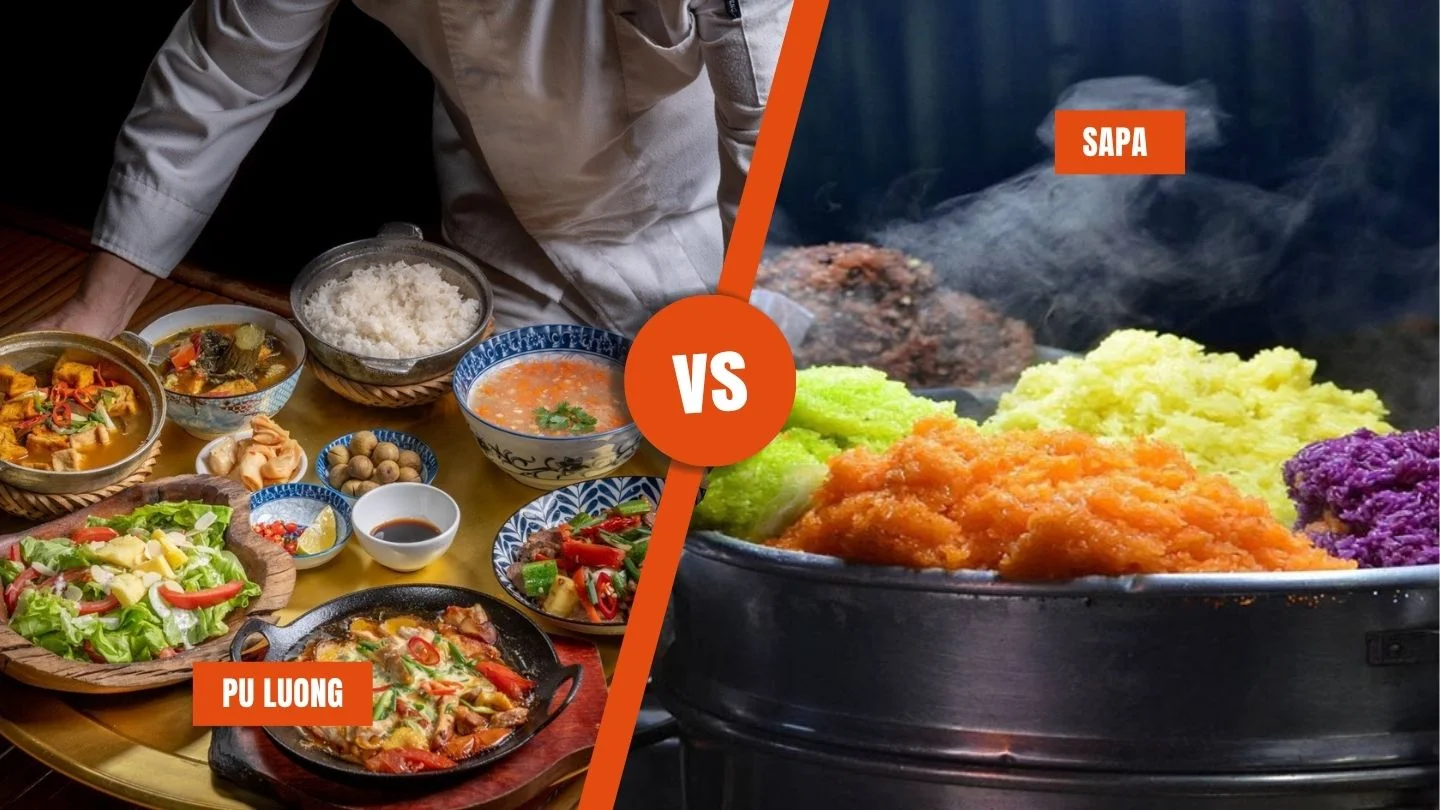
Pu Luong eats off its farms: bamboo-tube rice, roast chicken, river fish, and the local pride — short-necked duck. Fresh-harvest cooking, warm and homey.
Sapa eats off its winters: smoked buffalo, dried corn, preserved mountain flavors born of one harvest and long cold seasons. Rustic, smoky, built to last.
Call it a draw with different menus — Pu Luong for freshness, Sapa for character.
>> Related articles:
- Sapa Food: 24 Dishes Worth Coming Hungry For (2026 Guide)
- Best Restaurants in Sapa: Where We Actually Send Guests (2026)
7. Diverse Hotel Choices

Pu Luong’s beds sit in nature: homestays like Pu Luong Eco Garden around $13 a night, or terrace-view resorts — Pu Luong Retreat, Natura Bungalow — at $80–120. Small menu, high charm.
Sapa stocks the full accommodation: hostels near the lake up to 5-star resorts along Cau May and Muong Hoa, mountain views included at every price point.
Sapa wins for variety, while Pu Luong offers better atmosphere for the money.
Which One Do You Prefer? Pu Luong or Sapa
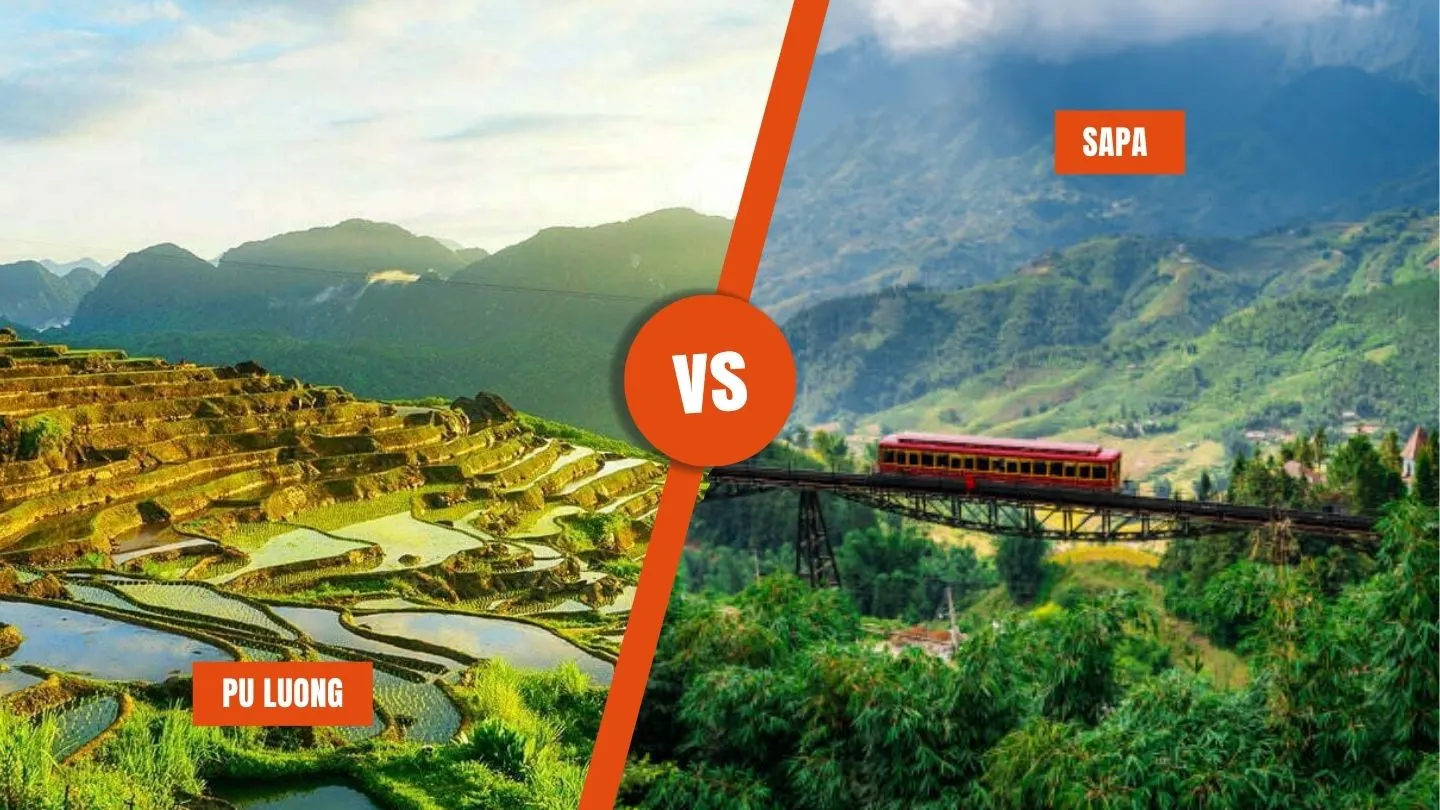
So which one? If quiet is the point — fewer people, gentler land, two green seasons — Pu Luong answers fastest.
If you want scale — bigger mountains, market mornings, four cultures and a town that can host you properly — Sapa is the pick.
Conclusion
Two mountain answers at two volumes. Pu Luong whispers — near, green, twice-harvested, half-empty. Sapa projects — high, layered, full-featured. Know how loud you want your holiday and the choice is already made.
→ Going the Sapa route? Time it with the best time to visit Sapa guide.
FAQs
Is Pu Luong or Sapa better for a short trip?
Pu Luong — four hours from Hanoi and compact enough that two days covers the reserve. Sapa deserves three or more once you count the longer journey.
When is the best time for each?
Pu Luong peaks at its two harvests — around early June and late September–early October. Sapa’s windows are March–May and September–November, with harvest gold in late September.
Can I combine Pu Luong and Sapa in one trip?
Yes, but they sit on different roads out of Hanoi, so plan them as two separate legs with a Hanoi night between — about a week total.
Which is quieter, Pu Luong or Sapa?
Pu Luong, by a distance. It has no train, no big-bus route and no tour-group circuit — the same reasons it stays beautifully empty.
Related Tours & Transport
