


 Sapa Tours & Activities
Sapa Love Market: What It Is – and How Real It Still Is
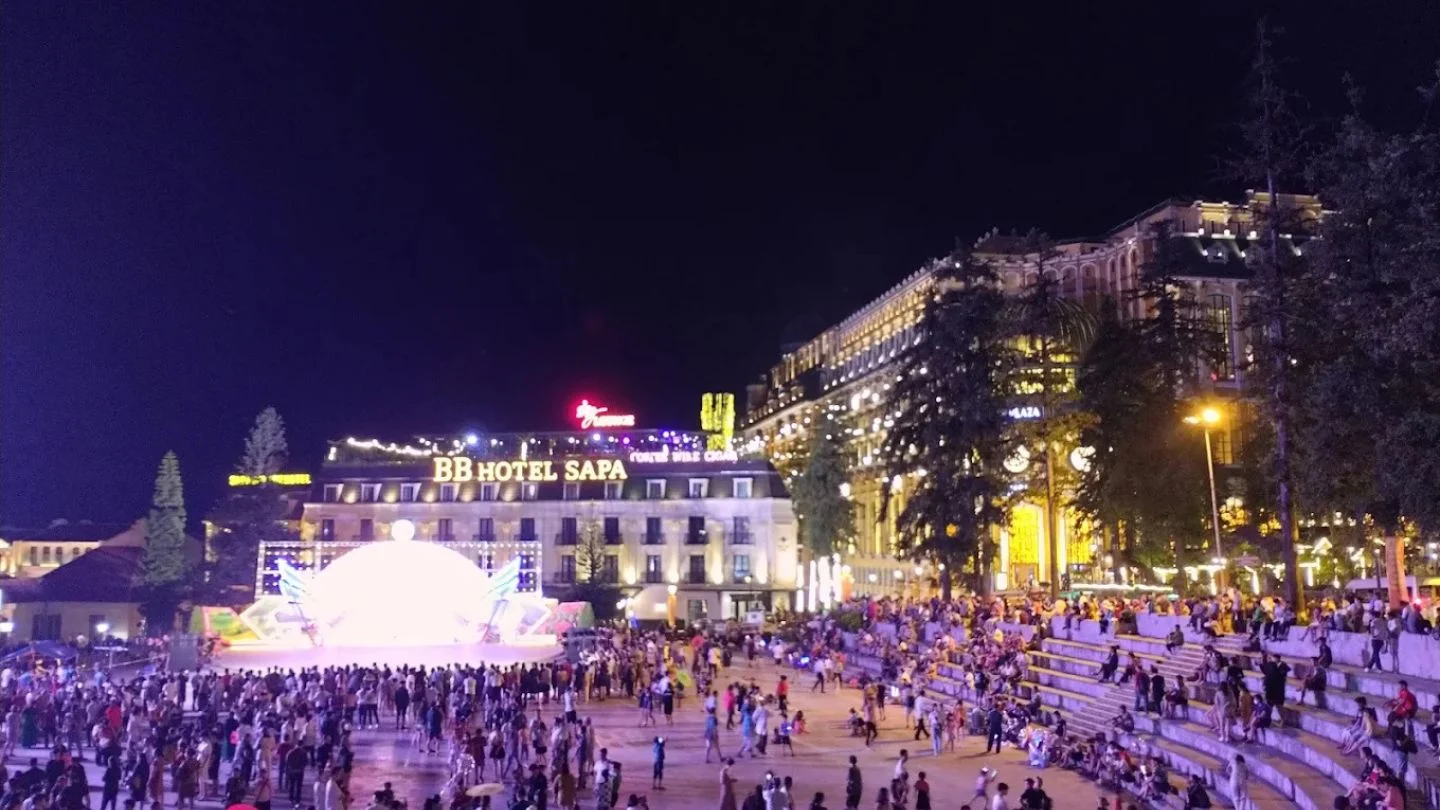
On Saturday afternoon, the square in front of the stone church belongs to selfie sticks and cable-car day-trippers. Around six, the light drops, the cold settles in — and the square changes hands.
Music starts. Vendors spread brocade under the lamps. And every week, someone in the crowd asks the same fair question: is this the real Love Market, or a show put on for us?
What is the Sapa Love Market?
In the late 19th century, the villages of this valley were a hard day’s walk apart. Saturday was trading day — and once the trading ended, the evening became the one chance for young people from different villages to actually meet.
The men played the khen, not for the crowd but for one listener. The girls answered with love songs and leaf whistles. Matches were made this way for generations, and the gathering earned its name. The Giao Duyen duet festival in Ta Phin comes from the same courtship culture — the spring-festival version of the same idea.
Is it still the real thing? An honest answer

Mostly, no – and it is better to know that before you go. Roads and phones ended the market’s matchmaking role decades ago. Young Hmong and Dao people no longer need a Saturday square to find each other, and the intimate courtship of the old days has moved out of public view.
What remains is a mix. Organized performance groups recreate the songs and dances — sometimes with stage lights and a smoke machine. Around the edges, though, the square still does its old job. Local teenagers gather and stay long after the tour buses leave; families sell embroidery under the lamps; the church bells still mark the hour.
Read the evening that way, and it works. The show is a tribute, not a fake; the sincere moments happen slightly off to the side. Don’t stand front and center all night — the best of it is at the edges.
When, where, and what it costs

Every Saturday evening, starting around 6 PM and winding down by about 10. The liveliest window is 7–9 PM, when the performances, food stalls and crowds all overlap. There is no ticket — the square is public.
The location could not be easier: the town square in front of the Stone Church, at the foot of Ham Rong mountain. Every central hotel is within a short walk. One name-check to avoid confusion: this is not Sapa Market, the daytime goods market a few streets away — different place, different purpose.
How to spend the evening
Watch the performances, then wander. Between sets, step inside the Stone Church — the Roman-Gothic interior is calm and reflective, a good pause before the square pulls you back.
Eat while you walk. Roasted chestnuts are the signature here — follow the “hạt dẻ Sa Pa” signs and the smell.

Grills carry corn, eggs, skewers and cơm lam (sticky rice in bamboo), and on cold nights a cup of hot wine keeps your hands warm between stalls. The busiest stalls are busy for a reason.

Browse the brocade. Red Dao and Hmong women sell embroidery, hats and silver along the square’s edge, and a small purchase opens easy conversations. Ask what a pattern means — you will usually get a better story than any label.
If a folk game forms — tug-of-war, bamboo dancing — join when invited; enthusiasm counts for more than skill. And photograph gently: ask first for close-ups, always for children, never during a private moment.

Insider note: Sapa is cold after sunset even in summer — bring a layer. Carry small cash; stalls don’t take cards. Bargain kindly, and keep your bag zipped in the thick of the crowd.
Worth your Saturday night?
→ Full guide: Sapa Vietnam: The Complete Travel Guide →
FAQs
What time is the Sapa Love Market?
Every Saturday evening, from around 6 PM to about 10 PM. The liveliest stretch is 7–9 PM, when performances, food stalls and crowds overlap. Some music continues later if the night is warm and the crowd stays.
Is the Sapa Love Market free?
Yes. The square is public, and there is no ticket. Bring small cash for food stalls and handicrafts — that is where the money part happens, and it goes straight to local families.
Is the Sapa Love Market authentic?
Honestly: it is a mix. The original courtship custom faded decades ago; today’s evening combines organized cultural performances with genuine local social life — teenagers gathering, families selling embroidery. Enjoyed as atmosphere rather than ritual, it holds up well.
Is it safe to walk around Sapa at night?
Yes, generally very safe. The town center is well lit and busy with locals and travelers on Saturday nights. The usual market-crowd sense applies: keep your bag closed and your phone in a front pocket.
→ Plan the rest of your evening with the Sapa at night guide.
By ten the smoke machine rests and the vendors fold their cloth. The teenagers stay longest. For an hour or so the square belongs to them again — no smoke machine required.
Related Tours & Transport
