


 Sapa Tours & Activities
Sapa Rice Fields: What They Look Like Each Month & When to Go
The Sapa rice fields run on a color clock. Silver water in May, deep green through early summer, golden weeks from mid-August to early September — then stubble and quiet for half the year.
Time your trip to the right color, and the terraces will be the best thing you see in Vietnam.
Best Time to Visit Sapa Rice Fields
One table answers most questions we get about the terraces — what the fields actually look like, month by month:
| Month | What the terraces look like |
|---|---|
| January–February | Bare and brown, resting; frost some mornings — stark, moody, not the postcard |
| March–April | Fields being repaired and plowed; first water arrives late April |
| May | Water-pouring season — flooded terraces mirror the sky (photographers’ second-favorite window) |
| June | Mirrors turn to young green as seedlings take hold |
| July–August | July: deepest green, terraces full. From mid-August the first fields turn gold — the best weeks begin |
| September | Gold lingers in patches early month; harvest clears most fields by mid-month |
| October | Stubble under clearing skies — come for the cloud sea, not the rice |
| November–December | Stubble and bare earth under the year’s clearest skies — come for the cloud sea, not the rice |
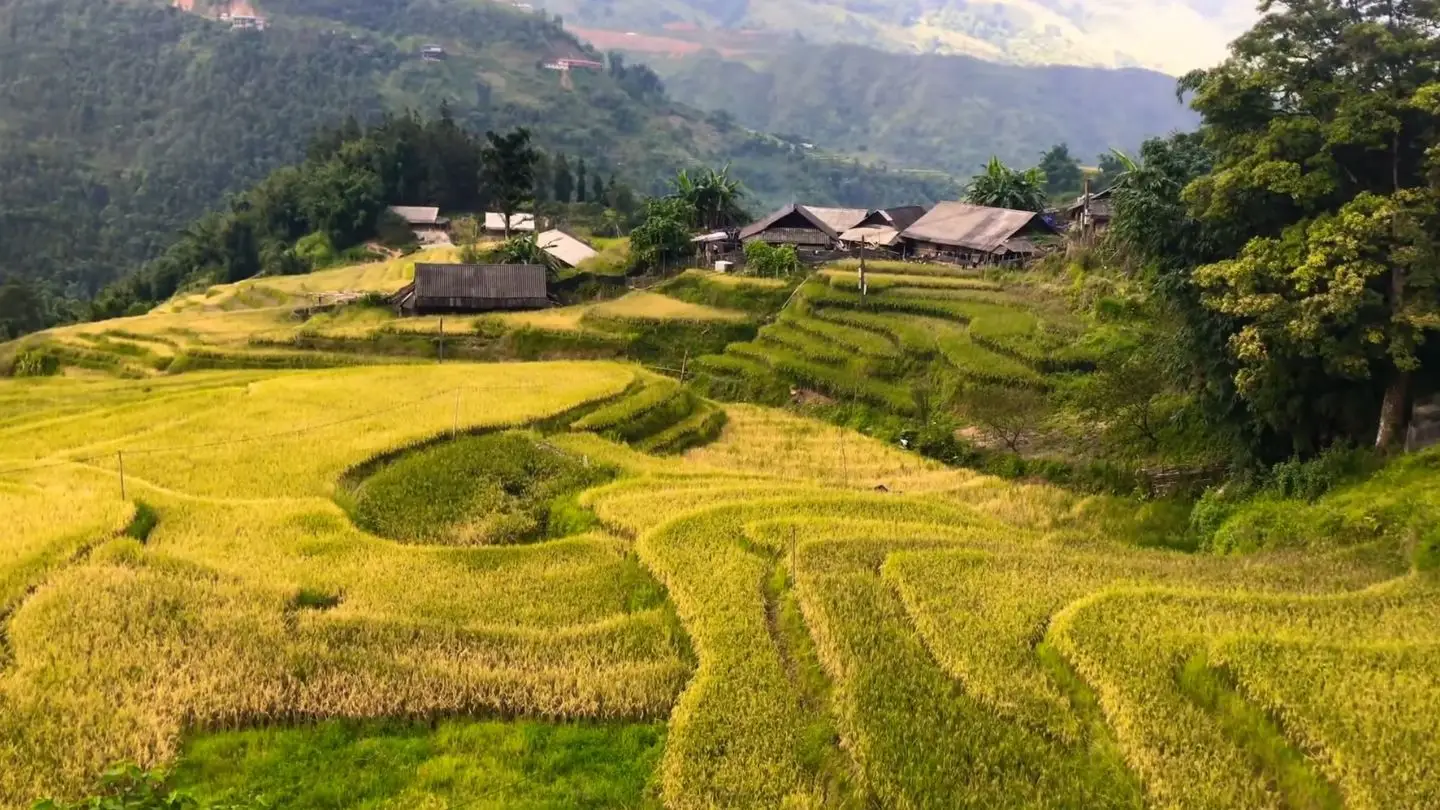
The best time to visit Sapa rice fields is during 2 special seasons. First, during the water-pouring season in late April to early May, when the fields are filled with shimmering water. Then, from mid-August to early September, you can see the rice at its peak, ripening hamlet by hamlet. Both seasons offer striking views that are worth witnessing!
Planting season in Sapa
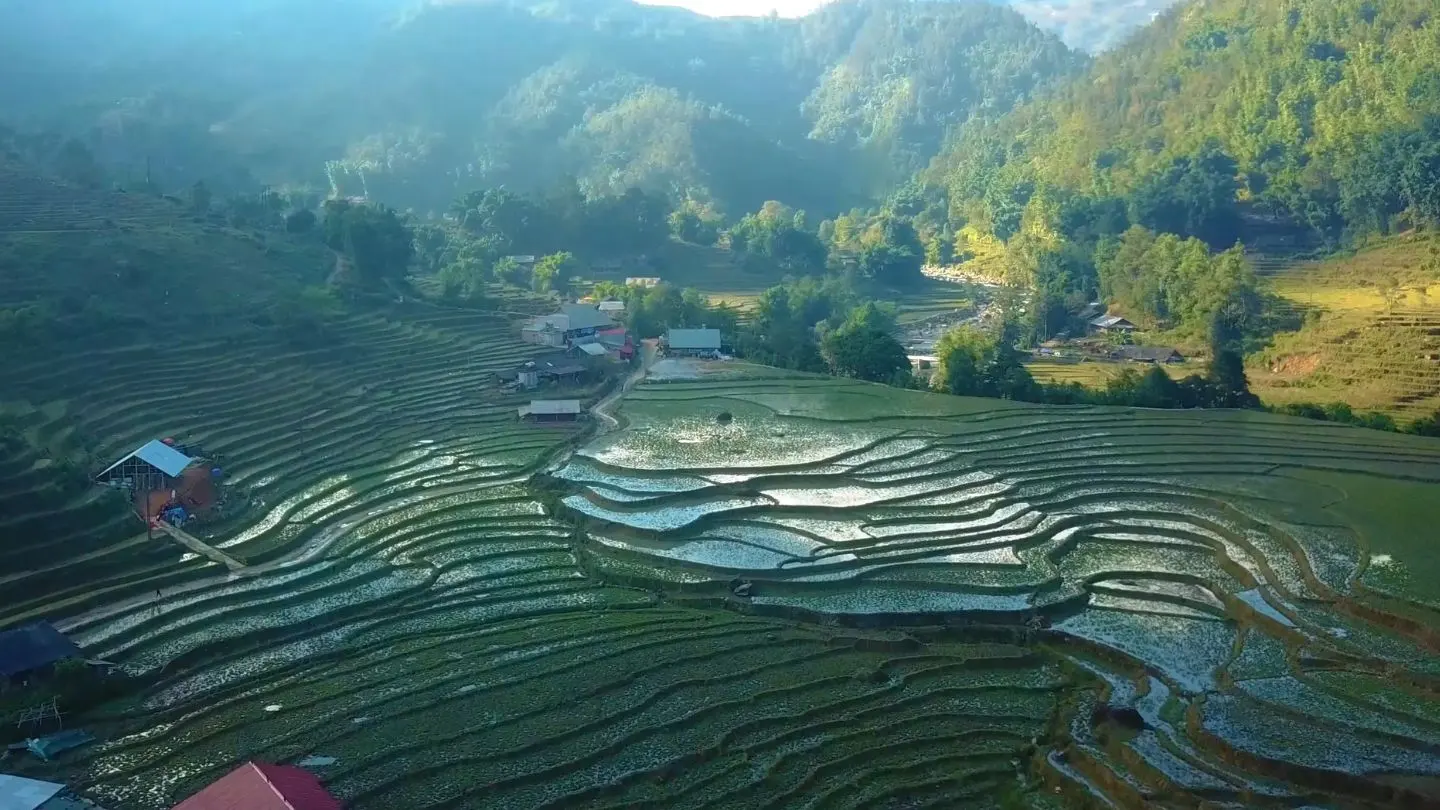
If you’ve ever seen photos of Sapa’s rice terraces reflecting the sky, they were probably taken around May. Farmers begin filling the terraces with water before transplanting young rice seedlings, creating mirror-like landscapes across Muong Hoa Valley.
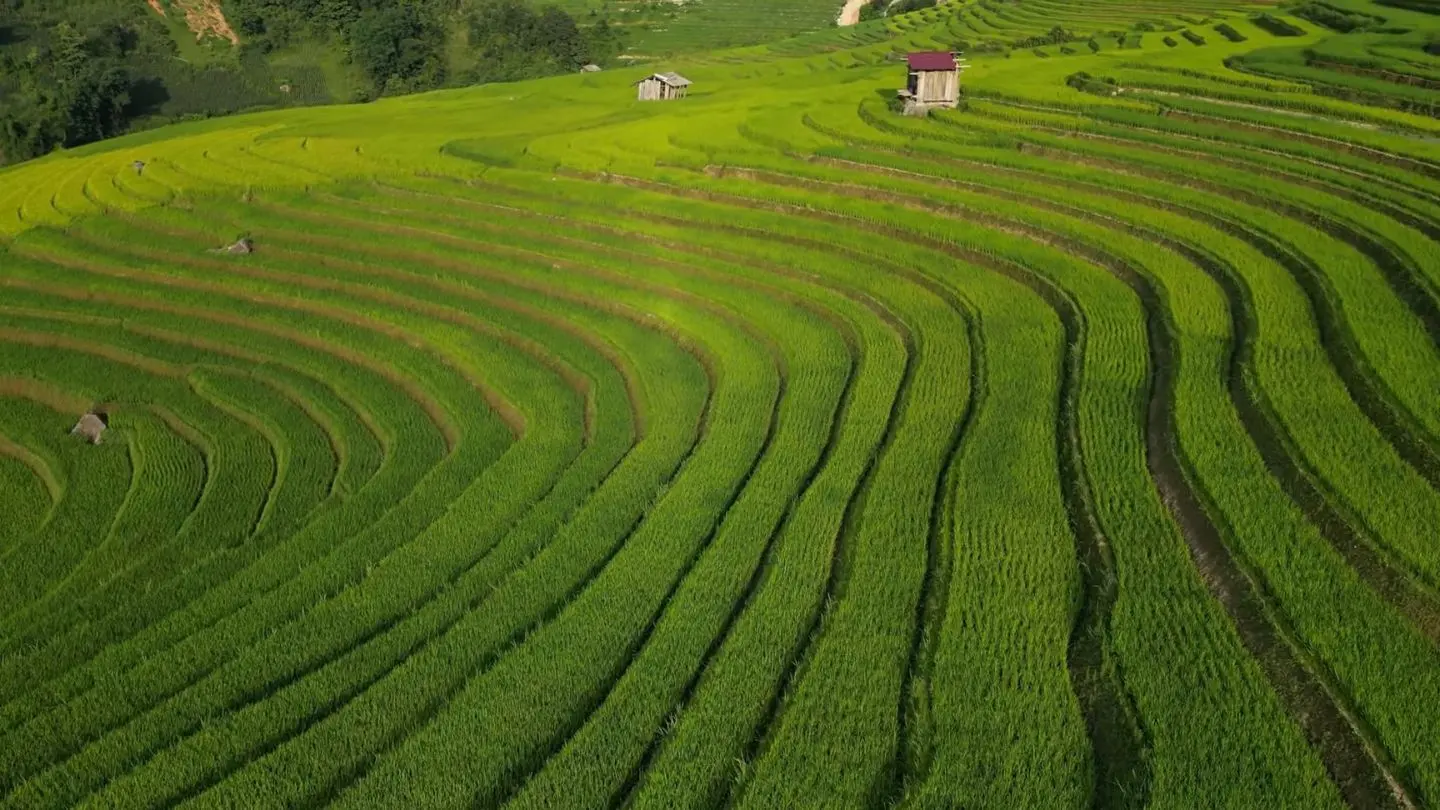
By June, the reflections slowly disappear as the fields turn fresh green. It’s a quieter season than harvest, but photographers often love it just as much.
Sapa Harvest season
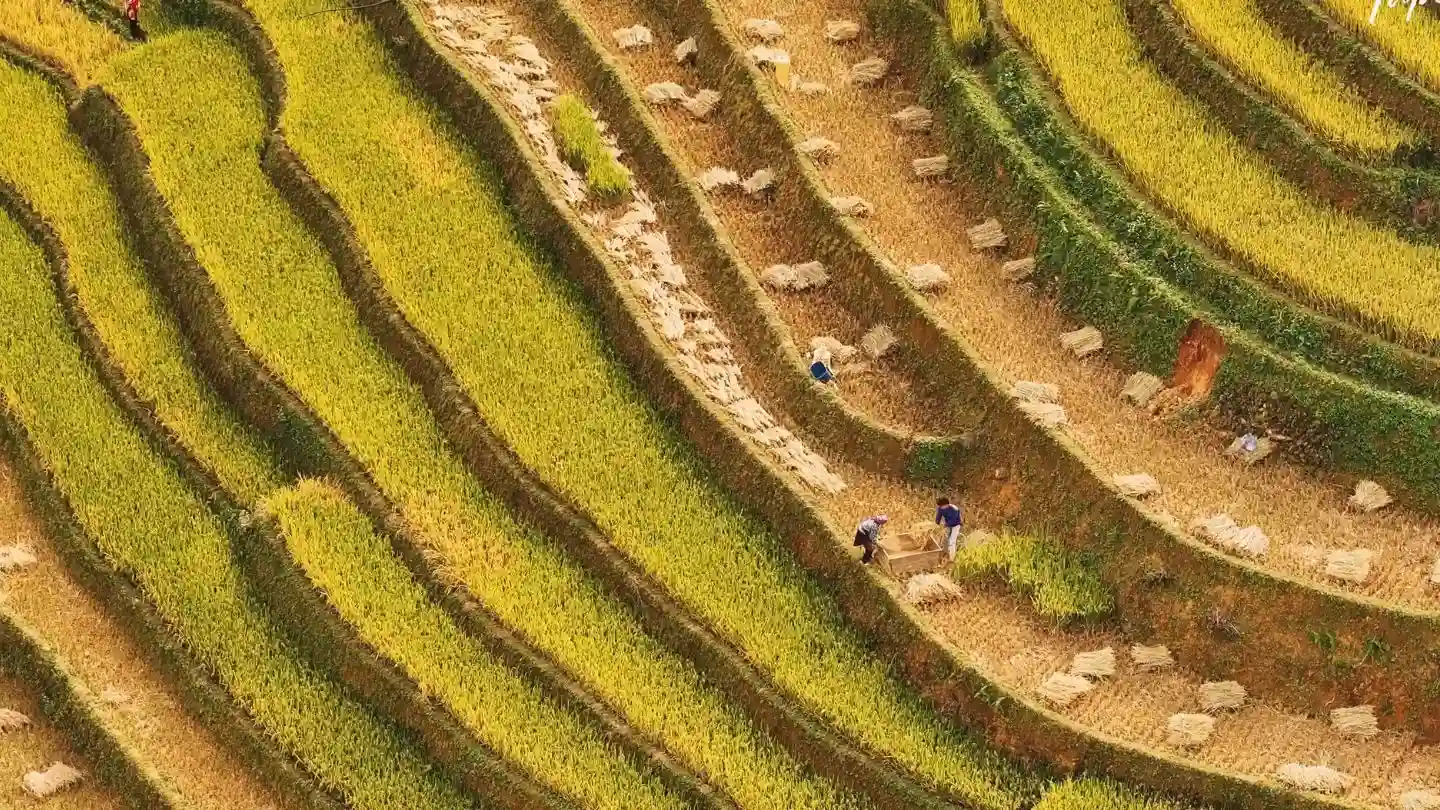
Harvest is easily the most popular time to visit the Sapa rice fields. The terraces glow gold across the mountains, and local families begin cutting rice by hand village after village.
It also overlaps the tail of Sapa’s busy summer season. For photographs with fewer people in the frame, go early on weekday mornings — and remember the fields turn hamlet by hamlet, so the quiet corner is usually one ridge away.
Best Time of Day to Visit the Sapa Rice Fields
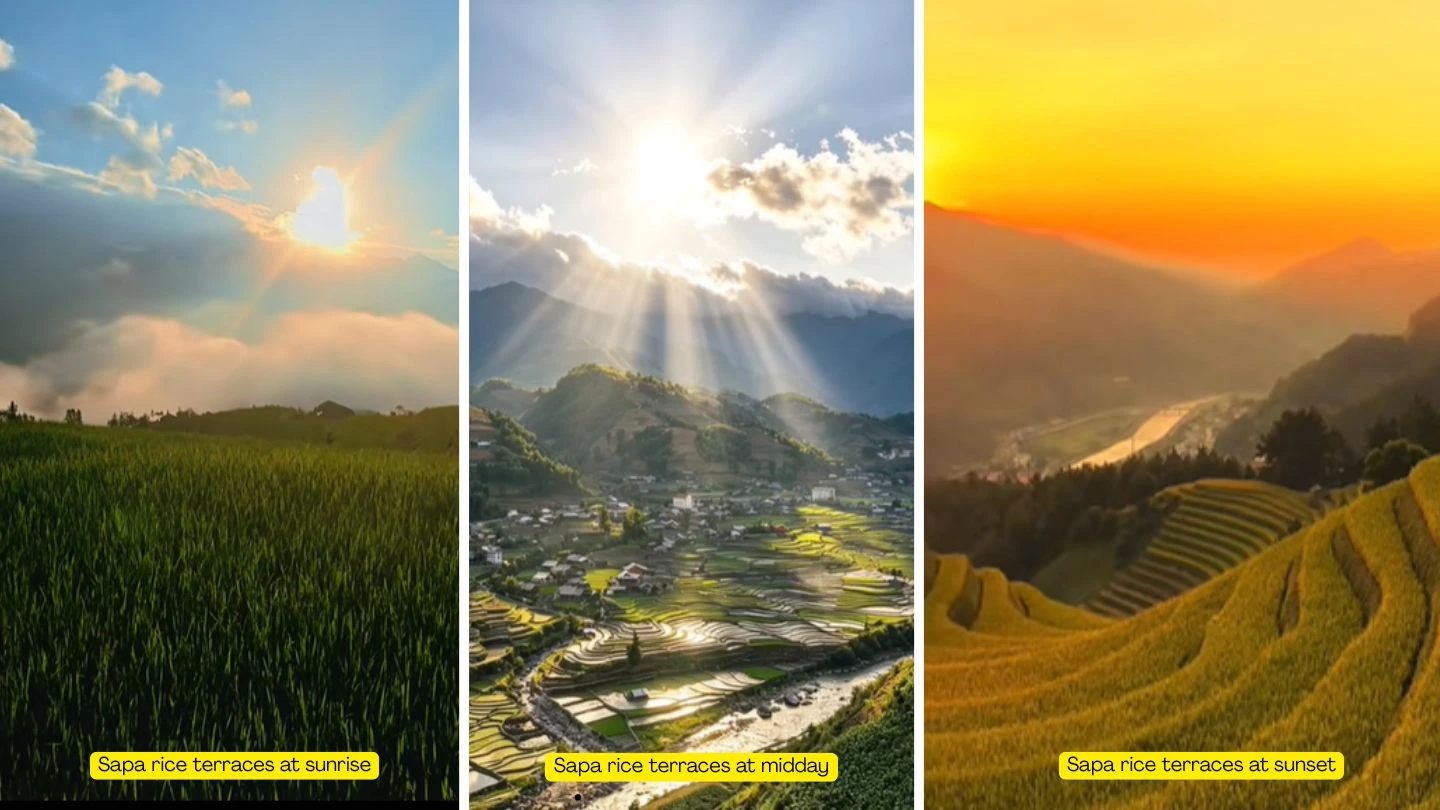
Morning wins. Between 6:30 and 9:00 AM, the valleys are usually quiet, the light is soft, and the mountain mist hangs above the terraces. If you’re hoping for photos, this is the window locals wait for.
By late afternoon, sunlight becomes warmer, and the terraces glow beautifully during harvest season. Midday, especially in summer, tends to flatten the landscape and attract the largest crowds.
If you only have one chance, choose early morning.
Why Timing Matters More Than You Think
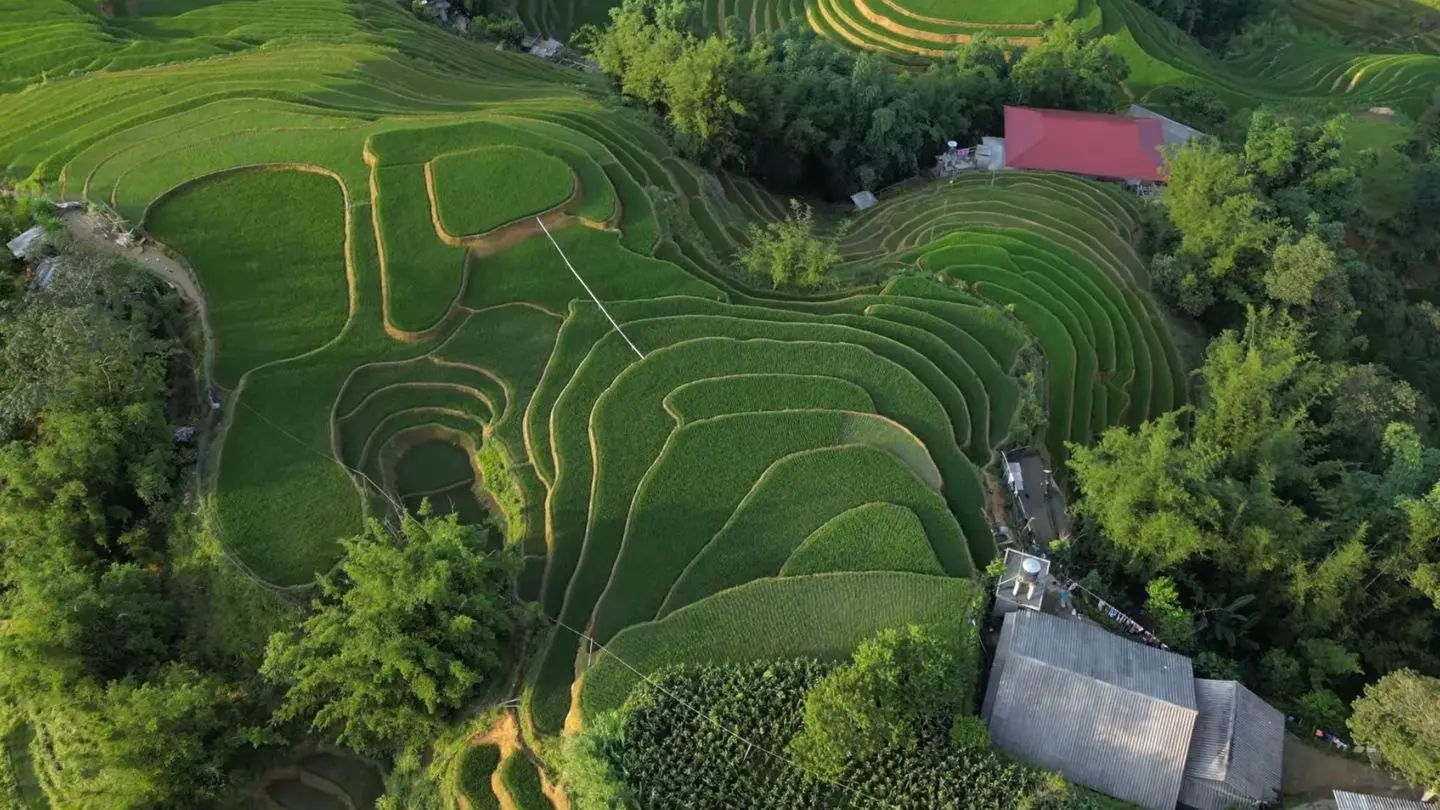
Flooded fields reflect the sky in spring. Summer paints the valleys deep green. Harvest transforms the mountains into waves of gold.
That changing landscape is one reason Travel + Leisure named Sapa one of Asia’s most beautiful rice terrace destinations, while the terraces themselves remain on Vietnam’s UNESCO World Heritage Tentative List.
Where to See Sapa Rice Fields?
Not every rice terrace in Sapa looks the same. Some places are known for sweeping valley views, while others are worth visiting for village life or local culture. If you only have a day or two, these are the places we’d start with.
| Location | Highlights |
|---|---|
| Y Linh Ho | Cascading terraced fields, Hoang Lien Son mountains, bamboo homes, streams, lively harvest colors |
| Ta Van Village | Cultural diversity, traditional stilt houses, lush rice fields, rustic village charm |
| Ta Phin Village | Red Dao culture, mountain and rice paddy views, local lifestyle insights, scenic scenery |
| Sin Chai Village | Quiet find, terraced fields, Black H’mong hospitality, mountain views, top charm |
| O Quy Ho Pass | Winding mountain road, striking rice field views, scenic journey, sweeping landscapes |
Y Linh Ho
If you only have half a day, start here. Just 7 km from Sapa town, Y Linh Ho combines cascading terraces, small streams, and H’Mong villages, all within one of the easiest trekking routes in the valley.
Ta Van Village
Ta Van is where rice terraces meet village life. Beyond the fields, you’ll find traditional stilt houses, small cafés, and local families still farming much as they have for generations.
Ta Phin Village
Come here as much for the culture as the scenery. Ta Phin is home to the Red Dao community, where rice terraces share the landscape with herbal baths, traditional textiles, and quieter mountain roads.
Sin Chai Village
Sin Chai stays quieter than most villages around Sapa. Terraced fields stretch across the hillsides, but it’s the slower pace and Black H’Mong hospitality that make people linger a little longer.
O Quy Ho Pass
You don’t come here to walk through the terraces—you come to see them all at once. O Quy Ho Pass offers one of the widest viewpoints in the region, especially beautiful during the green and harvest seasons.
Best Ways to Experience the Sapa Rice Fields
The rice terraces look different depending on how you explore them. Some views only appear on foot, while others are best seen from a mountain road or above the clouds. If you’re visiting during the green or golden season, these are the experiences most worth making time for.
Hiking and trekking
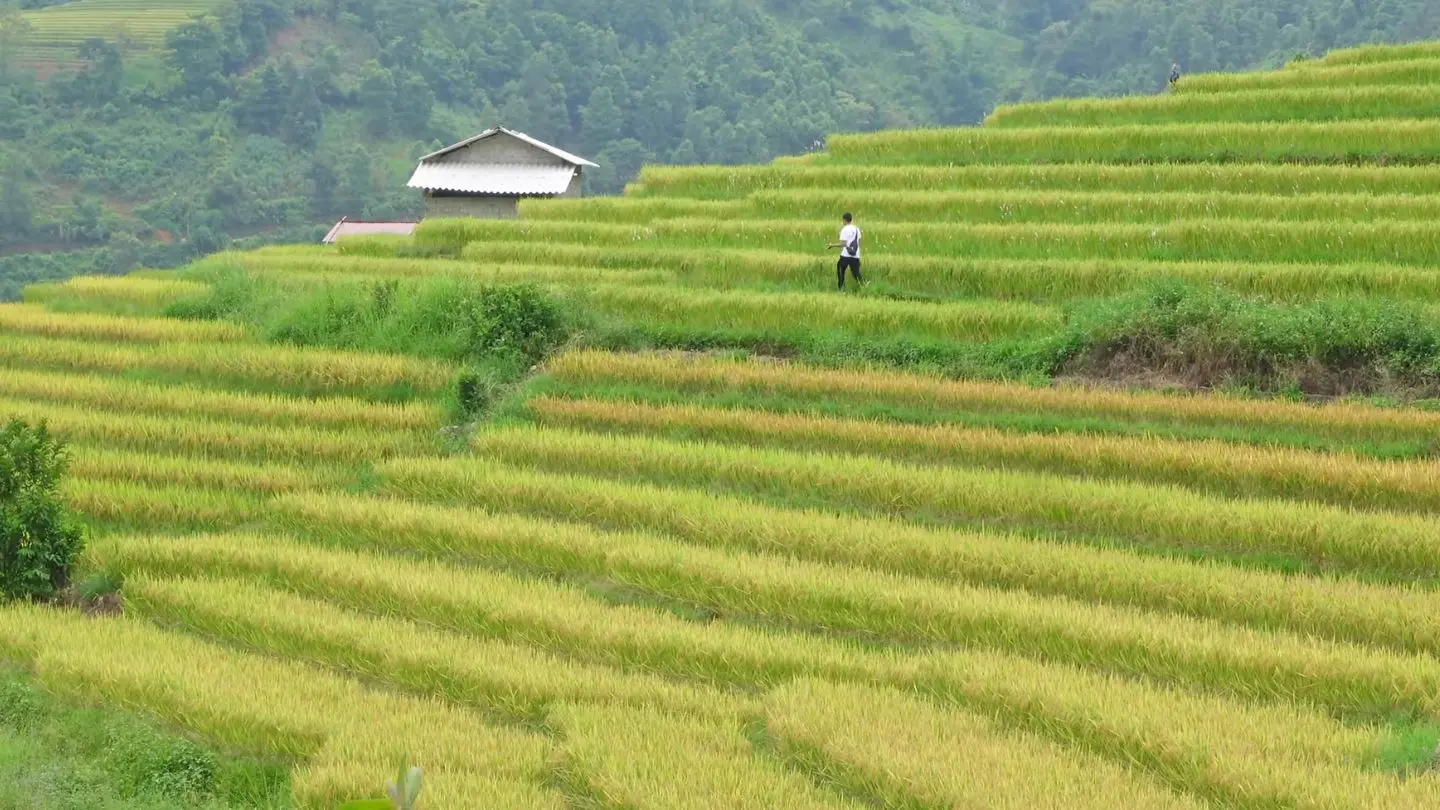
Walk slowly through the terraces, where every bend reveals another unforgettable mountain landscape ahead
Nothing slows you down quite like walking through the terraces. A short trek around Muong Hoa Valley brings you closer to village life, farmers at work, and the changing colours of the fields in a way no vehicle really can.
Stay in a Local Homestay
The best views often come before breakfast. Staying in a village homestay means waking up beside the terraces, watching the morning mist drift across the fields, and seeing a quieter side of Sapa most visitors miss.
Explore by Private Car or Motorbike
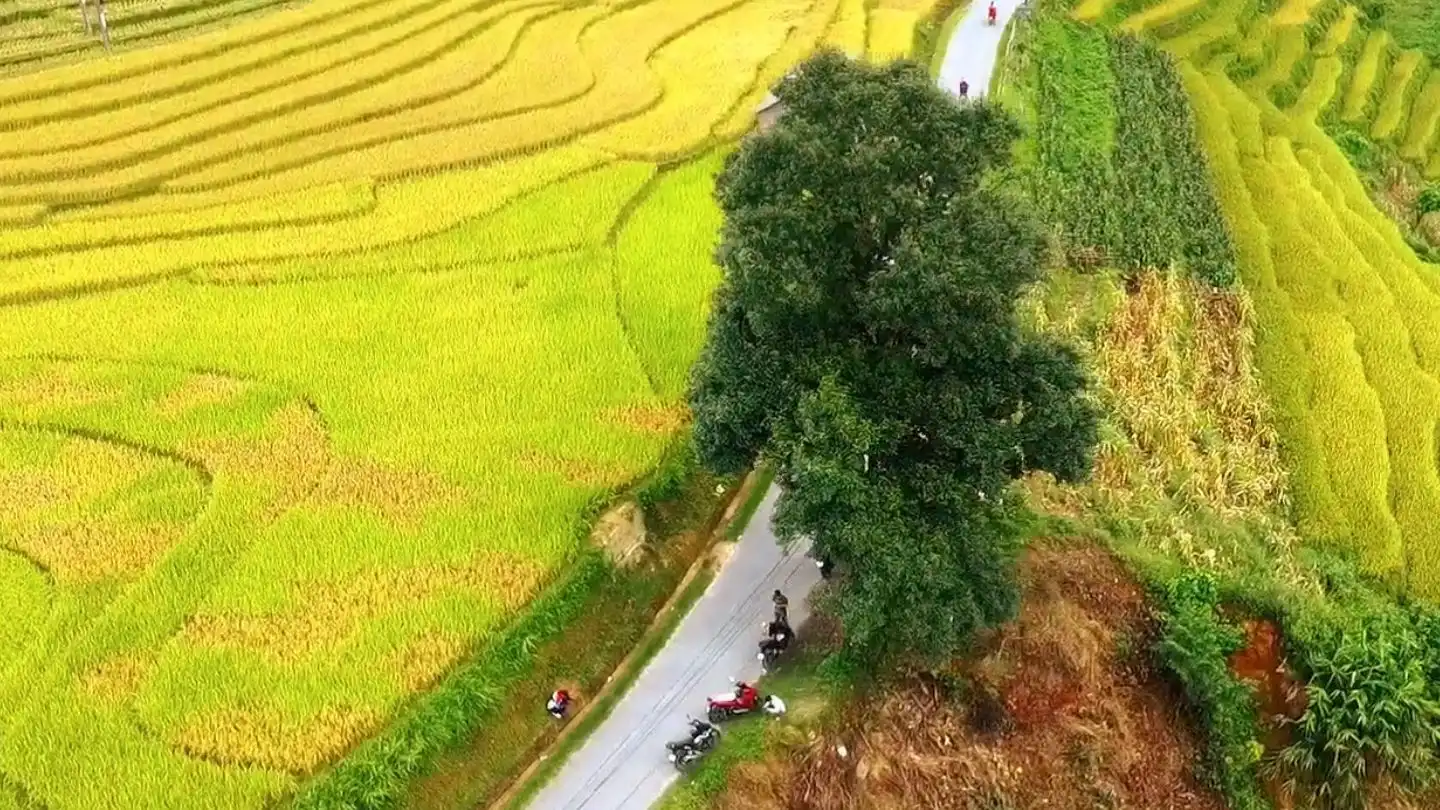
Follow mountain roads by car or motorbike between villages, stopping whenever the terraces ask you to pause naturally.
If you’d rather skip the long walks, driving is the easiest way to reach Sapa’s best viewpoints. A motorbike offers more freedom, while a private car lets you enjoy the scenery without worrying about mountain roads.
Join a Photography Tour
Every season has its perfect light. Local photography guides know where the mist lingers longest, which viewpoints stay quiet, and when the terraces look their best throughout the day.
Ride the Fansipan Cable Car
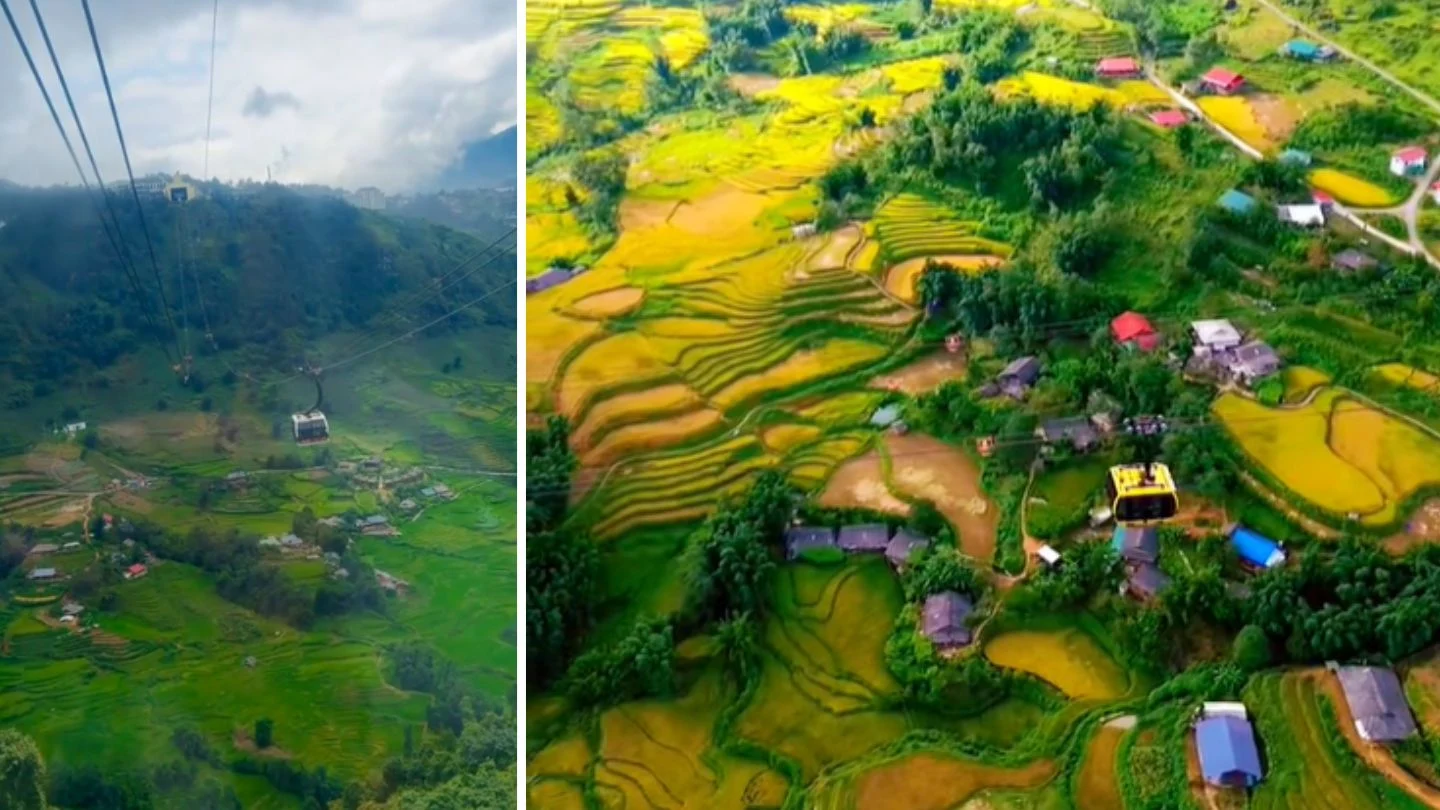
See endless rice terraces unfold beneath the clouds during one unforgettable cable car journey above
The cable car offers a completely different perspective. On clear days, you can look across Muong Hoa Valley and see layers of rice terraces stretching far below, especially beautiful during the green and harvest seasons.
Conclusion
The best time to visit the Sapa rice fields depends on what you want to see.
For reflections, come in late spring.
For endless green, visit in summer.
For the golden landscapes everyone dreams about, late August is difficult to beat.
Whichever season you choose, arrive early, slow down, and spend time beyond the viewpoints. The terraces have taken generations to shape – they’re worth longer than a quick photo stop.
FAQs
Can I see golden rice fields in Sapa in November?
Honestly, no — the harvest clears the terraces by mid-to-late September, and November fields are long-cleared stubble and bare earth. What November gives you instead: the year’s clearest skies and the start of cloud-sea season. For gold, aim for mid-August to early September.
When are the Sapa rice terraces golden?
Mid-August to early September — the rice ripens hamlet by hamlet, so timing varies valley by valley. The exact gold week shifts a little each year with the weather, and lower fields turn before higher ones.
Where are the best rice terraces in Sapa?
The Muong Hoa valley — the walk through Y Linh Ho, Lao Chai and Ta Van — holds the classic views. Ta Phin valley is quieter and nearly as good.
Can you see the rice fields in winter?
The terraces are there, but bare — brown and resting from November to April. May–June refills them with water mirrors, and the green builds from there.
→ Zoom out to the full best time to visit Sapa guide.
Related Tours & Transport
