


 Sapa Tours & Activities
Sapa in February: Honest Guide to Tet, Cherry Blossoms & Late Winter Beauty
February is the month I most often have to talk travelers out of expecting snow and into appreciating something better — Sapa’s spring blossoms arriving while winter still lingers. After ten Februaries here, I’ve watched the same pattern repeat: cherry blossoms (đào) explode in pink during Tết week, and frost lifts off the rooftops. A kind of hopeful chill settles over the town.
February is Sapa’s transition month between deep winter and early spring. The cold is still real, but blossoms are everywhere. Tết brings the year’s biggest local festival energy. And for travelers who time it right, Sapa in February delivers a combination of beauty, culture, and quiet you can’t find any other month.
Here’s what you actually need to know.
Sapa Weather in February
The honest truth: February is still cold — Sapa’s last real winter month — but visibly transitioning toward spring.
Quick reference
| Metric | February average |
|---|---|
| Temperature | 9°C nights → 16°C daytime (occasional 5°C cold snaps early-February) |
| Humidity | 70–80% (low for early-month, rising late) |
| Rainy days | 4–6 days (drizzle, brief showers, light winter rain) |
| Wind speed | 4–6 mph |
| Sunlight | ~11.5 hours daily |
| Sunrise / Sunset | 6:25 AM / 6:00 PM |
What this means on the ground
February mornings are cold and often frosty (early month). Mist hangs in valleys until 9 AM, then clears. Days warm to 15–16°C — comfortable for light layers. Evenings drop fast after sunset.
Cold snaps from China are less frequent than January but still occur — 1–2 times per month. Snow on Fansipan summit still possible (1–2 days/year on average). Cloud sea forms 3–4 mornings per week — close to December reliability.
By late February, you’ll start feeling spring arrive: warmer daytime, fewer cold snaps, more dry days. Cherry blossoms reach peak around Tết (which falls in late January or February depending on the year).
What to pack for February
I’ve seen plenty of guests arrive in Sapa thinking February wouldn’t feel that cold. Most of them end up buying an extra layer by the second evening.
- Thermal base layer (top + bottom) — essential for early-month sunrise treks
- Fleece or down jacket — warmest item you own
- Wind/water-resistant outer shell — for cold snaps and Fansipan
- Warm hat, gloves, scarf — extremities lose heat fast
- Waterproof boots with grip — frosty paths slippery
- Lip balm + moisturizer — dry cold cracks skin
- Hand warmers — useful for sunrise photographers
- Light layers for late month — Late February daytime can hit 17–18°C
Skip: cotton-only layers, sandals, summer clothing.
Is February a Good Time to Visit Sapa?
Honest answer: February is the best month for travelers who want cherry blossoms + cultural experience — and the worst month for heat-sensitive travelers.
✅ February’s strengths (what makes it special)
- Cherry blossoms peak — Pink đào and white plum (mận) blossoms cover hillsides early-mid February. Sapa’s most floral winter window.
- Tết Nguyên Đán (Lunar New Year) — Sapa decorated, Hmong and Vietnamese families celebrate. Cultural experience unique to this period.
- Cloud sea still reliable — close behind December’s odds.
- Fansipan visibility excellent — Winter dry air keeps summit visible 70–80% of mornings.
- Lower crowds than peak (except Tết week) — Pre-Tết and post-Tết weeks are quiet.
- Last reliable snow odds — If you specifically want snow on Fansipan, February has highest odds along with January.
❌ February’s weaknesses (be honest with yourself)
- Cold — still real winter — Especially first 2 weeks. Don’t underestimate.
- Tết closures — Some local businesses close 3–5 days during Tết for family time. Tour services usually keep running.
- Tết week premium pricing — Hotels run 30–50% above non-Tết February rates.
- Short daylight (~11.5 hours) — Sunset 6 PM. Plan activities tighter.
- Cable car closures — 5–10 days/month due to wind on Fansipan ridge.
- No rice terraces in green/gold — Bare brown fields. Blossoms compensate but aren’t a replacement.
My honest verdict: Come for the blossoms and Tết; skip it if you need warmth or green terraces. Everything else about February is negotiable — those two facts are not.
How to Get to Sapa in February
February is usually an easy month for getting to Sapa.
Road conditions stay dry, buses run reliably, and the heavy summer delays are gone. The only period that changes things quickly is Tết. Every year, we still get guests trying to book too late during holiday week and wondering why everything suddenly feels full.
Outside Tết, though, February calms down a lot.
VIP Cabin Bus
This is still what most travelers take.
Buses leave Hanoi at night and arrive in Sapa very early morning. In February, you start noticing the cold properly once the bus climbs higher into the mountains. Guests who thought they packed enough layers usually stop saying that around Lao Cai.
At this point, most cabin operators feel fairly similar honestly. Timing matters more than branding most of the time.


Overnight Train via Lao Cai
The train is slower.
But during colder months, some guests still prefer it because the ride feels steadier overnight. You arrive in Lao Cai around sunrise, then continue another hour uphill to Sapa.
I still think the better cabins are worth paying for here. You notice the heating a lot more in February than people expect before the trip.


Private Car / Limousine
Mostly for families, couples, or shorter trips.
Not really faster than the bus. Just easier. No transfers, no waiting outside late at night, and more flexibility once you leave Hanoi.
We usually recommend this more during winter months, especially for guests arriving on tighter schedules.


Insider tip from running 10+ Tết operations: Book transport for Tết week 3 weeks ahead minimum. Outside Tết, February weekday departures (Tuesday–Wednesday) have plenty of availability. The luxury train sells out fastest during Tết week.
→ Full transport comparison: Hanoi to Sapa Transport Guide
Top 7 Things to Do in Sapa February
February in Sapa feels slow at first, but once you understand how the month really works here, it becomes one of the most rewarding times to explore.
1. See Cherry Blossoms (Đào) and Plum Blossoms (Mận)

- Best time: First 3 weeks of February
- Best location: Along O Quy Ho Pass road, Ta Phin valley, road to Bac Ha, orchards near Sapa town
February is when Sapa’s blossom season peaks. Pink cherry (đào) and white plum (mận) cover hillsides for 3–4 weeks. The contrast against bare winter terraces creates Sapa’s most photogenic winter scene.
Best photo time: 8–10 AM (soft winter light, mist clearing). Walk-friendly orchards on the road to O Quy Ho Pass and in Ta Phin valley.
2. Experience Tết Nguyên Đán (Lunar New Year)

If your travel dates fall during Tết (date varies by year — usually late January or February), you’ll witness the most important Vietnamese holiday. Sapa town decorates streets, Hmong and Vietnamese families wear traditional dress, local markets fill with Tết treats.
What to do: Visit Sapa Stone Church square during Tết evenings. Watch family ceremonies at Hmong homestays (with respectful invitation). Try Tết special foods — bánh chưng (sticky rice cake), pickled scallions, candied fruits. Bac Ha Sunday Market during Tết week is especially colorful.
Note: Some local businesses (especially family-run shops) close 3–5 days during Tết core (lunar Day 1–3). Tour services usually run continuously.
3. Trek Hill Tribe Villages (Cold but Beautiful)
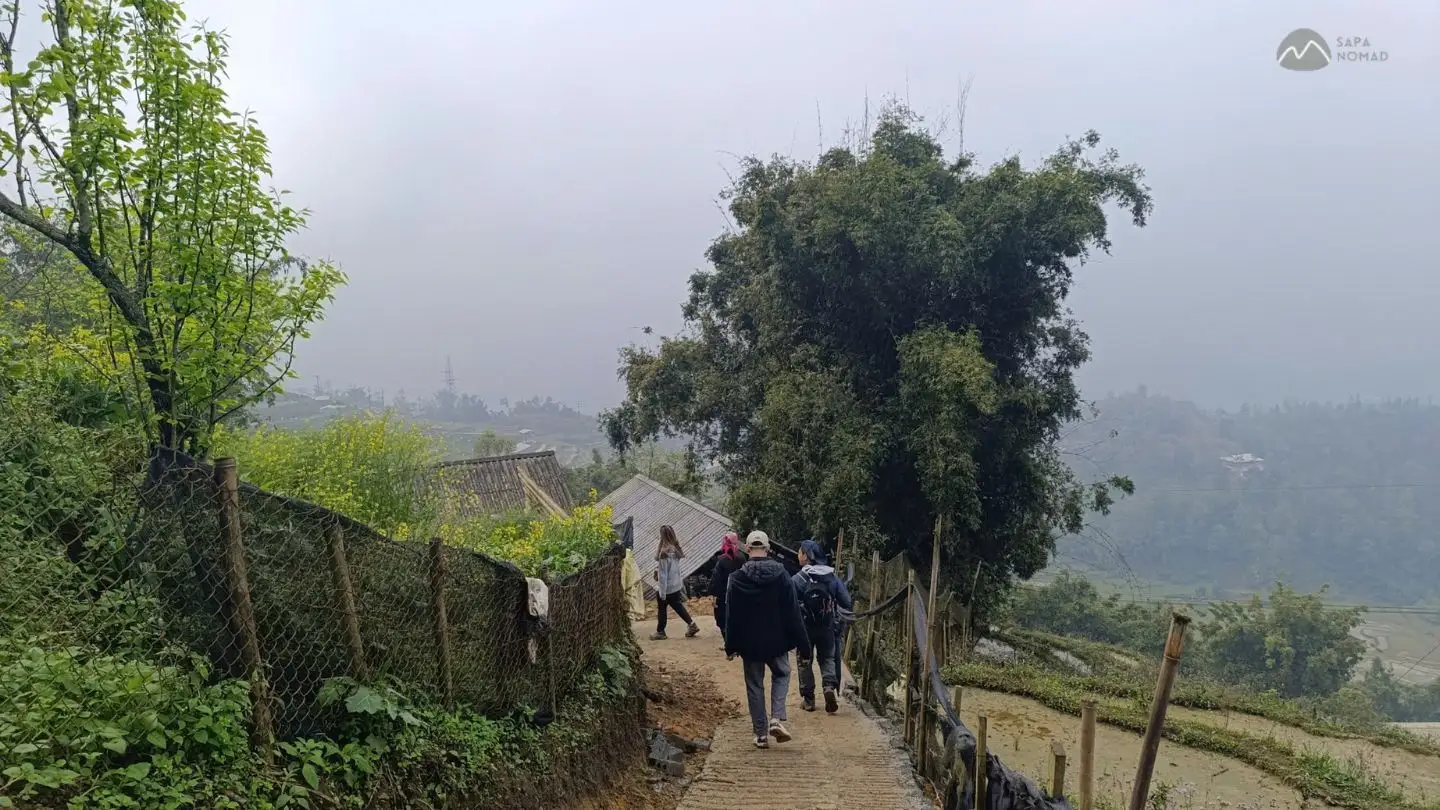
February trekking has trade-offs — real cold, short days, but firm dry trails and blossom-decorated villages. Morning treks (8–11 AM) preferred over early-sunrise treks (cold).
Top villages to trek in February:
- Lao Chai — Black Hmong, panoramic terrace views, cherry blossom orchards nearby
- Ta Van — Giay and Hmong, riverside, homestays with fireplaces
- Ta Phin — Red Dao village, famous for cherry blossoms + herbal baths
- Y Linh Ho — small Hmong, lowest tourist density


February trails stay firm and dry between drizzles — and blossom orchards line several village routes. For distances and difficulty see the Sapa trekking routes guide; for layering against the cold, what to wear trekking in Sapa covers the month honestly.
4. Catch the Cloud Sea at Fansipan Summit

February has Sapa’s third-most-reliable cloud sea — clear cold nights produce inversions 3–4 mornings per week. The Fansipan cable car at first run (7:30 AM) puts you above the clouds in 15 minutes.
→ Book: Fansipan Cable Car Ticket
5. Red Dao Herbal Bath (Essential in Winter)
February cold makes the Red Dao herbal bath in Ta Phin village essential. A wooden barrel of hot water steeped with mountain herbs — after a winter trek, 30 minutes warms you for the evening.
Best places: Ta Phin village homestays ($5–10), Topas Ecolodge spa, Hotel de la Coupole spa.
→ See: Best Spa & Massage in Sapa
6. Try Sapa’s Tết Cuisine

February brings Tết special foods to Sapa markets. What to try:
- Bánh chưng / bánh tét — Tết sticky rice cakes wrapped in banana leaves
- Candied fruits and ginger — traditional Tết treats
- Salmon hot pot (lẩu cá hồi) — Sapa’s signature winter dish
- Smoked buffalo meat — peak winter season, served with mac khen pepper
- Wild bamboo shoot dishes — late winter bamboo shoots
- Sapa Night Market grills — corn, sweet potato, sausage, chicken — comforting in cold
→ More: Sapa Food Guide | Best Restaurants in Sapa
7. Visit Fansipan Mountain (Excellent Winter Visibility)
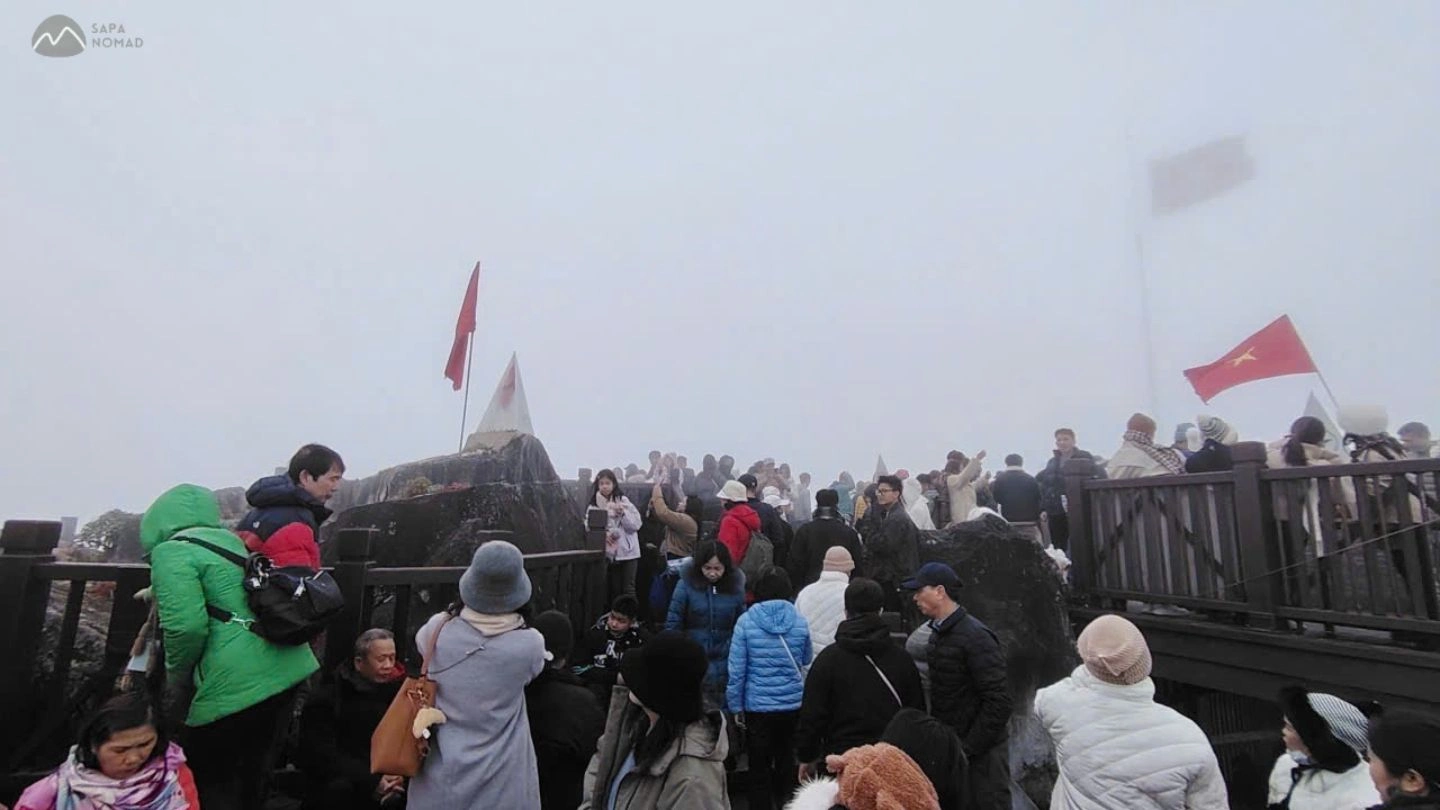
Fansipan’s 3,147m summit in February offers excellent visibility — dry winter air = 70–80% clear mornings. The 15-minute cable car ride is comfortable in February temperatures.
February tip: Always check cable car operation morning of. Wind closures 5–10 days/month possible. Have backup plan (Cat Cat, Ham Rong).
→ See: Fansipan Cable Car Ticket Review | How to Get to Fansipan Summit
Where to Stay in Sapa in February
February has two distinct pricing windows:
- Tết week (varies by year — usually late January through mid-February): rates run 30–50% above non-Tết February. Book 4–6 weeks ahead.
- Non-Tết February: rates run 25–35% below summer peak. Book 1–2 weeks ahead.
Key February factor: heating. Many Sapa hotels rely on electric blankets only. Confirm proper heating before booking, especially early February.
By traveler type
- Budget travelers: Best Hostels in Sapa — $6–18/night (Tết week premium)
- Mid-range: Best 3-Star Hotels — $25–55/night
- Comfort seekers: 4-Star Hotels in Sapa — $55–110/night
- Luxury: Best 5-Star Resorts — $120+/night (Hotel de la Coupole, Topas Ecolodge — proper heating + fireplaces)
- Cultural experience: Best Homestays in Sapa — $15–45/night (request rooms with proper heating)
Insider booking tip: The two weeks after Tết (lunar Day 7+ onwards) are one of the year’s cheapest windows — Tết travelers gone home, pre-spring quiet. Often 30–40% below pre-Tết rates.
→ Full overview: Where to Stay in Sapa
Practical Tips for February Travel

February in Sapa is a month where small changes in weather can completely shift how your trip turns out. After many winters here, we’ve learned exactly what most travelers tend to miss.
- Check Tết dates before booking — the lunar calendar shifts yearly; expect a few family-run shops to rest for Tết while tour operators keep running.
- Pack thermal layers — Early February still genuinely cold. Don’t underdress.
- Plan around 6 PM sunset — Slightly longer days than January, but still short.
- Always check Fansipan cable car morning of — Wind closures 5–10 days/month.
- Sunrise = cloud sea opportunity — Be at Ham Rong or Fansipan by 6:45 AM.
- Cherry blossom peak is first 3 weeks — Plan blossom-focused trip for Feb 1–20.
The Honest Verdict
February is Sapa’s most overlooked winter month. December gets the Christmas attention; January gets the “deepest winter” curiosity; October dominates the “best month” lists. February sits in between — but offers something unique: cherry blossoms in a still-cold mountain landscape, Tết cultural energy, and the year’s third-most-reliable cloud sea.
If you specifically want blossoms + winter beauty + cultural depth, February rewards you. If you specifically want snow odds, January is slightly better. If you want warm weather, wait for May–June. If this is your first visit and you want the safest pick, October remains my recommendation.
But for repeat visitors looking for something different — and travelers who plan well around Tết dates — Sapa in February delivers a side of Sapa most tourists never see.
Pack warm, time your trip around blossoms or Tết, and February will give you a quieter, more colorful version of Sapa winter.
Frequently Asked Questions
Is February a good time to visit Sapa?
Yes, especially for travelers who want cherry blossoms, winter beauty, and Tết cultural experience. February is one of Sapa’s most photogenic winter months. Not ideal for heat-sensitive travelers or those wanting green/gold rice terraces.
What is the weather in Sapa in February?
Average daytime 14–16°C, nights drop to 9–10°C. Humidity 70–80%. About 4–6 rainy days (drizzle or brief showers). Cold snaps to 5°C possible early month. Late February starts feeling spring — warmer days, fewer cold snaps.
Is Sapa cold in February?
Yes — real winter, especially the first two weeks. The cold here is damp rather than icy, so windproof layers matter more than sheer thickness. By late February, afternoons start hinting at spring.
Does it snow in Sapa in February?
Rarely. February snow happens 1–2 days per year on average, mostly on Fansipan summit (3,147m) and occasionally in Sapa town during cold snaps. Frost on rooftops more common (5–10 mornings/month).
What should I wear in Sapa in February?
Thermal base layer (top + bottom), fleece or down jacket, wind/water-resistant shell, warm hat, gloves, scarf, waterproof shoes. Late February can drop one layer — daytime hits 17°C some days. Bring hand warmers for sunrise photography.
When do cherry blossoms (đào) bloom in Sapa?
February through early March. Peak: Feb 1–20. Best locations: O Quy Ho Pass road, Ta Phin valley, road to Bac Ha. Plum blossoms (mận, white) bloom slightly earlier (late January through mid-February). Late-January and February visitors catch the best of both.
Can you trek in Sapa during Tết week?
Yes, tour services typically continue running during Tết. Some local family homestays may close 3–5 days for Tết core (lunar Day 1–3). Book through reputable operators who confirm Tết operations.
Is February cheaper than peak season?
Outside Tết week, yes — 25–35% below July–August summer peak. Tết week itself runs 30–50% above non-Tết February rates. The two weeks after Tết are one of the year’s cheapest windows.
Are there festivals in Sapa in February?
Tết Nguyên Đán (Lunar New Year) is the biggest. Date varies by year — usually late January or early-mid February. Sapa town decorates streets, Hmong and Vietnamese families wear traditional dress, local markets fill with Tết treats. Some ethnic minority villages have post-Tết traditional ceremonies (Lễ hội xuống đồng / Spring Field Festival, late February).
→ Plan around the calendar: Best Time to Visit Sapa → | Sapa in January | Sapa in March
Related Tours & Transport
