


 Sapa Tours & Activities
Best Time to Visit Fansipan: Months, Time of Day & Weather
The summit of Fansipan stands more than 1,500 m above Sapa town, and it has its own weather. The best time to visit Fansipan is the dry season — September to November and March to May — when the summit clears most often, and the trails stay firm.
Here is how the seasons change what you get up there, and why the hour you ride up matters almost as much as the month.
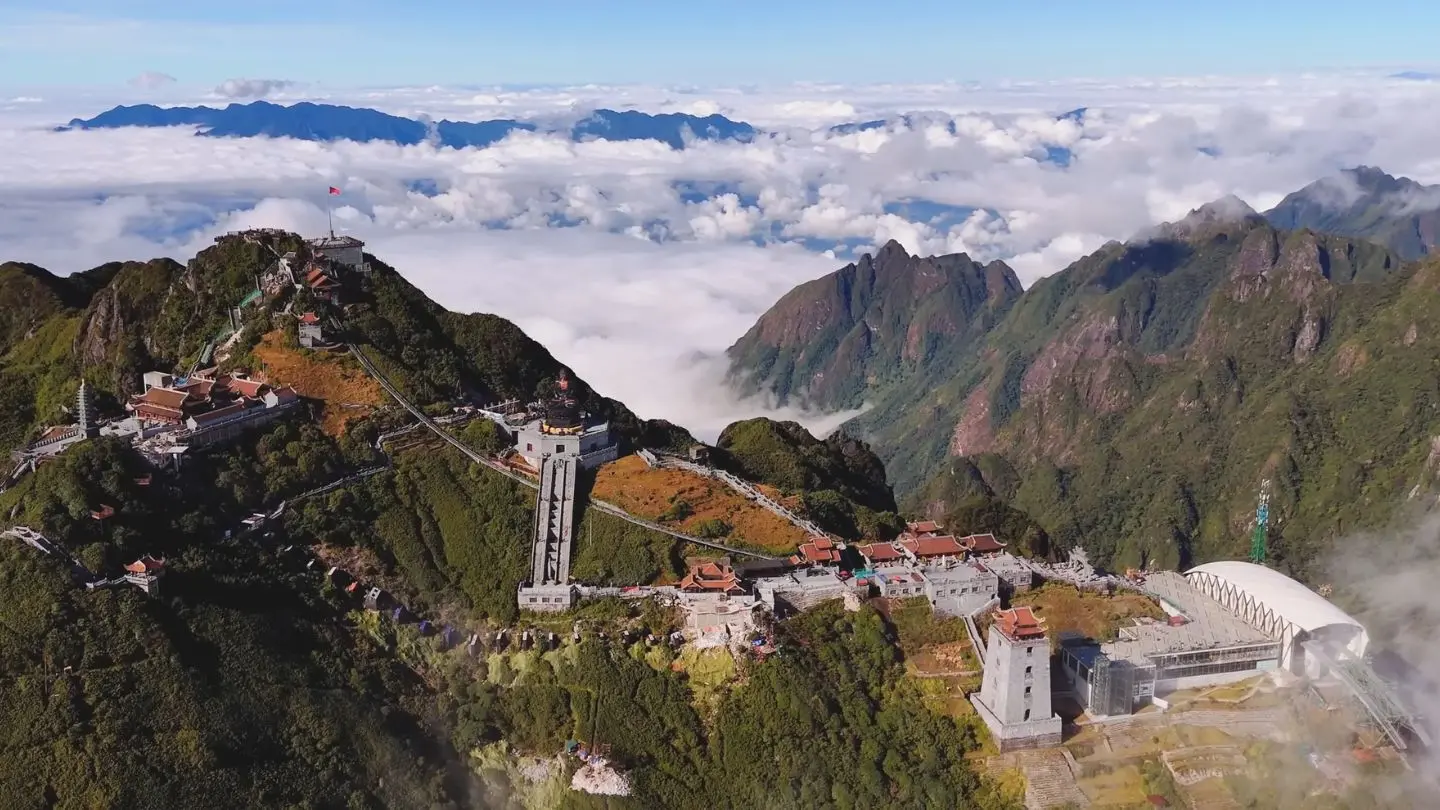
Overview of Fansipan Mountain
Fansipan is Vietnam’s highest mountain at 3,147.3 m — the roof of Indochina. The area’s humid subtropical climate averages around 20°C and spans roughly 10–30°C across the altitudes. It catches about 1,576 mm of rain a year, much of it in afternoon showers.
The number that matters most is altitude. Whatever Sapa town is doing, the summit is colder, windier and cloudier — plan for conditions at 3,000 m, not the forecast outside your hotel window.
When Is The Best Time To Visit Fansipan?
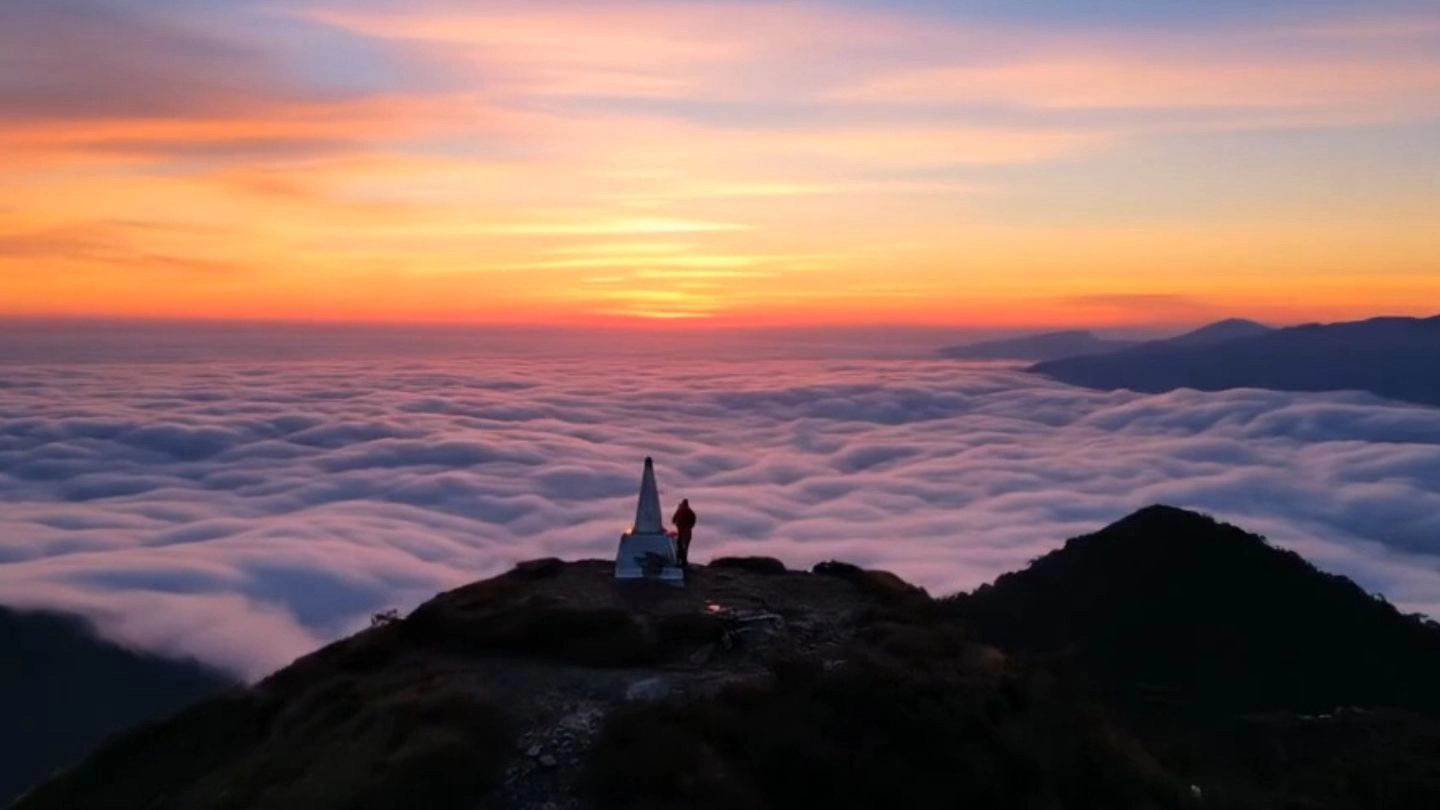
March to May and September to November are the sweet spots: mild air of roughly 10–25°C, dry trails, and the year’s best odds of an open view. Spring adds wild rhododendrons blooming through the Hoang Lien forests; autumn adds golden terraces in the valleys below.
December to February is the gamble: crystal mornings after cold fronts, frost on the ridges, even the occasional snow day on the summit. The price is real cold and more wind closures. June to August carries the most cloud and rain; it still works as an escape from lowland heat if you go early and keep plans flexible.
Best Time of The Day to Visit Fansipan Mountain
Morning wins. The cloud sea forms overnight and holds best before mid-morning; the wind is usually calmest, and the queues are shortest. If a photo above the clouds is the point of your trip, be on the first cars up.
Early afternoon is the comfortable second choice — warmer on the skin, with enough time to walk the whole summit complex before heading down.
Sunrise, sunset, and the cable car clock
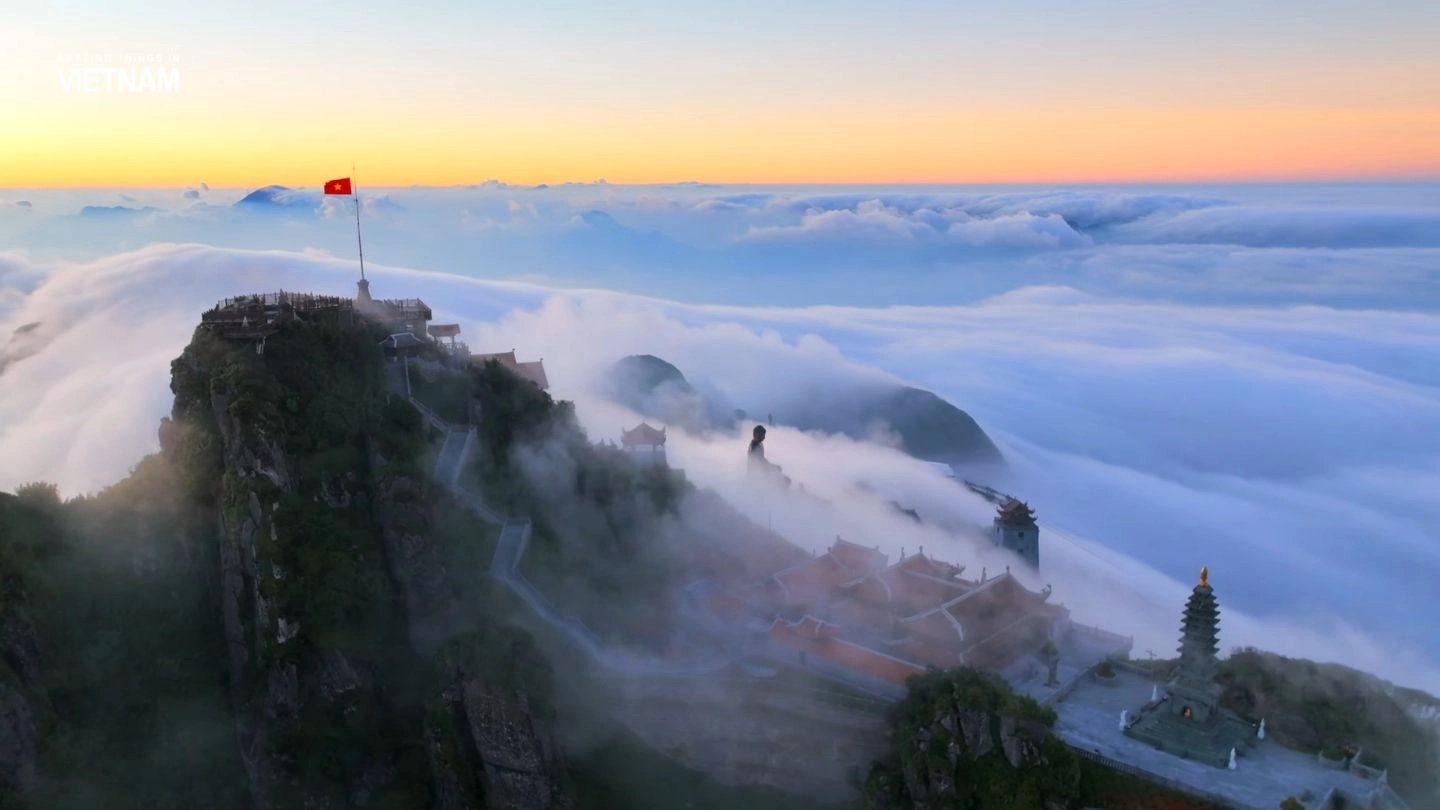
One honest scheduling note. The cable car runs 7:30 AM–5:30 PM, so a true summit sunrise belongs to overnight trekkers. The first runs still arrive while the morning light and cloud sea are at their best — and before the crowds build.
Sunset is the opposite: the last cars head down before the sun does, so don’t plan a summit sunset. Watch it from O Quy Ho Pass instead — the region’s classic sunset spot — and give Fansipan your morning.
What To Do At the Top of Fansipan?
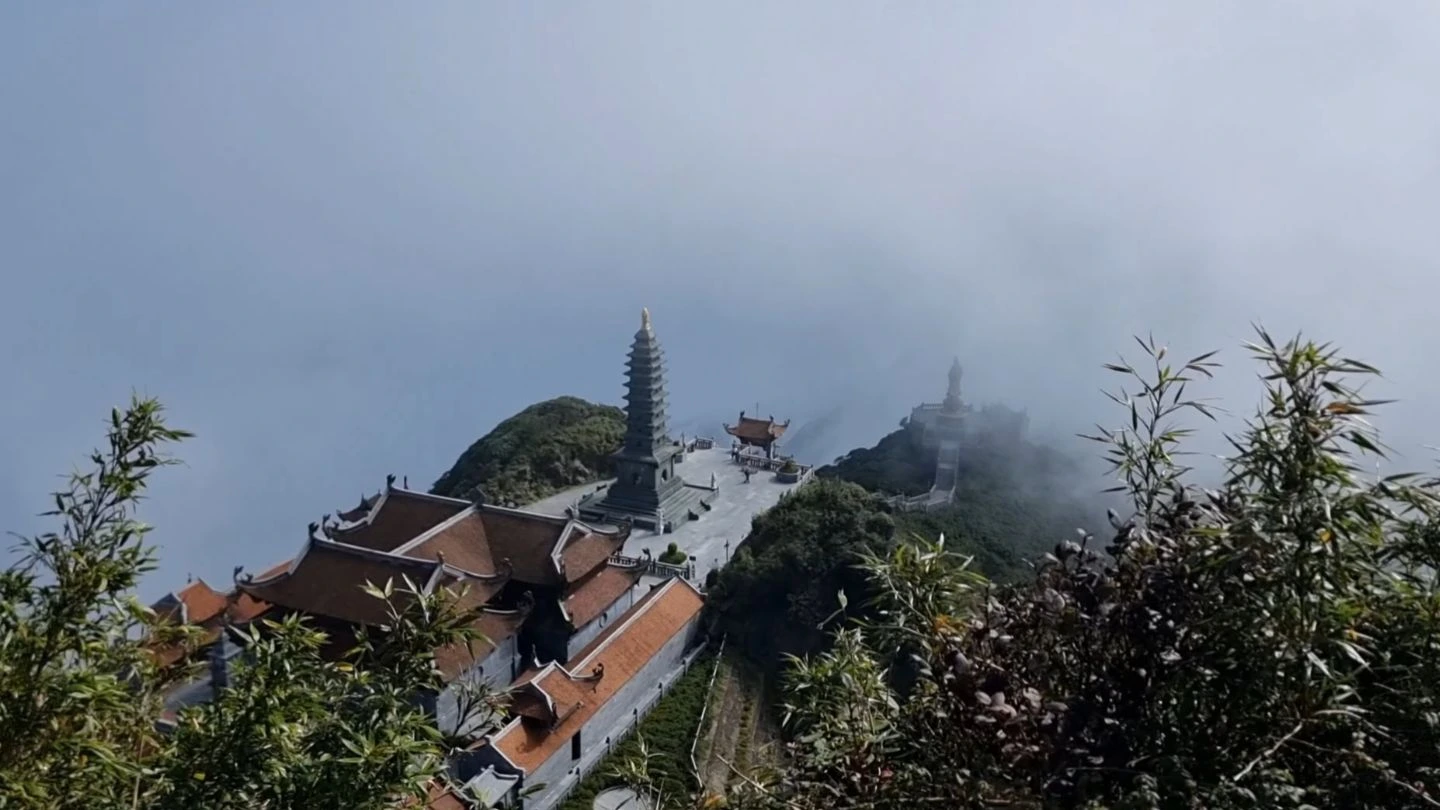
The summit complex in one frame — flag tower above the cloud sea, temple roofs, the copper Buddha, and the village below. Now, let’s take a closer look at each one.
National Flagpole
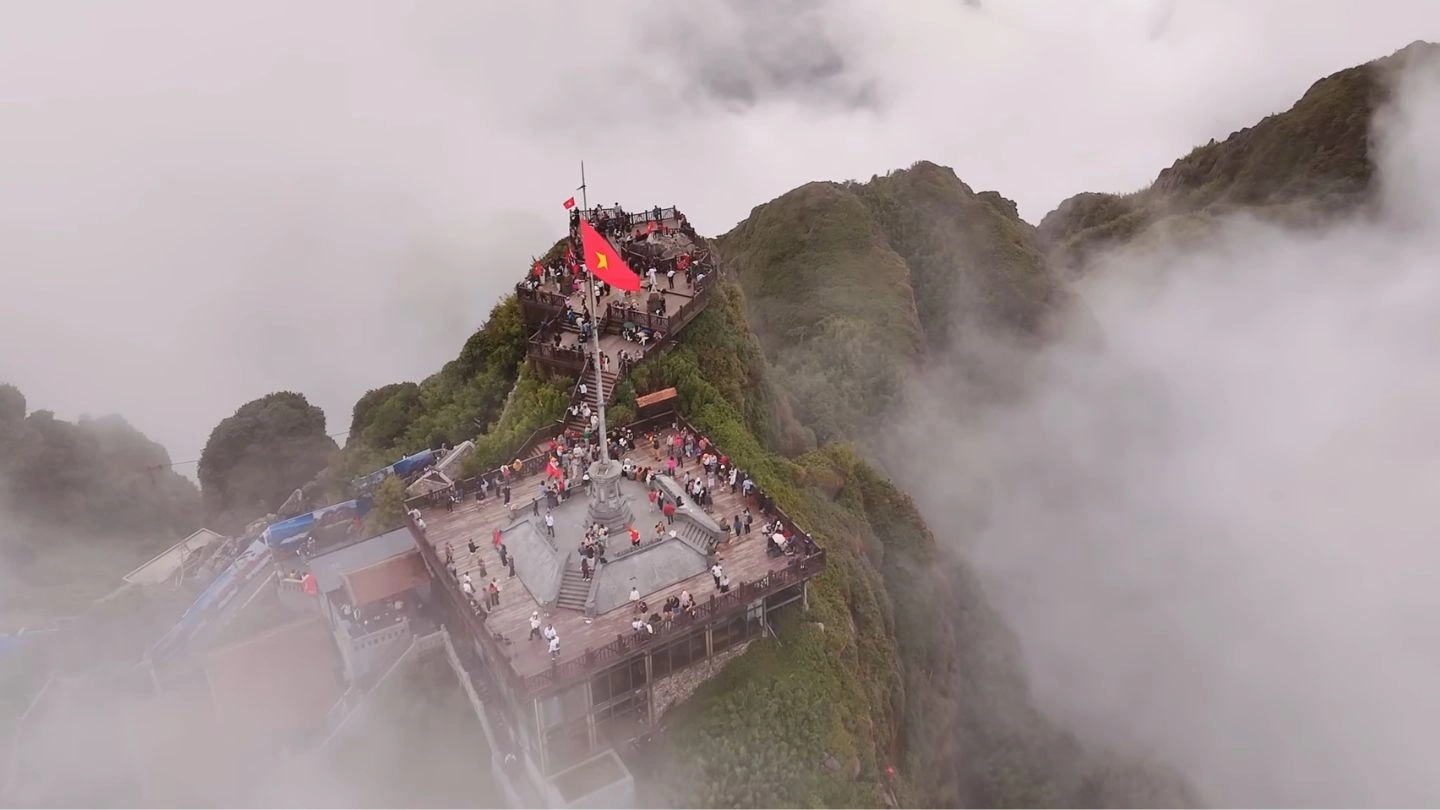
The flag tower crowns the stone terraces just below the steel pyramid marking “FANSIPAN 3,143M” — the photo everyone queues for, so go early for a clean shot. On weekends and special occasions, you can catch a flag-raising ceremony.
Kim Son Bao Thang Temple
At 3,091 m, Kim Son Bao Thang is the largest structure in the complex, built in the traditional ‘Noi Cong Ngoai Quoc’ style. On half-cloudy days its tiled roofs drift in and out of the mist — often better photos than full sunshine.
Great Statue of Amitabha Buddha
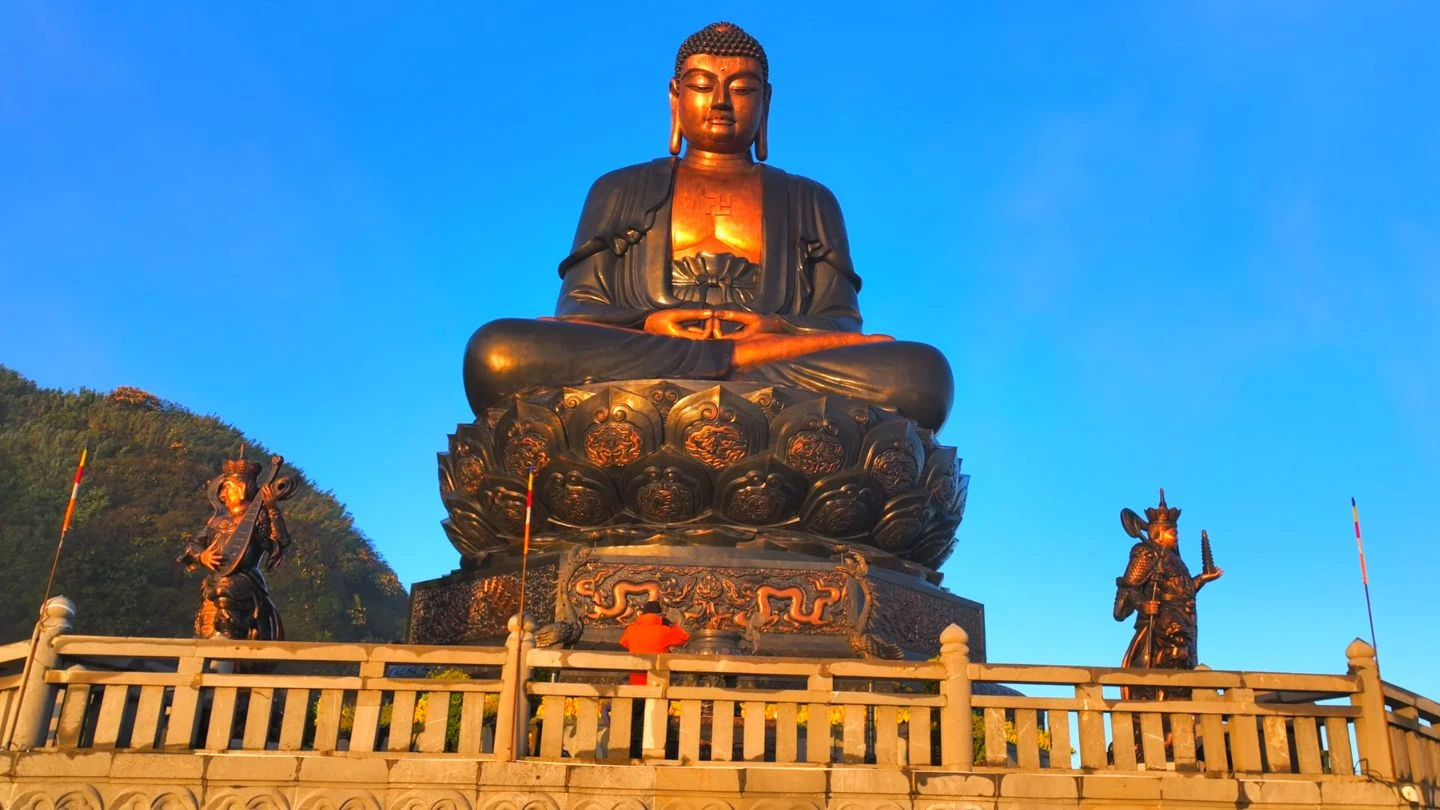
The seated Amitabha Buddha rises 21.5 m and weighs some 62 tonnes, assembled from hundreds of thousands of thin copper plates — the tallest copper Amitabha in Asia. Inside, a seven-story crystal stupa holds Buddha relics.
What To Do at the Foot of Fansipan?
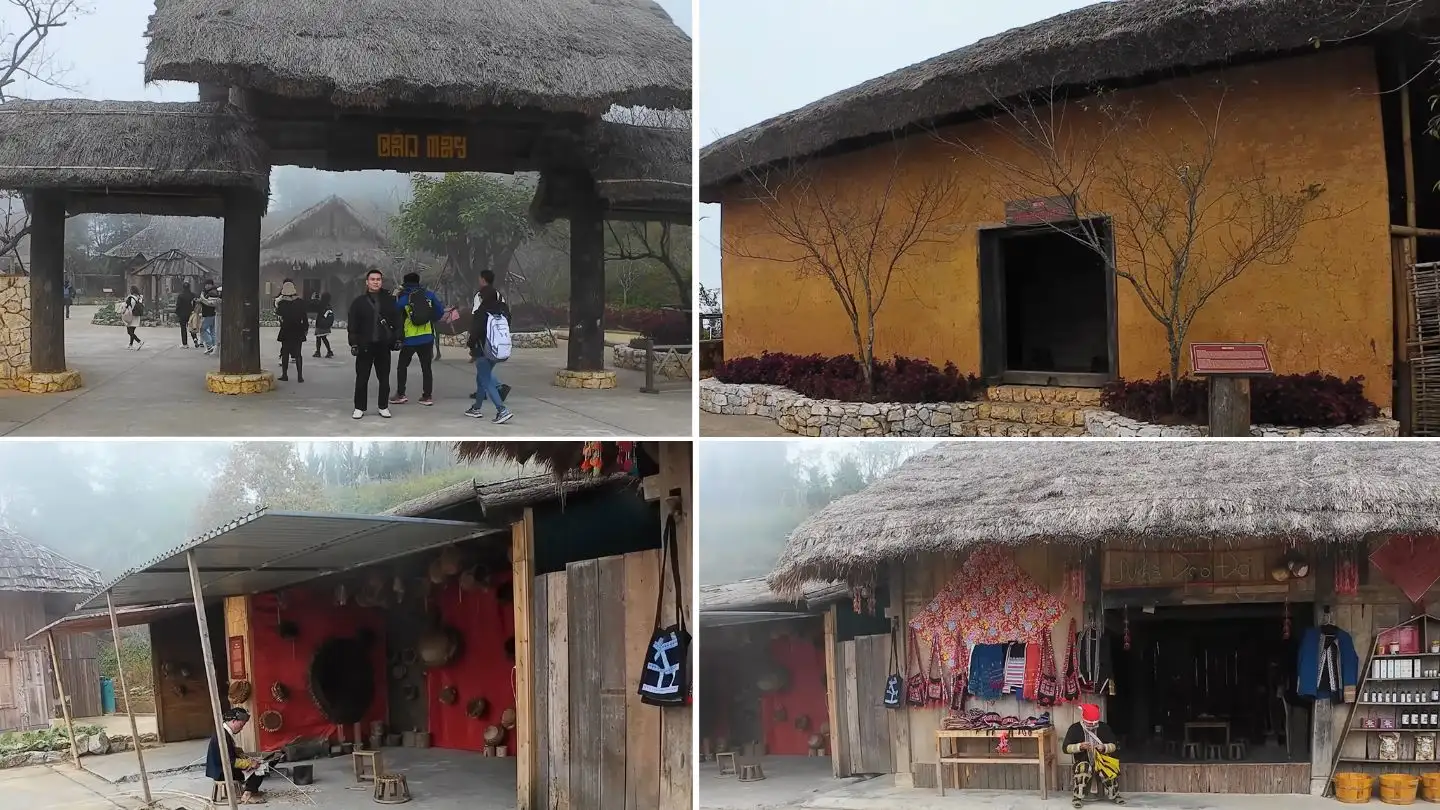
May Village sits by the cable-car station — a recreated community where several ethnic groups show their crafts, beliefs and food. Cultural performances run daily from 9:30–11:30 AM and 1:50–4:00 PM, with weekend re-enactments like a Red Dao wedding.
2 Best Ways to Conquer Fansipan Mountain
1. Hiking
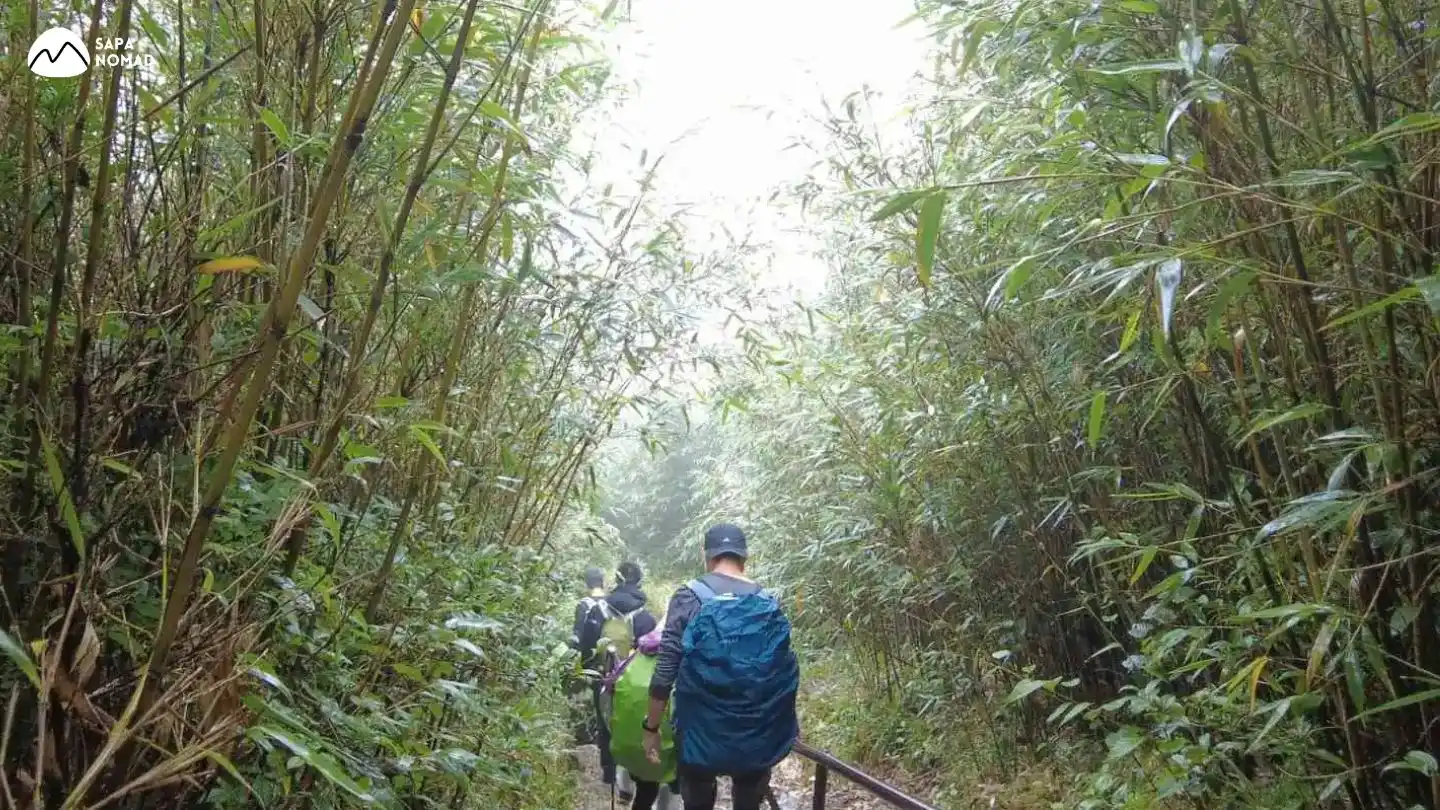
The classic trek takes two days through the Hoang Lien forests — mossy trunks, bamboo belts, and a summit you earn on foot. It is the version of Fansipan the cable car can’t show you.
Pack sturdy boots, thick socks, a trekking pole, grip gloves, warm layers and basic medicines. Permits for Hoang Lien National Park are required — a local guide arranges them, reads the mountain weather, and sets a pace that gets you up safely.


2. Fansipan Cable Car
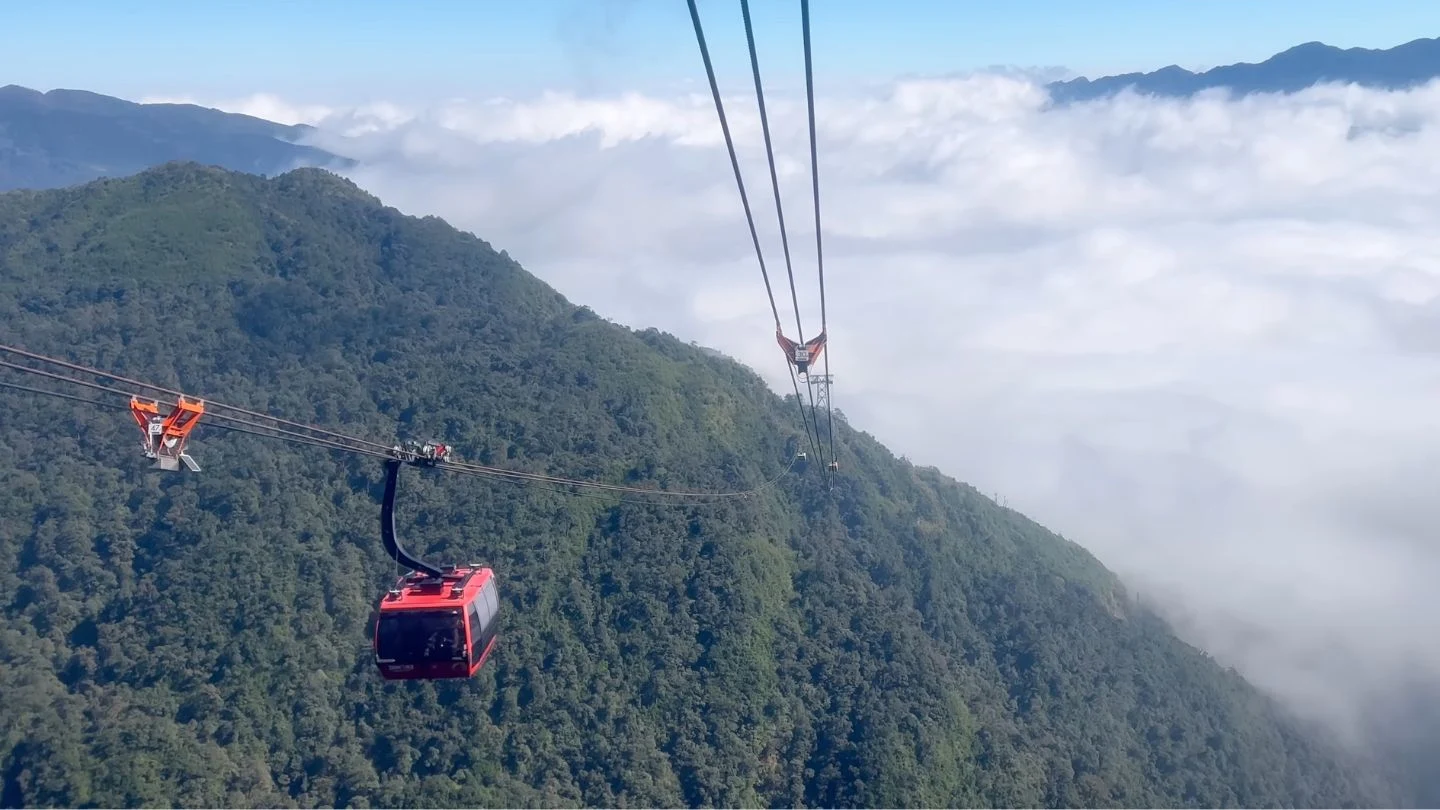
The cable car does the same climb in minutes, running 7:30 AM–5:30 PM from the valley station, with a funicular linking Sapa town to the terminal. It is the right call for families, tight schedules, and anyone saving their knees.
Two practical notes: high wind can pause the line, so check operation the morning you plan to ride — and don’t park Fansipan on your final day. Still torn between the two? Our hiking vs cable car guide compares both routes — views, effort and cost.
The honest verdict
→ Plan the rest of the trip with the best time to visit Sapa guide.
FAQs
What time does Fansipan open?
The Sun World Fansipan Legend cable car runs from 7:30 AM to 5:30 PM, and the funicular from town wraps up around 5:00 PM. Either clock doesn’t bind hikers on the trekking route.
Is it worth visiting Fansipan?
Yes. On a clear day, absolutely — the highest summit in Indochina, a 360° view over the Hoang Lien range, and a ridge-top temple complex you won’t find elsewhere. The honest caveat: in thick cloud you see very little, which is why timing is the whole game.
Does Fansipan experience any extreme weather patterns?
Winter occasionally brings hail, frost, and rare snow to the summit, and strong wind can pause the cable car in any season. These events rarely ruin trips — snow days actually draw crowds — but leave yourself a backup morning.
Is winter a good time for Fansipan?
Yes, with a note: winter mornings offer superb visibility and a chance of frost or rare snow at the summit, but wind closures rise and the cold is real. Check cable car operation the morning you go.
Is it cold at the top of Fansipan?
Always colder than town — at 3,147.3 m, the summit runs its own climate. Winter can sit near freezing, and even summer mornings ask for a light jacket.
In the end, what is the best time to visit Fansipan? Whatever month you pick, the mountain keeps one rule: mornings are kinder than afternoons. Book the first ride up, and keep a second morning in reserve if you can.
Related Tours & Transport
