


 Sapa Tours & Activities
Fansipan Snow: When It Falls & What the Odds Really Are
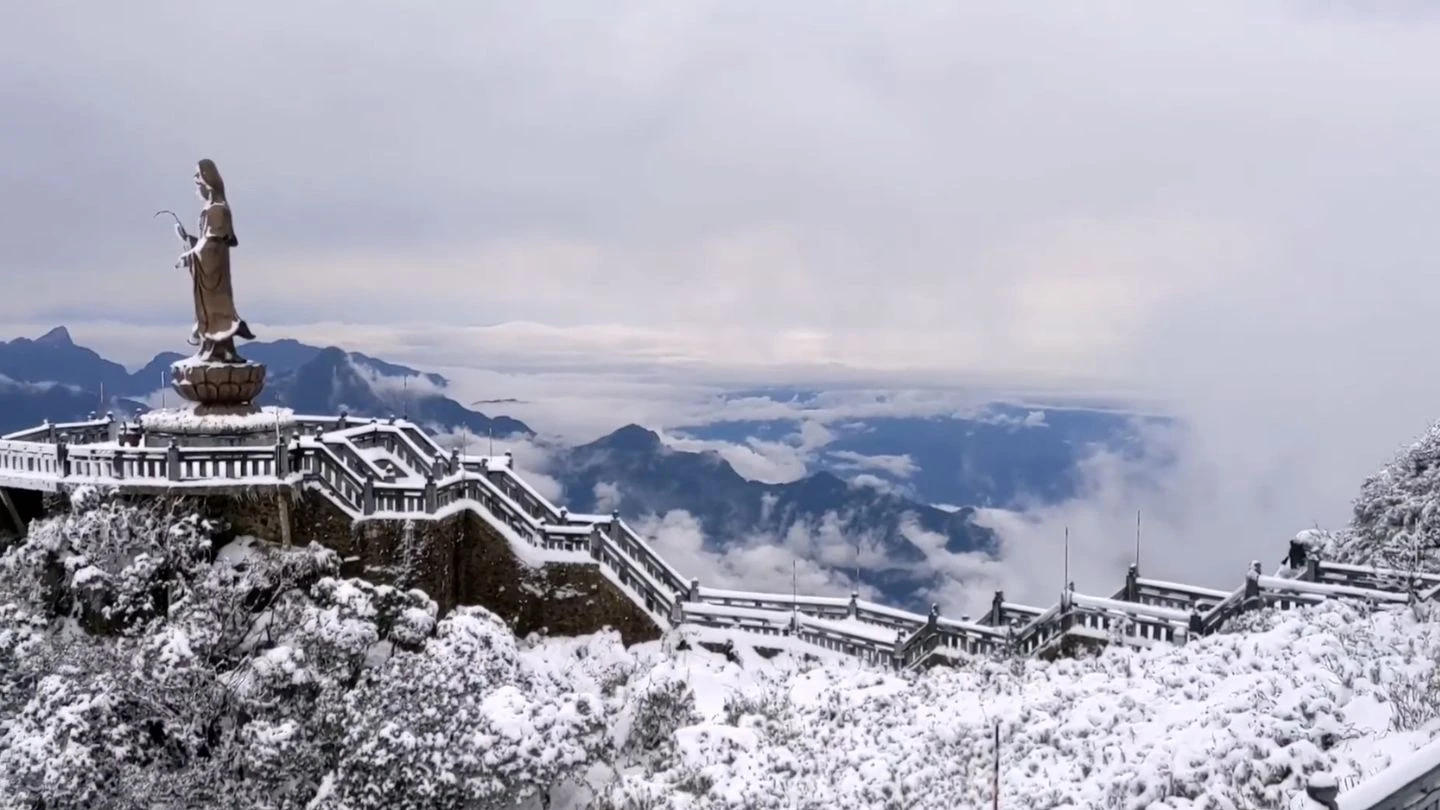
Some winters, for a day or three, the roof of Indochina turns white. Snow on Fansipan is rare, brief and never promised — which is exactly why the photos travel so far.
Here is when it happens, what the odds really are, and how to be there if it does.
When Does It Snow in Sapa Vietnam?
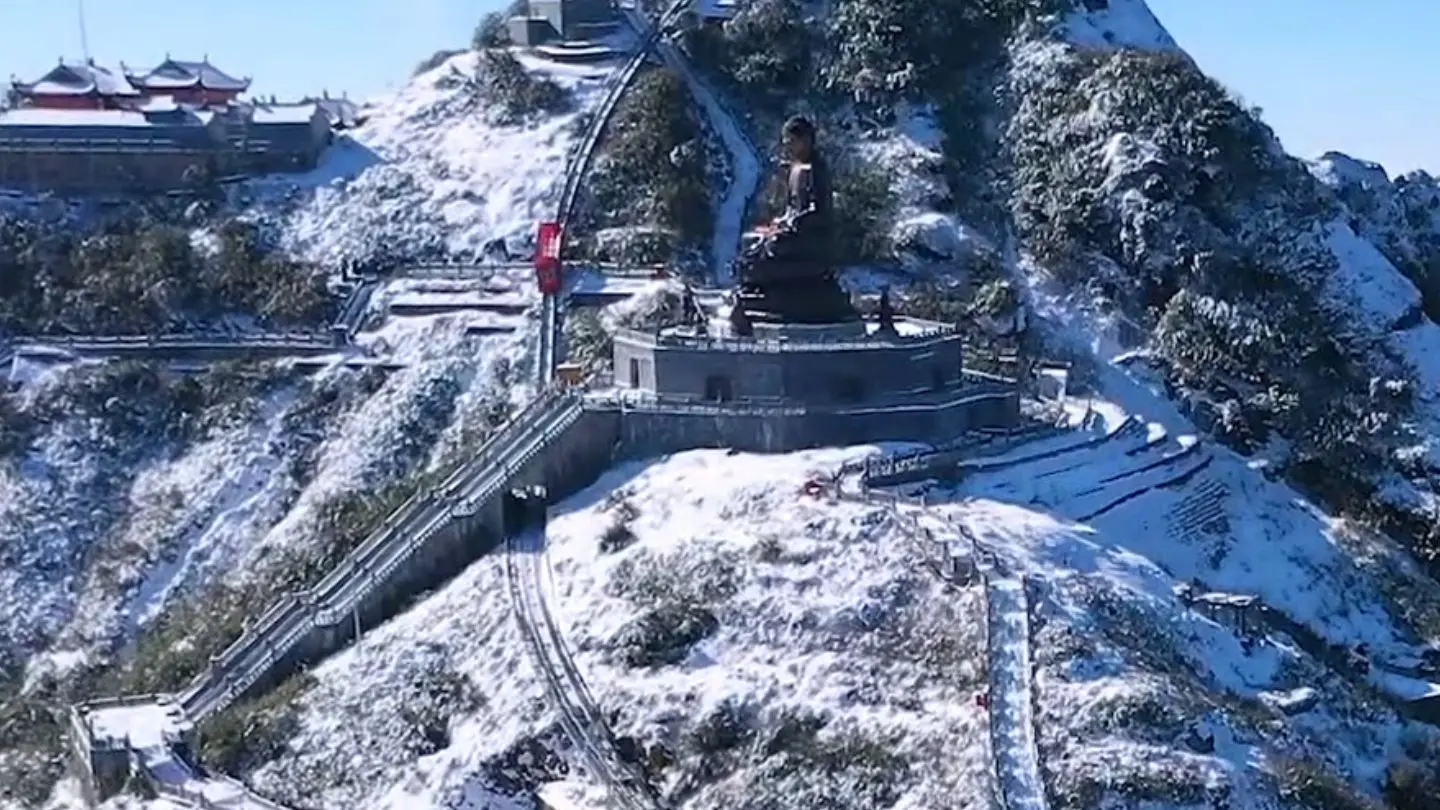
December and January, during cold snaps that push down from China — and only sometimes. In a typical year the summit sees one to three snow days; some winters bring none at all. Town-level snow is rarer still, a light dusting once every few years.
Winter temperatures at the summit swing between about −4°C and 4°C, so the ingredients are often close; what is missing most days is the moisture to match. When a wet cold snap lines up, the news moves fast — Vietnamese media report it within hours, and half of Lao Cai heads for the cable car.
That is your playbook too: watch the forecast for a strong cold snap in late December or January, and be ready to move the same morning. Chasing Fansipan snow on a fixed itinerary rarely works; catching it opportunistically often does.
What a snow day on Fansipan is actually like
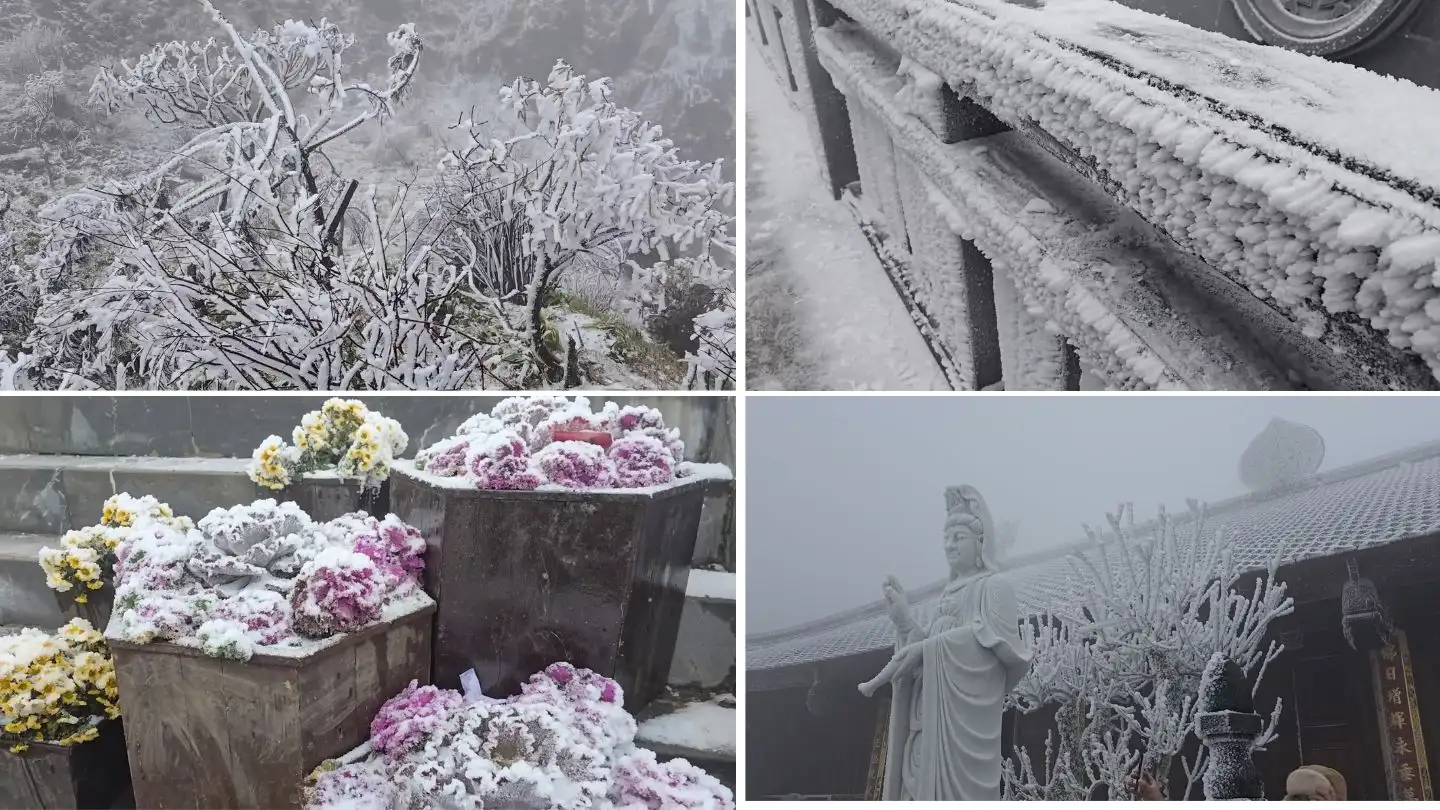
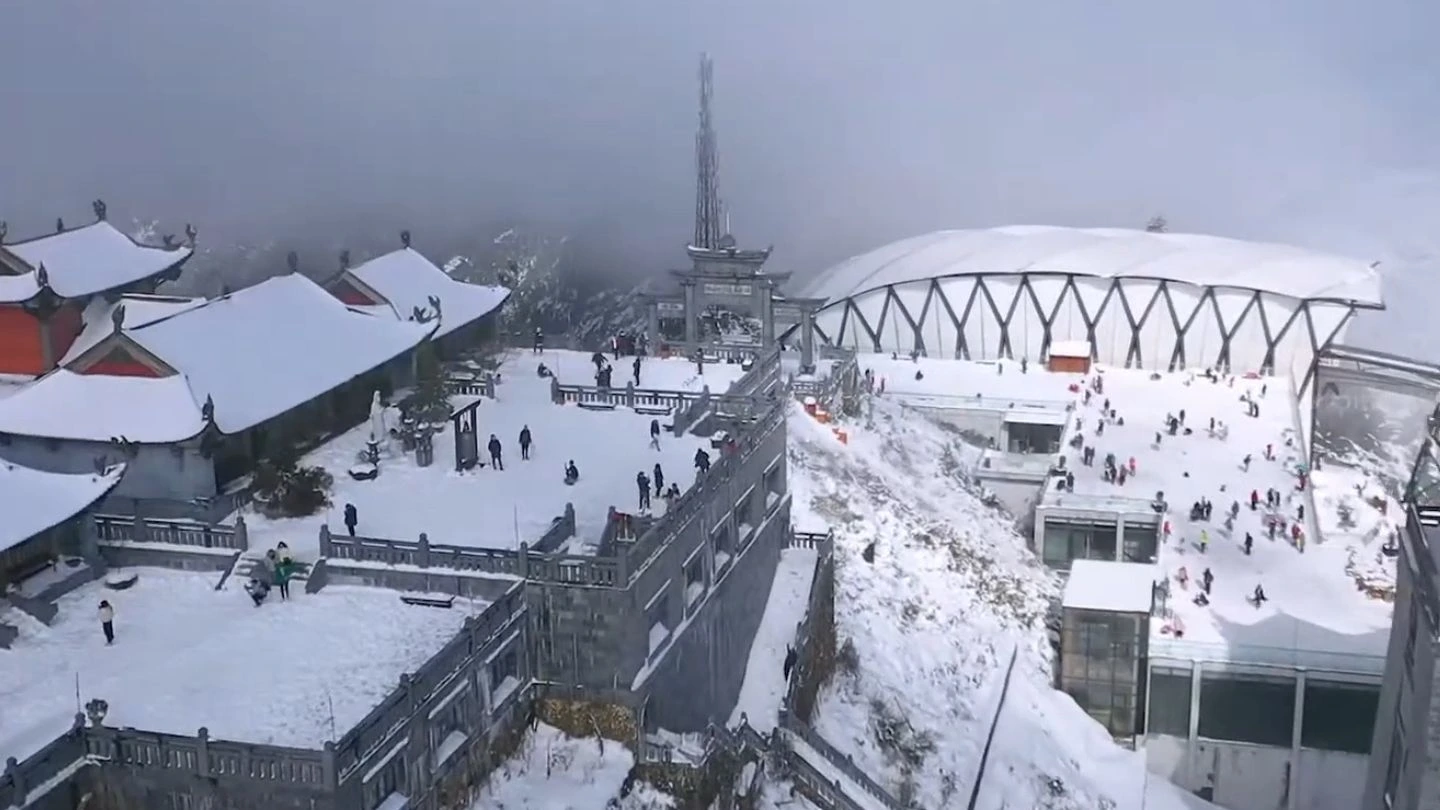
The cable car climbs through the cloud layers and delivers you into a different climate. Rime ice on the railings, the temple complex under white, and a crowd in rented parkas taking photos of their lives.
Be honest about what is up there: snow play, snowmen, and photographs. There is no skiing, sledding or snow-sports infrastructure on Fansipan — anyone promising slopes is describing a different mountain. The magic is simpler than that: standing on tropical Vietnam’s highest point while it snows.
Expect company. Snow days draw the biggest crowds of winter, queues at the cable car included — go on the first runs of the morning, and dress for genuine cold.
Getting up the mountain on a snow day
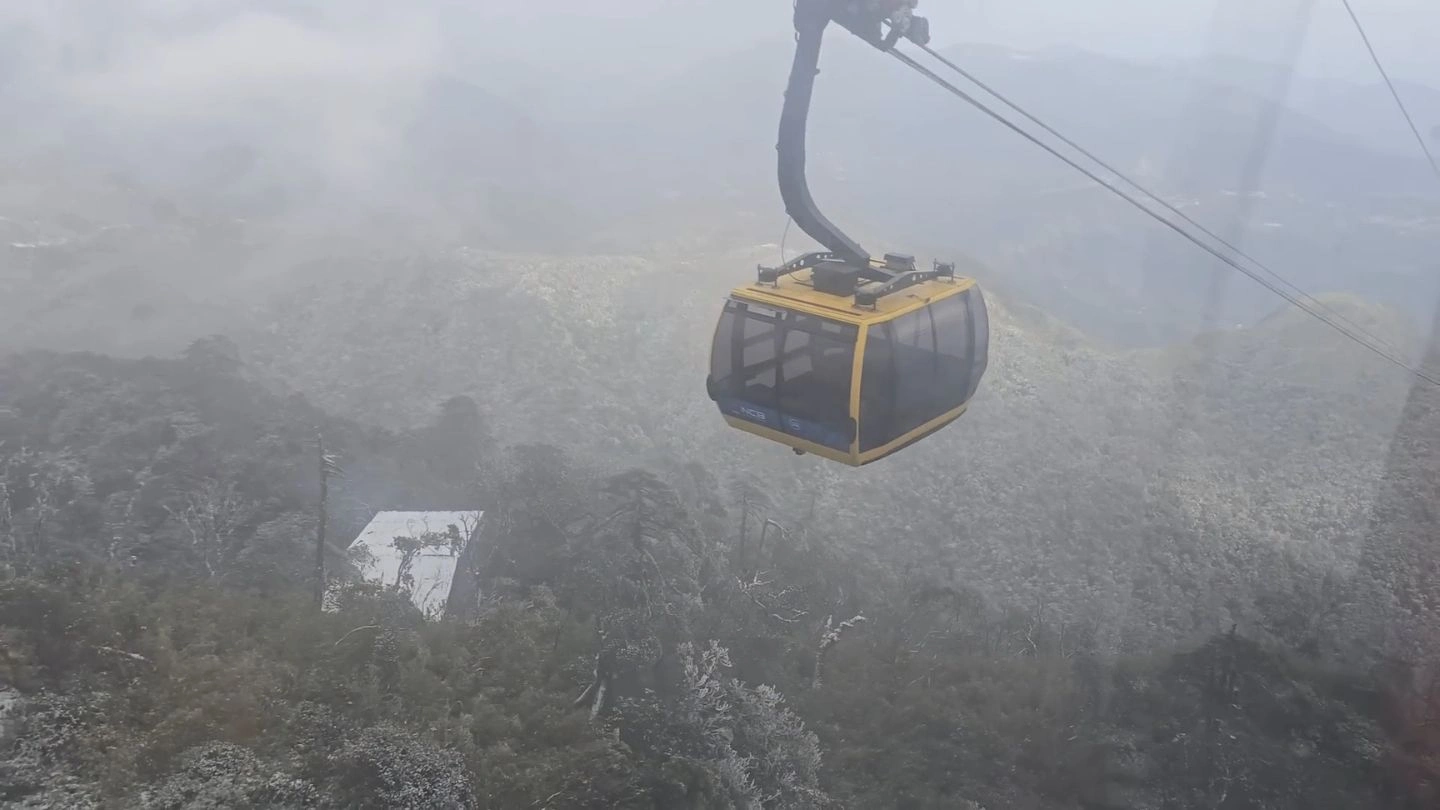
From Sapa town, the Muong Hoa funicular connects to the cable-car station, and the cable car covers the climb to the summit area in about 15 minutes. On snap days, check operation first thing — the same wind that brings the cold can pause the line, and conditions change by the hour.
From Hanoi to Sapa, it is the standard overnight hop — bus or train, arriving at dawn, which on a lucky morning is exactly when you want to be heading up.
If the snow doesn’t come
Most winter visitors never see snow — and most leave delighted anyway. Clear cold mornings deliver the reliable spectacle instead: the cloud sea below the summit, frost on the high ridges, and the year’s sharpest visibility across the Hoang Lien range.
Winter trekking under the mountain is superb in its own right — dry trails, empty paths, crystalline views.


Tips for a winter Fansipan trip
Dress in real layers — the summit runs 5–8°C colder than town, and wind cuts through casual jackets. Waterproof shoes with grip matter on iced walkways. Check the cable car every morning from your window, start early, and keep one spare day in the plan: the mountain decides the schedule in winter, not you.
→ Full guide: Best Time to Visit Sapa: An Honest Month-by-Month Answer (2026) →
FAQs
Does it snow on Fansipan?
Yes, on the 3,143 m summit, usually between late December and January, one to three days in a typical year. Some winters see none. Frost is far more frequent than snow.
Can you ski or sled on Fansipan?
No. There is no ski, snowboard, or sledding infrastructure on Fansipan — snow days are for snow play and photography. Anything promising slopes in Sapa is inaccurate.
Is it safe to visit Fansipan in winter?
Yes, with normal cold-weather care: iced walkways are slippery, the wind is strong, and the cable car pauses on high-wind days. Dress warm, wear grippy shoes, and follow staff guidance at the summit.
Is it worth going up if there’s no snow?
Winter is still Fansipan’s clearest season — cloud sea below, frost on the ridges, and visibility summer never offers. Snow is the bonus, not the reason.
The honest verdict
→ The full season picture is in the winter in Sapa guide.
The Fansipan snow never stays long — a day, maybe three, then the summit gives it back to the wind. Which is the whole point: if you are on the mountain when it comes, you’ve got something Vietnam almost never gives.
Related Tours & Transport
