


 Sapa Tours & Activities
Black Hmong Textiles in Sapa: A True Cultural Treasure
Not everyone who comes to Sapa realizes this: the most precious things here are not found on the peak of Fansipan. They live on quietly in the deep indigo cloth of the Black Hmong.
These Black Hmong textiles carry kitchen smoke, beeswax, and months of unseen handwork by local women. Here is how they are made — step by step, plant to garment.
Black Hmong Textiles: A Living Heritage, Step by Step
Sapa textiles are far more than pieces of fabric. For the Hmong people, textile making is a slow, intentional process that reflects their relationship with nature, time, and cultural memory.
When visiting Hmong homes in Sapa, it is common to see lengths of fabric hanging in the sun and rows of plants growing nearby.
1. From Plant to Fibre

The story begins behind a Black Hmong home, where rows of hemp grow beside vegetables and herbs. When the stalks mature, they’re harvested and left beneath the mountain sun until completely dry.
The dried stalks are then split open by hand to reveal the long fibres hidden inside. At first, they’re stiff and rough. Patient hands soften them little by little, separating each strand until only the fine fibres remain.
2. Spinning the Hemp Yarn
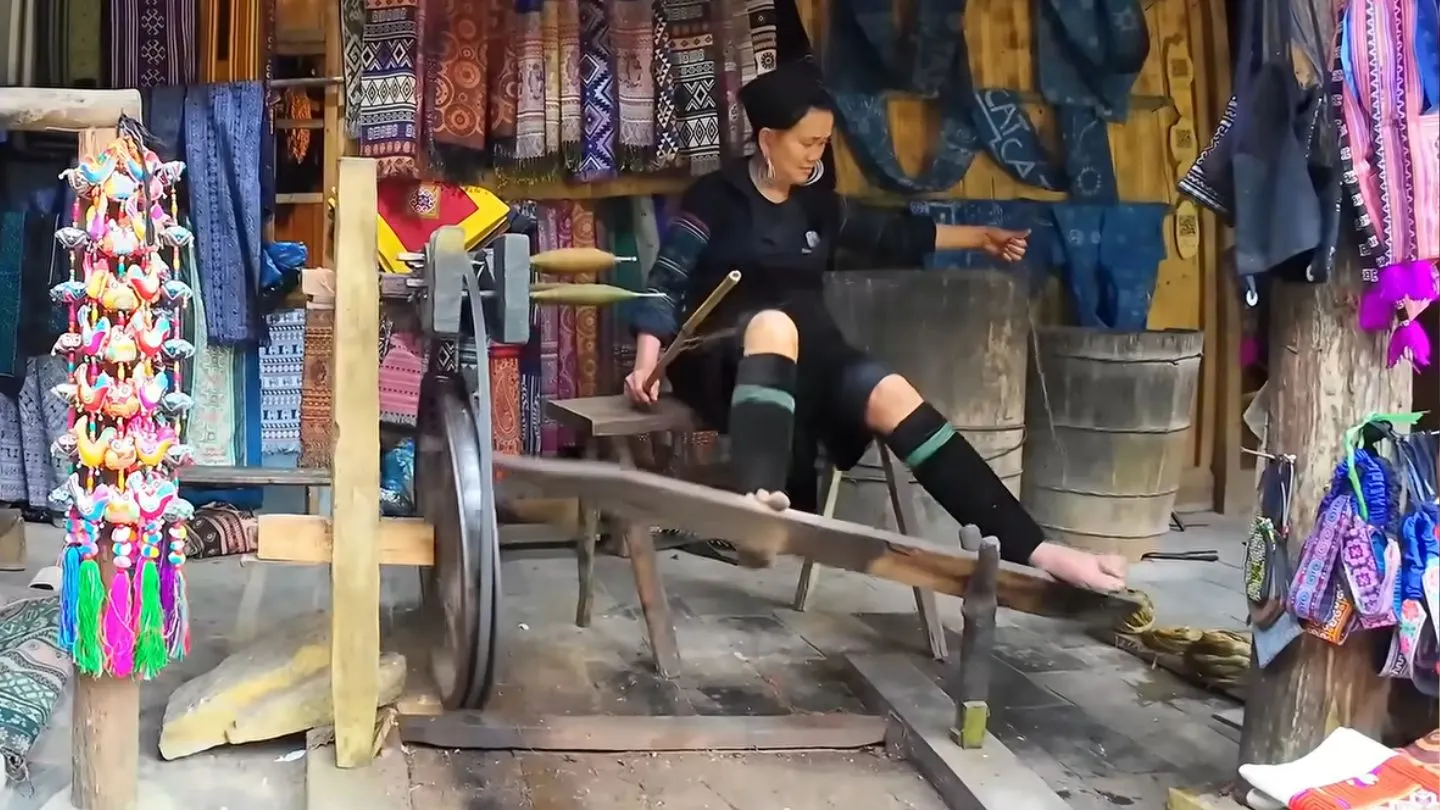
Once the fibres are cleaned and softened, they’re joined together and spun into yarn using a traditional spinning wheel. One foot keeps the large wooden wheel turning while both hands gently pull and twist the fibres into a long, continuous thread.
It looks simple when you watch an experienced artisan. In reality, keeping the yarn even takes years of practice.
3. Boiling and Whitening the Yarn
Freshly spun hemp still feels coarse.
To soften it, the yarn is boiled in water mixed with natural wood ash. This traditional step cleans the fibres, lightens their colour, and makes them much easier to weave. Afterwards, the yarn is rinsed and hung outside once again, drying slowly beneath the mountain sun. Only then is it ready for the loom.
4. Weaving the Cloth

The yarn is stretched across a traditional wooden loom inside the family’s home. Feet work beneath the frame while hands guide each thread into place. The rhythm hardly changes. One row follows another, until the plain hemp fabric slowly appears.
When the weaving is finished, the cloth is carefully lifted from the loom for the first time. It has taken weeks to reach this point, yet the decoration hasn’t even begun.
5. Batik: Drawing Stories with Beeswax

Freshly woven fabric retains its natural hemp colour. Decoration and dyeing come next, beginning with batik, a resist-dye technique using beeswax.
Beeswax is melted in a small bowl over hot coals. The women apply the wax using a unique tool, similar to a tjanting but fitted with a blade-like tip. With steady hands, they draw intricate patterns directly onto the fabric.
Beeswax acts as a dye repellent, meaning that areas covered in wax will resist colour during dyeing. When the wax is later removed, these sections remain in the fabric’s original tone, creating striking contrast. The motifs often reflect nature, daily life, and spiritual symbolism, serving as a visual language of the Hmong people.
6. Indigo Dye: Colour from the Earth
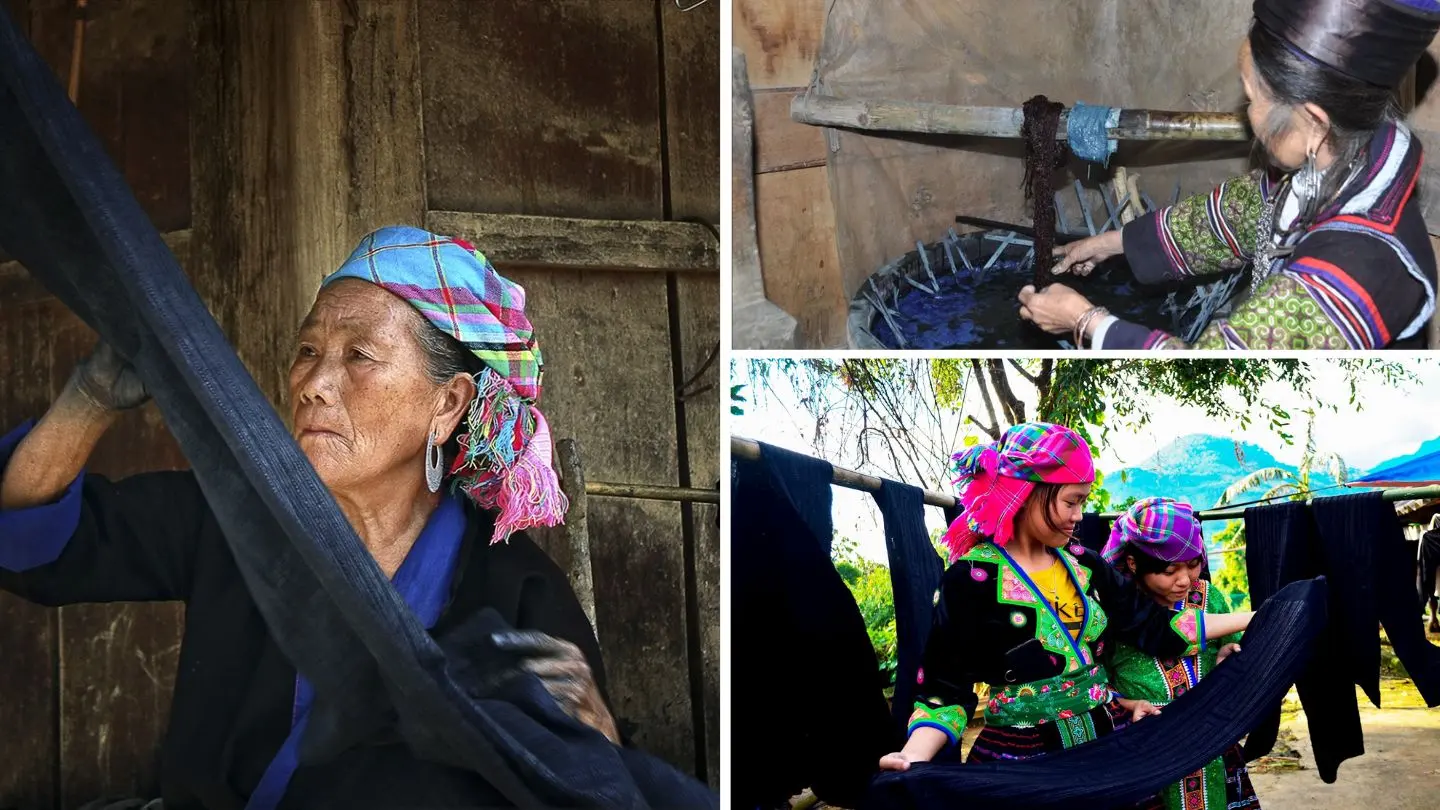
Alongside hemp, the Hmong also cultivate indigo plants for natural dye. Indigo leaves are harvested between May and July. Through fermentation, the green leaves darken into a deep blue dye.
The leaves are mixed with water and limestone inside large wooden barrels and left to ferment for several days. Only when the dye reaches the desired intensity is the fabric submerged.
The cloth may remain in the dye bath for several days or even up to a week. Afterward, it is hung outside to dry, allowing the colour to oxidize and deepen. This dyeing process is repeated multiple times until the fabric achieves the iconic dark blue – almost black – shade associated with Hmong textiles.
The indigo dye is remarkably strong; even a single splash can permanently mark fabric, a testament to its natural potency.
7. Polishing the Cloth with Stone
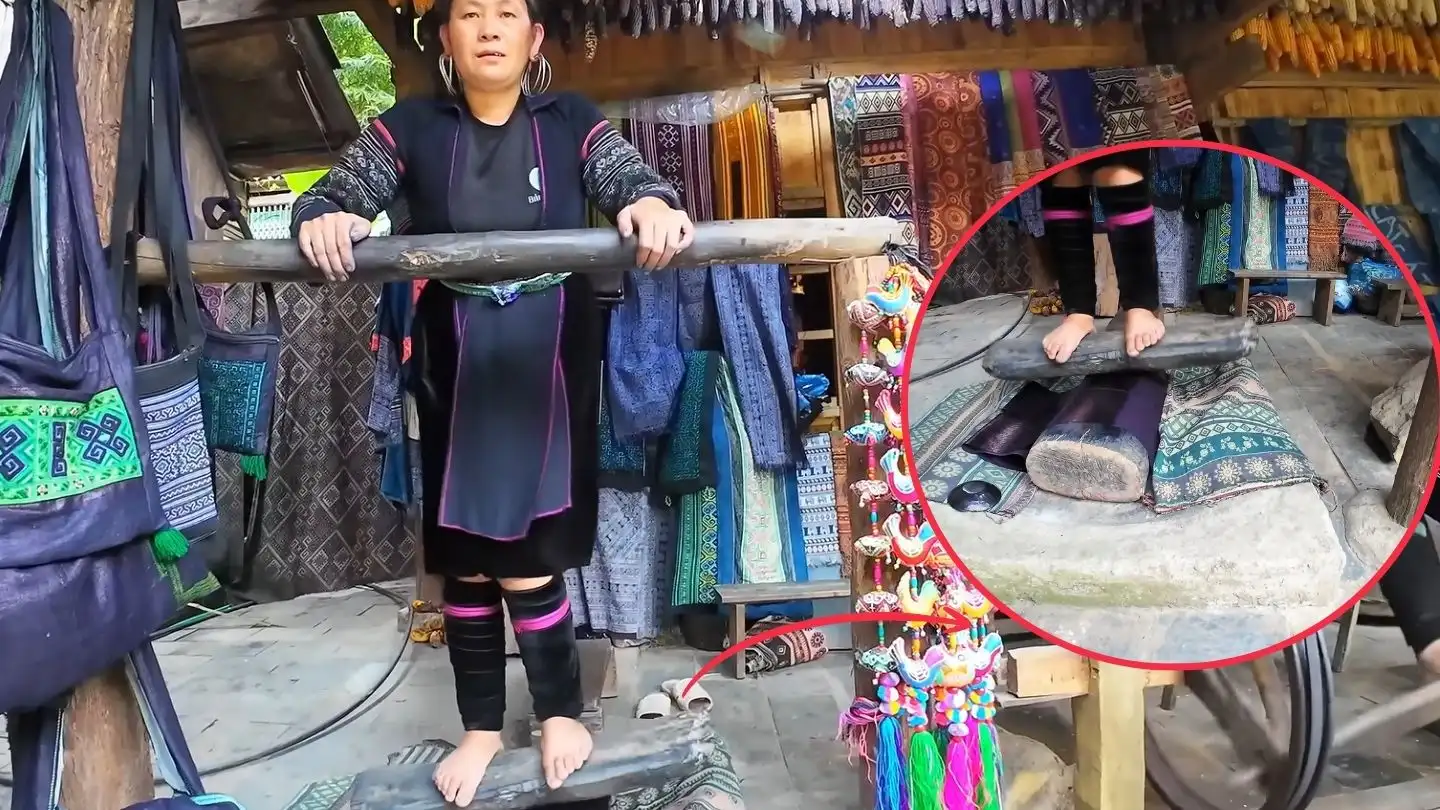
Even after dyeing, the work isn’t finished.
The cloth is carefully spread across a thick wooden board. A large, smooth stone is then rolled slowly back and forth across the fabric, often guided with the maker’s foot. Rather than rubbing the surface, the weight of the stone gently presses the fibres flat.
Little by little, the cloth becomes softer, stronger, and develops the gentle natural sheen that makes authentic Black Hmong textiles instantly recognizable. Nothing changes in a single pass. The shine appears only after countless slow movements.
8. Hand Embellishment: Stitch by Stitch
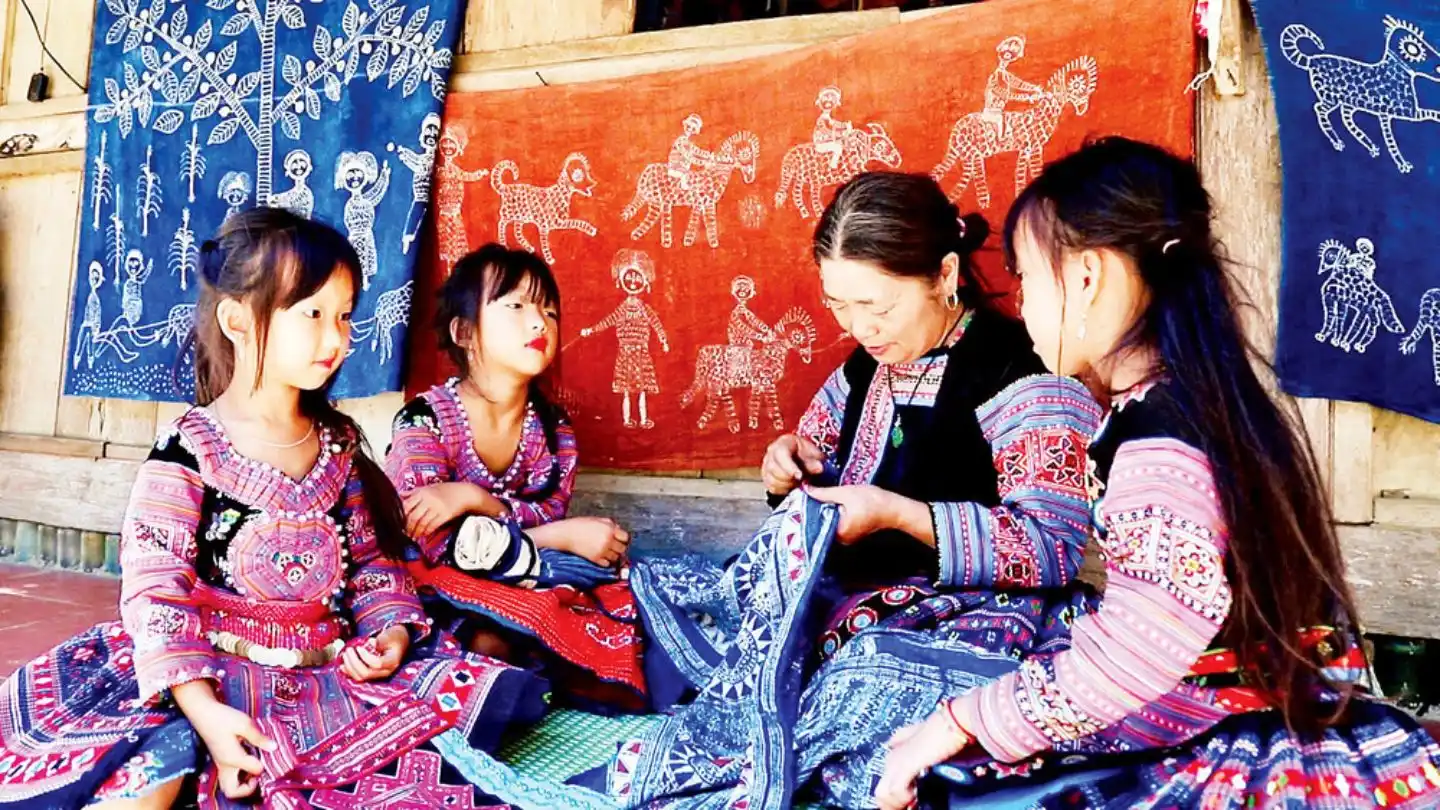
The final decorative stage of Black Hmong textiles is hand embroidery, a process that demands patience and precision. No machines are used. In markets and village homes, it is common to see women sitting together, quietly stitching intricate designs.
Traditional patterns – often inspired by snail shells, plants, and natural forms—are created using cross-stitch, relief embroidery, and appliqué. Before the Hmong developed a written language, these motifs served as a form of storytelling and expression, preserving identity, beliefs, and history.
Girls begin learning these techniques at a young age, ensuring that both skill and meaning are passed down through generations.
9. Turning Cloth into Clothing

Once every stage is complete, the fabric is ready to become clothing.
The women cut each piece by hand before sewing jackets, skirts, leggings, aprons, baby carriers, and ceremonial outfits. Every garment begins with the same hemp plants growing quietly behind the house, yet no two are ever exactly the same.
By the time one outfit is finished, months have already passed. That is why authentic Black Hmong textiles are never valued simply for their appearance. They carry the time, patience, and hands that created them.
Conclusion
Black Hmong textiles in Sapa are more than just fabrics – they’re living stories woven with patience, skill, and heart. Each stitch carries the rhythm of mountain life and the quiet dedication of generations of women. Holding one is like touching a piece of Sapa’s soul, rich with culture and tradition. These textiles don’t just decorate your home – they leave a memory, spark curiosity, and remind you of the beauty hidden in simple, handmade things.
→ Full guide: Sapa Vietnam: The Complete Travel Guide →
FAQs
What materials are used to make them?
Black Hmong textiles are usually made from hemp fibres woven into cloth, then batiked and dyed with natural indigo before embroidery.
Are the patterns meaningful?
Yes, embroidery and batik patterns often reflect daily life, nature, and cultural symbolism unique to each maker or occasion.
Who makes Black Hmong textiles?
Traditionally, Black Hmong women create these textiles, passing skills from mother to daughter as part of their cultural heritage.
Are the textiles still widely made today?
Though still practiced, traditional handmade textile skills are declining as machine‑made and modern clothes become more common.
→ See all eight crafts in the ethnic handicrafts guide.
Related Tours & Transport
