


 Sapa Tours & Activities
Ethnic Handicrafts in Sapa: The Authentic Soul of the Mountains
When people talk about ethnic handicrafts in Sapa, they often think of colorful textiles hanging in market stalls. But the story begins much earlier than that.
Her hands are the first thing you notice — stained blue-black to the wrist, the dye worked so deep no soap will ever lift it. She isn’t selling anything. She sits in a doorway in Ta Van, dragging a thread of hot wax across a length of hemp with a tiny brass blade, and the line she leaves is straighter than anything I could draw with a ruler.
No one taught her from a book. She learned the way her mother did — by watching, then failing, then doing it ten thousand times. This is the part of Sapa that doesn’t fit in a photo. The mountains you can shoot from a car window. The crafts you have to slow down for.
What counts as a “handicraft” here — and why it isn’t a souvenir

It’s easy to see these handmade pieces as souvenirs, especially when they’re displayed in market stalls across Sapa. But the more time I spent learning about them, the more I realized they were created for everyday life.
An indigo-dyed skirt isn’t just something beautiful to wear. A woven basket isn’t simply a decoration. Many of these items were made to be used—carried to the fields, worn during festivals, or passed down through generations. Once you understand that, the craftsmanship feels much more meaningful.
8 Traditional Ethnic Handicrafts to Discover in Sapa
8 ethnic handicrafts in Sapa you’ll actually meet. I’ve kept each short on purpose — two of them have their own full story, linked where it matters.
1. Brocade & hemp weaving. The blue cloth everyone photographs starts months earlier: hemp grown out back, stripped and spun by hand, woven on a simple loom, then dyed in fermented indigo until it’s almost black.
The zig-zags and spirals aren’t decoration — they’re mountains, rivers, protection. The full plant-to-cloth process is its own slow miracle. → Black Hmong Textiles

2. Embroidery. Among the Dao, especially, girls learn it almost as early as walking. First watching, then stitching until their hands remember the patterns by instinct.
A woman’s wedding outfit can take months, every motif (rice grain, plant, animal) carrying a wish. Which tribe wears what is a whole language of its own. → Sapa traditional clothes by tribe
3. Silver jewellery. Necklaces, bracelets, earrings – hammered and engraved by hand, and worn every day, not locked away. Silver is believed to protect and balance, which is why H’mong and Dao children wear it from a very young age.
At festivals, it comes out in full, completing the costume. Each piece feels personal because it literally is one of a kind.
4. Bamboo & rattan weaving. The craft nobody photographs, and the one most woven into daily life — baskets, trays, carrying frames. Here’s the detail I love: finished pieces are hung above the kitchen fire. The smoke slowly hardens the fibres and keeps the insects out. Practical magic, no instruction manual required.
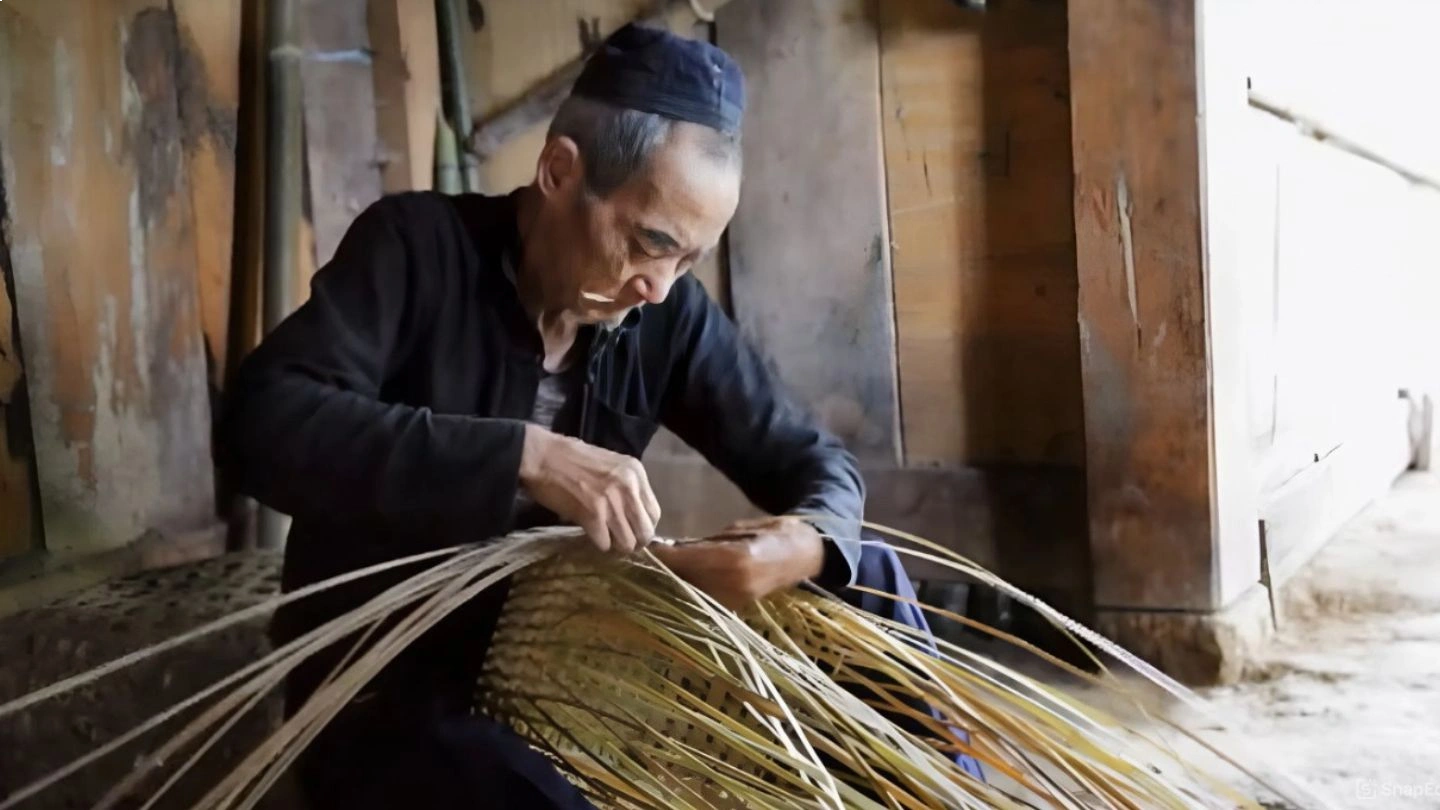
5. Drum making. The one craft you can’t really buy. Among some Dao, the drums are hollowed wood, stretched hide, dried slowly for a deep tone. They are sacred instruments for rituals and ancestral ceremonies, usually made by elders. Their value is in the ceremony, not the shop.
6. Woodwork & tools. Not made for beauty — made for survival. The Nung and Ha Nhi still shape farming tools, weaving frames, and household items by hand, each one fitted to steep ground and real work. You won’t find these in a souvenir shop, but they quietly hold the whole way of life together.
7. Bamboo paper making: Long before it became one of the old ethnic handicrafts in Sapa, bamboo paper served a practical purpose for the H’mong and Red Dao people. With their own writing system, they used handmade paper to record ceremonies, traditions, and knowledge passed down through generations.
Today, the craft still survives in villages around Sapa, where artisans spend weeks turning natural fibers into paper using techniques that have changed very little over time.

8. Herbal incense making: At first glance, they look like ordinary incense sticks. But they’re made from bark, roots, spices, and medicinal plants gathered from the surrounding mountains. Local artisans still roll each stick by hand and leave them to dry under the sun, just as generations before them did.
The soft, earthy scent feels very different from commercial incense, and it’s still used today in ancestor worship, family ceremonies, and other important traditions across Sapa.
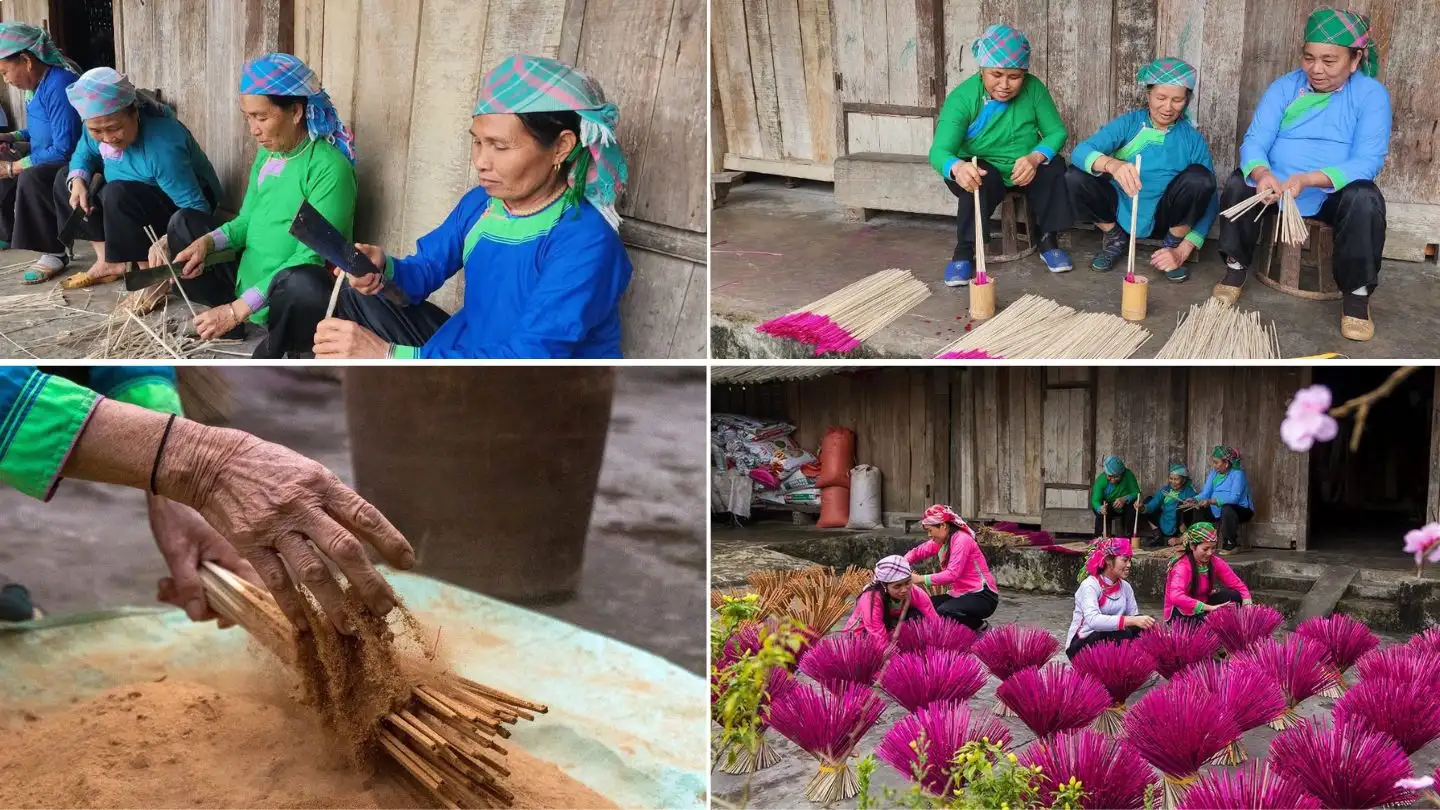
How to tell the real thing from a factory copy
This is the question the stalls won’t answer for you, so here it is straight. The markets are full of machine-printed “H’mong” scarves that never saw a loom. A few quick tells:
- Look at the back. Hand embroidery is slightly uneven and a little messy behind; machine work is identical front and back.
- Look for wax cracks. Real batik has fine, irregular crack-lines where the indigo seeped through broken wax. A perfectly clean pattern is a print.
- Smell it. Genuine indigo cloth carries a faint, earthy, smoky smell. A chemical or “new fabric” smell is a giveaway.
- Mind the price. A real hand-dyed, hand-stitched piece took days — if it’s priced like a fridge magnet, it was made like one.
Where to see them – and where to buy the real ones
To watch craft being made, the villages are better than any shop. Try Ta Van and Lao Chai on a Muong Hoa trek, where women often work in doorways and won’t mind you slowing down. To buy the genuine handmade thing (and skip the printed stuff), start here:
- Sapa Market — the everyday place to browse textiles, silver, and baskets in town.
- What to buy in Sapa — the keepsakes worth your bag space.
- Where to shop in Sapa — the spots that sell the real, locally made pieces.
Is it worth seeking out?
→ Full guide: Sapa Vietnam: The Complete Travel Guide →
FAQs
Which ethnic groups make crafts in Sapa?
Mainly the Hmong, Dao, Giay, Tay, and Xa Pho.
How do I tell handmade from machine-made?
Check the back of embroidery (handwork is slightly uneven), look for fine irregular wax cracks in batik, smell for a faint earthy-smoky indigo (not chemical), and be suspicious of fridge-magnet prices. See the full checklist above.
What materials are used?
Hemp and cotton for cloth, fermented indigo for dye, beeswax for batik patterns, hammered silver for jewellery, and bamboo and rattan for baskets and frames — almost all grown or sourced locally.
Where can I buy authentic handicrafts in Sapa?
The best options are ethnic villages, where you can buy directly from artisans, or reputable shops in Sapa Town that specialize in genuinely handmade crafts.
→ Browse more things to do in Sapa.
You’ll probably bring home one of the ethnic handicrafts in Sapa – a scarf, a bracelet, or a small woven piece – and at first, it’ll seem like just another souvenir. Then one grey afternoon, you’ll catch the faint scent of woodsmoke, and suddenly you’ll be back in that doorway in Ta Van, watching a blue-stained hand draw a line no machine has ever matched.
Related Tours & Transport
