


 Sapa Tours & Activities
Sapa Traditional Clothes: Learn Each Tribe’s Unique Look
Sapa traditional clothes look colorful at first glance — and confusing a minute later. Five ethnic groups, five dress codes, and patterns that blur together for every new visitor.
This guide untangles them, outfit by outfit.
Sapa Traditional Clothes: Five Groups, Five Dress Codes
Traditional clothing among Sapa’s ethnic minorities is far more than apparel — it expresses identity, cosmology, heritage, and craftsmanship. Materials like indigo‑dyed hemp/cotton, silver ornaments, and symbolic embroidery are markers of community belonging and cultural memory.
H’Mong Clothing: Symbols of Identity and Artistry

You can usually spot the H’Mong before anyone tells you who they are.
A flash of indigo. A pleated skirt catching the mountain wind. Bright embroidery stitched so carefully that it almost feels too beautiful for everyday life. Here, clothing has never been just clothing. It carries family stories, old symbols, and the quiet patience of the women who make it.
Colors & Fabrics
Everything begins with hemp or cotton. The fabric is woven by hand, then dyed over and over in natural indigo until it reaches that deep blue the H’Mong are known for. Only then does the embroidery begin.
Women’s Clothing
H’Mong women wear pleated skirts, fitted jackets, colorful aprons, and embroidered sashes. Spirals, flowers, rice terraces, and mountain shapes appear across the fabric, each pattern quietly reflecting prosperity, family, or the natural world around them.
Men’s Clothing
Men dress more simply in indigo jackets, loose trousers, and embroidered belts or scarves. Their clothing is practical enough for daily work, yet still carries the same sense of identity during festivals and celebrations.
More Than Decoration
Silver necklaces, bracelets, and earrings complete the outfit. Many garments still take months to finish, preserving weaving, batik, dyeing, and embroidery techniques passed from one generation to the next.
Red Dao Attire: Detailed Craftsmanship and Symbolic Meaning

The Red Dao never hide in the landscape. Long before you notice the embroidery, you’ll see the red headscarves. They brighten mountain villages even on the foggiest mornings, making the Red Dao one of the easiest communities to recognize in Sapa.
Colors & Fabrics
Dark indigo cloth forms the base of every outfit, while rich red embroidery brings warmth and life. Together, the colors symbolize protection, prosperity, and spiritual strength.
Women’s Clothing
Women wear long indigo tunics edged with delicate embroidery around the sleeves, chest, and hem. Their signature red headscarves are often decorated with silver coins, beads, and tassels that gently move as they walk.
Men’s Clothing
Men usually wear simple indigo jackets and trousers, finished with embroidered belts that add subtle detail without drawing attention away from the overall simplicity.
Clothing for Everyday Life and Ceremony
Every stitch carries meaning. During weddings, New Year celebrations, or spiritual rituals, Red Dao clothing becomes a way of honoring ancestors and expressing family identity, not simply dressing beautifully.
Tay Clothing: Elegant Simplicity Rooted in Daily Life
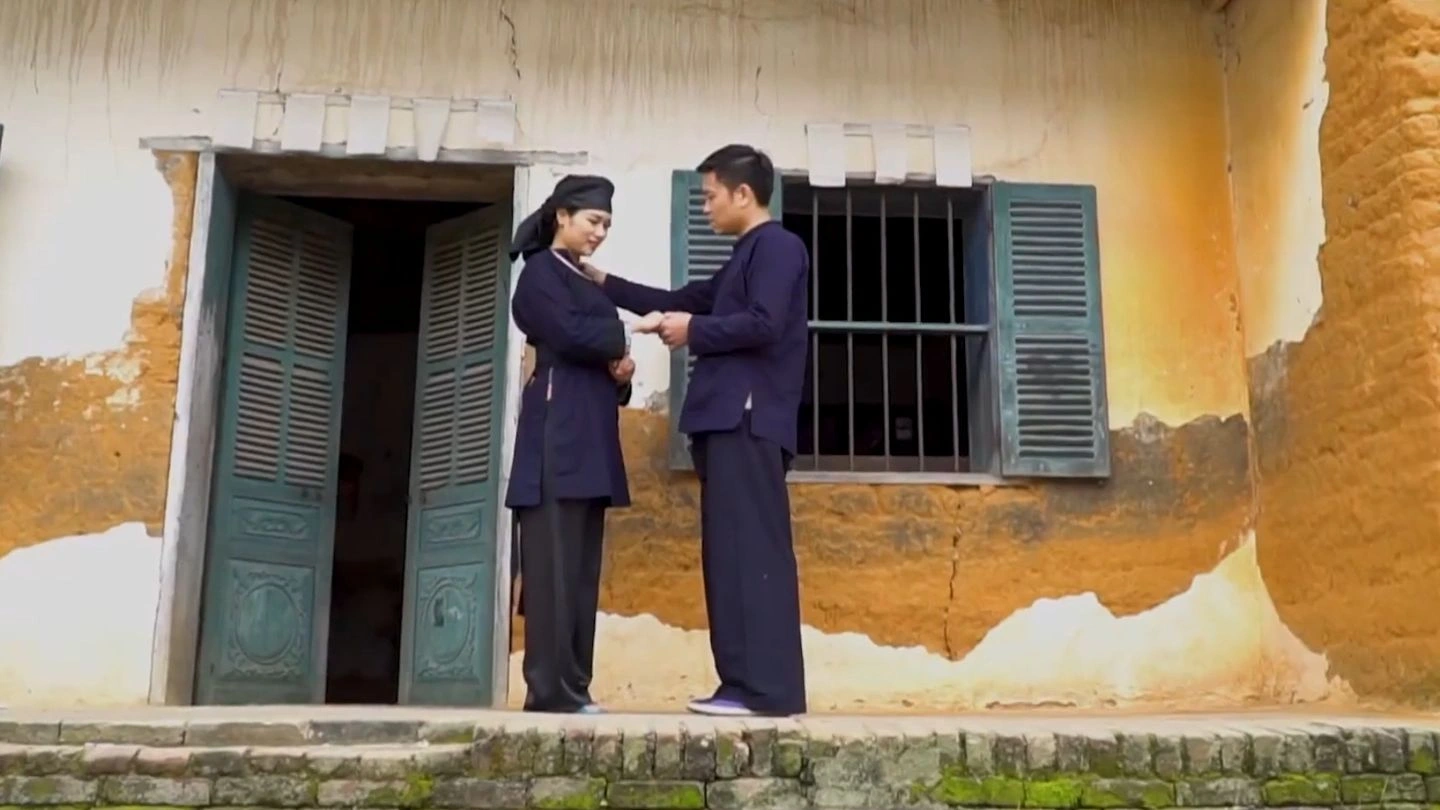
If H’Mong clothing catches your eye, Tay clothing waits patiently for you to notice it. The colors stay soft. The lines stay simple. Like the peaceful valleys where the Tay have lived for generations, nothing feels hurried or overly decorated.
Colors & Fabrics
Natural indigo remains the heart of Tay clothing. Cotton fabrics are dyed into soft shades of blue that blend easily with rice fields, rivers, and wooden stilt houses.
Women’s Clothing
Women traditionally wear long dark skirts with fitted indigo blouses. A little embroidery appears around the collar or sleeves, while neatly wrapped headscarves complete the outfit with quiet elegance.
Men’s Clothing
Loose indigo tunics and comfortable trousers allow freedom to work in the fields throughout the changing seasons.
Quiet Elegance
Rather than elaborate embroidery, the Tay are known for balance and simplicity. Their weaving traditions extend beyond clothing, creating beautiful brocade fabrics for blankets, household textiles, and ceremonial pieces.
Giay Clothing: Functional Harmony and Subtle Ornament

Walk through Ta Van, and you may not notice Giay clothing at first. That is exactly its charm. Nothing feels loud. The beauty comes slowly – in the clean lines, the carefully sewn collar, and the way practicality has quietly shaped every piece.
Colors & Fabrics
Most traditional Giay clothing is made from cotton or hemp, dyed with natural indigo into soft shades of blue and brown that suit everyday farming life.
Women’s Clothing
Women traditionally wear loose-fitting five-panel blouses fastened to one side with long skirts, although dark trousers are often worn today while working in the fields. A narrow strip of contrasting fabric along the collar brings just enough color without overpowering the design.
Men’s Clothing
Men wear loose indigo tunics and practical trousers designed for long days spent tending rice fields and livestock.
Beauty Without Excess
Compared with the H’Mong or Red Dao, Giay clothing carries very little embroidery. Instead, it reflects a quiet sense of balance, where every detail serves a purpose and simplicity becomes its own kind of beauty.
Xa Pho Attire: Distinctive and Understated

The Xa Pho are one of Sapa’s smallest communities, and their clothing feels much the same. It rarely asks for attention. Yet behind every simple garment is a tradition that has survived quietly for generations.
Colors & Fabrics
Handwoven hemp or cotton is dyed with natural indigo, creating dark fabrics suited to mountain life.
Women’s Clothing
Women wear long dark tunics decorated with small red and white geometric embroidery inspired by mountains, fields, and village life. Simple scarves or modest beaded headwear complete the outfit.
Men’s Clothing
Men wear loose dark jackets and trousers with very little ornamentation, allowing comfort to come before decoration.
Quiet Identity
Xa Pho clothing is rarely seen in busy tourist markets. It survives mostly in villages like Nam Sai and Nam Keng, where every stitch continues to reflect community, resilience, and a way of life that changes slowly.
Cultural Significance of Traditional Clothing
Across Sapa’s ethnic groups, traditional dress serves multiple roles:
Cultural Identity & Heritage
Clothing patterns and motifs often encode stories, clan affiliations, or ancestral symbolism — acting as textiles of memory. Vietnam Paradise Travel
Social and Ritual Roles
Specific garments or ornaments signify marriage status, age, or role in ceremonies like weddings or harvest festivals.
Artistic Craftsmanship
Weaving, indigo dyeing, embroidery, batik, and silverwork are not just handicrafts but cultural practices transmitted through generations, connecting the wearer to communal history.
Cultural Display
Markets and festival days in Sapa – such as the Bac Ha and Can Cau markets – provide opportunities to see these traditional clothing styles at their brightest and most ceremonial.
Where to see Sapa traditional clothes in real life
Sapa traditional clothes are best understood not just by reading, but by seeing and experiencing it in real life. Photos can’t fully capture the textures, the hand-made details, or the pride behind each outfit. If you love culture but feel bored of “tourist-only” experiences, Sapa offers something deeper. Walking through villages, meeting locals, and seeing traditional clothing up close will make every story feel real – and might just be the reason you fall in love with Sapa.
→ Full guide: Sapa Vietnam: The Complete Travel Guide →
FAQs
Which ethnic groups wear traditional clothes in Sapa?
H’Mong, Red Dao, Tay, Giay, and Xa Pho are the main groups with distinctive outfits you’ll see in villages and markets.
How can I spot Red Dao clothing?
Red Dao women often wear striking indigo tunics with detailed embroidery and red headscarves or hats paired with silver accessories
Do the clothes have cultural meaning?
Definitely, patterns, colors, and accessories can represent community values, stories, and sometimes age or social role.
Can tourists wear these clothes in Sapa?
Yes, many places in Sapa rent ethnic outfits for photos and cultural experiences.
Where is best to see authentic traditional clothing?
Visit villages like Cat Cat, Ta Phin, Lao Chai, and local market days to see people in real traditional dress.
→ Meet the people behind the outfits in the Sapa ethnic groups guide.
Related Tours & Transport
