


 Sapa Tours & Activities
Giay Ethnic Group in Sapa: Ta Van’s Quiet Culture
Ask travelers where they stayed in Sapa, and half will say, Ta Van. Ask whose village Ta Van actually is, and the table goes quiet.
It belongs to the Giay ethnic group – a small people who host thousands of guests a year, and whose name most of those guests never learn. This page is the missing introduction.
Who the Giay are
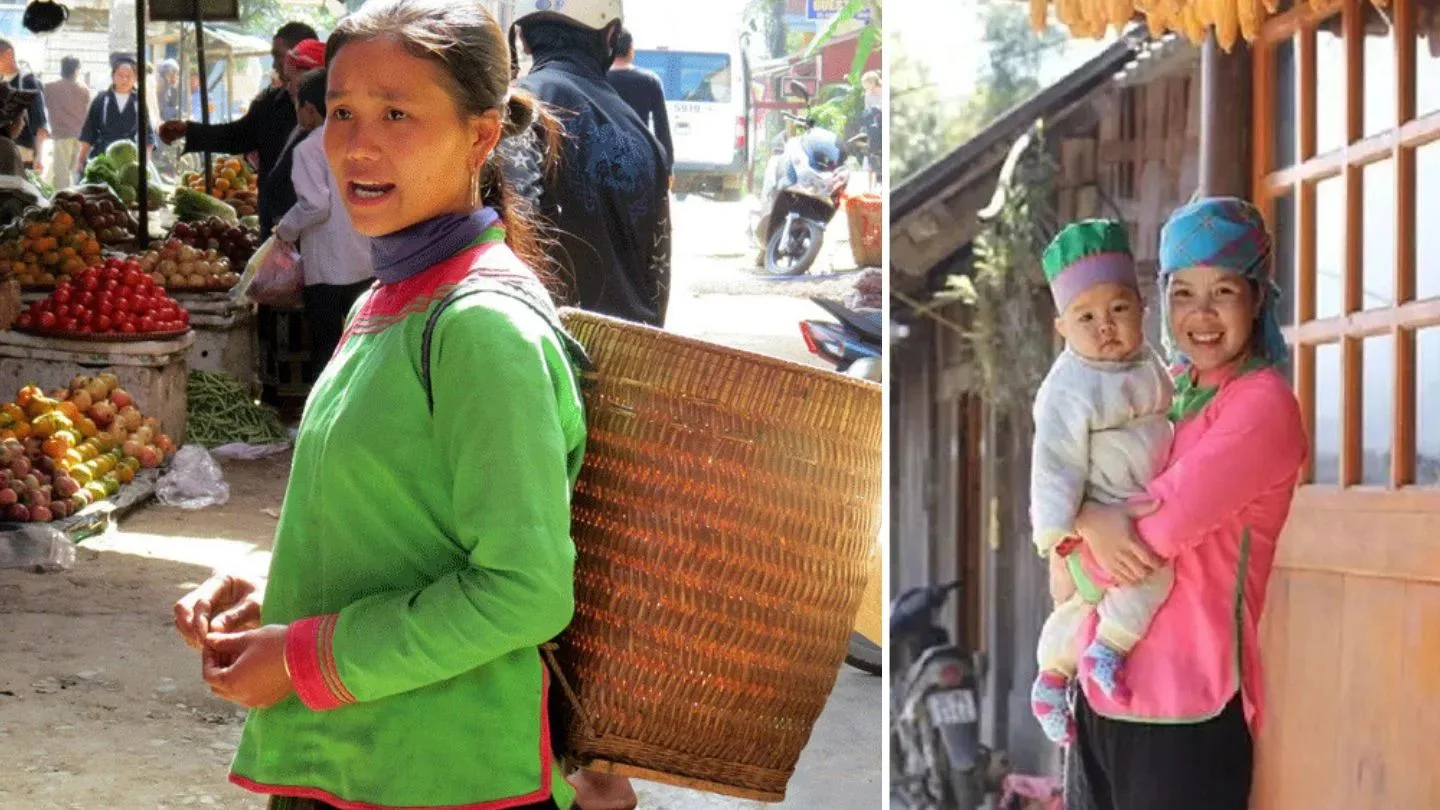
The Giay arrived from southern China two to three centuries ago, looking for fertile land and a steadier life. They settled the river valleys and kept farming them – wet rice first, plus buffaloes, horses, ducks and chickens.
Many customs still carry a clear Chinese influence, but generations in the Muong Hoa valley have reshaped them into something local. What defines the Giay today is not spectacle. It is steadiness: family bonds, neighborly labor-sharing at planting and harvest, and a spiritual life that runs through the middle of the house.
Dress: neatness over embroidery
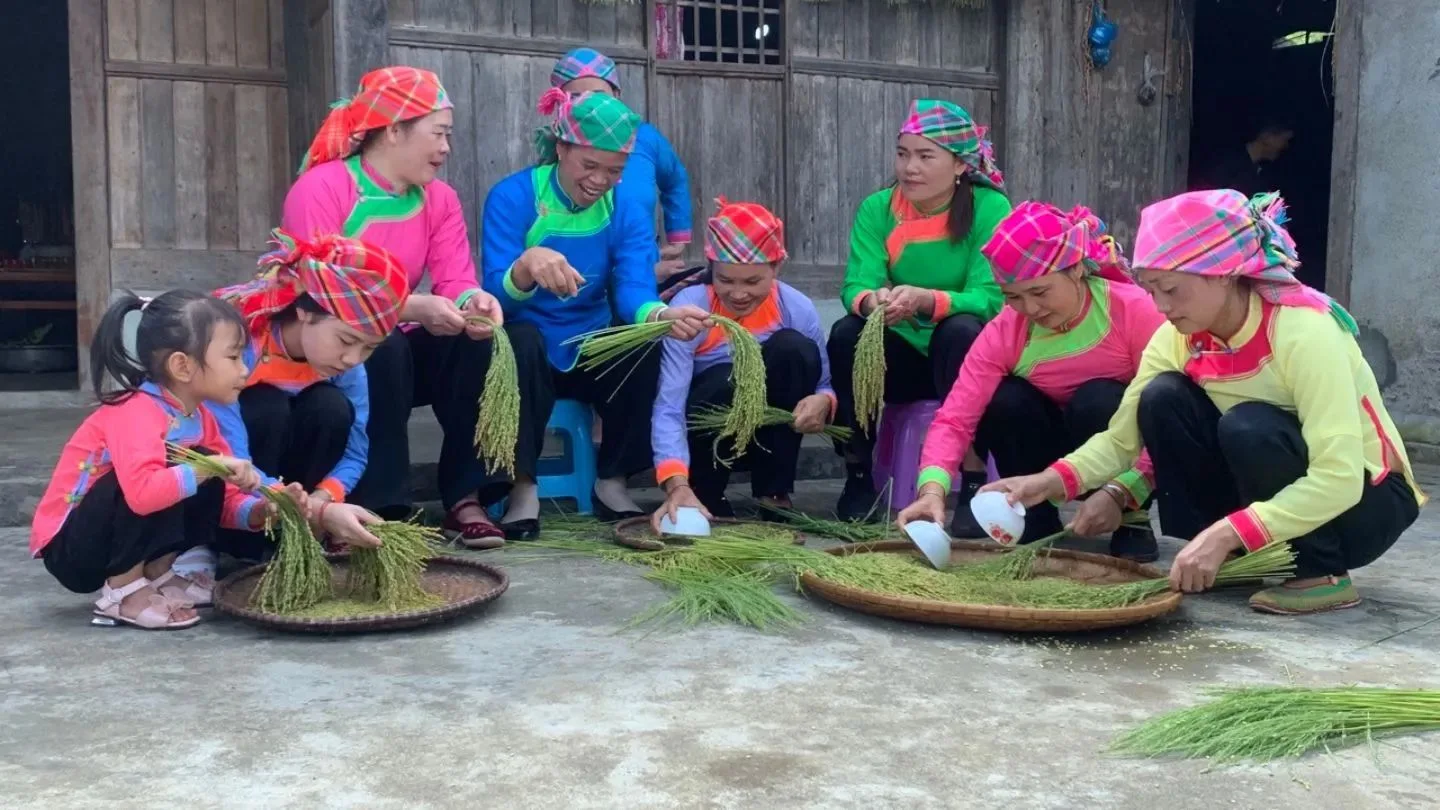
Giay clothing skips the heavy embroidery of their Dao neighbors. Women wear a five-panel blouse buttoned at the right side over dark indigo trousers, with a band of contrasting color at the collar and front. Brighter for young women, darker with age.
The beauty is in the neatness and balance, not the thread count. It is also why visitors often assume the Giay have “no traditional dress.” Look for the collar trim; once you see it, you see it everywhere in Ta Van.
Valley Life: Homes and Farming
The Giay have always belonged to the valley.
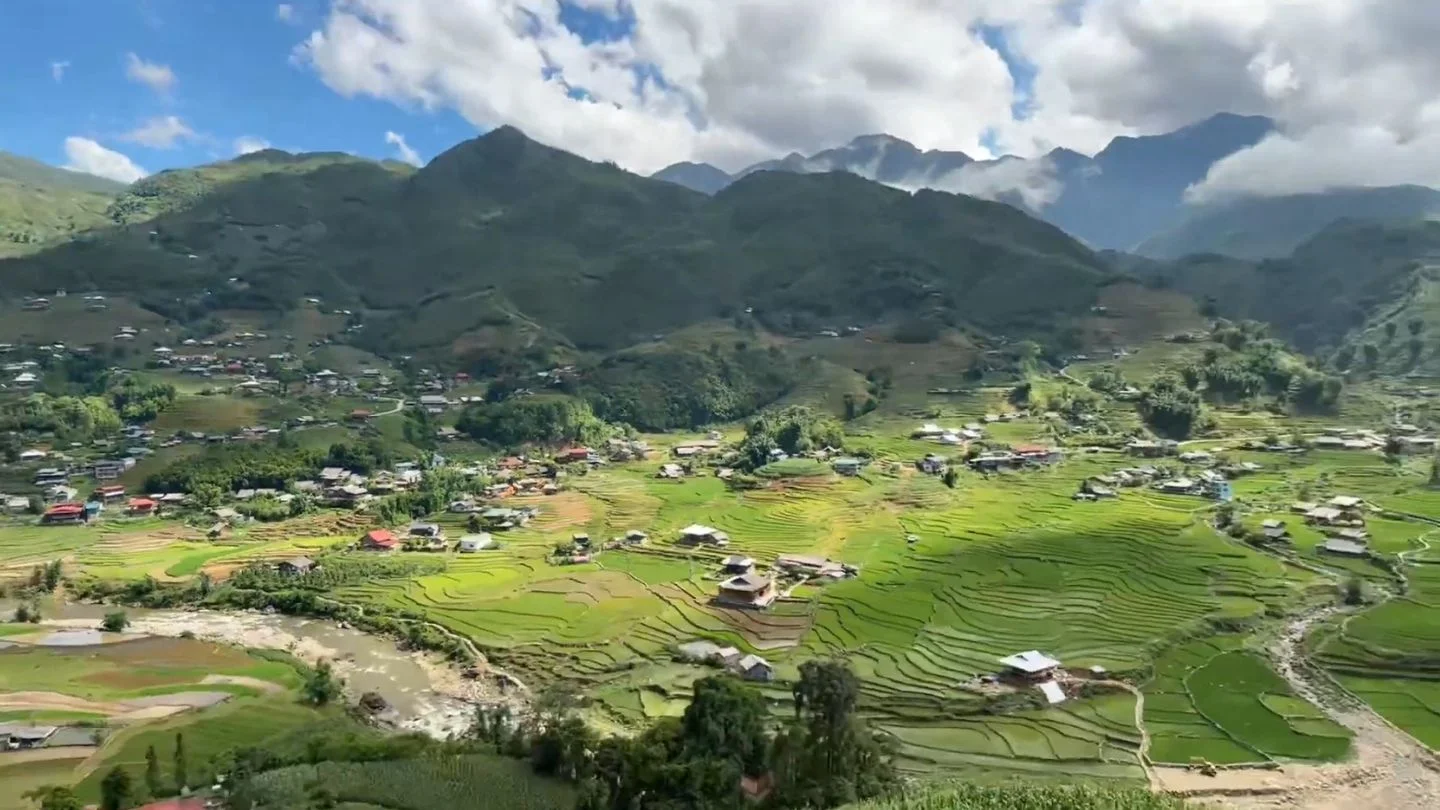
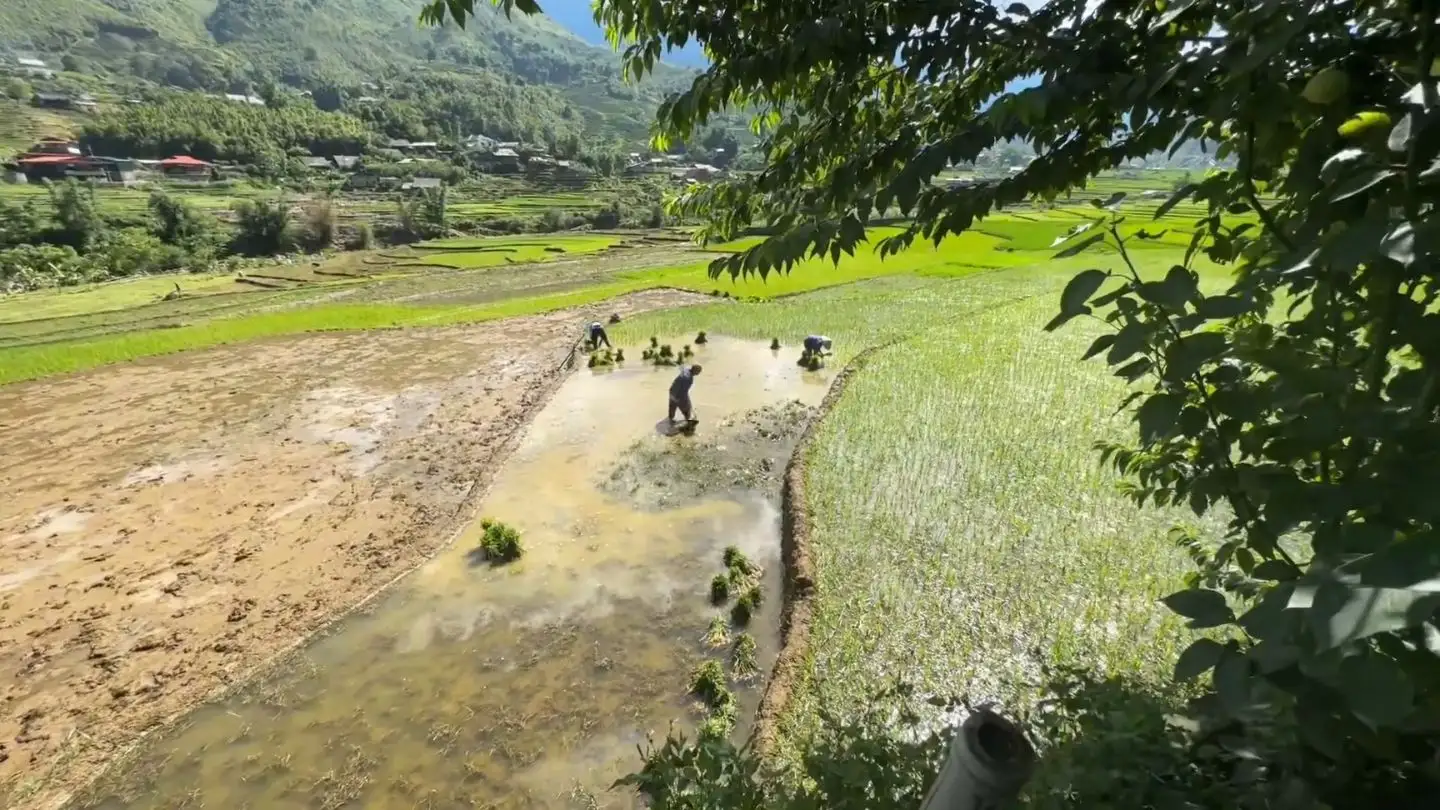
Unlike the Hmong, who carved rice terraces into steep mountainsides, the Giay built their lives beside rivers and streams. Their villages spread across gentle hills and flat fields where water could flow naturally into the paddies.
Many traditional Giay houses stand directly on the ground, while some older homes are raised on short stilts to avoid damp soil during the rainy season. Inside, everything follows a quiet order. The ancestor altar sits at the center of the house, while family spaces stretch naturally around it. Guests are welcomed into the front room, where tea is poured long before conversation begins.
Family Life and Beliefs
For the Giay, every important moment follows its own rhythm.
A newborn is introduced to the family’s ancestors after the first month of life, receiving both a name and a horoscope believed to guide the child’s future. Marriage begins long before the wedding day, with a trusted matchmaker helping both families reach an agreement.
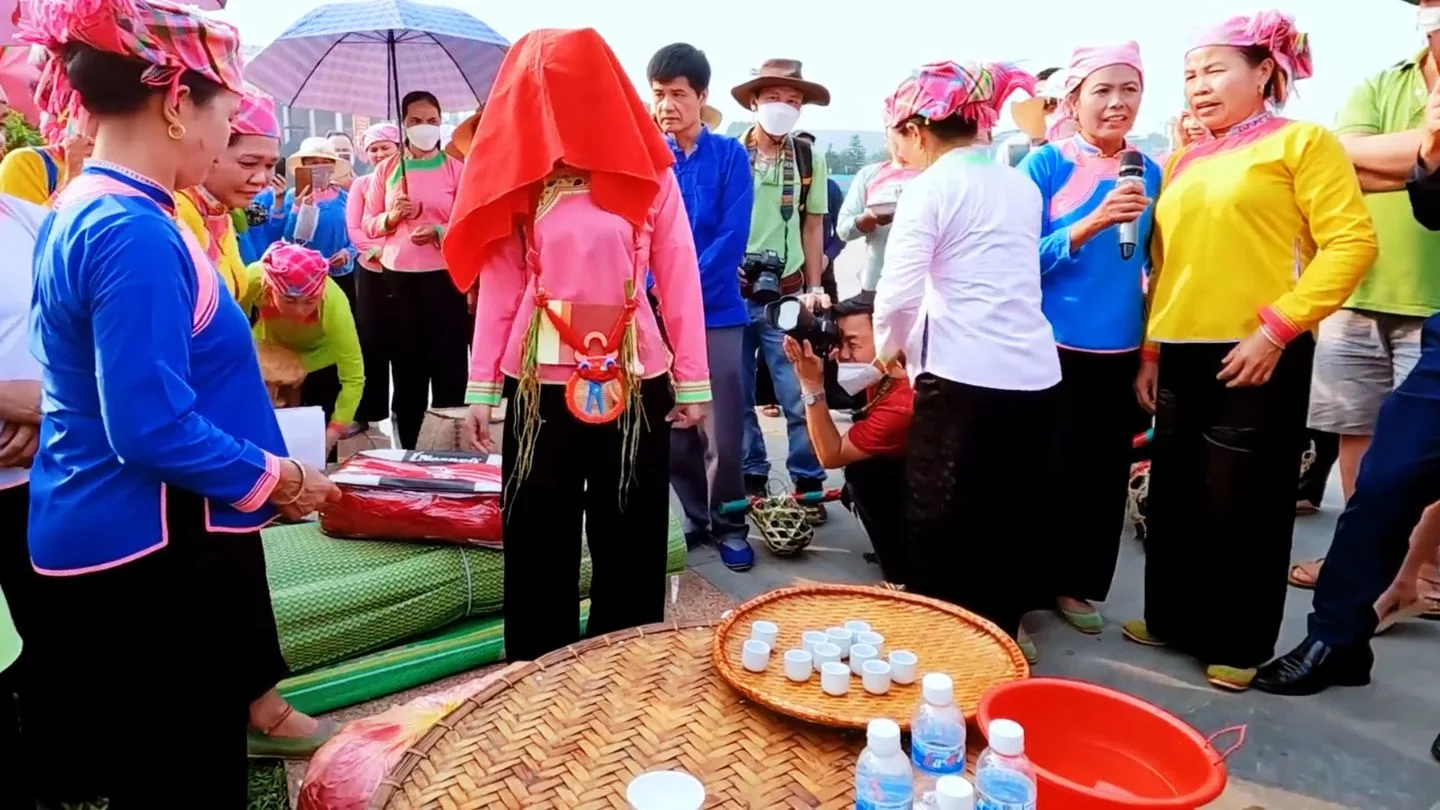
One tradition remains especially memorable. During the wedding procession, the groom carries his bride into their new home on his back. The custom is believed to keep her spirit from wandering back to her parents’ house before beginning her new life.
A culture carried by voice
The Giay language belongs to the Tai family — a cousin of Tay, unrelated to Hmong or Dao. It has no traditional script.
Everything that matters travels by voice instead: folk songs, stories, life lessons passed across kitchen fires and field edges. It is a quieter way to keep a culture alive, and it has worked for three hundred years.
Roong Pooc: the valley’s biggest morning
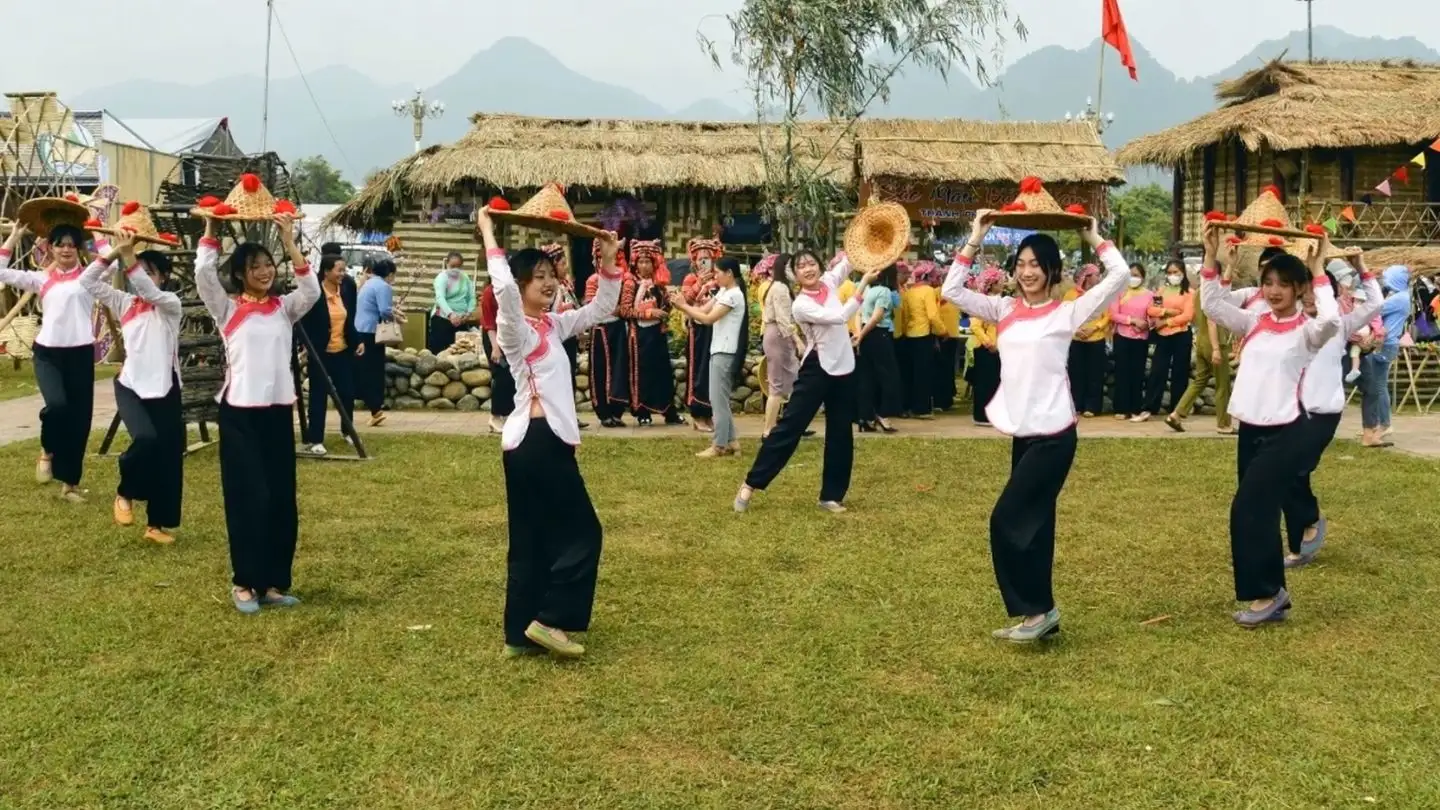
Once a year, the calmest people in the valley throw its loudest party. Roong Pooc — the Giay thanksgiving to the land — draws thousands to Ta Van’s fields on a Dragon day of the first lunar month. Offerings under a sun-and-moon pole, con ball games, tug-of-war, food everywhere.
If your trip lands in February or early March, check the date in the Sapa festival calendar. It is the single best day of the year to be in Ta Van.
Worth going deeper?
FAQs
Where do the Giay people live?
Mainly Ta Van village in the Muong Hoa valley, with smaller communities in Lao Chai and in provinces like Ha Giang, Yen Bai and Lai Chau. In Sapa they make up about 2% of the population.
What language do the Giay speak?
Giay, from the Tai language family — related to Tay, not to Hmong or Dao. There is no traditional Giay script; culture passes orally through songs and stories.
How do the Giay make a living?
Wet-rice farming in the valley, plus buffaloes, horses and poultry. In Ta Van, homestay tourism is now a major part of village income.
What festival do the Giay celebrate?
Roong Pooc, on a Dragon day of the first lunar month (February–early March). It began as the Giay new-year rite and has grown into the biggest festival in the Muong Hoa valley.
→ Meet the other four peoples in the Sapa ethnic groups guide.
Next time someone tells you they stayed in Ta Van, you can tell them whose home they slept in.
Related Tours & Transport
