Have you ever looked at Sapa and thought, there must be more than just the scenery? That’s exactly where the story of the Tay ethnic group begins. Their life is slow, quiet, and deeply rooted in nature – nothing flashy, but incredibly real. If you’re curious about how they live, what they value, and why their way of life feels so calming, stay with me. I’ll walk you through the world of the Tay ethnic group in Sapa, one story at a time.
The Tay People of Sapa: Valley Dwellers Shaped by Water and Time

Among the many ethnic groups living in Sapa, the Tay stand out as one of the earliest settlers and also one of the most quietly influential communities. Unlike groups who traditionally inhabit high mountain slopes, the Tay chose fertile valleys and low-lying areas, where water, soil, and climate allowed agriculture to flourish. Today, travelers can encounter Tay communities mainly in Ban Ho and Thanh Phu villages, where daily life still follows rhythms shaped by rice fields, rivers, and ancestral traditions.
If you’re interested in other ethnic groups in Sapa, click here – we’ve put together some helpful information about the most common ones.
- Hmong Ethnic Group: A Captivating Cultural Journey in Sapa
- An Exciting Journey Into The Rich Dao Ethnic Group in Sapa
An Ancient Arrival: The First Footsteps in Northwestern Vietnam
The Tay are believed to have arrived in what is now northern Vietnam around 500 BC, migrating from inland Southeast Asia. This makes them one of the oldest known ethnic minorities in the region. Their early settlement in Sapa’s valleys gave them a strategic advantage: access to flat land and water sources, which later defined their strong tradition of wet rice cultivation.
Over centuries, the Tay developed stable villages and social systems long before many other ethnic groups arrived in the highlands. Their long presence explains why Tay culture often feels deeply rooted, calm, and closely aligned with the landscape itself.
A Language That Carries Memory
Tay language belongs to the Tay–Thai language family, sharing linguistic roots with several ethnic groups across mainland Southeast Asia. While older generations once used traditional scripts, a Latin-based writing system was introduced in 1960, making it easier to preserve and teach the language in modern education systems.
Today, most Tay people are bilingual, speaking both Tay and Vietnamese fluently. This bilingualism reflects their strong integration into mainstream Vietnamese society, while still maintaining a distinct cultural identity passed down through oral storytelling, folk songs, and rituals.
Spirits at Home: Belief Systems Rooted in Everyday Life

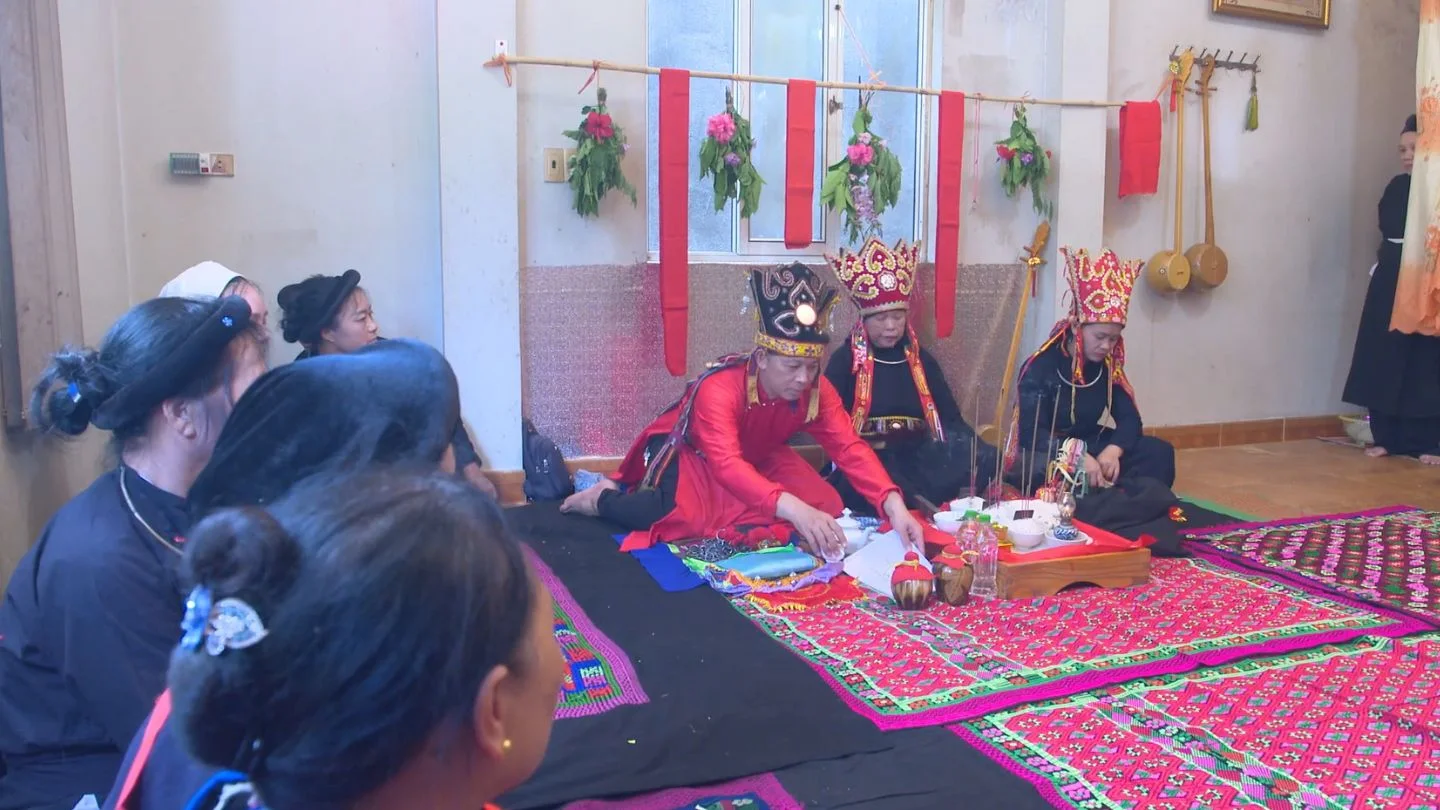
Tay spiritual life centers on the idea that the unseen world constantly interacts with the human one. They worship ancestors, the house spirit, the kitchen spirit, and the midwife spirit, all of whom are believed to protect family health, harmony, and prosperity.
Rather than grand temples, Tay beliefs are practiced within the home. Altars, rituals, and offerings are woven into daily life, reinforcing the idea that spirituality is not separate from living – it is part of cooking, building a house, raising children, and honoring the dead.
Traditional Tay Clothing: Beauty in Simplicity

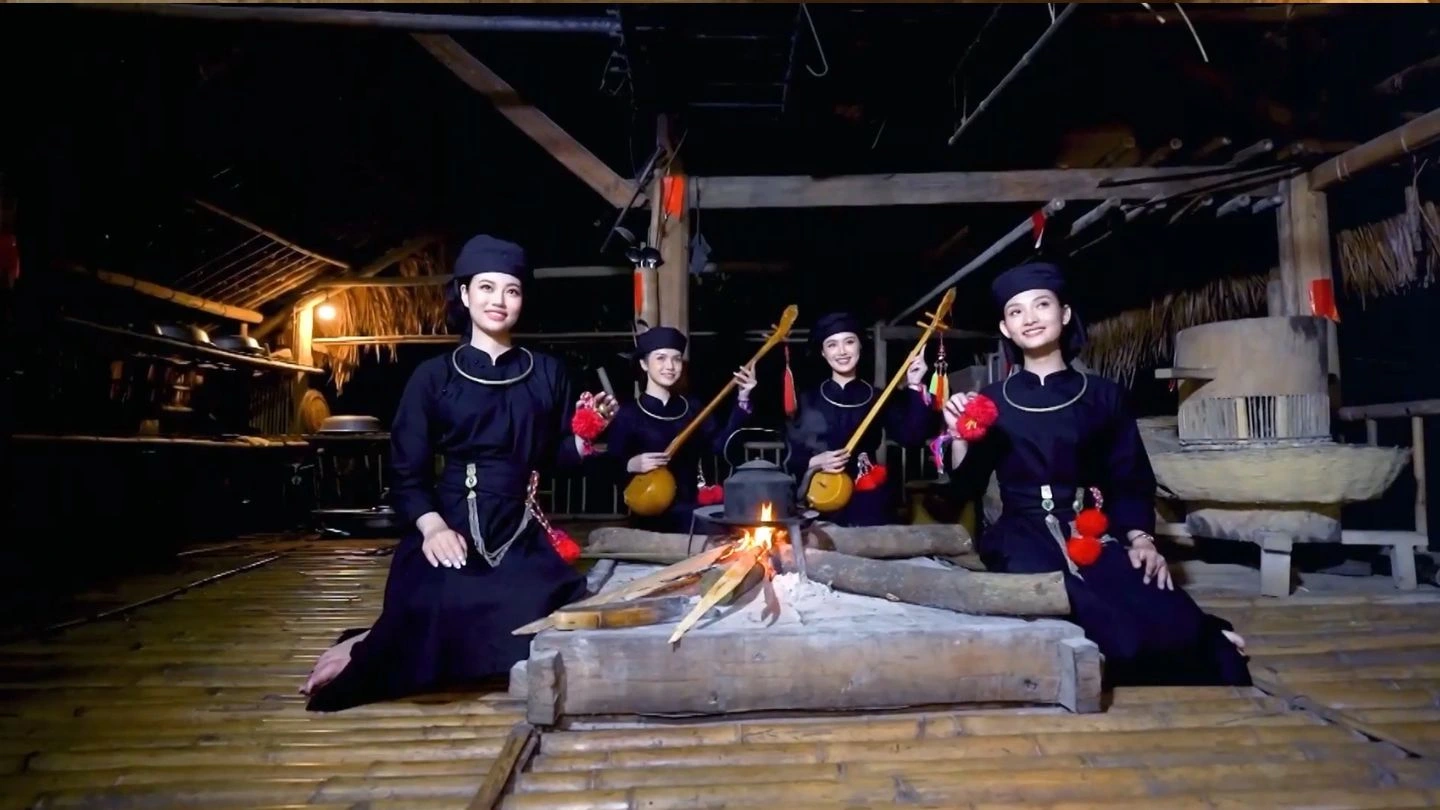
Tay traditional costumes reflect a philosophy of practicality and balance. Made from indigo-dyed cotton, the clothing is usually plain, with minimal embroidery or decoration. Women traditionally wear simple blouses fastened with silver buttons and black trousers, while both men and women often use colorful headscarves as subtle accents.
In modern times, traditional clothing is mostly reserved for festivals or cultural events, as many Tay people now wear Vietnamese or Western-style clothes. Still, the understated elegance of Tay dress continues to symbolize their grounded, agricultural lifestyle.
Music and Festivals of the Tay Ethnic Group in Sapa

Music and festivals play an important role in Tay cultural life, reflecting their close connection to agriculture, community, and spiritual beliefs.
Distinctive Tay Folk Music
The Tay are known for their rich folk music traditions, especially luon singing and khap singing.
- Luon songs are often performed during festive nights or when welcoming visitors from afar, creating a warm and friendly atmosphere.
- Khap singing resembles the quan họ folk songs of northern Vietnam and is usually performed as a musical dialogue, expressing emotions and strengthening social bonds.
Traditional Festivals of the Tay People
-
- Long Tong Festival (Field-Going Festival)
Held on the full moon of the first lunar month in Ta Van village, this festival honors Than Nong, the god of agriculture, and prays for fertile fields and good harvests. - Xoe Dance Festival – Thanh Phu
Celebrated on the 4th day of the lunar new year, marking the beginning of a new farming season and community unity. - Then Singing Festival – Ban Ho
Takes place on the 6th day of the first lunar month, featuring traditional Then chants and spiritual performances. - Ta Chai Xoe Dance Festival
Held annually on the 5th day of the first lunar month, this early-year festival prays for abundant crops, full granaries, and a peaceful village life. After ritual ceremonies, villagers gather to perform xoe dances to the sound of drums and gongs. The dances include gathering xoe, pair xoe, and welcoming xoe, along with traditional farming-inspired movements such as sowing seeds, harvesting rice, and going to the fields. These graceful dances reflect Tay daily life and their deep bond with the land.
- Long Tong Festival (Field-Going Festival)
From Feudal Villages to Open Communities
Historically, Tay society resembled a localized feudal system. Each village was once controlled by a powerful individual who owned land, forests, and rivers, governing the people who lived and worked there. This structure appeared early and gradually disappeared by the 19th century.
Today, Tay communities are far more open and integrated. They often live in multi-ethnic villages, enter into mixed marriages, and migrate for education or work. Among Vietnam’s ethnic minorities, the Tay are considered one of the most successfully integrated into mainstream culture—while still retaining strong cultural roots.
Life’s Milestones: Rituals from Birth to Death
The Sapa ethnic group observes life as a journey guided by both family and spirits.
- Birth: Pregnancy and childbirth are surrounded by taboos meant to protect mother and child from illness and evil spirits. When a baby is three days old, a ritual honors the midwife spirit, and after one month, a celebration officially names the child.
- Marriage: Young men and women may fall in love freely, but marriage decisions rest with parents. Astrologers are consulted to compare fortunes before approving a union. After marriage, the wife remains with her parents until she becomes pregnant, only then moving to her husband’s home.
- Funeral: Tay funeral practices are similar to those of the Kinh people, guiding the soul to the afterlife. Three years later, a final ritual brings the spirit to the ancestors and marks the end of mourning. Annual remembrance days ensure the dead remain part of the living family.
Stilt Houses: Architecture Guided by Nature and Fate

Traditional Tay houses are built on stilts, originally designed to protect families from wild animals and floods. The ground floor is now commonly used for storage and cooking, while living spaces remain elevated.
Building a house is a spiritual decision as much as a practical one. The owner must carefully choose the location based on age, horoscope, and auspicious signs. On the first night in a new home, the head of the family lights a fire and keeps it burning all night, symbolizing warmth, continuity, and life.
Masters of Wet Rice Cultivation
Agriculture lies at the heart of Tay life. They practice traditional wet rice farming, cultivating rice on gently sloping hills with minimal water. Ingenious irrigation systems – canals, ditches, and bamboo water pipes – allow them to use water efficiently.
This intensive cultivation method has enabled the Tay to produce high yields for generations, supporting stable villages and strong food security. Farming is not only an economic activity but also a cultural practice passed from parents to children.
Food as Symbol and Celebration
Rice dominates Tay cuisine, shifting over time from mostly sticky rice to regular rice in daily meals. During festivals, however, traditional foods return with symbolic meaning:
- Square sticky rice cakes (bánh chưng) represent the earth.
- Round sticky rice cakes (bánh dày) symbolize the sky.
- Roasted young sticky rice (cốm) is prepared for the Mid-Autumn Festival.
These foods are more than nourishment—they express Tay cosmology and respect for
Conclusion
The Tay ethnic group in Sapa represents a gentle and meaningful part of the region’s culture. Through their simple lifestyle, close connection to nature, and strong sense of community, the Tay people show us a slower and more peaceful way of living. Learning about their traditions and daily life helps us appreciate Sapa beyond its scenery. If you ever visit, taking time to understand the Tay culture will make your journey more memorable and heartfelt.
FAQs
Do Tay people still use their old script?
Historically they used a Tay script based on Chinese ideograms, but today only a few older people can read it.
What are some Tay cultural traditions?
Tay people have rich folk songs, dances, and stories, including “luon” and “khap” singing in festivals and celebrations.
What type of houses do Tay people live in?
Many Tay villages feature traditional stilt houses beside water, helping ventilation and protection from damp ground.