


 Sapa Tours & Activities
Hoang A Tuong Palace: The Magnificent Mansion of a Mountain King
A hundred years ago, a man here was called the King of Bac Ha. Hoang Yen Chao held the salt, the opium, and the trade for miles around, and built a yellow palace to prove it. French arches, Chinese roofs, cement flown in by plane – and now he is long gone, but the palace still stands.

Older photos often show Hoang A Tuong Palace covered in faded yellow paint and patches of moss. After a major restoration in 2024, the palace looks far newer and brighter than it did in the past.
The story
The Hoang A Tuong palace was built between 1914 and 1921 by Hoang Yen Chao, a Tay lord who ran Bac Ha in the semi-feudal years of French rule. Locals called him a king; it is, though, named after his son and heir, Hoang A Tuong. His fortune came from controlling the region’s salt and opium trade and from supplying the French.
It was home and fortress at once, built to hold power as much as to live in. Today, it is a quiet museum, the rooms half-empty, the paint fading on the walls. It was made a national heritage site in 1999.
The architecture

The design is a deliberate East-West blend — French arches and round staircases under Asian roofs, a two-story main mansion flanked by lower auxiliary houses around a courtyard. Two architects, from different traditions, worked it out together.
The materials tell the same story of money and ambition: local limestone, sand, molasses, and beeswax. The cement and steel were flown in by plane — extraordinary for the time and place.
Activities at Hoang A Tuong Palace
Most people arrive for the architecture, but the rooms inside tell a more interesting story. From traditional costumes and musical instruments to hidden tunnels, guard posts, and reception halls, each space reveals a different piece of daily life within Hoang A Tuong Palace.


Best time to visit
You can visit Hoang A Tuong Palace year-round, but spring is loveliest, when the courtyard fills with flowers. Time it to a Bac Ha festival and you will catch traditional dress and dance in the grounds. Mornings are quietest, before the market crowds drift over.
How to get there and tickets
Bac Ha is about 100 km from Sapa, a 2.5–3 hour drive, usually via Lao Cai. Most people come by private car or on a Bac Ha day tour; the palace sits right in Bac Ha town at 257 Ngoc Uyen.
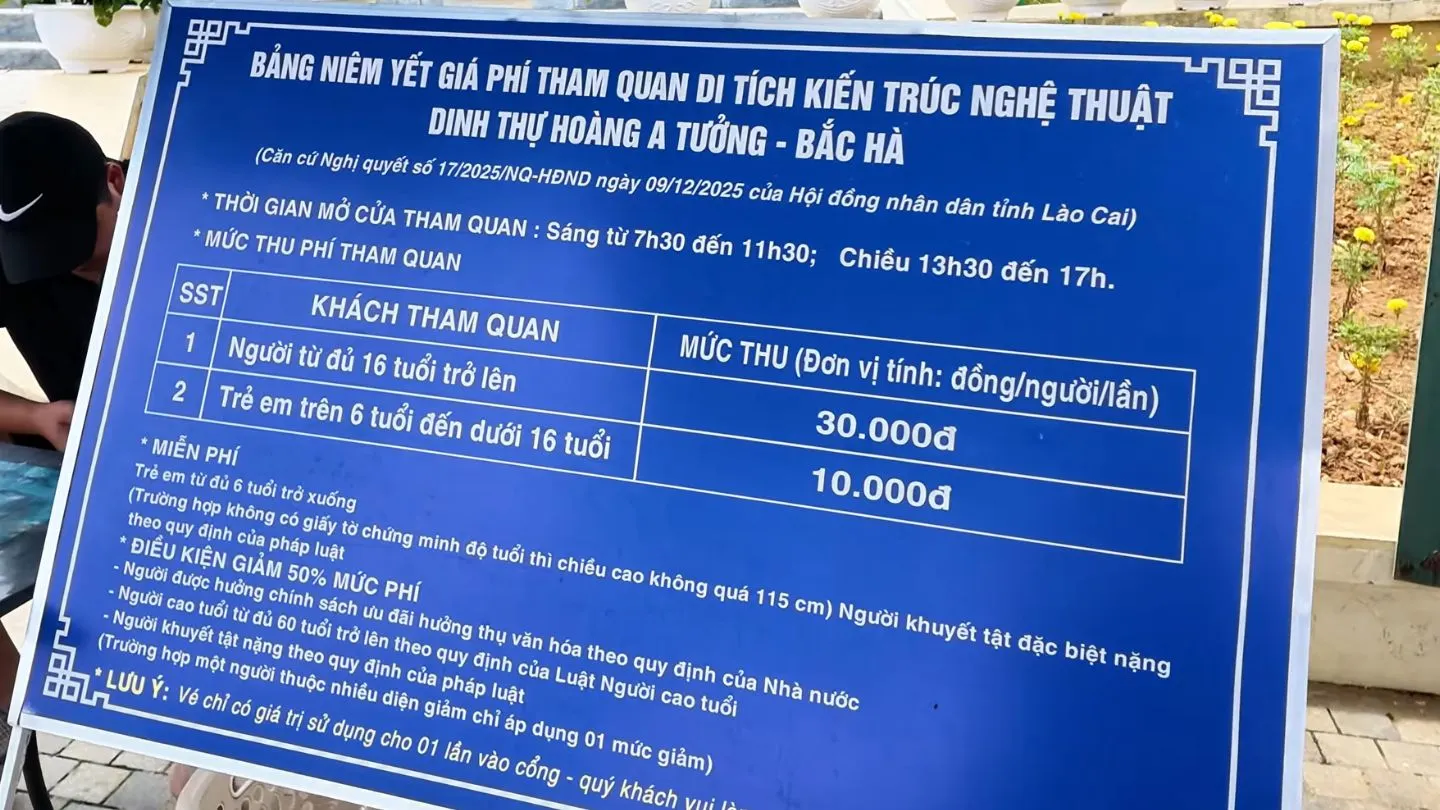
The palace is open daily from 7:30 AM to 11:30 AM and 1:30 PM to 5:00 PM. Admission is 30,000 VND for adults, 10,000 VND for children aged 6 to under 16, and free for children under 6.
What’s nearby
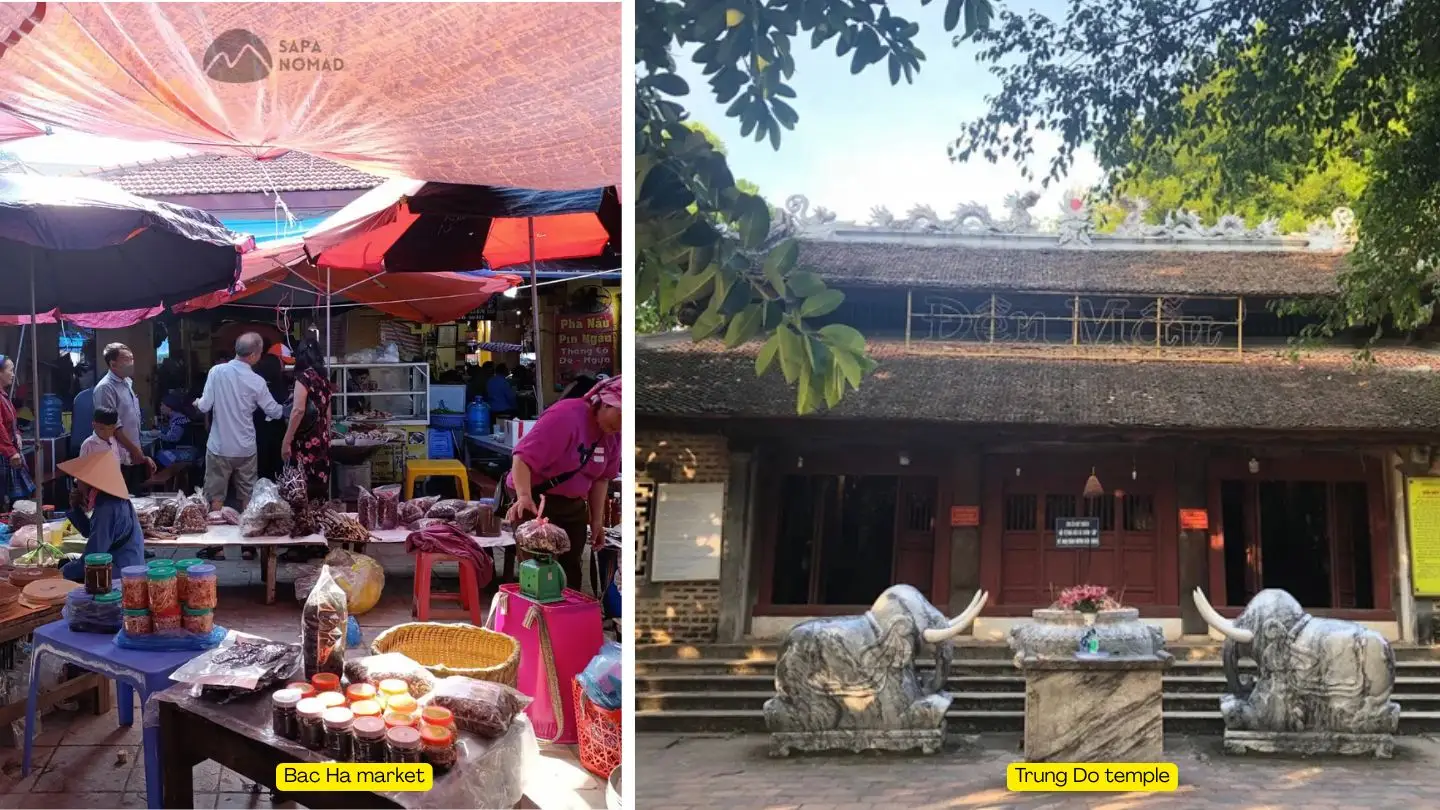
The palace is best folded into a Bac Ha day. Time your trip to Sunday for the famous Bac Ha market, the biggest in the region, and add the old Trung Do temple a little out of town.
Bac Ha is a long way out, but the palace earns its place among the region’s most worthwhile Sapa sights.
Tips for visiting
- Come on a Sunday to pair it with the Bac Ha market.
- Allow a full day from Sapa — it is a long drive each way.
- Go in the morning for quiet rooms and softer light.
- Bring small cash for the ticket and the market.
→ Full guide: Sapa Markets: The 8 Highland Markets Worth the Early Start →
Frequently Asked Questions
How far is Hoang A Tuong Palace from Sapa?
About 100 km, a 2.5–3 hour drive, usually via Lao Cai. It is right in Bac Ha town.
Who built the palace and when?
The Tay lord Hoang Yen Chao built it between 1914 and 1921, during French colonial rule. It is named after his son, Hoang A Tuong.
What is special about it?
Its East-West architecture — French arches and round staircases under Asian roofs — and its history as the seat of a local “king.”
When should I visit?
Spring or a festival day is best, ideally on a Sunday, so you can also see the Bac Ha market.
You walk the cool, faded rooms, out onto a balcony, and look down at the same hills the old lord once counted as his. The power is gone, and the family with it. What is left is the Hoang A Tuong Palace – ancient, patient, outlasting the man who needed it.
