


 Sapa Tours & Activities
Funicular Train Sapa: Sapa’s Vintage Train to Fansipan
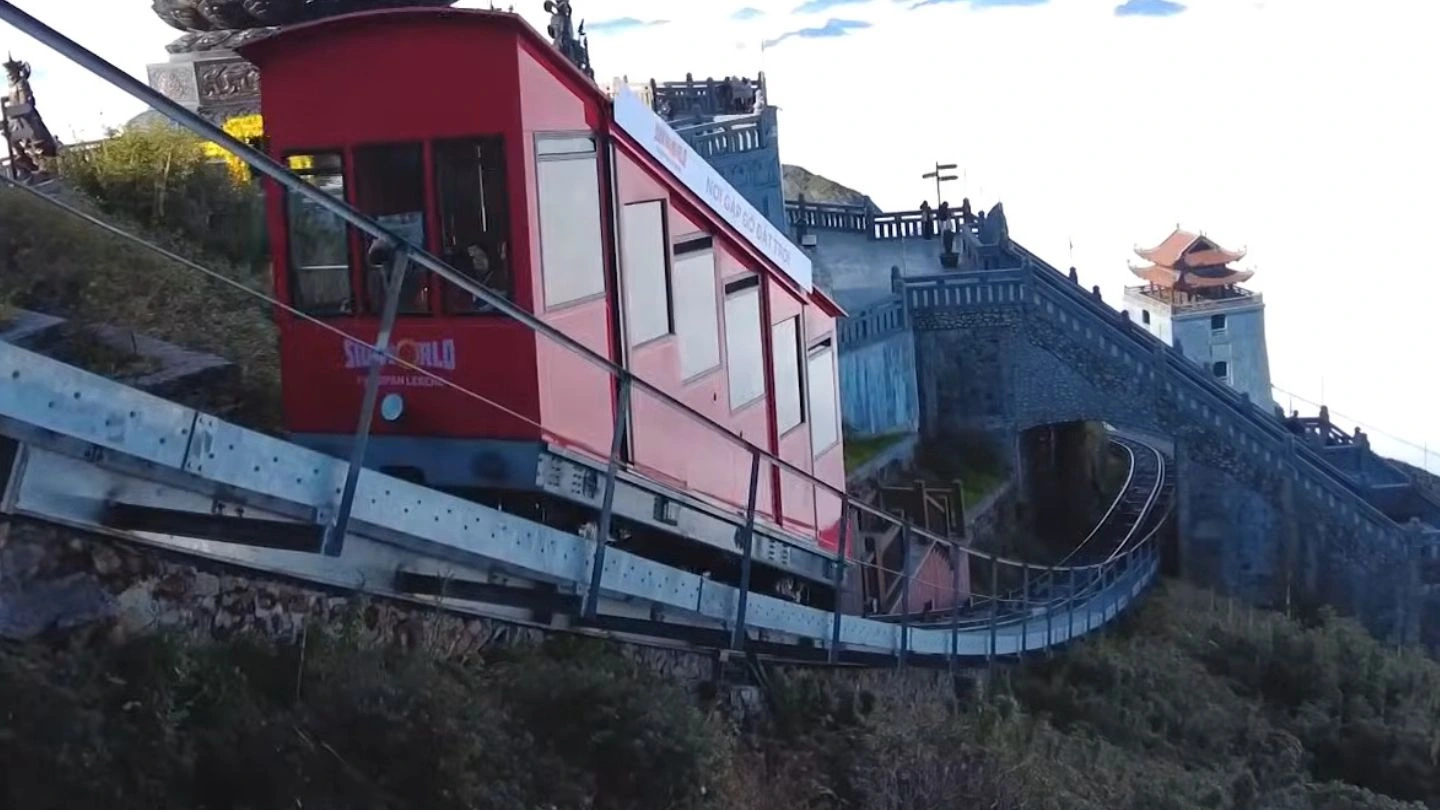
Most people treat the little red train as a way to skip a taxi. Step aboard, though, and you’re in a Belle Époque carriage — brass poles, antique ceiling fans, warm-wood floors — gliding two kilometres over the Muong Hoa valley on a viaduct. Vietnam’s longest funicular doesn’t just save you twenty minutes of winding road. This funicular train Sapa is the prettiest six minutes of the whole trip up Fansipan.

Vietnam’s longest funicular — the numbers
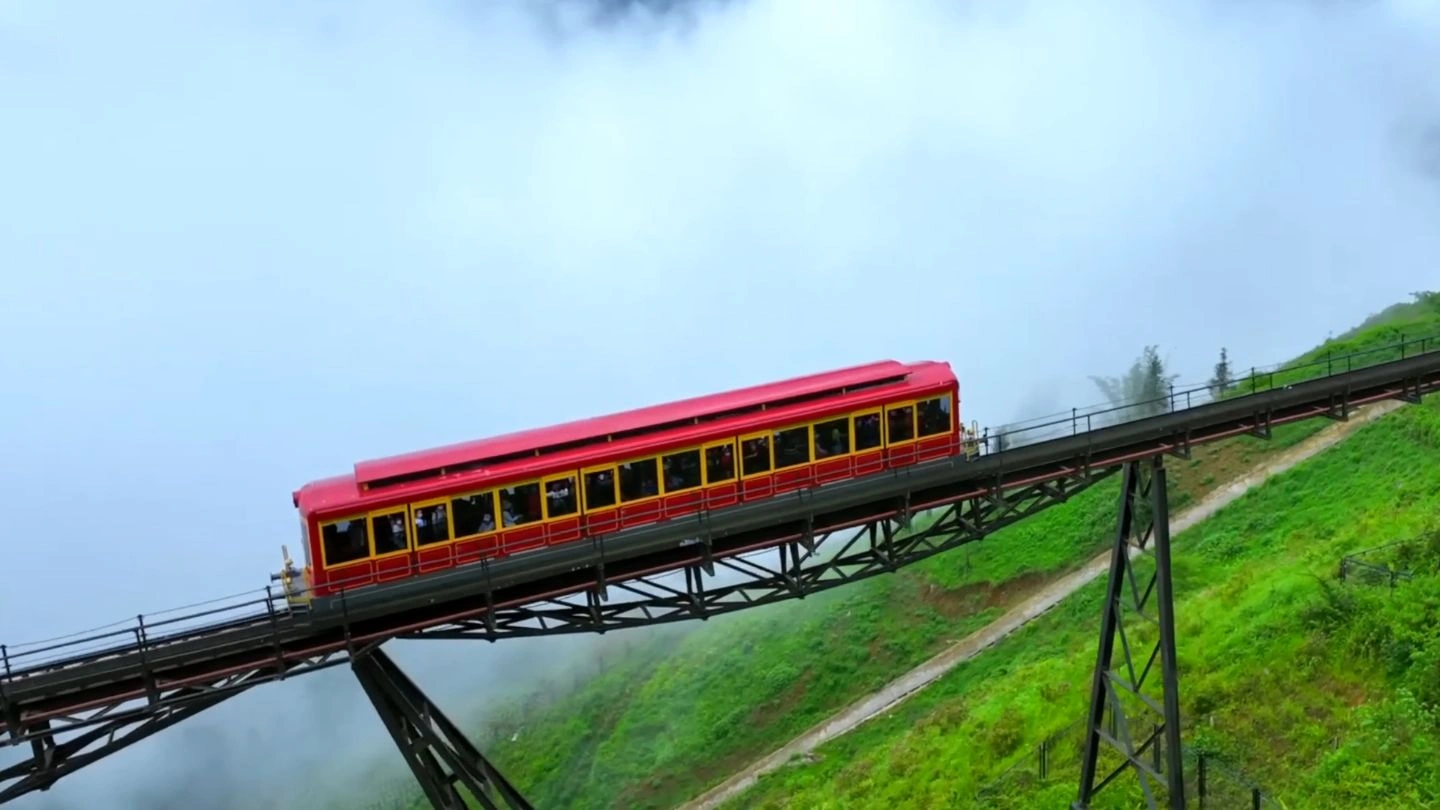
The Muong Hoa funicular opened on 31 March 2018, built by Sun Group. At roughly 2 km it remains the longest funicular in Vietnam, running from the edge of Sapa town to the Fansipan cable car station.
The line threads through two tunnels and four viaducts, hitting speeds up to 10 metres per second and moving as many as 2,000 passengers an hour. What took 15–20 minutes by car on the twisting mountain road now takes about six. It’s less a transfer than a ride worth taking for its own sake.
A train styled like 1900s Europe
The two cabins were designed and built by Garaventa, the Swiss funicular specialists, and styled after early-twentieth-century European trains. Each runs about 20 metres long and carries up to 200 people, so even a full load rarely feels cramped.
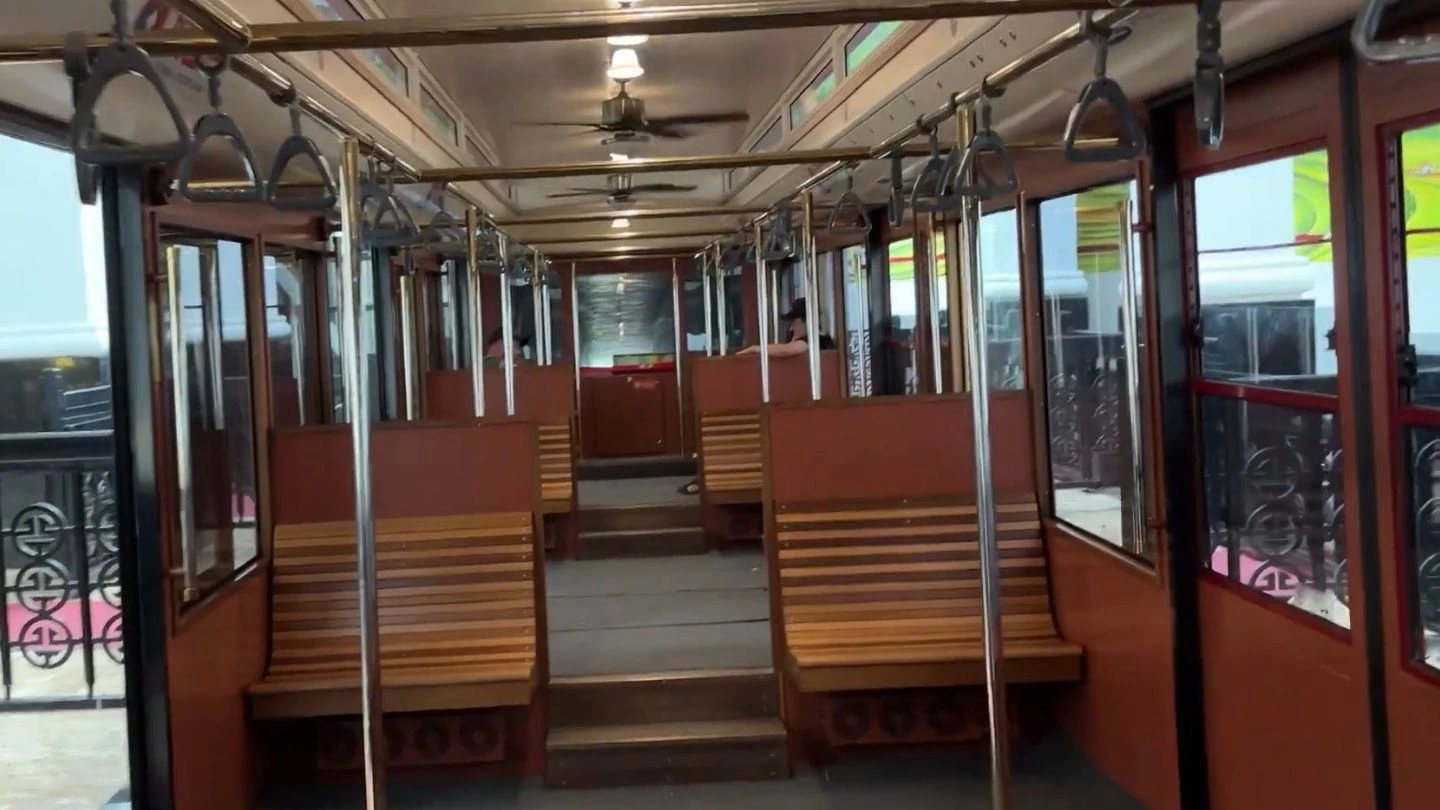
The detailing is where it earns the queue. Antique ceiling fans turn overhead, brass poles run between terracotta benches, and the floor is laid in warm timber. The station carries the same theme: a glass-and-iron departure hall in Sun Plaza, designed by American architect Bill Bensley, who also styled the neighbouring MGallery hotel. It’s a deliberate piece of theatre before the mountain begins.
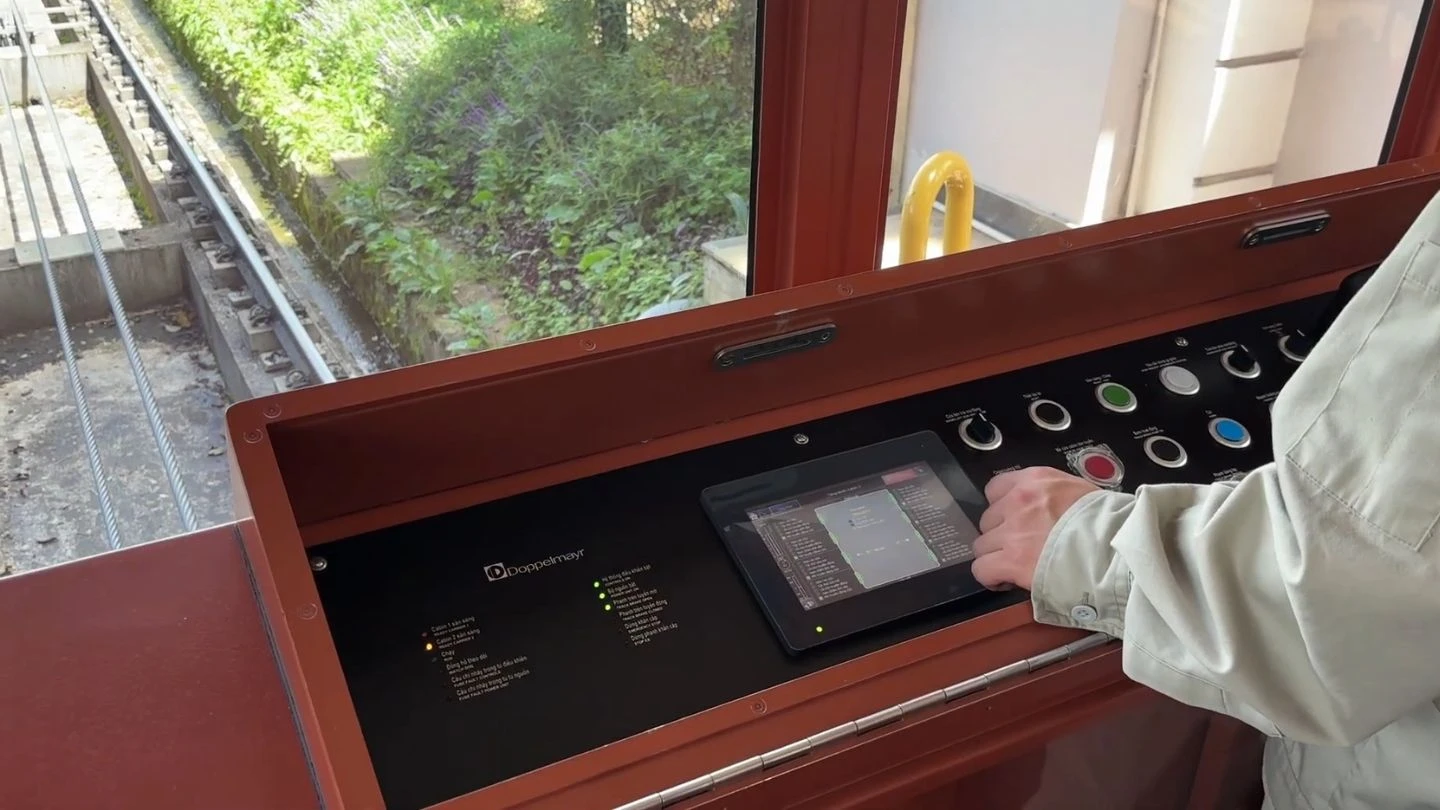
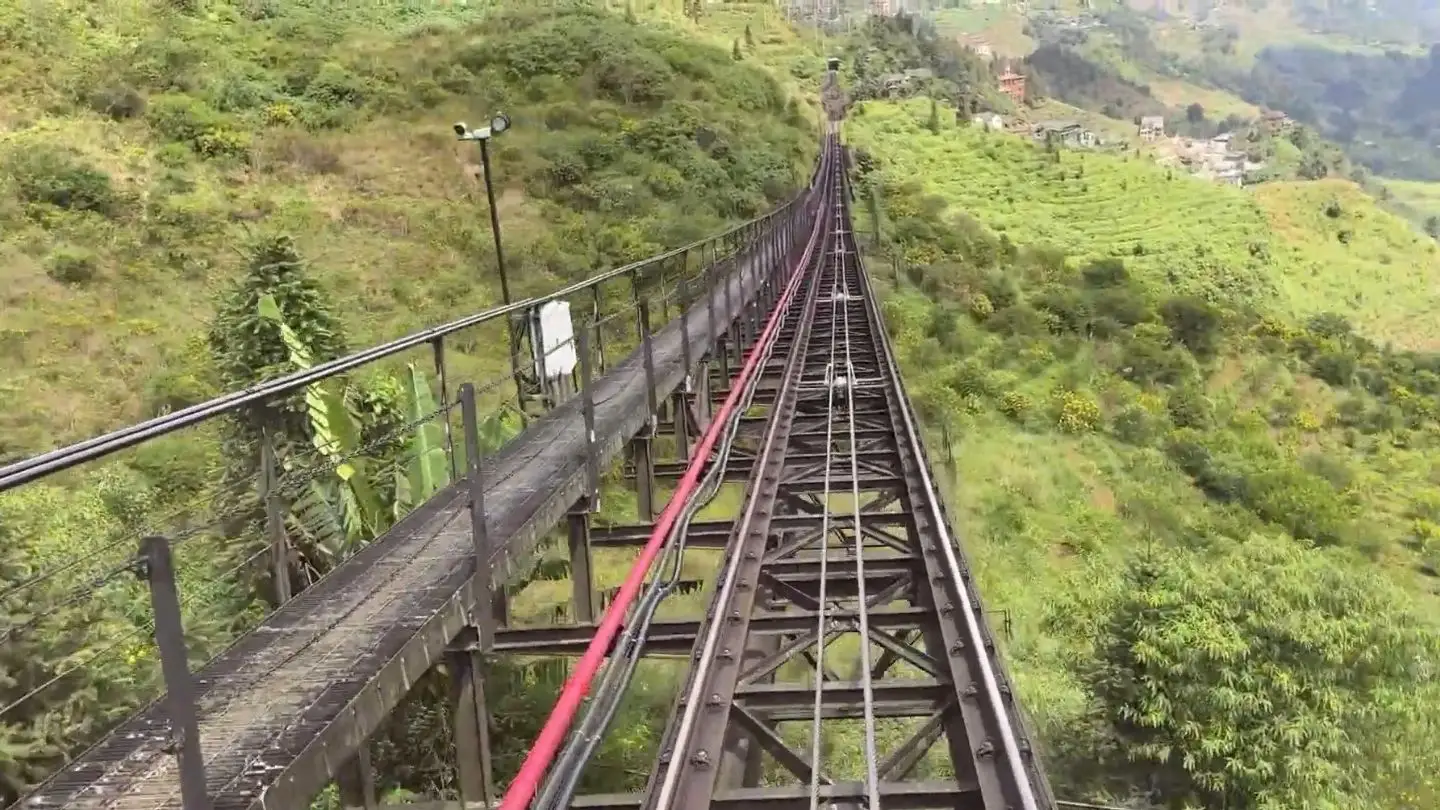
Most people are busy looking out the window, but if you sit near the front of the train, you can catch a glimpse of the control panel and the tracks stretching ahead.
The ride: six minutes over Muong Hoa valley
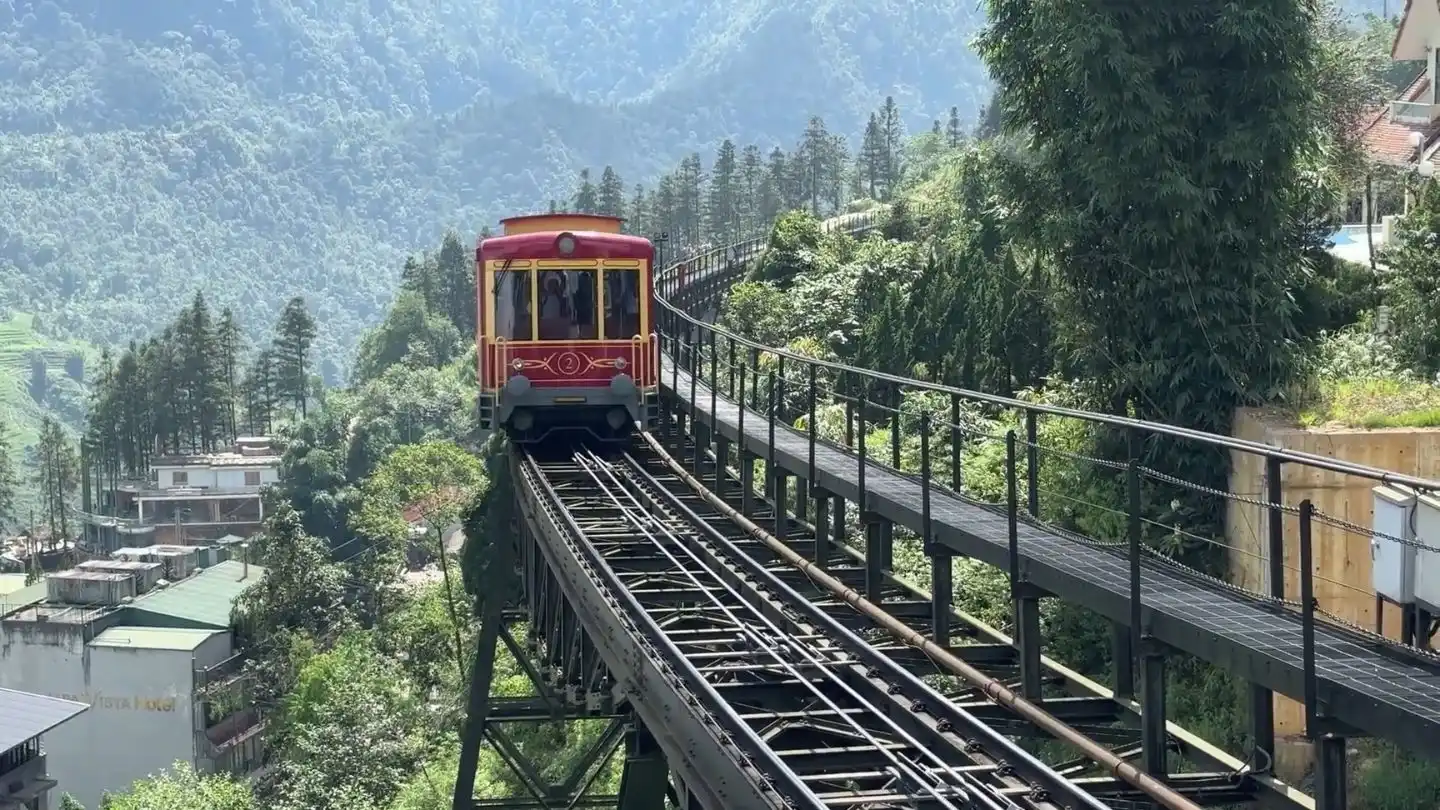
The reason to look up from your phone is the glass. Wide windows on both sides open onto Muong Hoa valley — terraced rice fields, scattered hamlets, and, in late spring, the rose gardens covered in our Rose Valley guide. Morning and late afternoon give the clearest air and the softest light for photos.
The funicular runs on demand rather than to a timetable — it departs once the cabin fills, so expect a brief queue at busy times. Boarding is inside Sun Plaza, a few steps from the ticket counters.
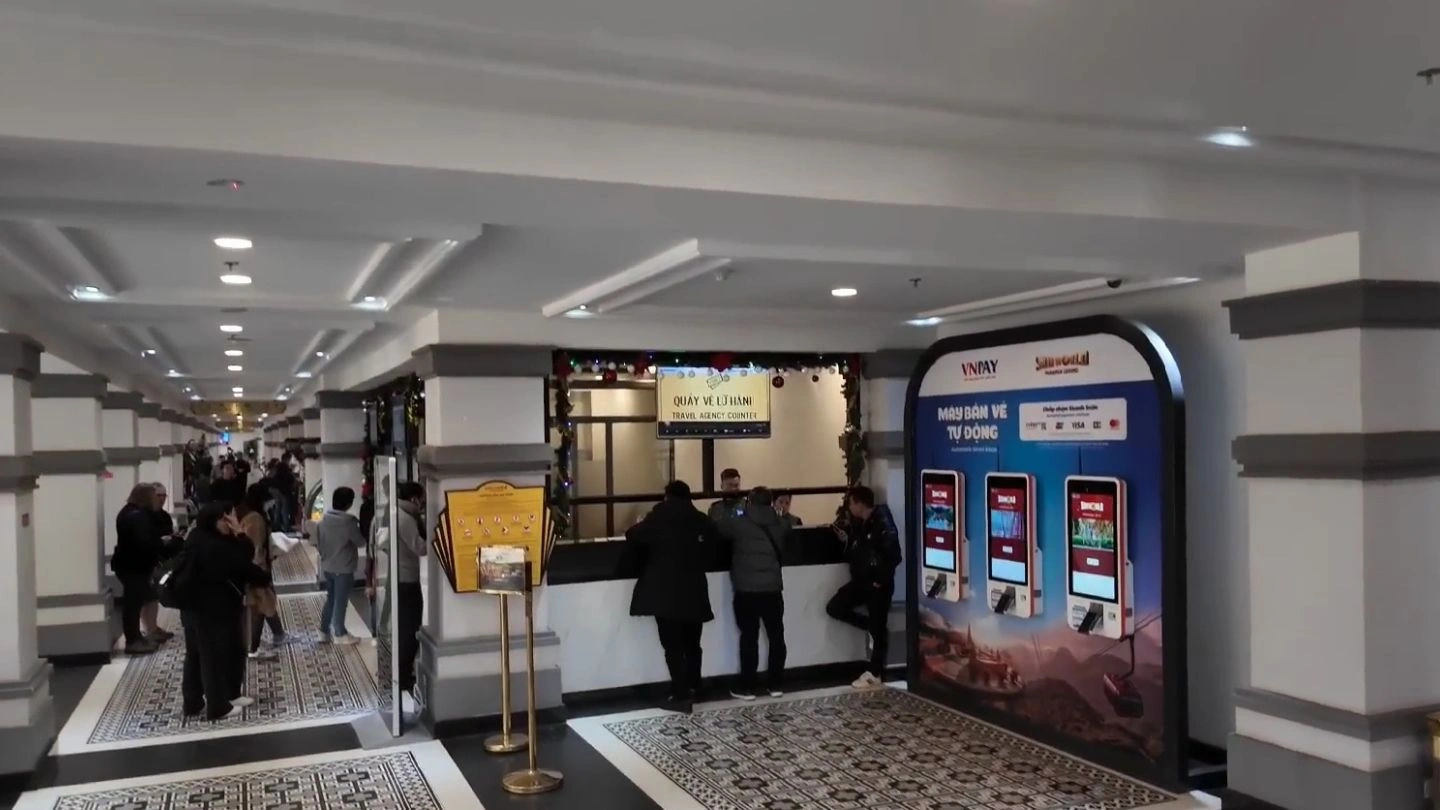
Where the train fits in the bigger climb — and which of the funiculars you can skip — is laid out in our funicular and cable car system guide. For fares, child rates, and where to buy, see the Fansipan ticket guide.
From our team: stand at the downhill end of the cabin and face back toward the valley. As the train climbs, the terraced fields drop away beneath the windows — it’s the shot most people miss because they’re watching the station ahead.
→ The Fansipan set: funicular + cable system | cable car prices | the complex in full | full mountain guide — or browse all things to do in Sapa →


Arriving at Muong Hoa Station
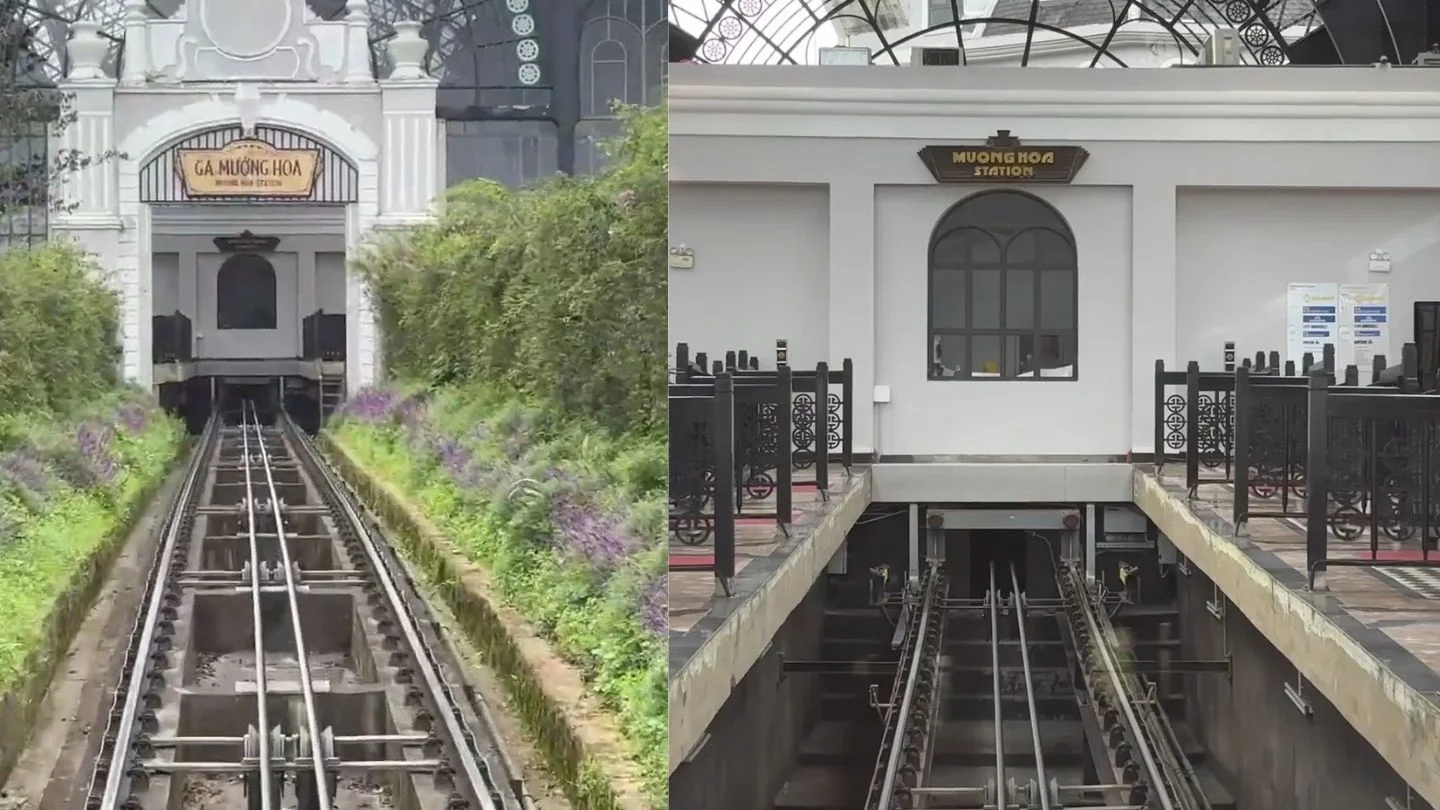
After arriving at Muong Hoa Station, visitors take a short walk to the Hoang Lien Cable Car Station. The cable car ride takes about 15 minutes and brings passengers to Fansipan Station, located near the summit area.
From Fansipan Station, visitors can either climb the stairs or continue their journey on the Fansipan Mountain Railway. Along this route, the train passes through Do Quyen Station and Truc May Station before reaching the area closest to the summit. From there, visitors only need to walk a short distance and climb a few remaining steps to reach the peak of Fansipan, known as the Roof of Indochina.
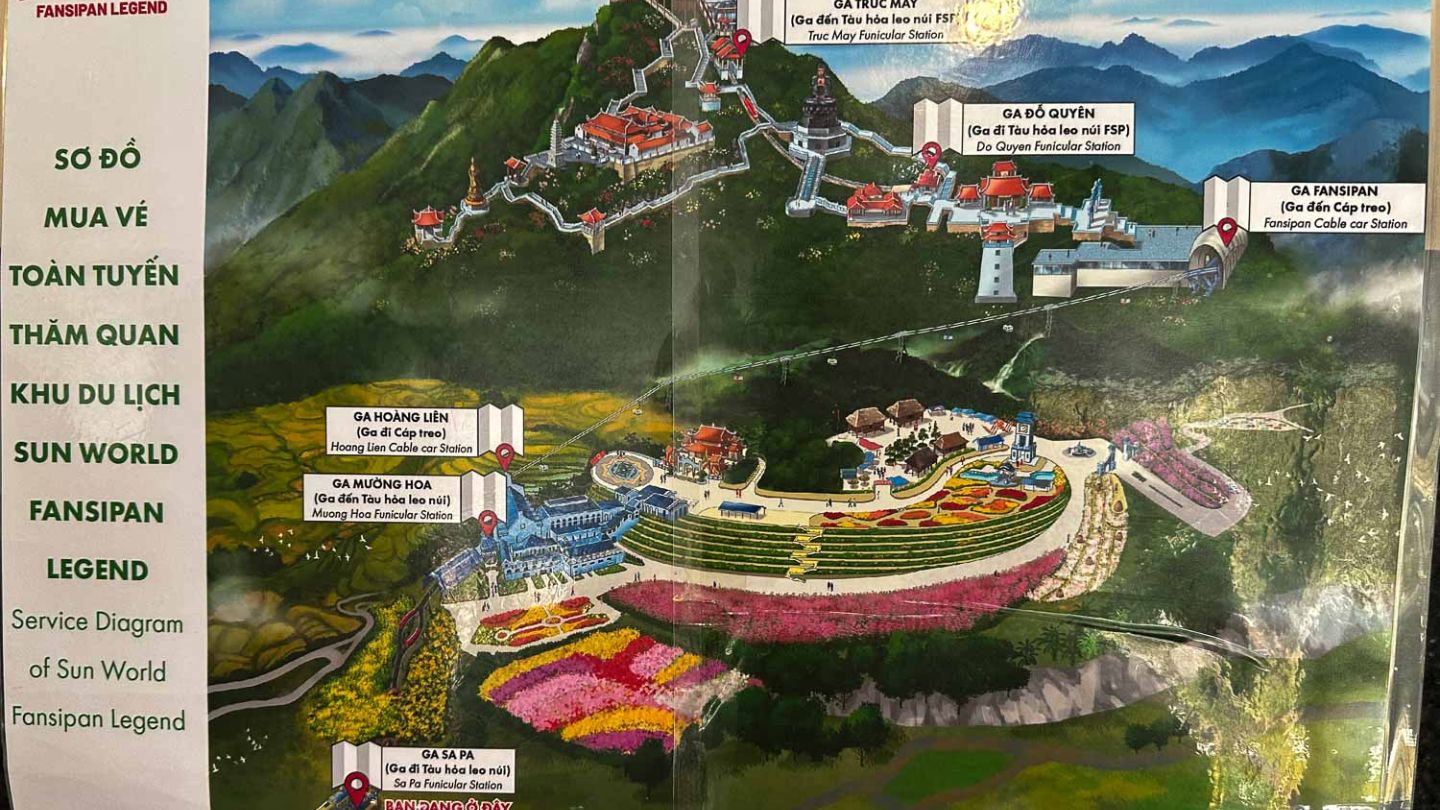
Muong Hoa Station
- The final stop of the Muong Hoa Funicular.
- Serves as the transfer point to the cable car.
Fansipan Station
- The arrival station of the Hoang Lien Cable Car.
- Marks the beginning of the summit area.
Do Quyen Station
- Located along the Fansipan Mountain Railway route.
- Named after the rhododendron flower, which is famous in the Hoang Lien Son mountain range.
Truc May Station
- The station closest to the summit on the Fansipan Mountain Railway.
- From here, visitors only need to walk a short distance to reach the Fansipan peak marker.
FAQs
What is the Muong Hoa funicular?
It’s the mountain railway connecting Sapa town to the Fansipan cable car station — about 2 km, around six minutes, and the longest funicular in Vietnam. It’s the first leg of the journey up Fansipan, not the cable car itself.
How long is the funicular ride, and how fast is it?
Roughly six minutes each way over about 2 km, at speeds up to 10 metres per second. It replaces a 15–20 minute drive on the winding road between town and the cable car station.
How much is the Muong Hoa funicular ticket?
Round-trip fares start around 200,000 VND, and the funicular is usually bought together with cable car tickets at Sun Plaza. For current prices and child rates, see our Fansipan ticket guide.
Is the funicular the same as the Fansipan cable car?
No. The funicular is the mountain train at the bottom, from the town to the cable car station. The cable car is the gondola that actually climbs Fansipan, connecting with a second funicular at the top.
Sun Group could have run a plain shuttle bus, and nobody would have minded. Instead, they built a two-kilometre stage set on rails and handed you the prettiest opening act in Sapa. Take the window seat — the mountain can wait six minutes.
Related Tours & Transport
