


 Sapa Tours & Activities
Fansipan Funicular vs Cable Car: They’re Not a Choice (2026)
Search “Fansipan funicular vs cable car,” and you’d think you have to pick one. You don’t — and the question quietly trips up thousands of visitors a year.
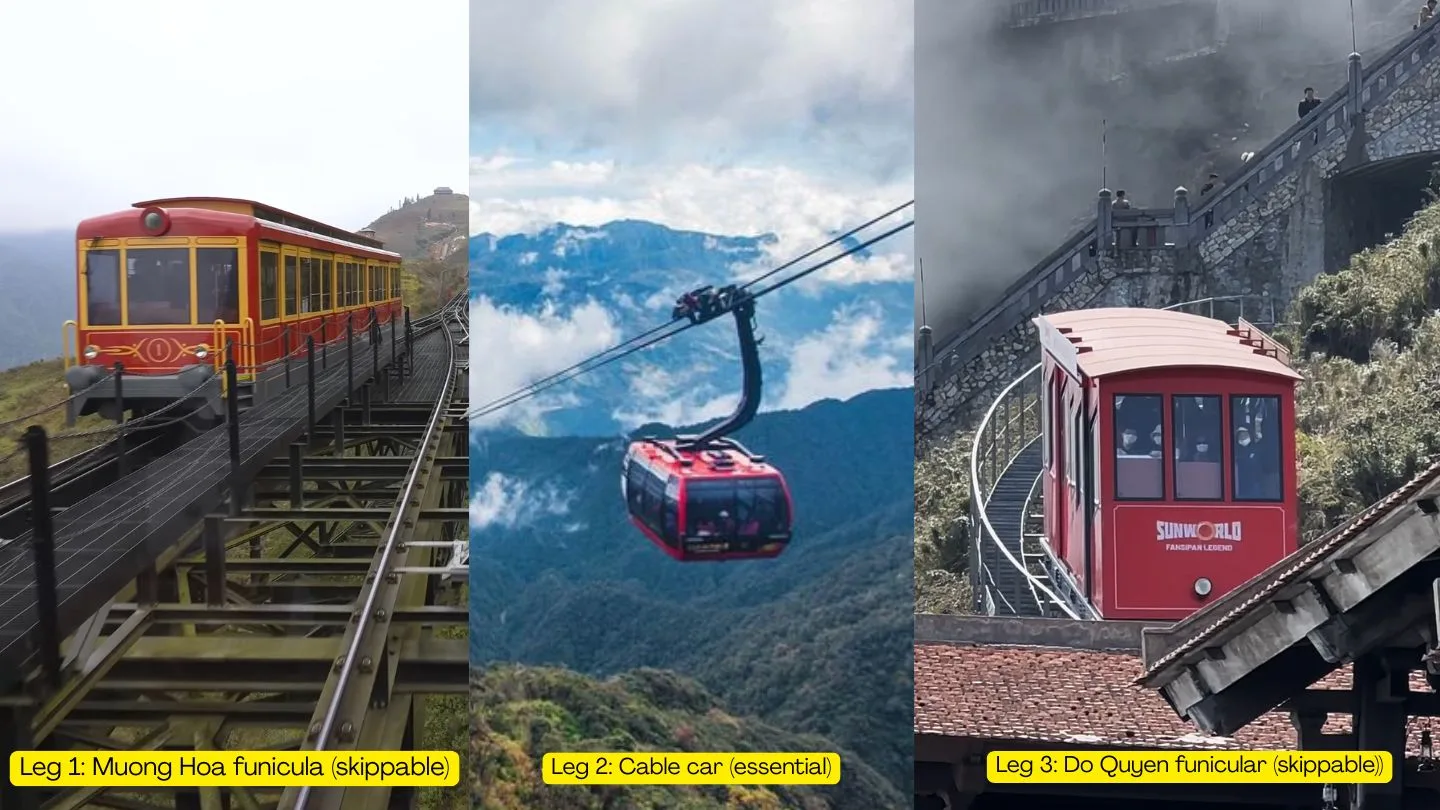
The funicular and the cable car aren’t rivals. They’re different legs of the same journey, stacked on top of each other: a train to the mountain, a cable car up it, and a second train to the top. Here’s how the system actually works, and which legs you can skip.
Three legs, not a choice
From Sapa town to the 3,147 m summit, the journey stacks three separate rides. Each sells its own ticket, and only the middle one is essential.
| Leg | What it does | Round-trip | Skip it? |
|---|---|---|---|
| 1. Muong Hoa funicular | Sun Plaza (town) → cable car station, ~5 min through the valley | 200,000 VND | Yes — take a taxi (~50–100k) instead |
| 2. Cable car | Hoang Lien station → Fansipan station, 6.3 km in 15 min |
|
No — the only way up the mountain |
| 3. Summit funicular (Do Quyen) | Cable car station → near the peak | 320,000 VND | Yes — climb the final ~600 steps free |
So the real choice isn’t “funicular or cable car.” It’s which of the two optional funiculars you pay for, on either side of the one ride you can’t avoid.
Leg 1 — the Muong Hoa funicular (skippable)

This is the scenic train from Sun Plaza in the town centre to the cable car station, a short ride through Muong Hoa Valley. It runs when full rather than on a fixed schedule, so a short wait is normal. It saves a bumpy 15–20 minute road trip — pleasant, but a taxi does the same leg for less. Worth it for the view and the comfort; easy to skip on a budget.
Leg 2 — the cable car (essential)
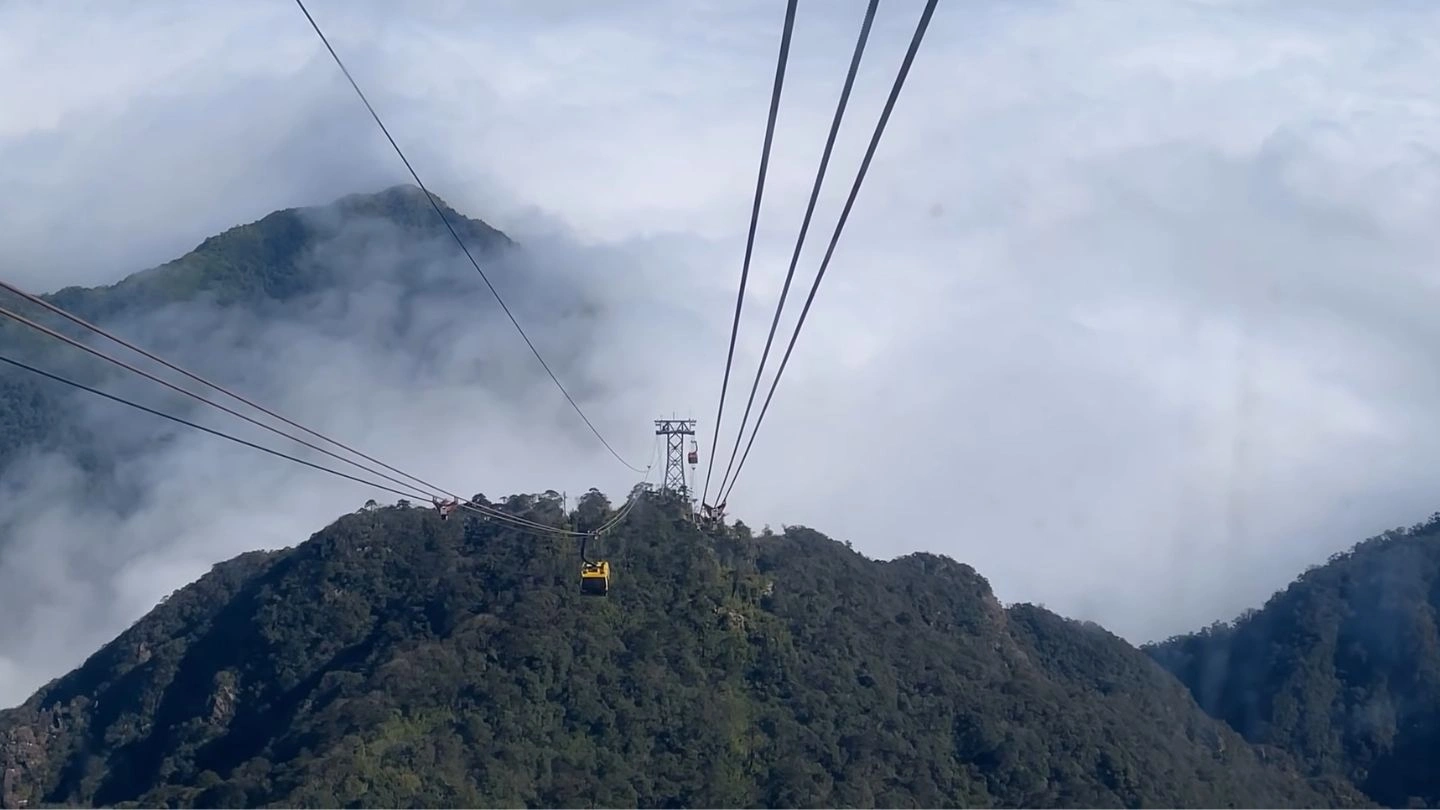
This is the part that actually climbs the mountain: 6.3 km of cable, about 15 minutes, rising roughly 1,400 meters over the terraced valleys. It holds Guinness records for a three-rope system and has run since 2016. There is no shortcut here — your only alternative to the cable car is hiking the mountain over two days. For ticket prices, child rates and where to buy, see our Fansipan cable car ticket guide.
According to the Vietnam National Authority of Tourism, reaching the summit of Fansipan no longer requires a two-day hike. Today, the cable car carries 30–35 passengers per cabin, transporting up to 2,000 people every hour and completing the journey in just 15 minutes.
Leg 3 — the summit funicular (skippable)

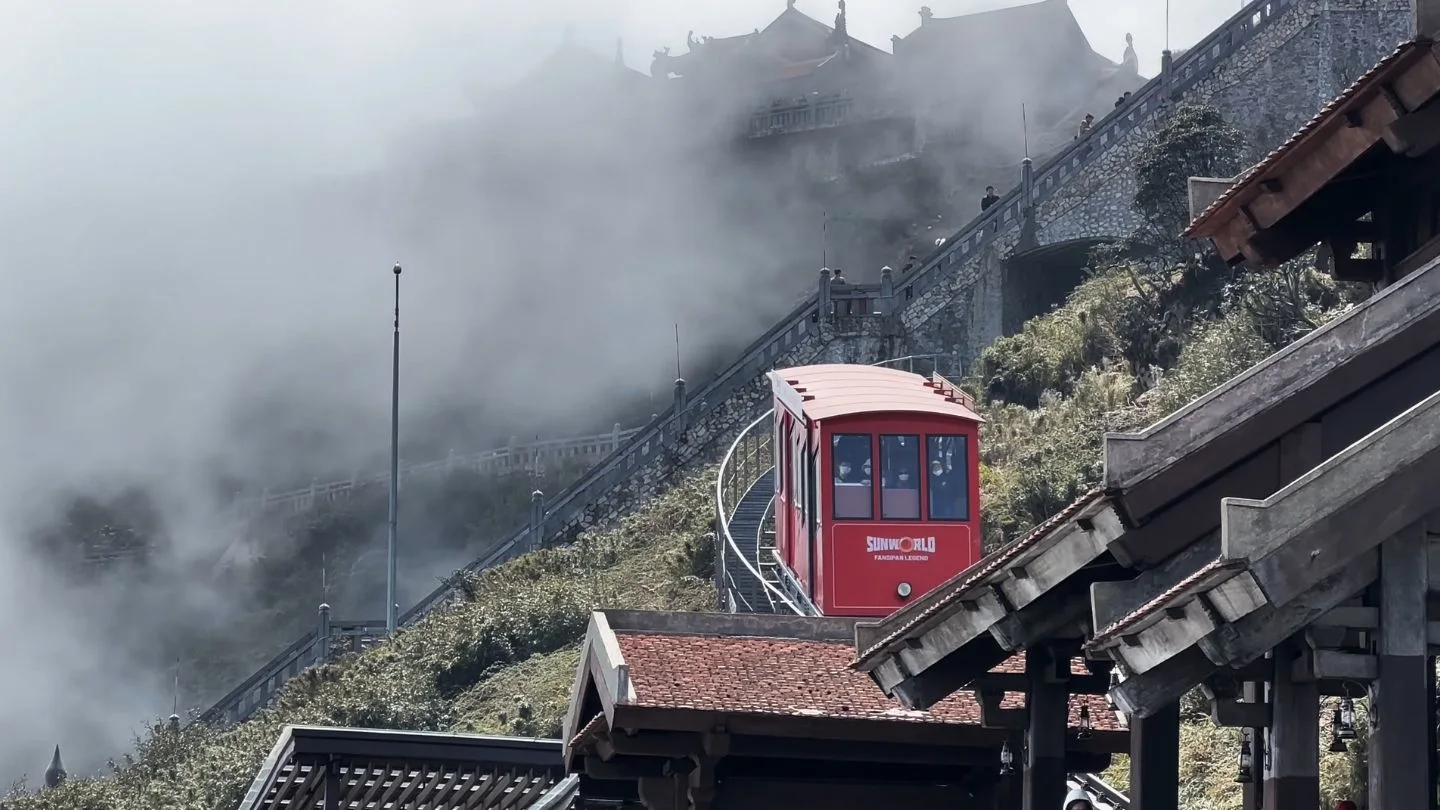
The cable car drops you near, but not at, the top. From its upper station, the Do Quyen funicular covers the last stretch to the summit area — or you climb roughly 600 stone steps yourself. At over 3,000 meters the steps are honest work, 20–30 minutes for most people. If your knees are willing, this is the easiest leg to save money on. If they’re not, the funicular is worth every dong.
Can you reach Fansipan without the cable car?
Yes — on foot. The classic trek to the summit takes two to three days with a guide, and it’s a real adventure, not a stroll. That’s a completely different trip from the rides above. If earning the peak appeals more than floating to it, start with our honest take on whether to hike or take the cable car.

From our team: most first-timers take the cable car plus both funiculars on the way up — then walk the 600 steps down to save a little and stretch their legs. It’s the comfortable-but-not-extravagant middle path.
→ The Fansipan set: cable car prices & real total | what to do at the summit | full mountain guide — or browse all things to do in Sapa →


FAQs
Is the Fansipan funicular the same as the cable car?
No. The cable car is the gondola that climbs the mountain — the one essential ride. The funiculars are mountain trains on either side of it: one from town to the cable car station, one from the upper station to the summit. They’re sequential legs, not alternatives.
Do I need both funiculars and the cable car?
You need the cable car — it’s the only way up short of a two-day hike. Both funiculars are optional: a taxi replaces the lower one, and 600 steps replace the upper one. Take all three for full comfort, or trim to the cable car alone to save money.
How long is the cable car ride up Fansipan?
About 15 minutes each way, covering 6.3 km and climbing roughly 1,400 meters — a Guinness-recognized three-rope line running since 2016.
How much does the whole journey cost?
The cable car is 850,000 VND round-trip for adults (>1.4m) and 550,000 VND for children (1m – 1.4m); the Muong Hoa funicular adds 200,000 VND, and the summit funicular adds 320,000 VND. All-in runs roughly 1.070 – 1.370 million VND per adult.
The mountain only ever asked for one thing: that you climb it. Fansipan funicular vs cable car isn’t really about which ride is better. The cable car ascends the mountain. Everything else — the train from town, the train at the top – is simply the question of how much of the journey you’d rather hand to a machine.
Related Tours & Transport
