


 Sapa Tours & Activities
Rose Valley Sapa: Vietnam’s Biggest Rose Garden (2026)
Ride the little mountain train out of Sapa in May, and the hillside turns red before you ever reach Fansipan. Three hundred thousand rose bushes climb the slope on both sides of the track — the largest rose garden in Vietnam. Most people pass straight through it on the way to the cable car, never quite realizing what they just rode past.
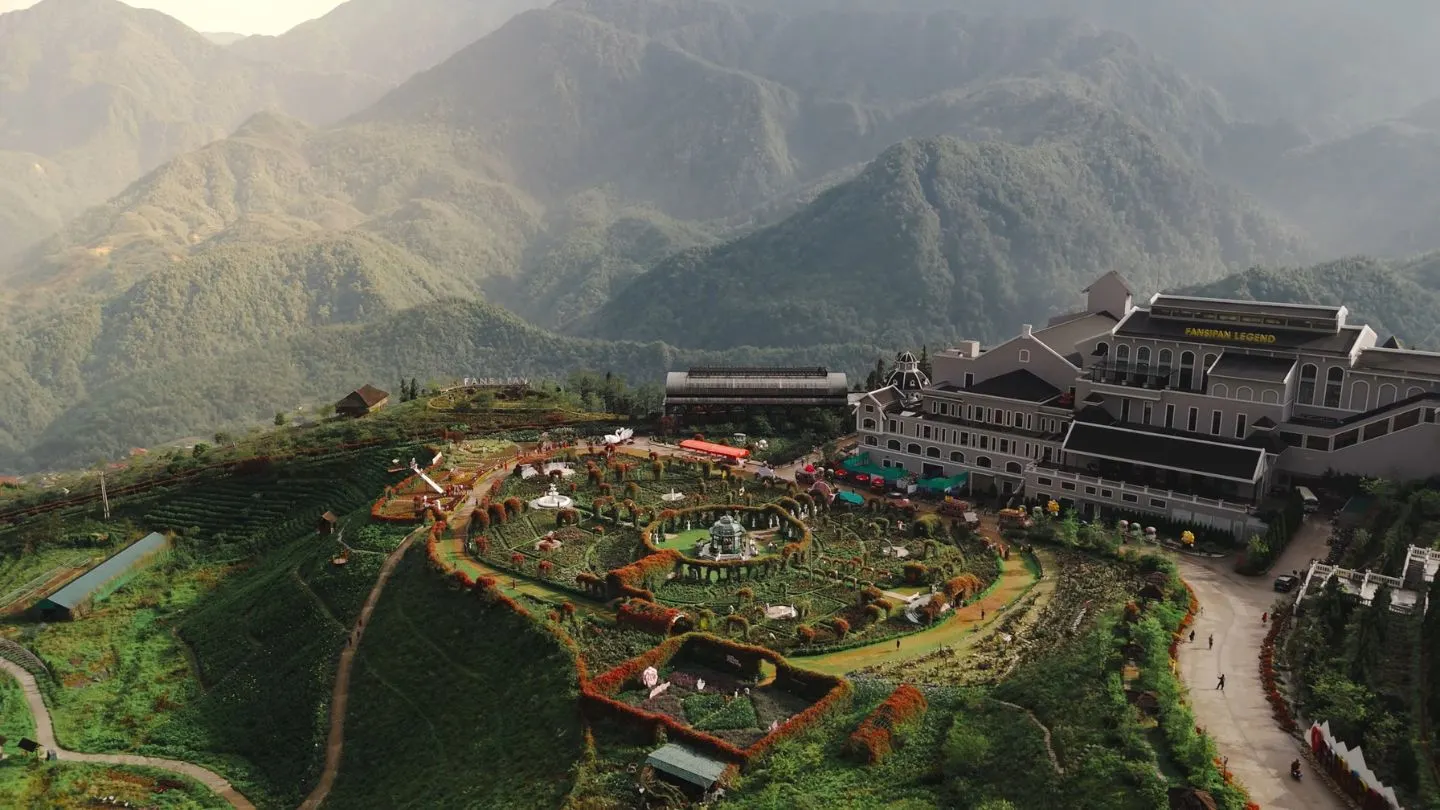
Vietnam’s largest rose valley — the real numbers
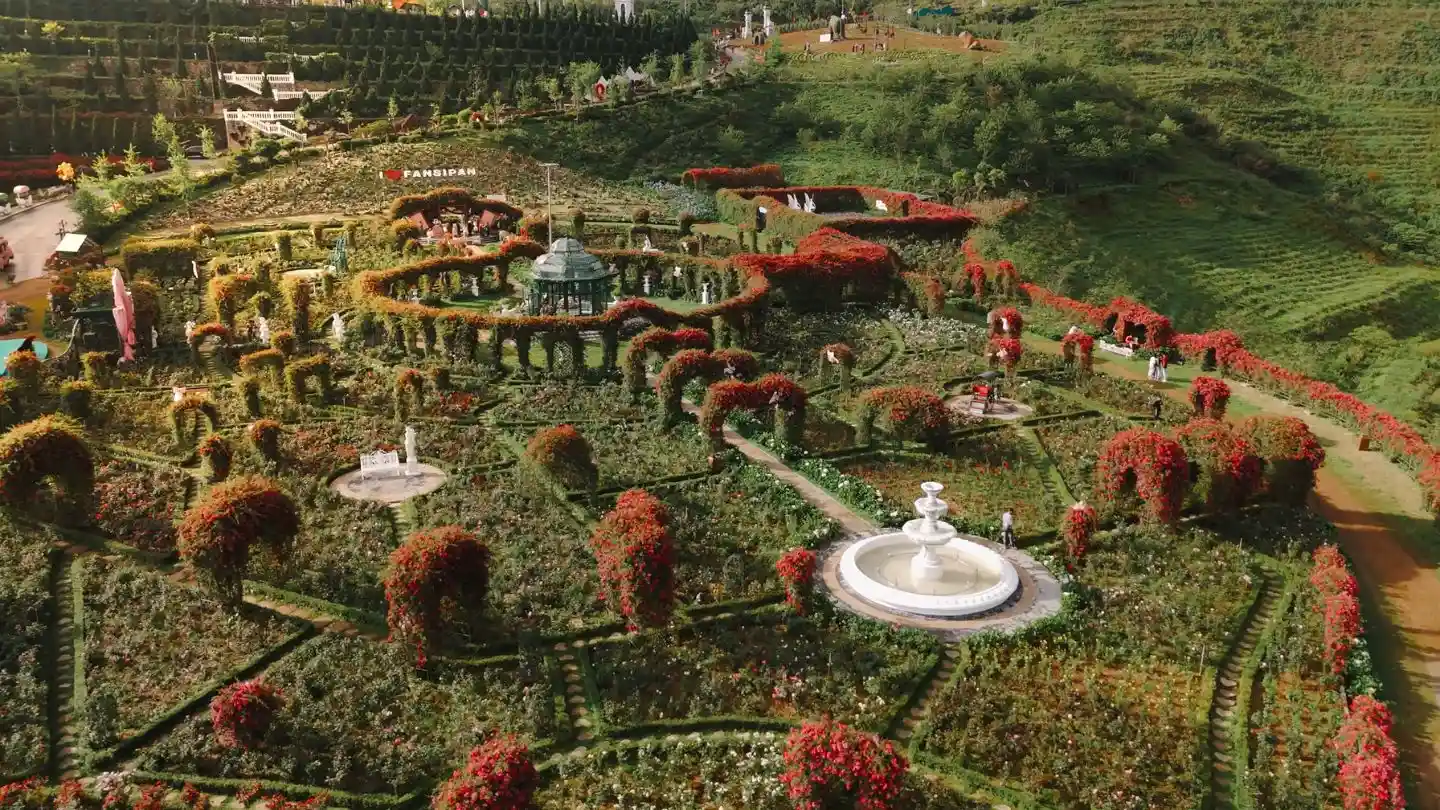
Rose Valley Sapa earns its name by the numbers. The garden covers about 50,000 square meters and holds more than 300,000 rose bushes. The varieties run past 150 — heritage Sapa, Hue and Hai Phong old roses, the pale-pink Van Khoi.
In May 2020, it was certified as the largest rose valley in Vietnam. The cool mountain air suits the plants: many blooms open as wide as a rice bowl, with a density and scent that lowland gardens rarely manage. If you saw an older figure of “10,000 bushes over 5,000 square meters” somewhere, that’s long out of date — the valley is roughly ten times that size.
When the roses bloom

The roses follow the mountain seasons. They start opening in March, build through late spring, and reach their fullest in May and early summer. That peak is when Sun World stages the Fansipan Rose Festival — roughly ten days of full bloom each May.
June to August keeps the rose valley Sapa full and green, but it overlaps Sapa’s rainy season, so pack for showers. Autumn, September to November, trades sheer volume for soft light and morning mist. For how the wider mountain shifts month to month, see the full Fansipan guide.
How to see it

Rose Valley Sapa sits about 2.5 km from Sapa town, in Village 1 on Muong Hoa Street, and runs uphill from Sun Plaza to the cable car station. There are three ways in:
- On foot — the 2.5 km along Muong Hoa Street takes 20–30 minutes and is scenic the whole way.
- Motorbike or taxi — a short hop from the town centre; the main road runs right past the valley.
- The Muong Hoa funicular — the mountain train threads straight through the flowers on its way to the Fansipan cable car. How the funicular fits the climb is covered in our cable car system guide.
The valley is part of the Sun World Fansipan Legend complex, so most people take it in as the opening act of a Fansipan day rather than a separate trip. For funicular and cable car prices, see our Fansipan ticket guide.
These days, it costs around 70,000 VND per person to wander through Sapa’s Rose Valley and stop for as many photos as you like.
From our team: go on a weekday morning if you can. The festival fortnight in May is the garden at its absolute peak — but it’s also when every photo has three strangers in it. Soft early light on a quiet Tuesday is the version we’d choose.
→ The Fansipan set: the complex in full | cable car prices | full mountain guide | best photo spots in Sapa — or browse all things to do in Sapa →


FAQs
Where is Rose Valley Sapa?
In Village 1 on Muong Hoa Street, about 2.5 km from Sapa town centre. The garden runs uphill from Sun Plaza to the Fansipan cable car station, alongside the Muong Hoa funicular line.
Is Rose Valley the same as Sun World Fansipan?
It’s part of it. Rose Valley is the rose garden inside the Sun World Fansipan Legend complex. It’s the flowers you pass on the funicular up to the cable car, not a separate attraction across town.
When is the best time to see the roses?
Late spring to early summer, with May the headline month — that’s when the Fansipan Rose Festival runs, and the blooms are fullest. March starts the season; autumn brings softer light but fewer flowers. Early morning beats both crowds and harsh light.
Do you need a separate ticket for Rose Valley?
You reach it through the Sun World Fansipan complex, so it comes as part of a Fansipan visit rather than a standalone gated garden.
Most travelers come to Sapa for the summit and treat the roses as scenery on the way up. Time it for May and step off the train, and the scenery at Rose Valley Sapa turns out to be the destination. Three hundred thousand roses, blooming at the foot of the highest mountain in the country.
Related Tours & Transport
