


 Sapa Tours & Activities
Sapa Night Market: Hours, Location & Is It Worth It? (2026)
The neon gate over Luong Dinh Cua flickers on around half past six, and the lane behind it fills with grill smoke, fairy lights and racks of cheap fleece. Sapa’s night market isn’t quite the hill-tribe bazaar the photos promise – most of what’s on the tables arrived by truck. But for an hour of grilled corn and people-watching in the cold, it’s a pleasant way to spend an evening.
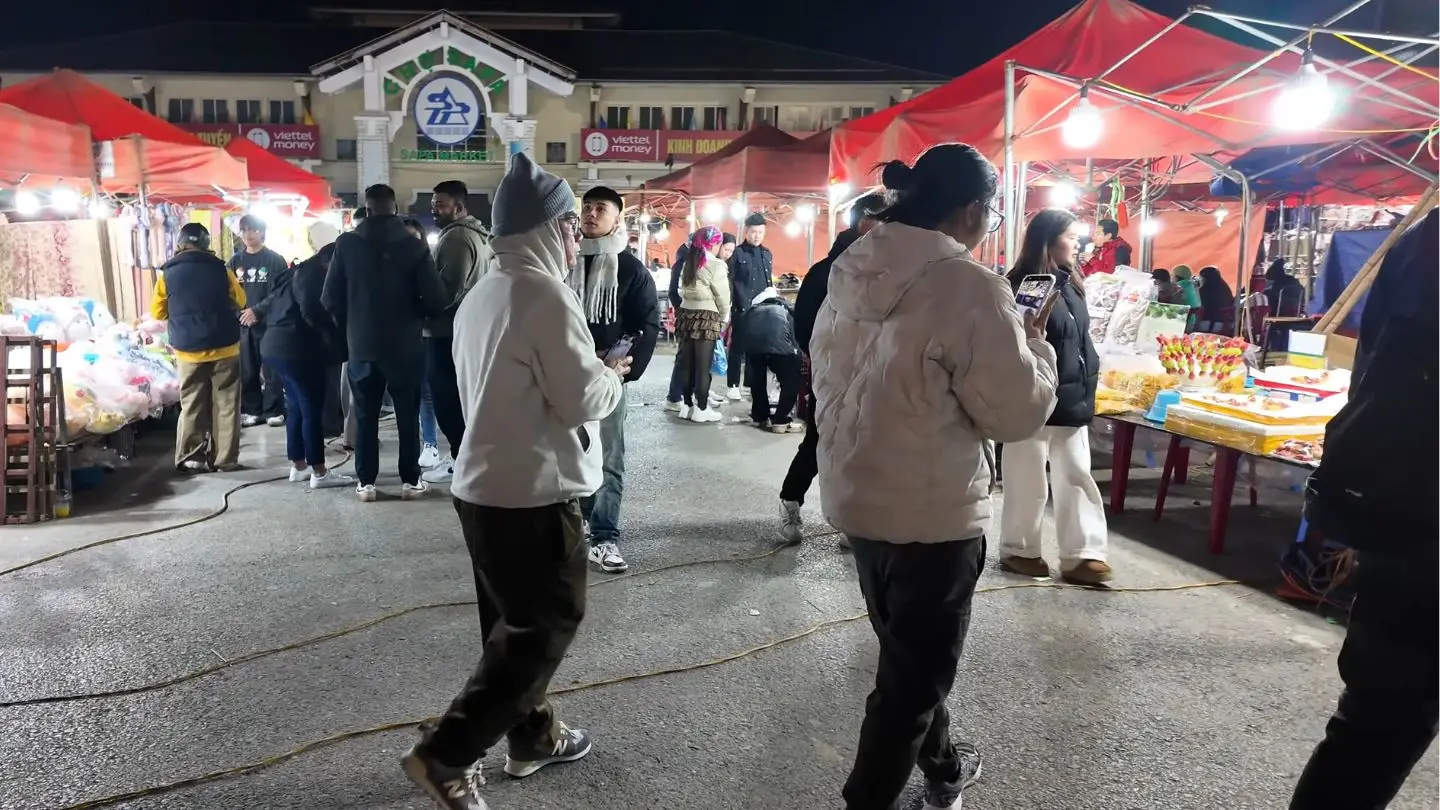
Where it is, and when to go
The night market sits on Luong Dinh Cua Street, a short, flat walk from the town square and the Stone Church. You won’t need a taxi — it’s right in the centre. Look for the lit “Chợ đêm Sa Pa” gateway.
It opens around 6:30 PM nightly and winds down by about 10 PM. Crowds are thickest Friday through Sunday, when day-trippers fill the town.
Two things often get confused with it. The daytime Sapa town centre has its own covered market. And the Saturday-night Love Market is a separate cultural event near the church — not this commercial night market.
What’s for sale
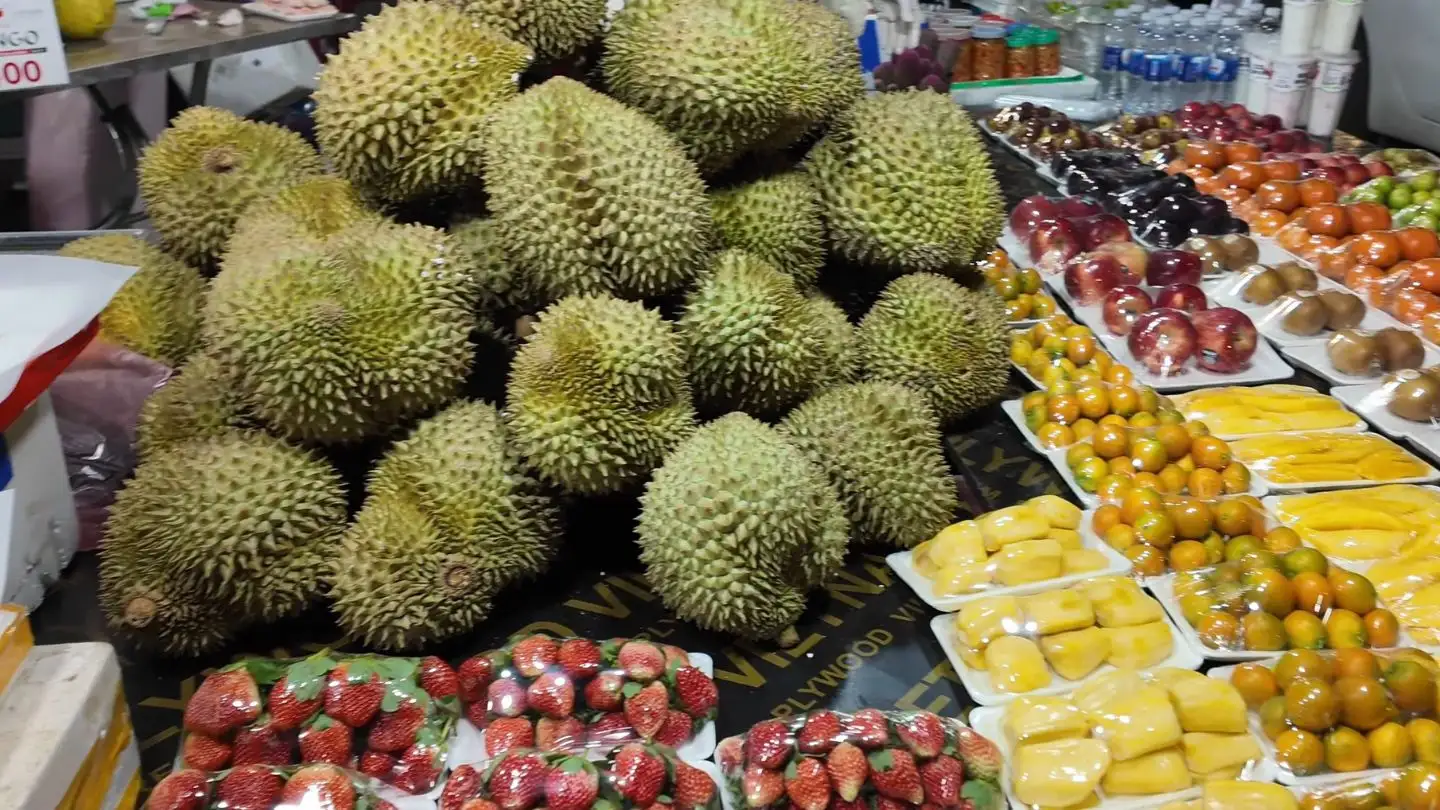
The fruit stalls don’t catch your eye at first. The grilled food always wins. But one lap around the market later, those cups of pineapple, mango and guava suddenly look like exactly what you’ve been craving.
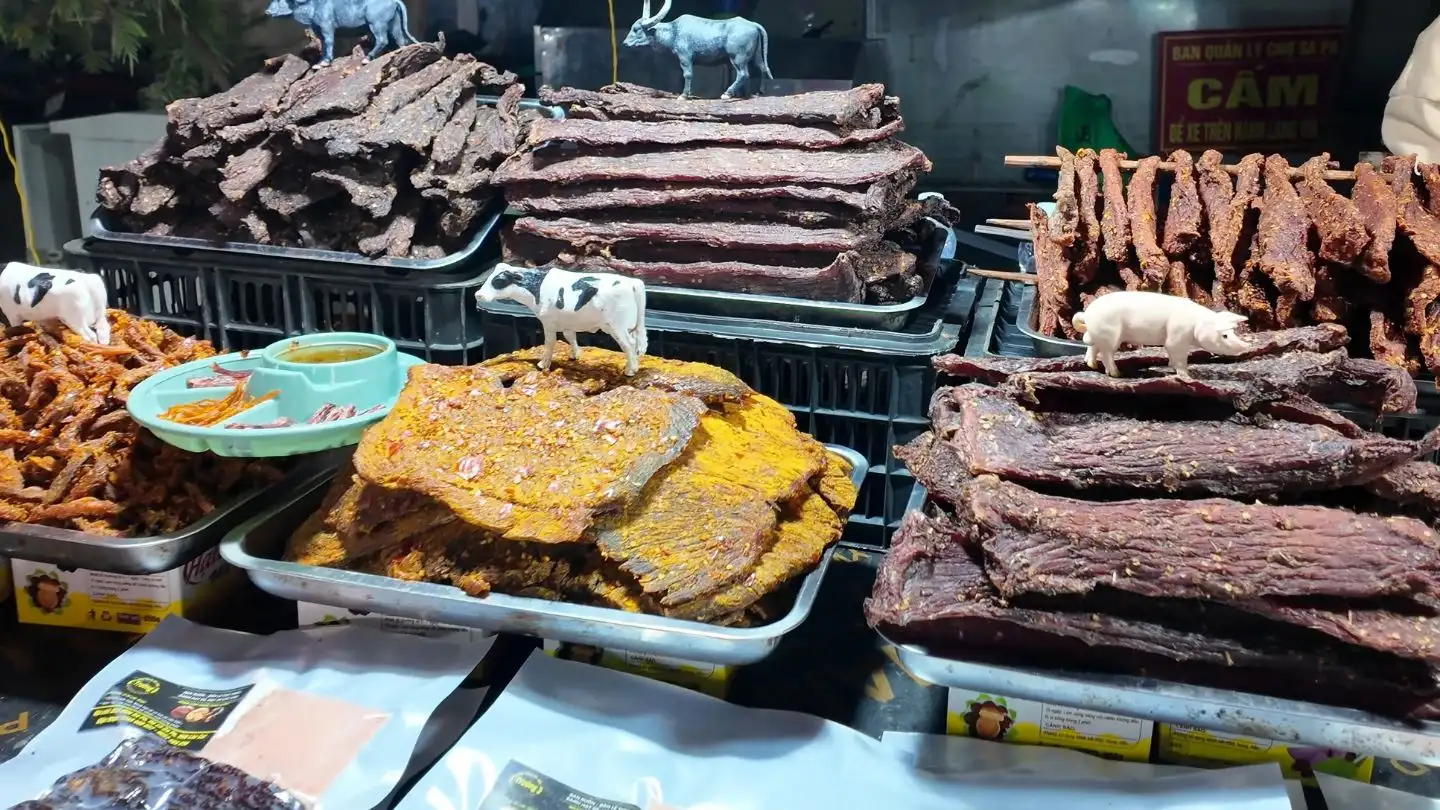
Long strips of smoked buffalo, pork, and horse meat hang outside almost every shop. Before you’ve looked properly, someone is already offering a free sample. That’s how most souvenir shopping starts here.
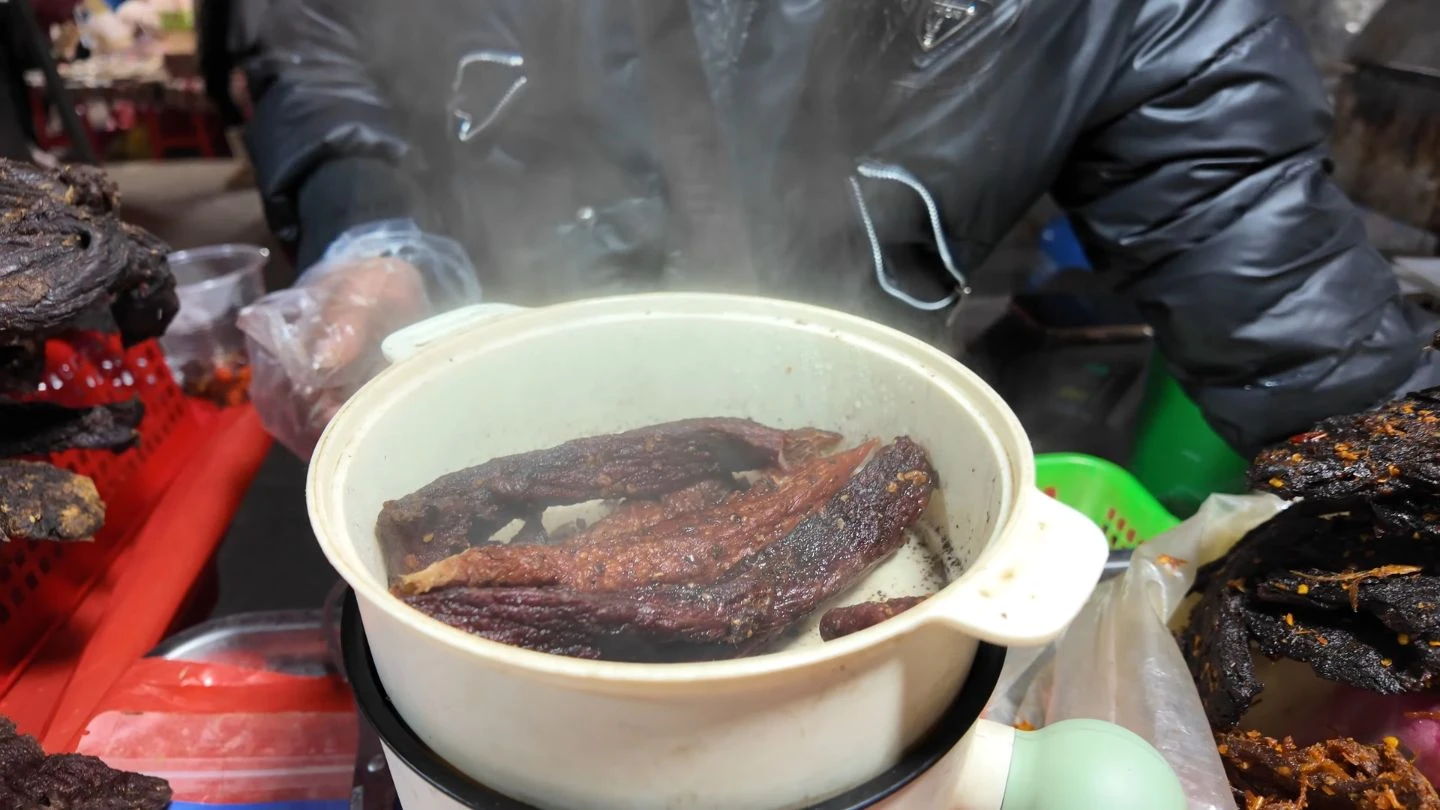
The dried venison doesn’t come straight from the shelf to your plate. First it spends a few minutes in a small steamer, just enough to loosen the fibres. Then comes the chẩm chéo, and suddenly the whole thing tastes unmistakably like the mountains.
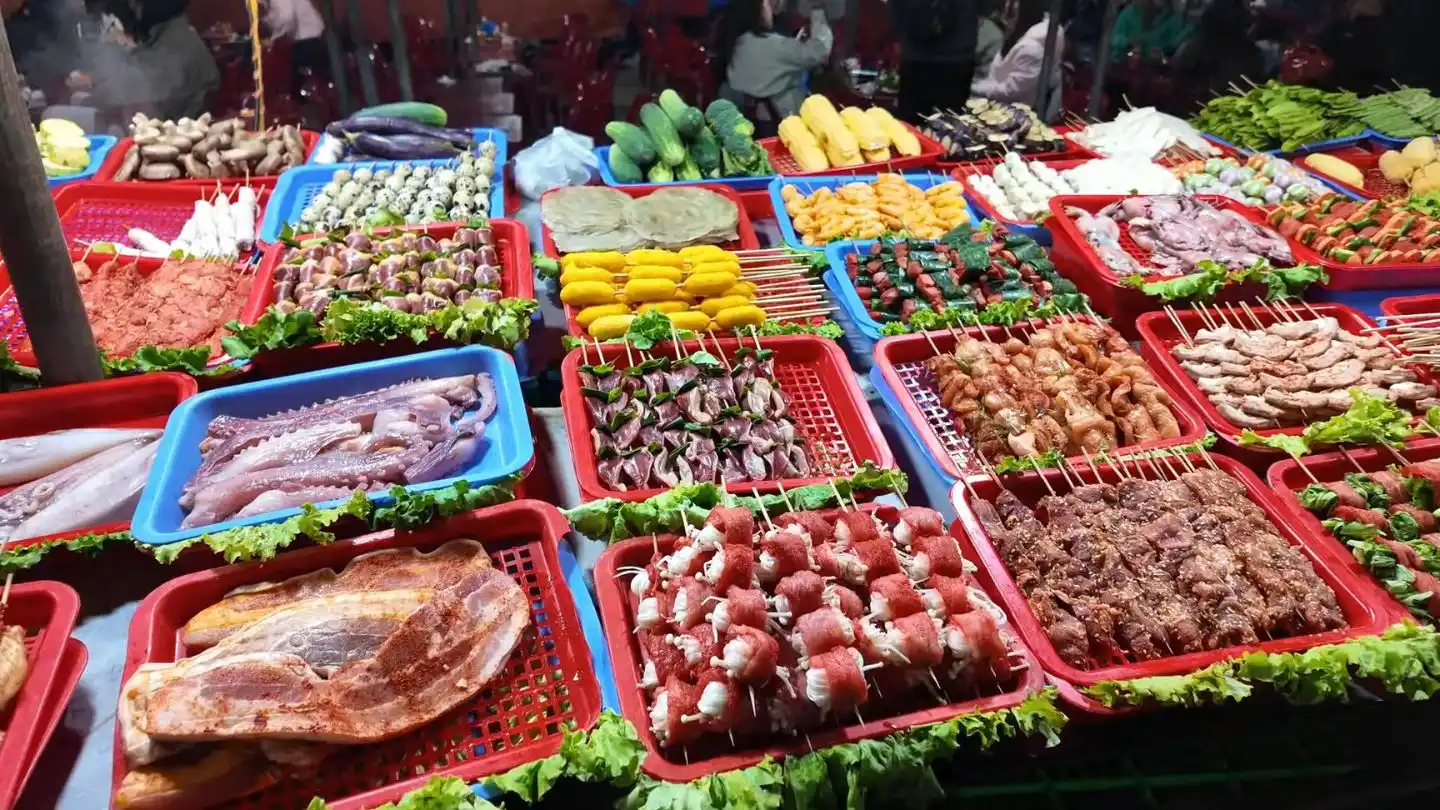
Nobody needs directions to the food grilled stalls. The smoke does that job. Skewers of pork, mushrooms and sticky rice keep turning over charcoal while people slow down, pretending they’re “just looking.”
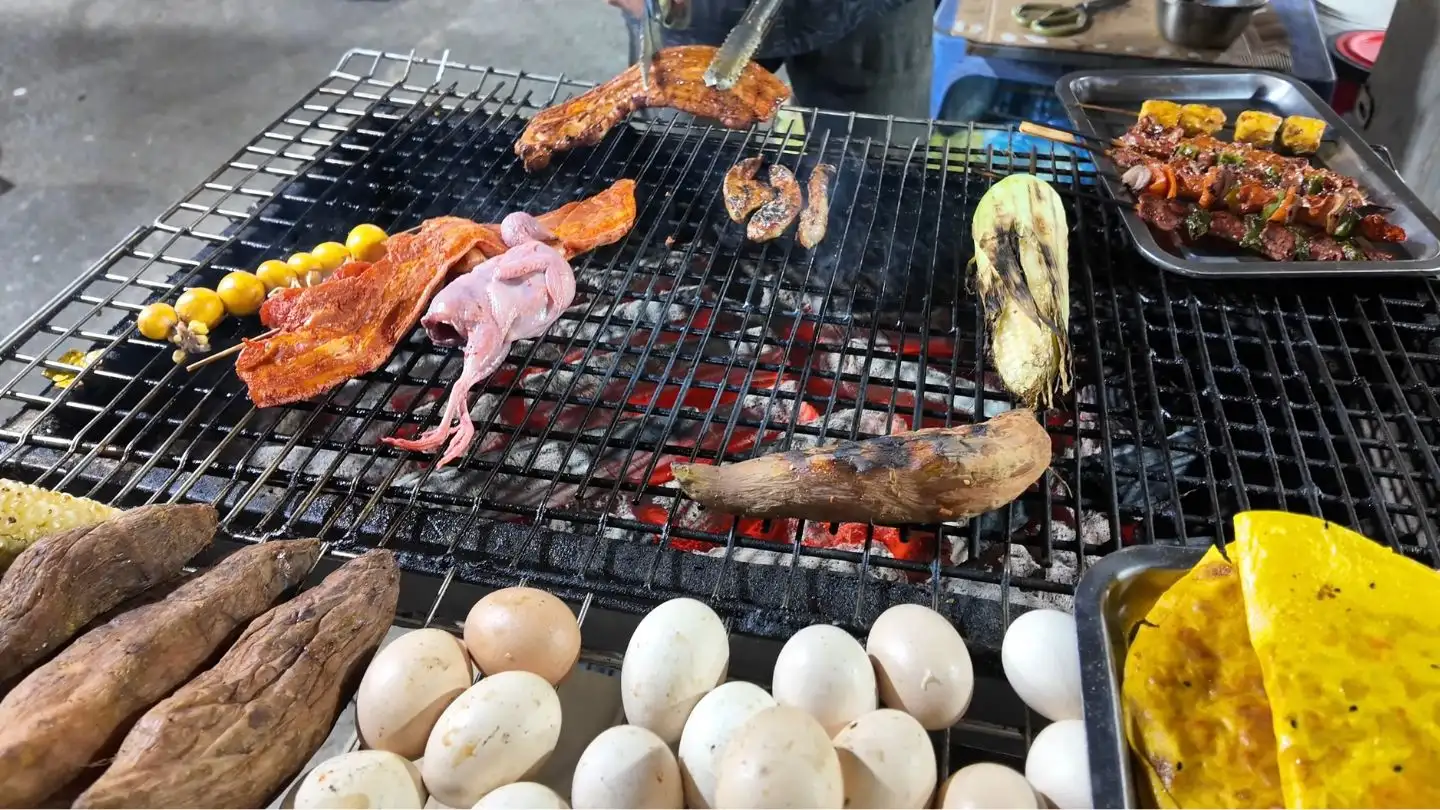
Most people come over for the grilled food, then end up lingering beside the charcoal fire while corn, sweet potatoes, grilled pork and bánh tráng nướng slowly cook over the glowing coals.
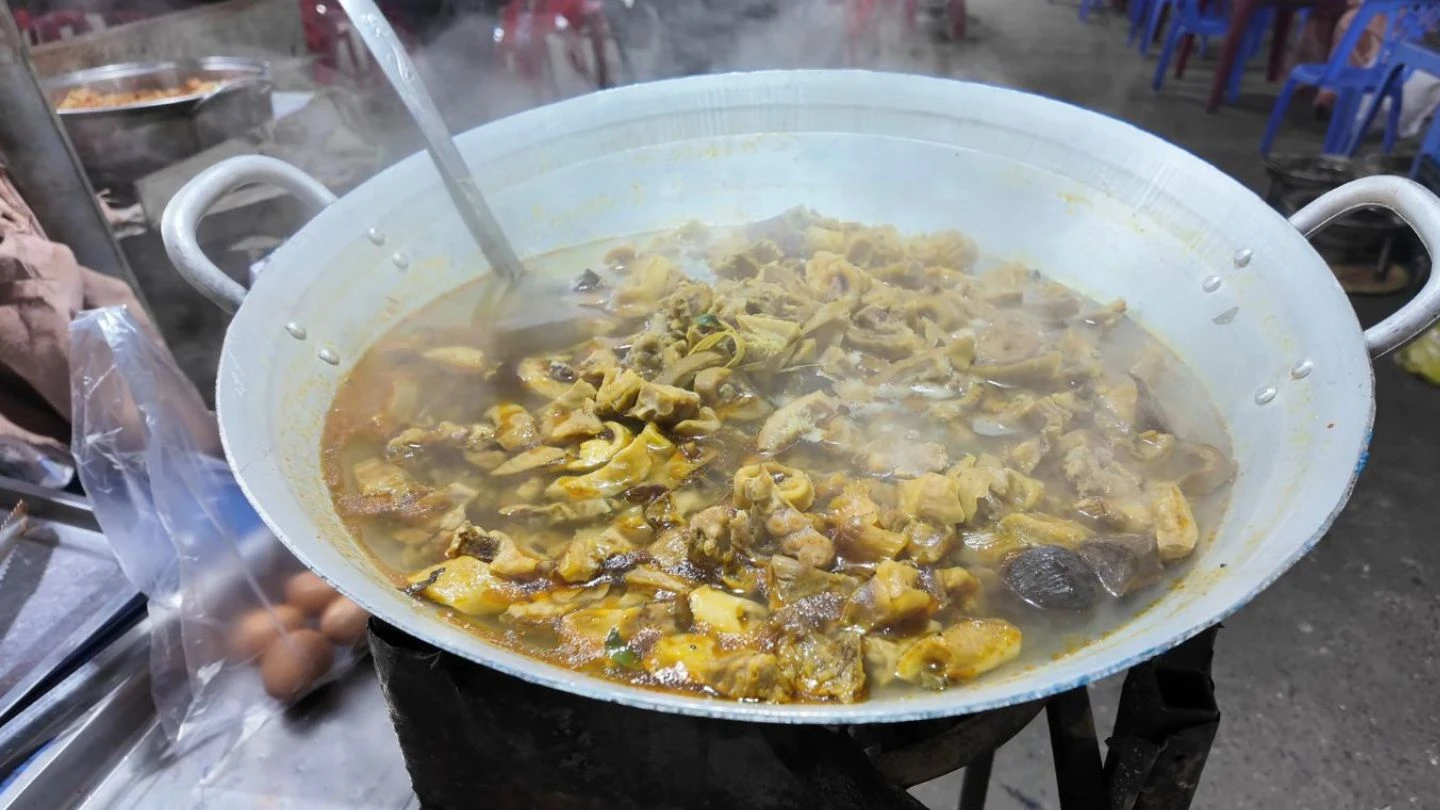
The biggest pot in the market usually belongs to thắng cố. Some people walk straight over. Others keep walking without slowing down. Few dishes split first-time visitors quite as quickly.
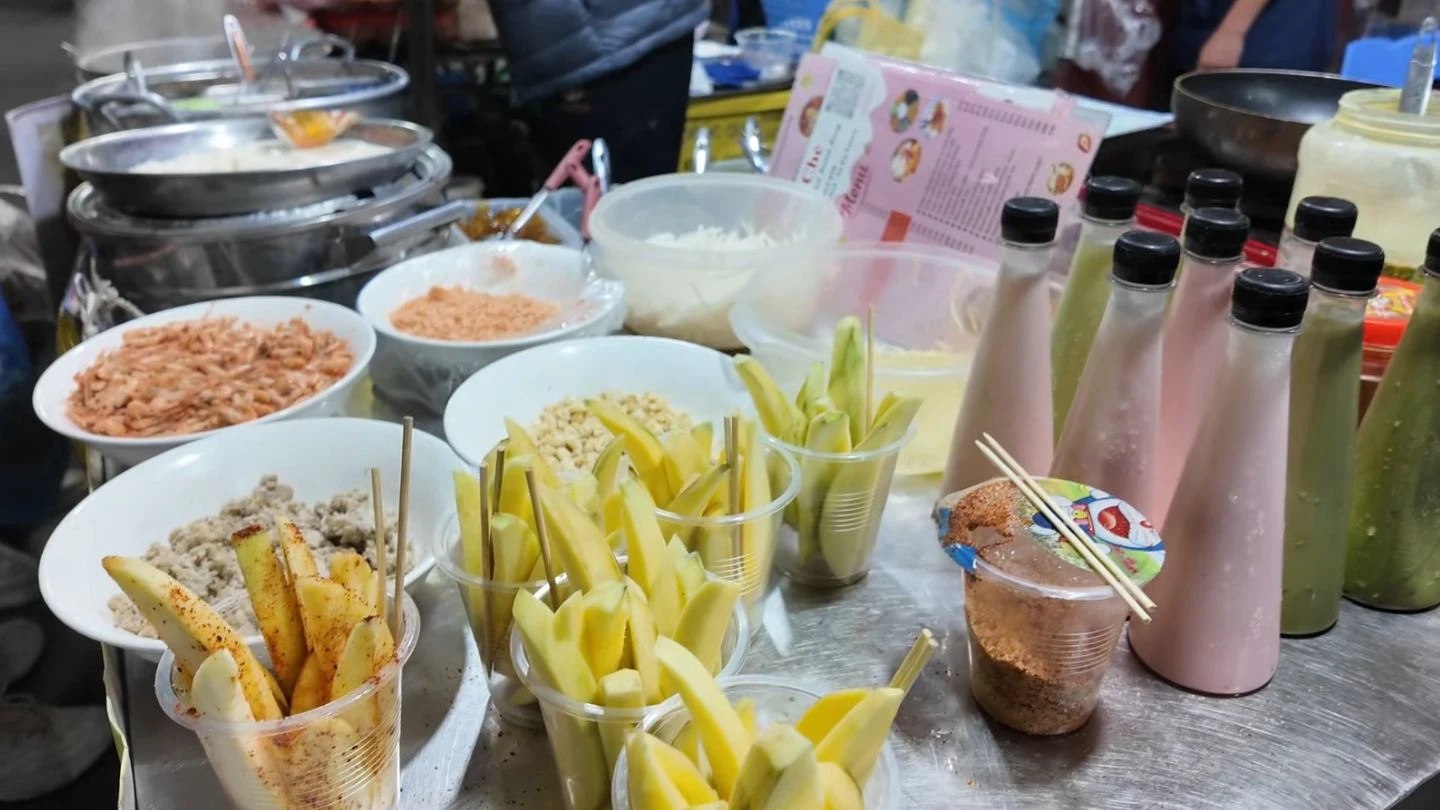
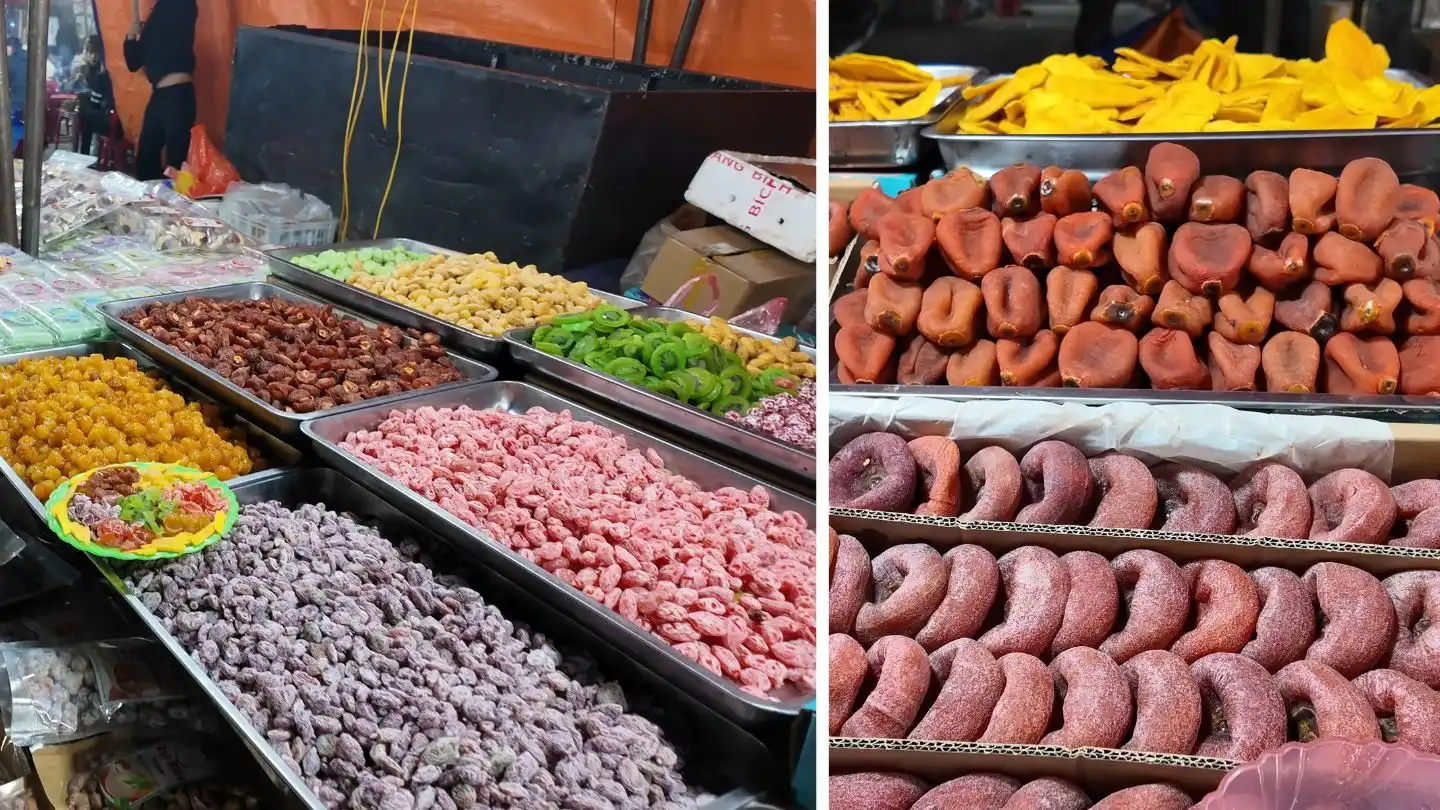
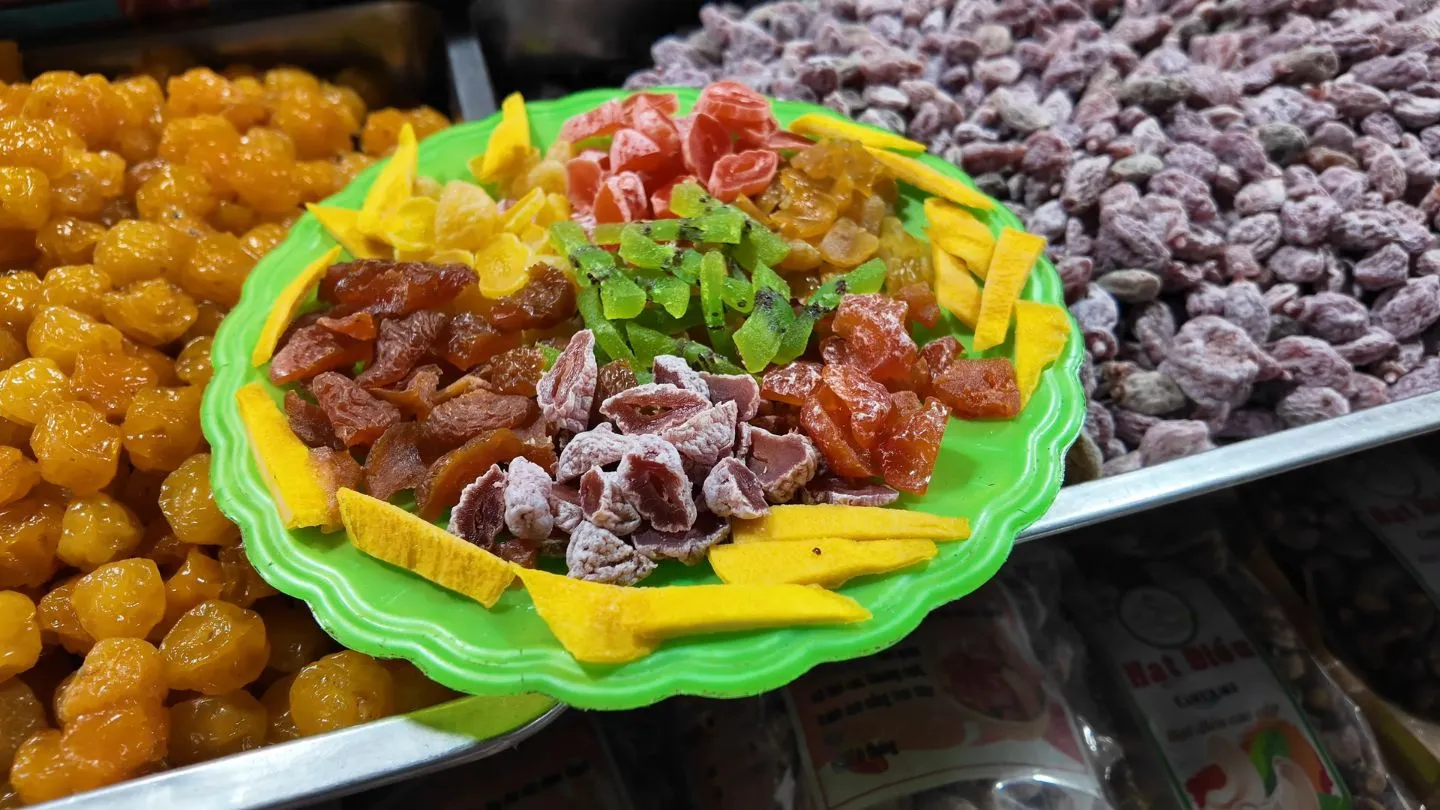
Every dried-fruit stall keeps the same little tasting plate at the front. Persimmons, strawberries, bananas, mangoes — all cut into tiny pieces. Most people stop for one sample. Plenty leave holding a bag they never meant to buy.
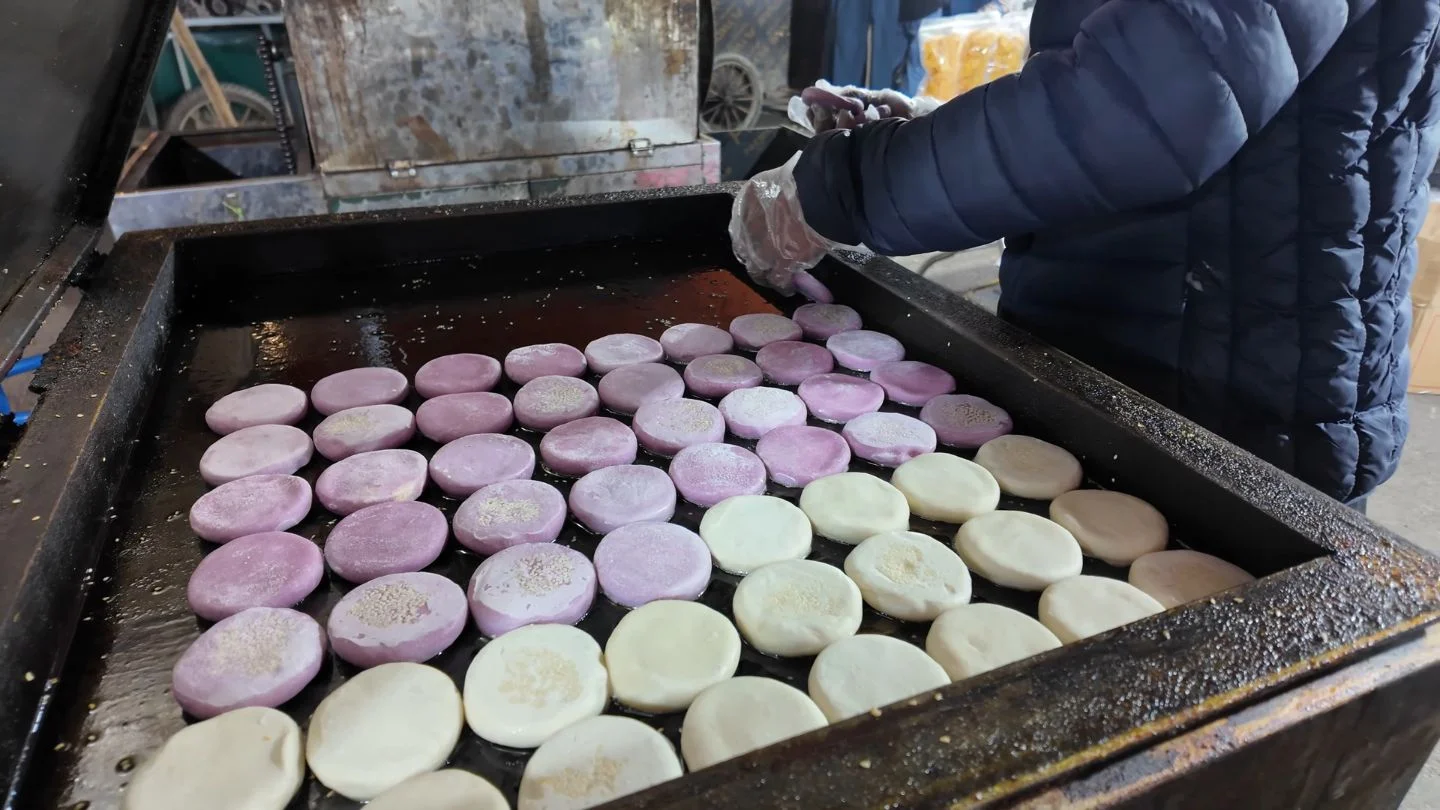
You weren’t planning dessert. Then someone in front of you stops at a stall where sponge cakes, egg tarts and sweet buns sit on simple trays. A minute later, you’re pointing at one too.
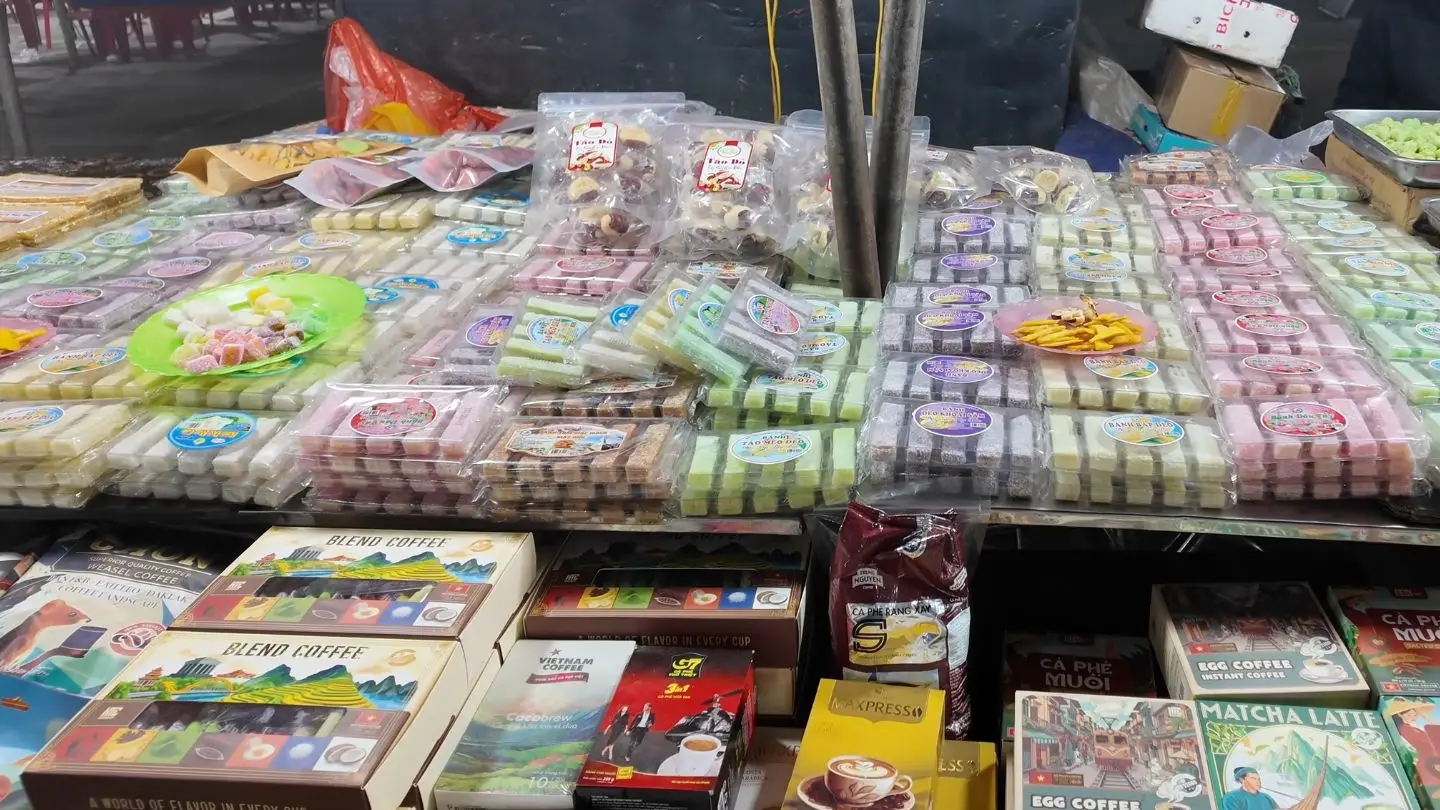
Different kinds of cakes quietly tempt hungry visitors between shopping stops on cold mountain evenings together.
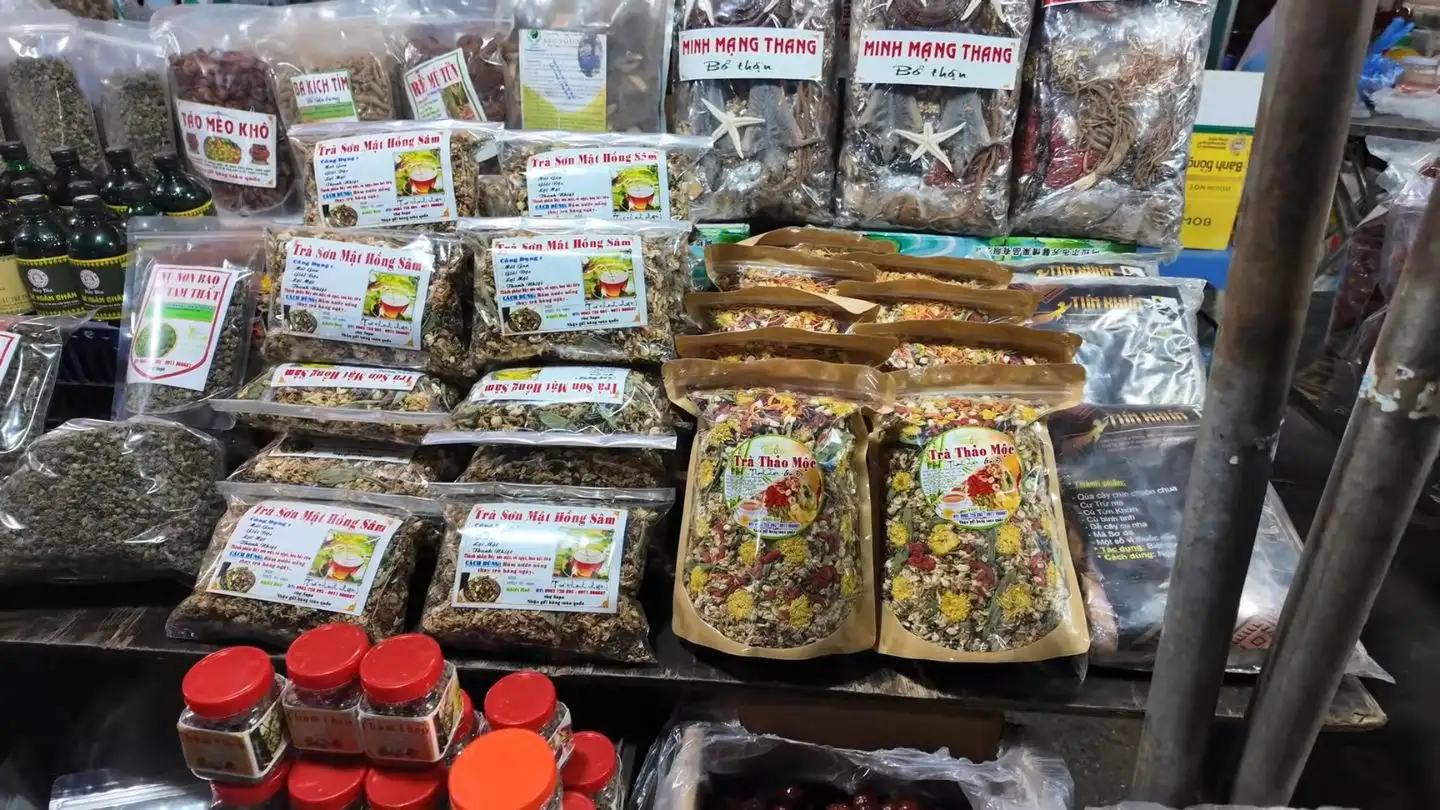
Rows of clear bags filled with dried mountain herbs sit neatly across the stall, each labelled for a different purpose. Some are for herbal baths, others for tea or home remedies. You don’t need to understand every ingredient to leave with one tucked into your bag.
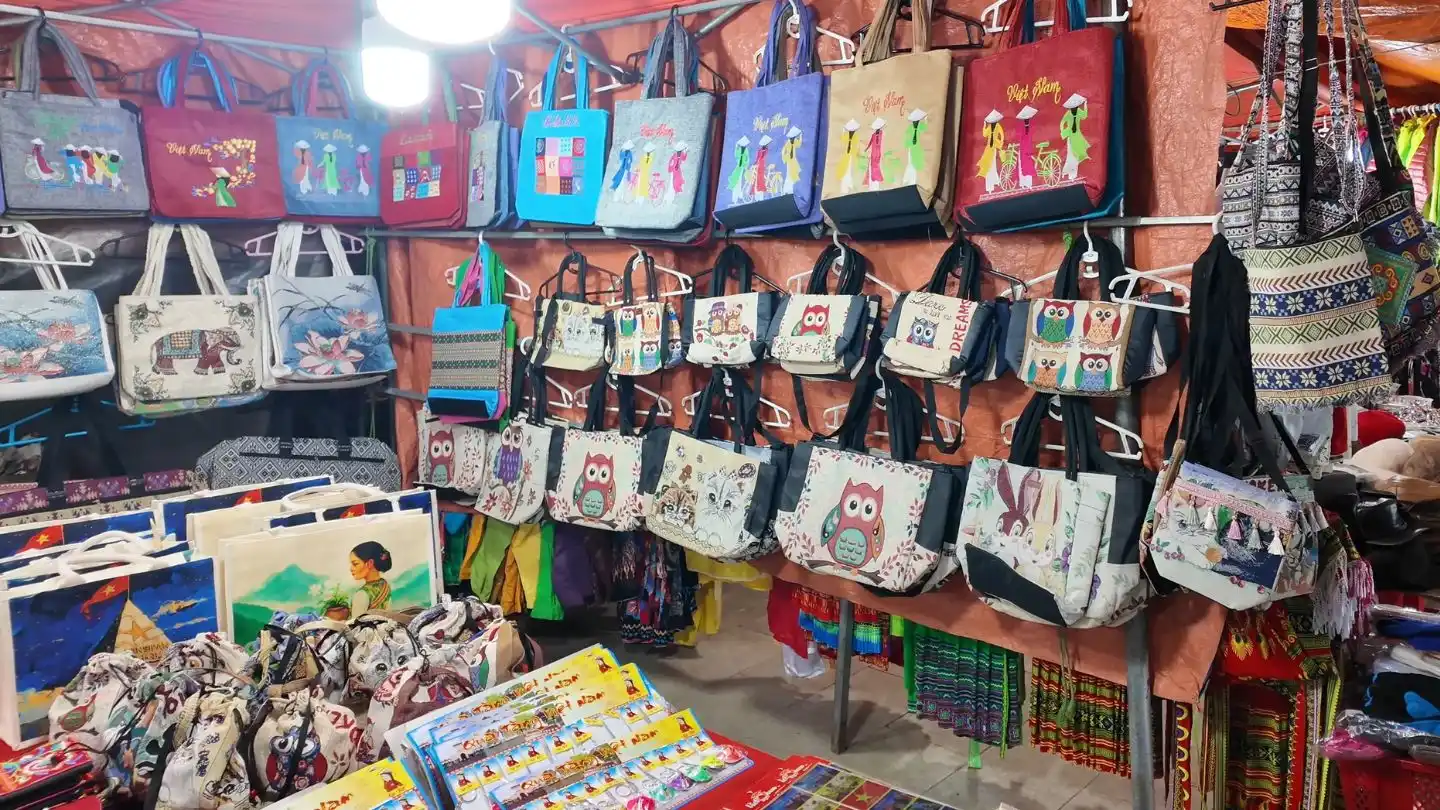
Beyond food, the stalls lean heavily commercial: warm fleece and jackets, and souvenir textiles – scarves, embroidered bags, caps. Some pieces are genuinely handmade; many are factory goods sold by traders from outside Sapa. Treat it as a souvenir-and-snack stop, not a craft pilgrimage.
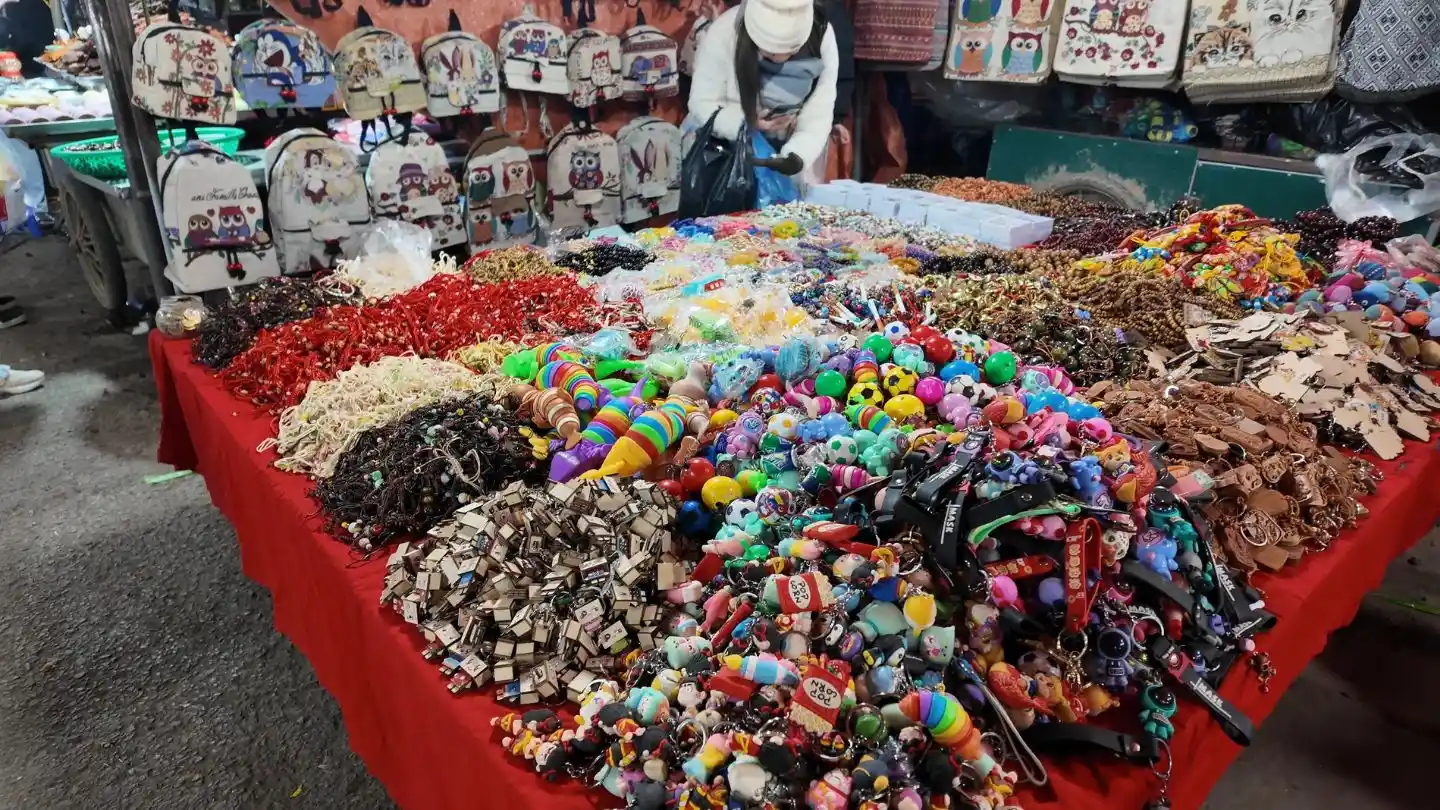
Magnets, postcards and little keychains fill shelves from end to end. They’re the kind of things you don’t need until the trip is almost over. Then suddenly, everyone is buying one.
Is it worth visiting?
On Google, it sits at a fair 4.1 from 2,695 reviews, and that feels about right. It’s worth half an hour if you’re already in town for the evening — the lights, the food smell and the buzz are genuinely nice in the mountain cold.
Set your expectations, though. This is a tourist night market, not an authentic ethnic one. If you came for real hill-tribe craft, the weekly village markets deliver far more. Bring small cash, keep an eye on your bag in the crush, and bargain with a smile.
From our team: we send guests here for the grilled corn and the atmosphere, not the shopping. Most of the “ethnic” goods are mass-produced and trucked in — the real craft is at the weekend village markets, not under the neon.
→ More after dark: things to do in Sapa at night | the Saturday Love Market | bars in Sapa — or browse all things to do in Sapa →
FAQs
Where is Sapa Night Market?
On Luong Dinh Cua Street in central Sapa, a short flat walk from the town square and Stone Church. Look for the lit “Chợ đêm Sa Pa” gateway; you won’t need a taxi.
What time does Sapa Night Market open?
It opens nightly around 6:30 PM and runs until about 10 PM. The biggest crowds are Friday through Sunday, when day-trippers fill the town.
Is Sapa Night Market worth visiting?
For an evening stroll and cheap grilled street food, yes — it’s lively and rated 4.1 on Google. For authentic hill-tribe crafts, no; most goods are mass-produced souvenirs, and the village markets are far better for that.
What can you buy at Sapa Night Market?
Street food (grilled corn, sticky rice, skewers), warm clothing, souvenirs, and textile crafts like scarves, bags and embroidered caps. Bring cash — cards are rarely accepted — and expect to bargain.
Come hungry, bring a jacket and a handful of small notes. Treat the Sapa night market for what it is — a warm, bright, slightly chaotic hour of grilled corn and fairy lights. Do that, and it’s a lovely way to round off a day in the mountains.
Related Tours & Transport
