


 Sapa Tours & Activities
Sapa Ancient Rock Field: The Carvings No One Can Read
No one knows for certain who made them. Scattered through the Muong Hoa valley, more than a hundred and fifty stones carry carvings cut long ago — no one is sure quite when. Spirals, terraces, figures, a kind of writing, and no one has fully read them.
What it is
IMPORTANT NOTICE: Sapa Ancient Rock Field is currently closed to the public. Conservation work is underway to help preserve the site, so visitors will need to wait a little longer before exploring it again.
The rock field is not one site but a scatter of carved boulders across the Muong Hoa valley, around Ta Van, Hau Thao, and Lao Chai. Officials count about 159 carved stones, with over 200 slabs in all, spread across some eight square kilometres.
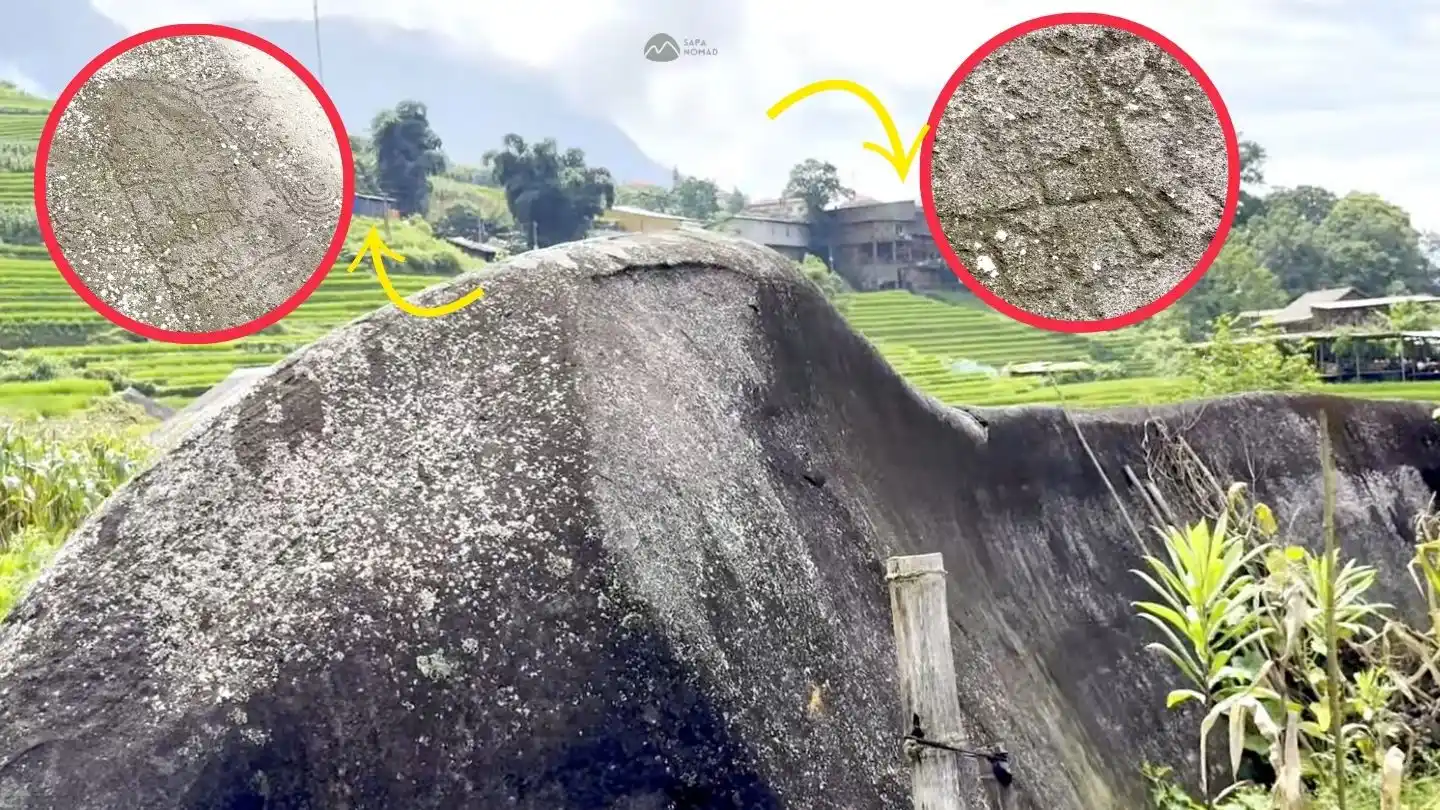
The carvings in Sapa Ancient Rock Field – spirals, human figures, terraced shapes, marks that look like writing — are hard to date. The UNESCO nomination links them to the Dong Son culture of three to four thousand years ago; Vietnamese historians have argued for as recent as the 11th or 12th century. Either way, a 2005 study by Lao Cai’s culture service and the French institute EFEO mapped them, and in 1994 the field became a national monument.
What to do there

When the site is open, the pleasure is slow: find the marked stones, trace the carvings, and guess at what they meant. A guide who knows the symbols turns a field of rocks into a story.
Beyond that, it is simply a beautiful stretch of valley. Walk the terraces, photograph the stones in good light, share the path with farmers, or stop for a picnic among the rice.
Best time to visit Sapa Ancient Rock Field
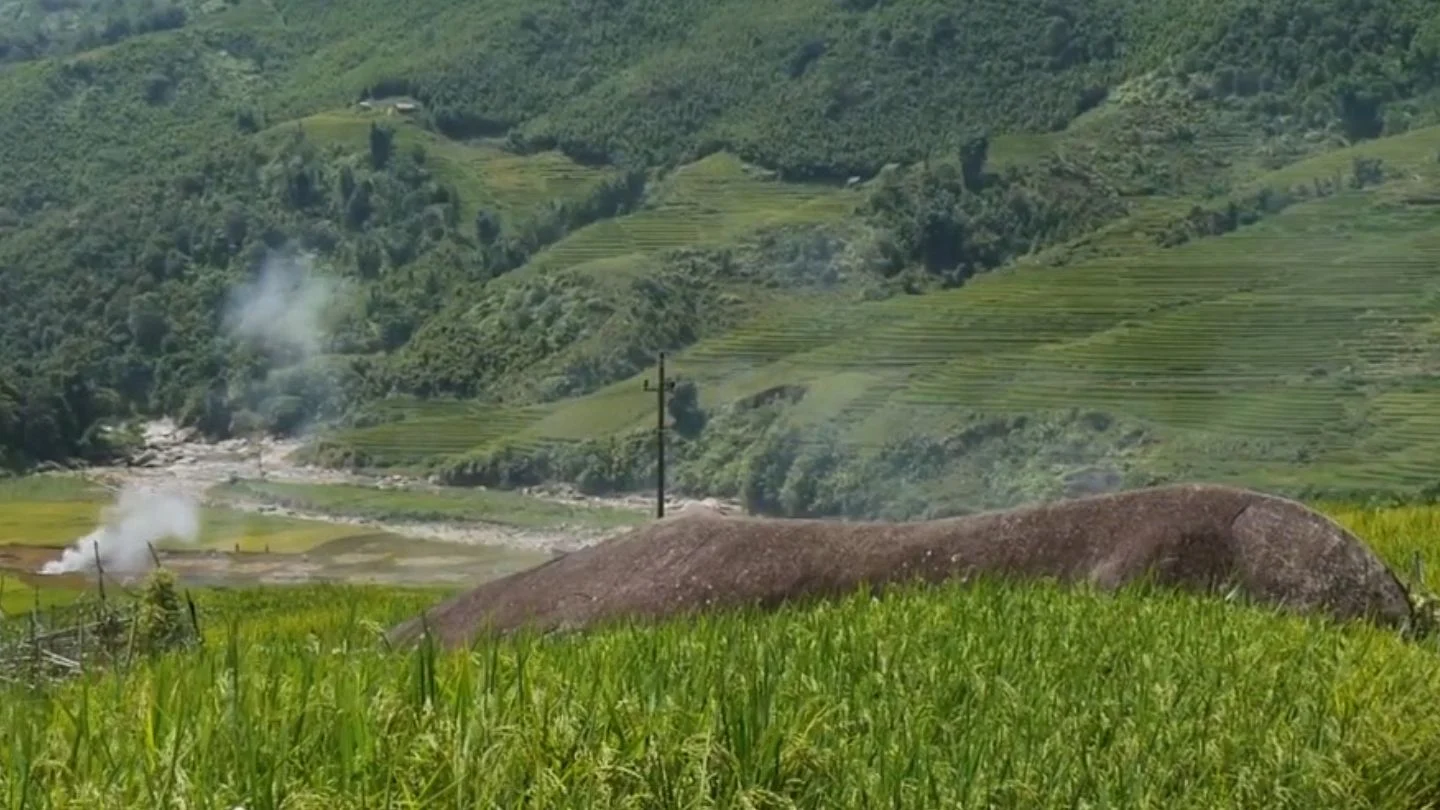
The stones never change, but the valley around them does. Around September, the rice ripens gold, the most photogenic season; spring brings green shoots and planting. Go on a clear morning, when the light is soft, and the carvings show best.
How to get there from Sapa
The Sapa Ancient Rock Field lies about 11 km from Sapa, a 30-minute drive down into the Muong Hoa valley toward Ta Van on road TL152. Most people come by motorbike, car, or on foot as part of a valley trek.
Note that the field is currently closed to the public for conservation, with a visitor center built nearby; check locally before going. When open it is free and open-air, scattered along the valley, with no public bus — so ride, drive, or walk in.
What’s nearby
The stones sit in the heart of the trekking country. The same valley holds the villages of Lao Chai and Ta Van, and our Muong Hoa valley guide covers the wider walk the rocks are part of.
The stones are one of the quieter entries on any list of things to see in Sapa.
Tips for visiting Sapa Ancient Rock Field
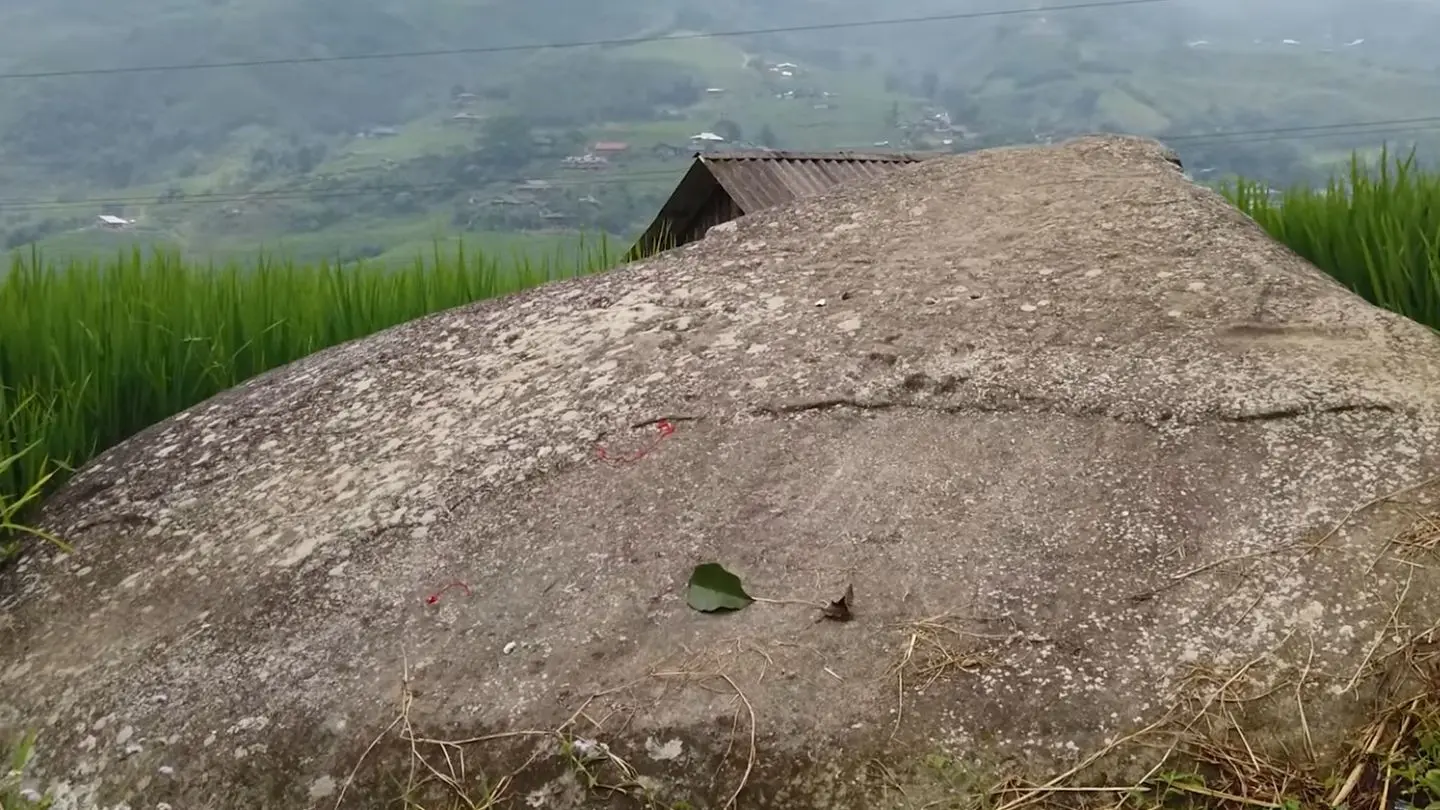
- Take a guide if you want the carvings explained — many stones are easy to miss.
- Wear walking shoes. The stones are spread across fields and paths.
- Combine it with a trek through Lao Chai and Ta Van.
- Go in the morning for the best light on the carvings.
Frequently Asked Questions
Where is the Sapa Ancient Rock Field?
In the Muong Hoa valley near Ta Van and Hau Thao, about 11 km and a 30-minute drive from Sapa town.
Is there an entrance fee?
It is currently closed to the public for conservation, so check before going. When open it is free, with no ticket gate.
How old are the carvings?
Their age is debated — from as recent as the 11th–12th centuries to as old as 3,000–4,000 years (the Dong Son theory). It became a national monument in 1994.
How many carved stones are there?
About 159 are officially recorded, with over 200 stone slabs in all, spread across roughly eight square kilometres.
Can I combine it with a trek?
Yes — the stones lie right along the Muong Hoa trekking route through Lao Chai and Ta Van.
You leave the Sapa Ancient Rock Field where they have always been, half-sunk in the grass, their meaning still locked inside them. Whoever cut these marks is long gone, and the valley has simply grown rice around them ever since.
Related Tours & Transport
