


 Sapa Tours & Activities
Rattan Bridge Sapa (Cau May): The Free One and the Paid One
There are two rattan bridges in this valley, and they are not the same thing. One is old and free, strung across the stream near the Giang Ta Chai waterfall, where few people come just for the bridge. The other, at Ta Van, was built beside a restaurant, and you pay to cross it for the photo.
The real one: Giang Ta Chai
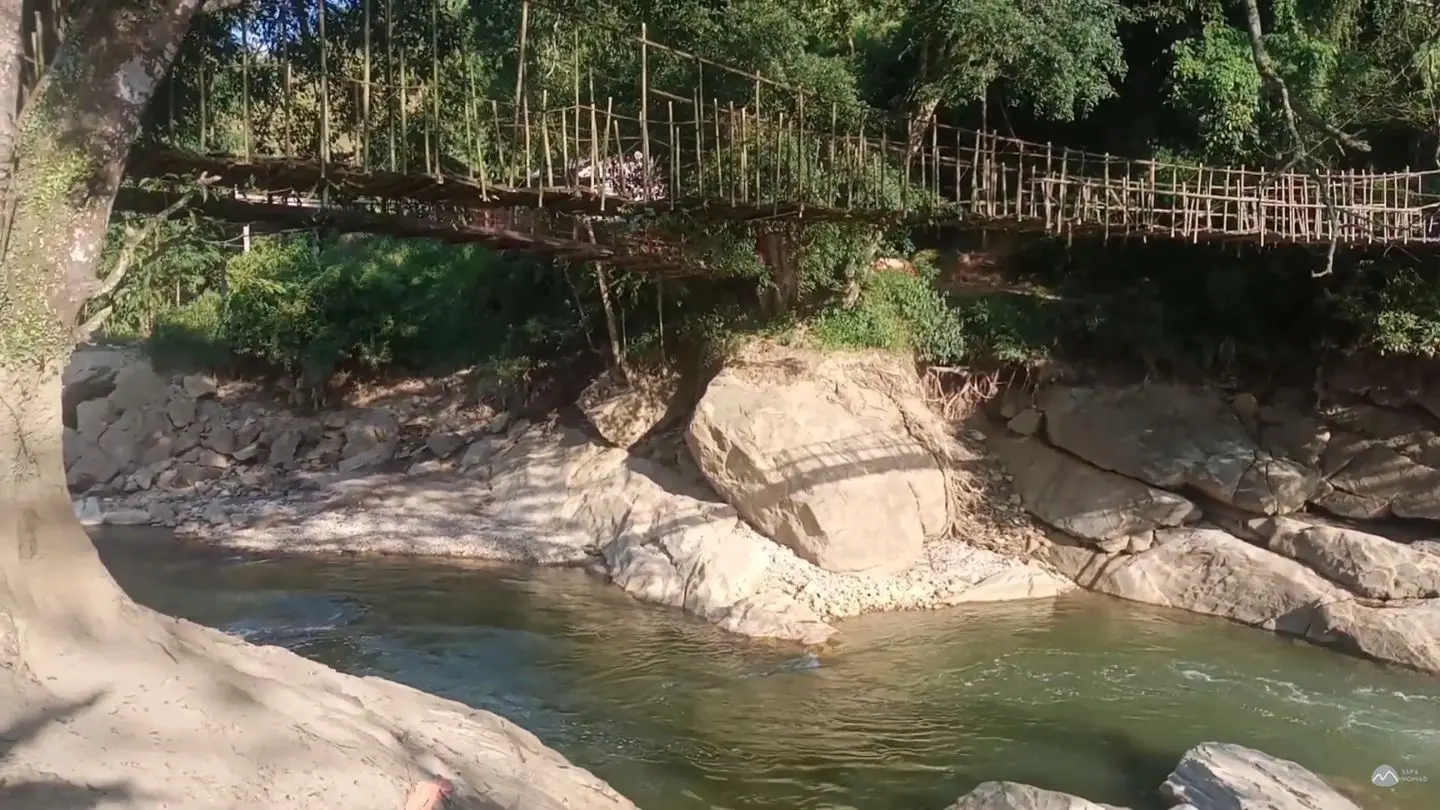
The authentic rattan bridge is the old one near Giang Ta Chai, strung across the stream below the waterfall. It is free, rough, and quiet — most people who come this way are walking to the waterfall and the bamboo forest, and the bridge is simply part of that walk.
This is the one worth the effort: handwoven rope and bamboo, no ticket booth, the stream loud beneath it. Be ready for a bumpy approach road and a few vendors near the waterfall.
More than 100 years old, the rattan bridge in Giang Ta Chai is one of the oldest surviving bridges in the Muong Hoa Valley. Built entirely by hand from rattan, bamboo, and wooden planks, it once helped local people cross Muong Hoa Stream and travel between villages.
Today, the bridge remains remarkably well preserved and is managed by Eco Home Cau May, a tourism business run by local ethnic residents.
The paid one: Ta Van
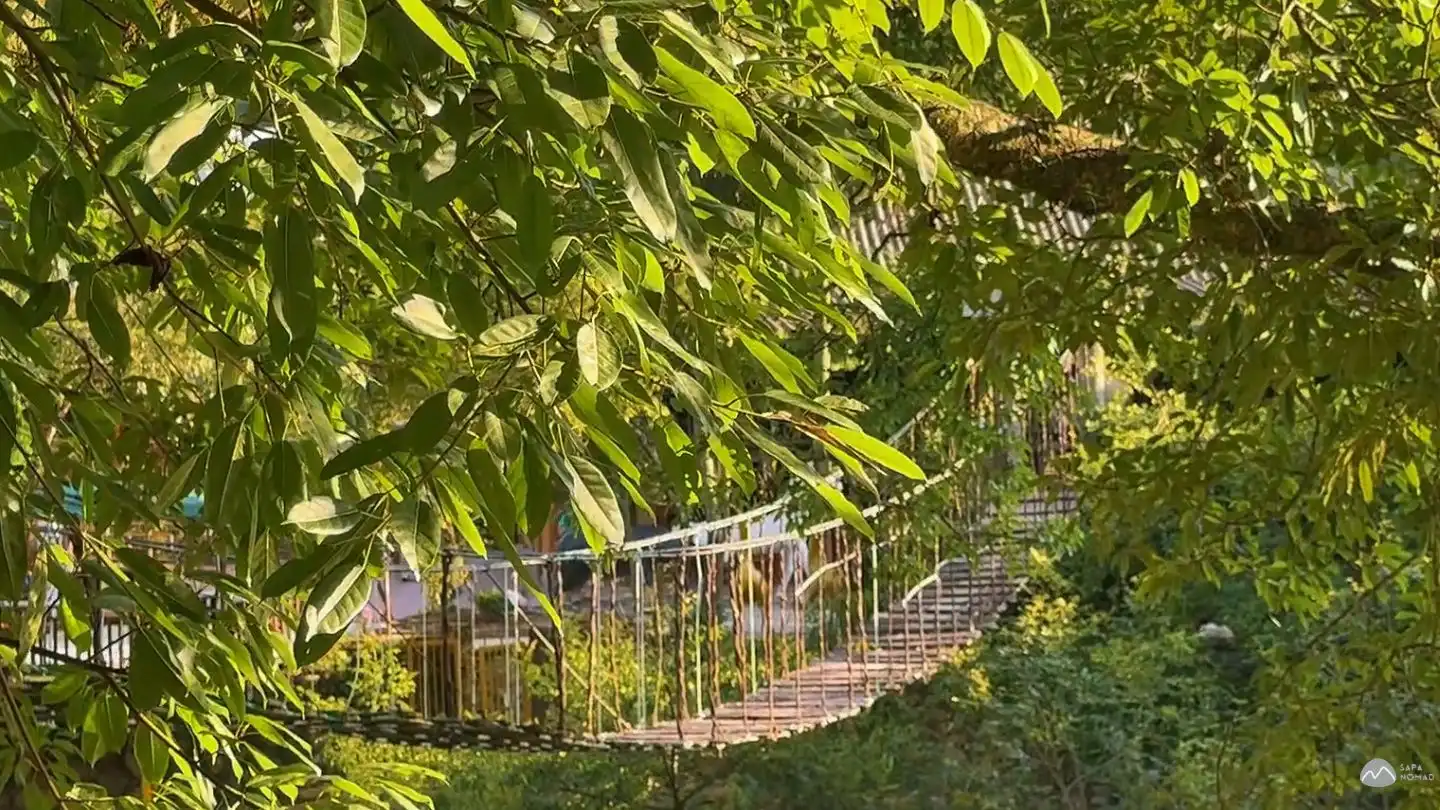
The rattan bridge most guides point you to in Ta Van is different. The newer rattan bridge in Ta Van Village has been part of the Muong Hoa Valley for around 20 years. Built from steel cables, natural rattan, and wooden planks sourced from old forest trees, the bridge spans Muong Hoa Stream and has become a popular stop along the valley route.
Additionally, it is a photo-bridge built and run by a restaurant, the H’Mong Cau May, with a pool, costume rental, and a fee to cross. It is set up for one good photograph.
Set your expectations, though. Reviewers find it pretty and IG-worthy. Others say there is little to see beyond the bridge, that it is not quite worth the ticket, and that it is not safe for kids. If you want the photo and a meal, it is fine. For the real bridge, go to Giang Ta Chai.
What it’s like to cross
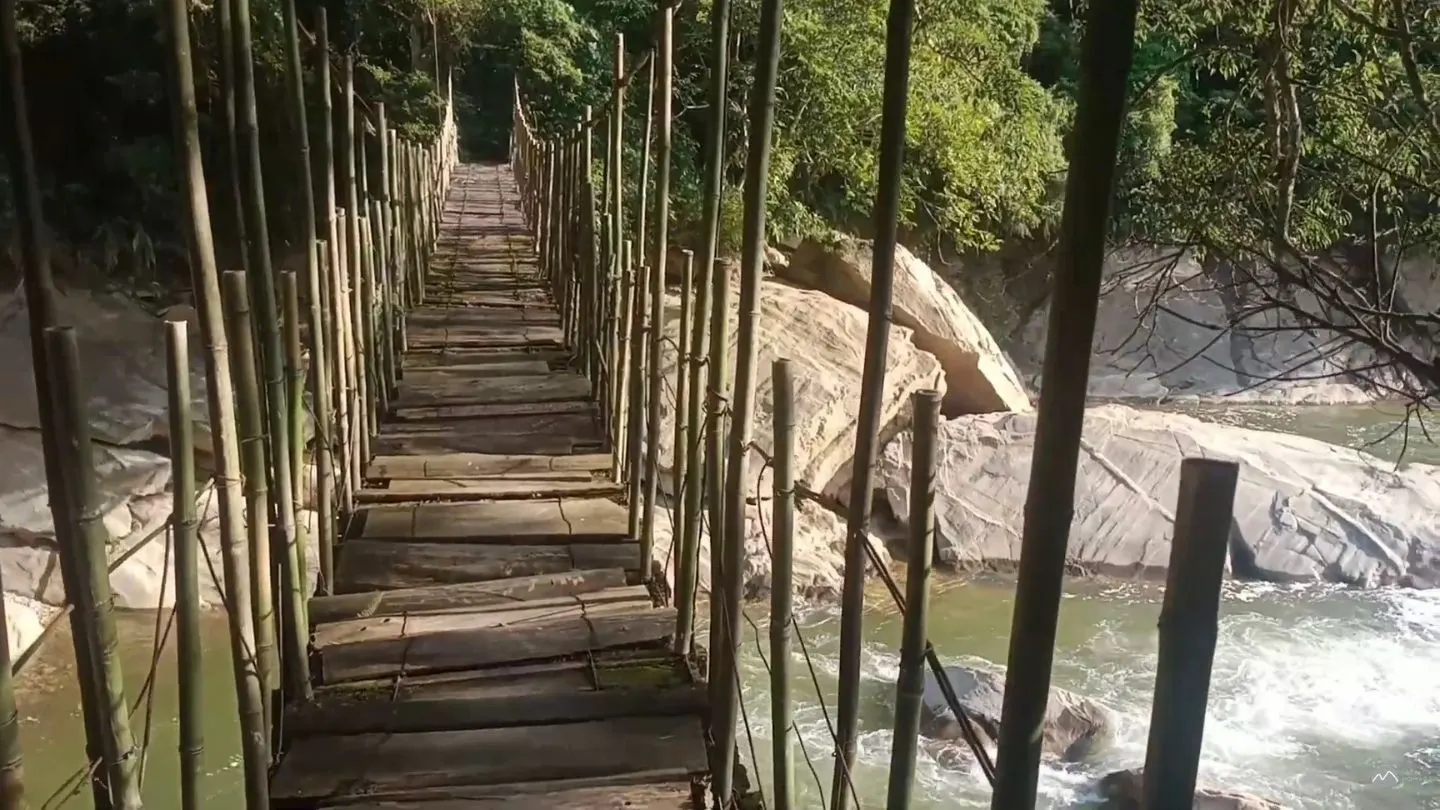
Both bridges are handwoven from rattan rope and bamboo, the planks spaced and the deck swaying as you walk. It is more thrilling than dangerous, but the gaps are real — hold the ropes, go slowly, and keep a close hand on children.
How to get there
Both sit in the Muong Hoa valley southeast of Sapa. The Ta Van restaurant bridge is around 10–13 km; the Giang Ta Chai waterfall and old bridge are a little further, roughly 15–17 km. Most people come by motorbike, car, or on a Muong Hoa trek.
Neither bridge has a clear pin on the map. The Giang Ta Chai one is easiest found via the waterfall; the Ta Van one via the H’Mong Cau May Restaurant. A local guide saves a lot of guessing.
Best time to visit
A foggy morning is the classic time when the bridge seems to float over the stream. Dry days make the planks safer and less slippery. Go early either way, for soft light and fewer people.
The bridge sits in the heart of the trekking country, where the paths link Giang Ta Chai and Ta Van and the wider Muong Hoa valley. It is one of the quieter Sapa sights.
Tips for visiting
- For the real bridge, free, go to Giang Ta Chai with the waterfall and bamboo forest.
- The Ta Van bridge is a paid restaurant attraction — go in knowing that.
- Hold the ropes, mind children — the planks are spaced and the bridge sways.
- Ask a guide — neither is clearly marked on the map.
→ Full guide: 25 Best Things to Do in Sapa: A Local’s Complete Guide (2026) →
FAQs
Which rattan bridge is the real one?
The old, free bridge by the Giang Ta Chai waterfall. The Ta Van one is a newer photo-bridge built beside a restaurant.
Is there an entrance fee?
The Giang Ta Chai bridge is free. The Ta Van restaurant bridge charges a fee to cross; many reviewers feel it is not worth it.
Is it the same as Cau May?
Yes — “Rattan Bridge,” “Cau May,” and “Cloud Bridge” all mean these bamboo-and-rattan bridges over the Muong Hoa stream.
Is it safe to cross?
It is more thrilling than dangerous, but the planks are spaced and the bridge sways — hold the ropes and watch children closely.
How do I find them?
Both are poorly mapped. Look for the Giang Ta Chai waterfall, or the H’Mong Cau May Restaurant in Ta Van, or simply ask a local guide.
Skip the ticket, if you can, and walk instead to the old bridge below the Giang Ta Chai falls. No booth, no pool, no queue for the photo — just rope and bamboo over moving water, the way the crossing was always meant to feel.
Related Tours & Transport
