


 Sapa Tours & Activities
Mai Chau or Sapa: Which Mountain Escape Fits You Best?
Mai Chau or Sapa comes down to altitude and ambition. Mai Chau is a flat, quiet valley of stilt houses about four hours from Hanoi; Sapa is the high-mountain heavyweight — terraces, treks and Fansipan. Here is the honest comparison, category by category.
| Mai Chau | Sapa | |
|---|---|---|
| Location |
|
|
| Geography |
|
|
| Weather | Humid subtropical, dry winter | Cool summers and mild winters |
| Transportation | More options | Fewer options |
| Accommodation | A wider range of accommodations | Has a lot fewer accommodations compared to Sapa |
| Cultural Experience | 6 main ethnic communities | 4 main ethnic communities |
| Activities | Fewer activities | A broader range of activities |
A Brief Overview of Mai Chau or Sapa
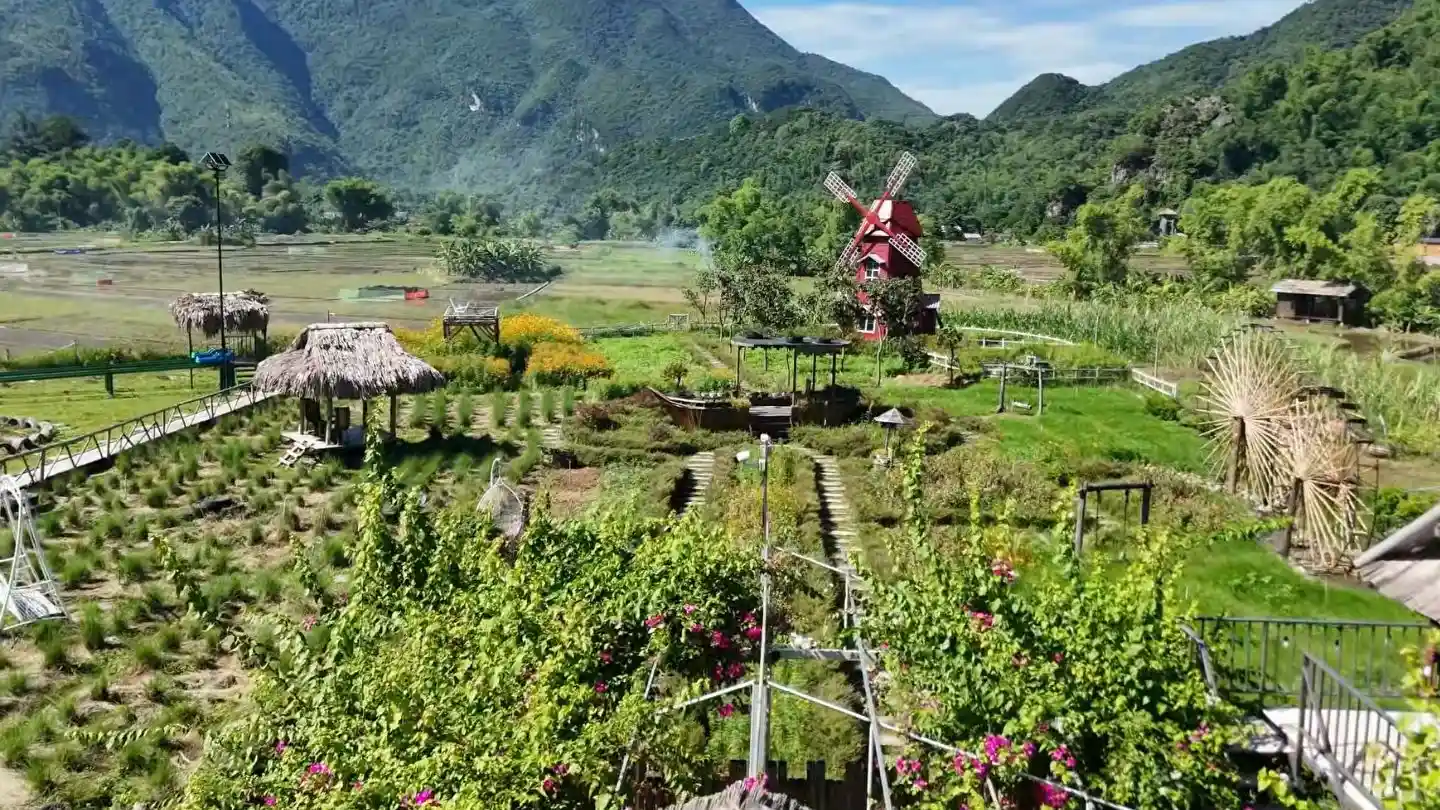
Mai Chau sits west of Hanoi at the far end of Hoa Binh province, brushing Moc Chau, Son La and Pu Luong — about 130 km from the capital. People call it Sapa’s quiet sister: open valley views, Thai stilt villages, and a pace that makes 24 hours feel like a real rest.
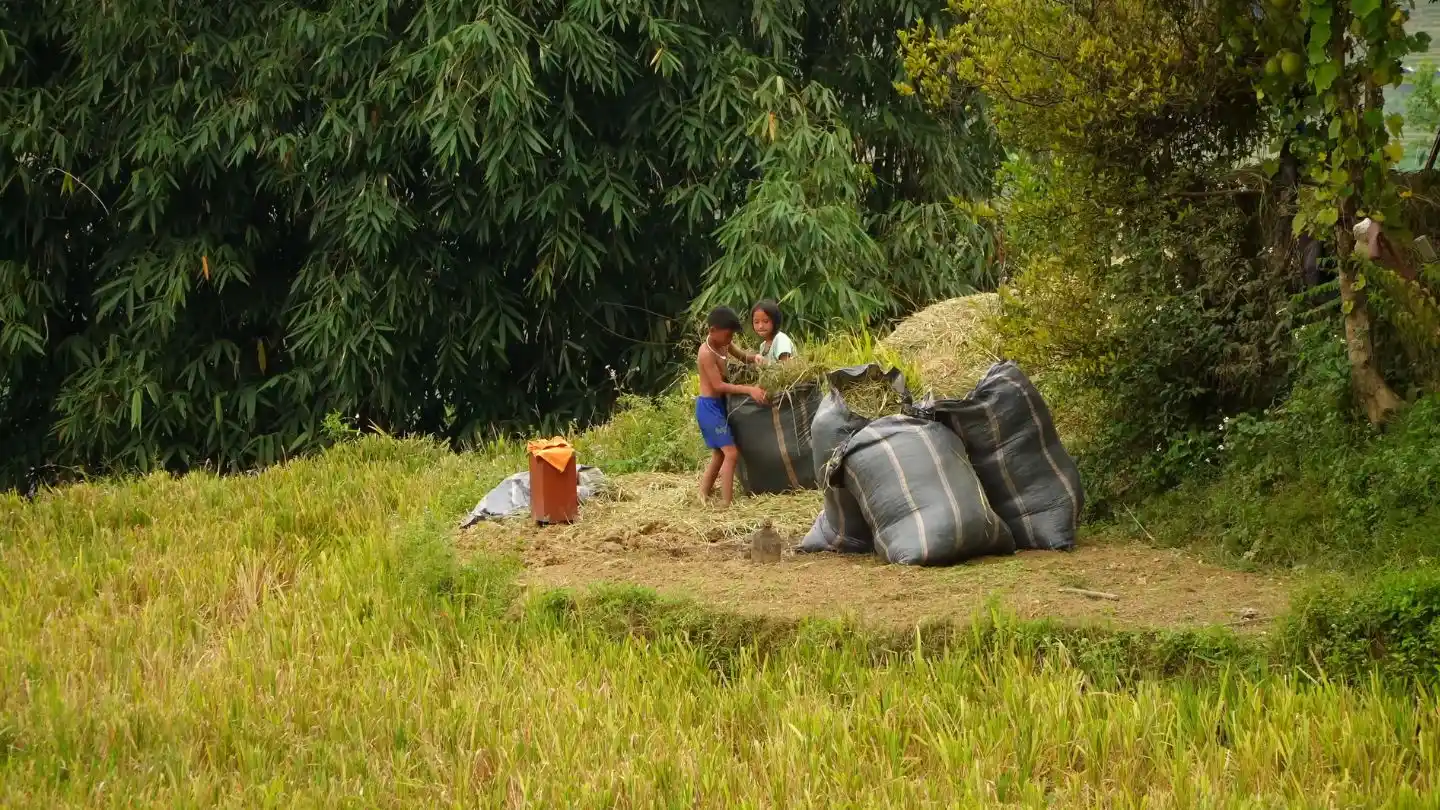
Sapa is the opposite corner of the map: Lao Cai province, 350 km from Hanoi, hard against the Chinese border — a rocky, high-altitude town wrapped in ethnic cultures.
Geography: Mai Chau or Sapa
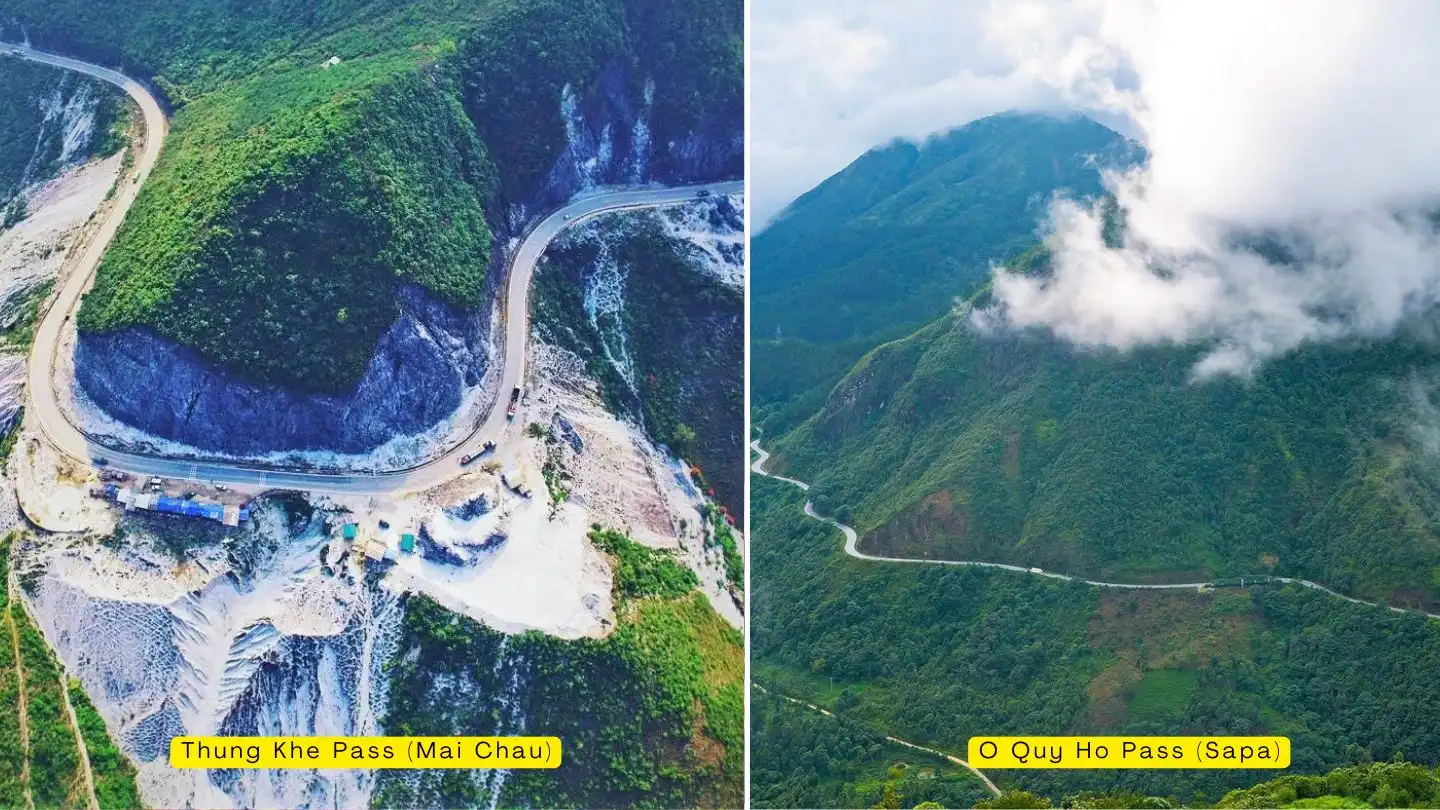
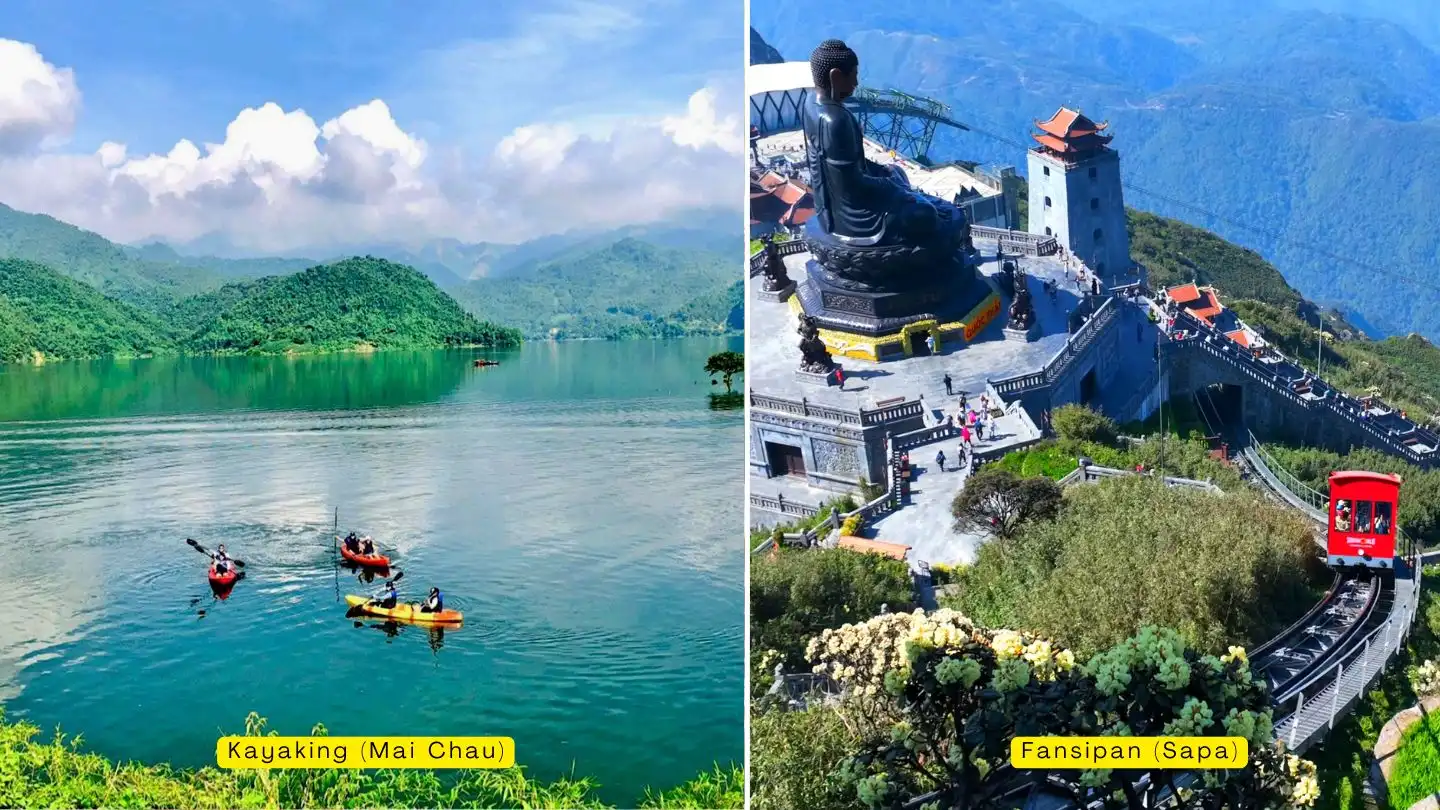
Sapa’s district covers about 680 km² of high country in Lao Cai province. It is stacked with the Vietnam rice fields the region is famous for, and crowned by Fansipan, Vietnam’s highest peak at 3,147 m.
Mai Chau district covers a smaller area of 520 km² compared to the entire province which spans across 4,662 km². Unlike Sapa, another popular destination in Vietnam known for its terraced rice fields, Mai Chau has none of that stacked drama — its valley is flat. Instead, the rice fields in Mai Chau are spread out evenly at the same level throughout the valley.
Mai Chau or Sapa: Weather Comparison
Two different climates, one decision — here is the weather side by side.
| Mai Chau | Sapa | |
|---|---|---|
| Climate | Humid subtropical, dry winter | Cool summers and mild winters |
| Temperature | Generally, the entire year is warm to hot.
|
The short of it: Sapa’s climate runs a solid 5–8°C cooler than Mai Chau all year — real mountain weather
|
| Rainfall | The wet season (July-September) | Uniformly dispersed throughout the year, with the occasional mist and fog |
| The ideal time to visit | October to April for nice weather and less rain | April-May and September-October for moderate temps and clear skies. |
Mai Chau or Sapa: Accessibility and Transportation
Getting there is where the two really part ways.
How to get to Mai Chau
Mai Chau is the easy one: a four-hour drive from Hanoi, no more.
There is no train line — you come by bus, car or motorbike, and that is half of why it stays quiet. Our Hanoi to Mai Chau guide breaks down every option.


How to Get to Sapa
Sapa gives you choices: the overnight train to Lao Cai plus a transfer up the mountain, a direct sleeper bus, or a private car if comfort wins. All three run daily.


| Mai Chau | Sapa | |
|---|---|---|
| Bus | $8 – $13 | $20 – $35 |
| Taxi | $175 | $150 – $200 |
| Motorbike | $15 – $20 | $30 – $50 |
| Train | Not appliance | $25 – $180 |
*Note: reference prices — they move with the day, the hour and the season.
Accommodation Options: Mai Chau or Sapa
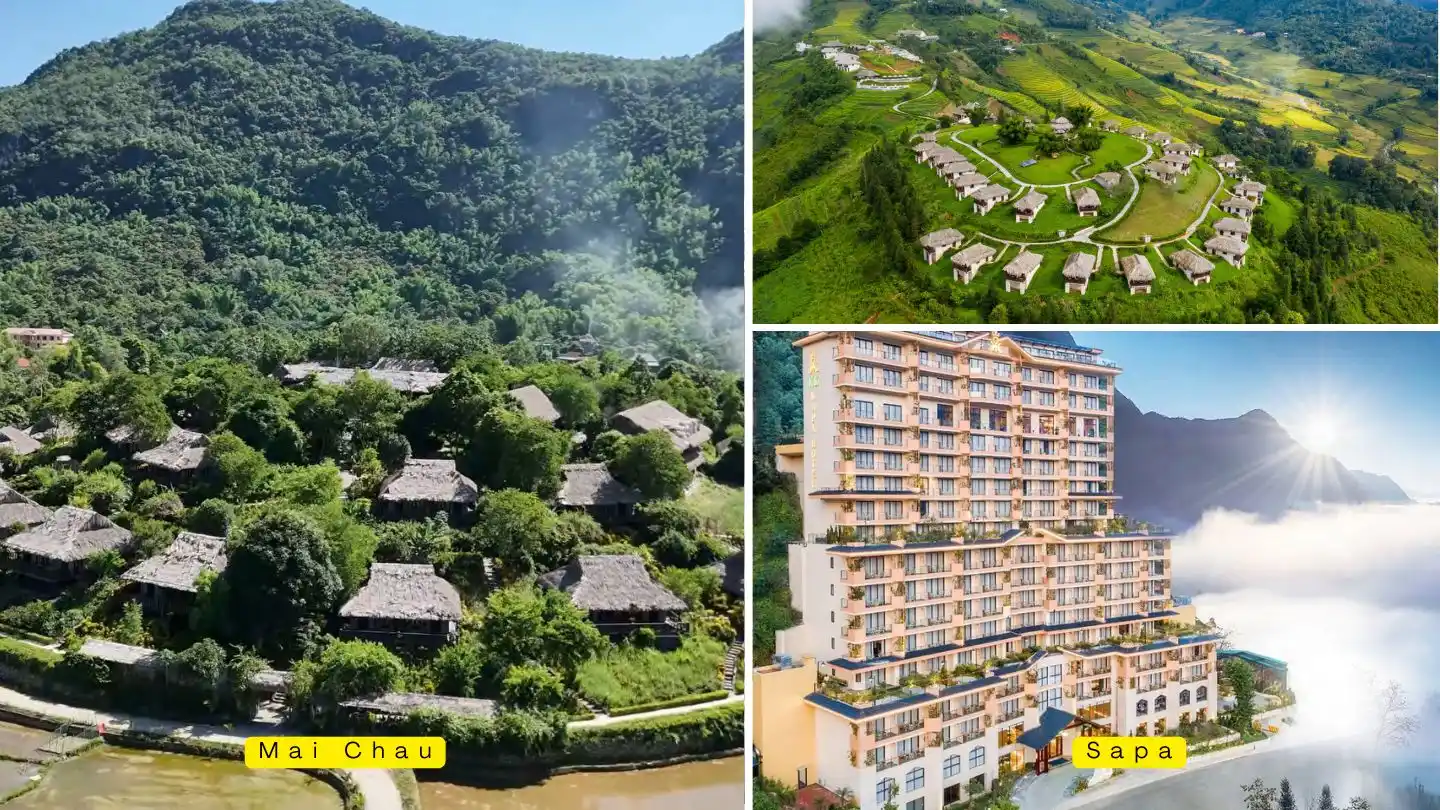
Sapa, being a real town, carries the wider range — hostels to hotels in the center, minority-run homestays and lodges out in the valleys. Every budget finds a bed.
If you want specifics, our stay guides cover the full range:
Mai Chau has no town to speak of — and that is the appeal. Nearly everything is a stilt-house homestay or a small lodge in the rice fields, with a few modest hotels for those who want walls. Fewer options, more atmosphere.
Mai Chau or Sapa: Cultural Experiences
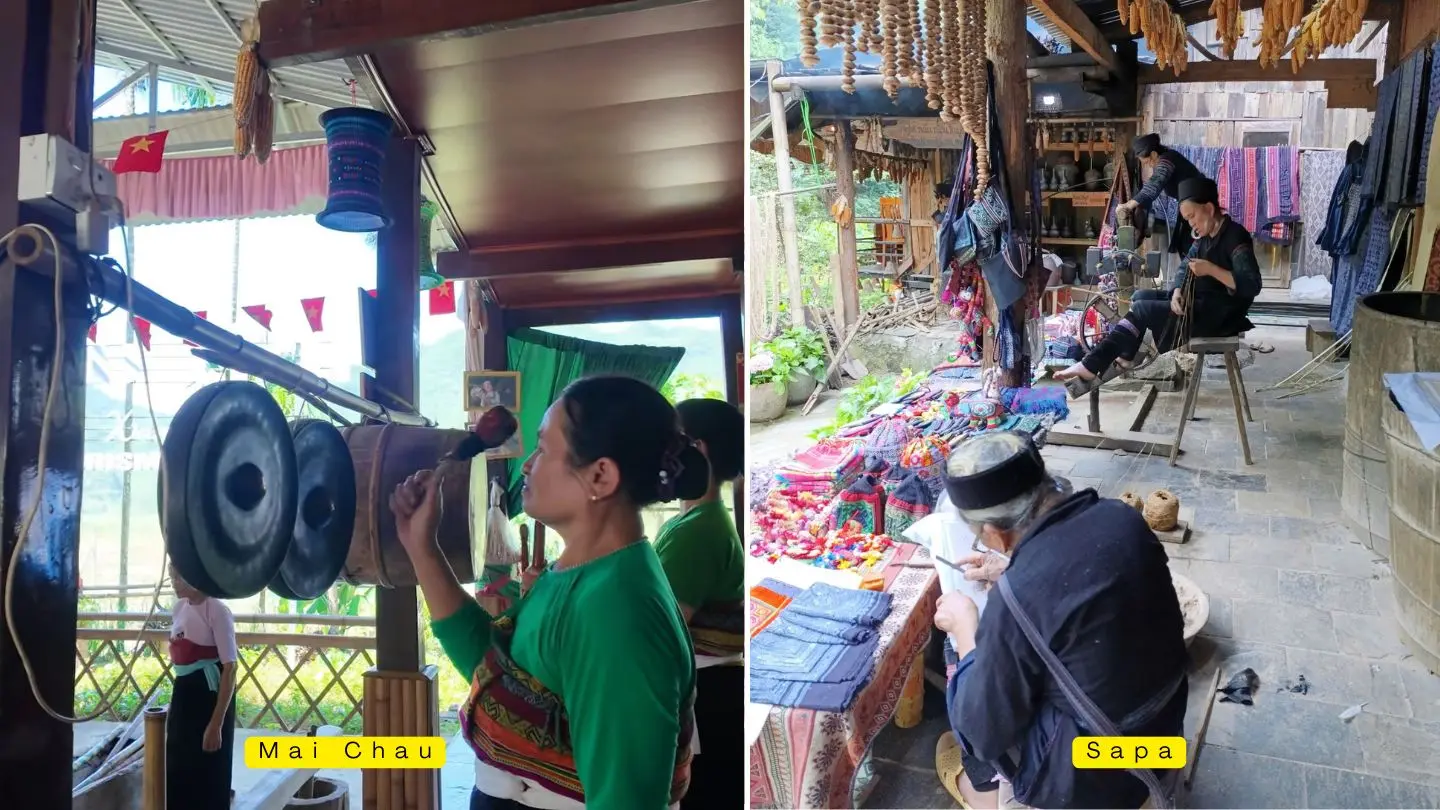
Mai Chau is known for its valley scenery and the hospitality of its six main ethnic communities. The cultural experience here revolves around village life — you sleep, eat and cycle among the stilt houses.
Sapa’s valleys hold four main groups — Hmong, Dao, Tay and Giay. Culture here is met on foot: trekking between villages, watching the crafts being made, hearing four languages in one market morning.
Weekly Markets
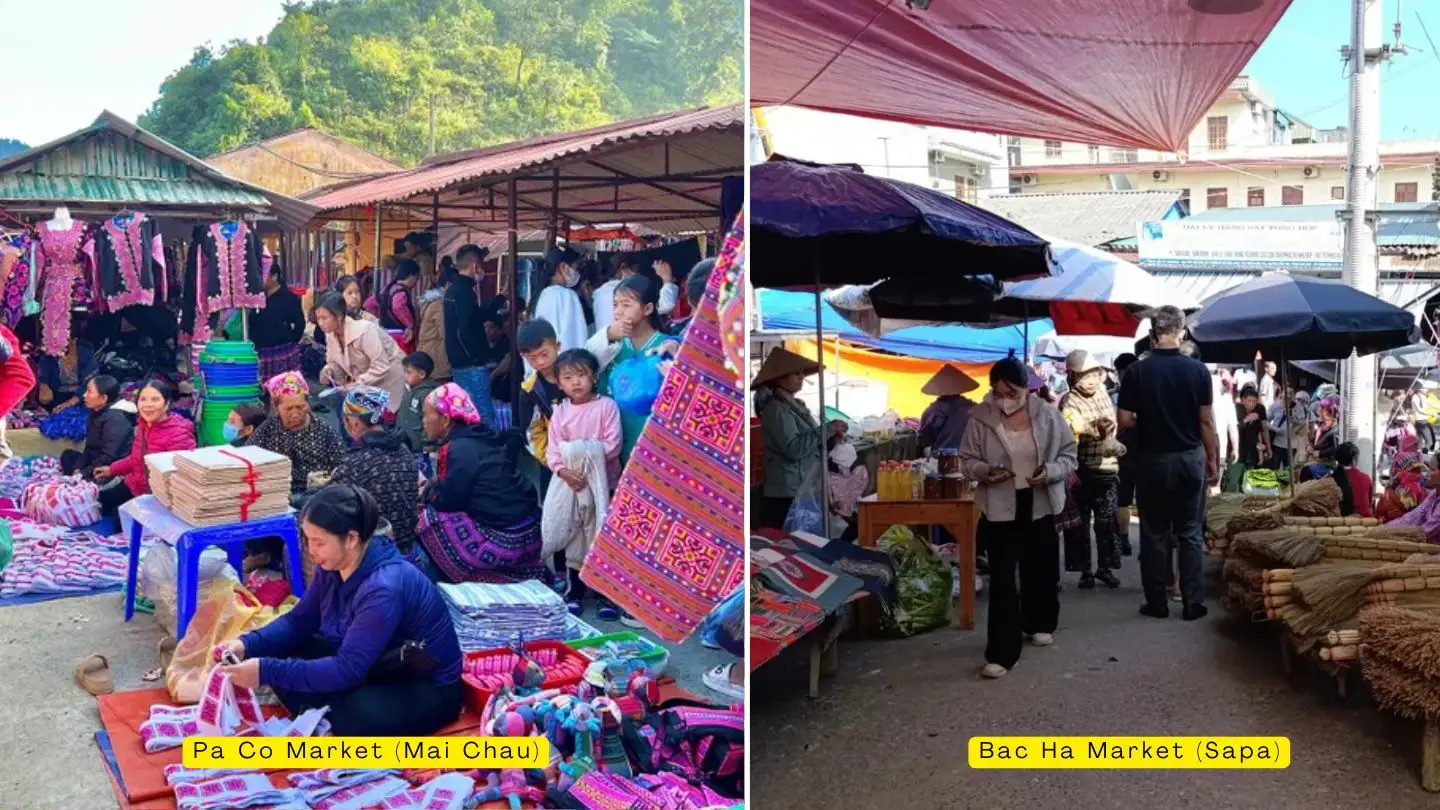
Sapa markets feel bigger in every sense. Beyond the market in town, the region is dotted with famous weekly markets like Bac Ha, Can Cau, and Coc Ly, where everything from brocade clothing to mountain herbs fills the lanes.
Mai Chau is quieter, with only a handful of local markets such as Pa Co and Bao La, making the experience feel smaller and more intimate.
Local Food
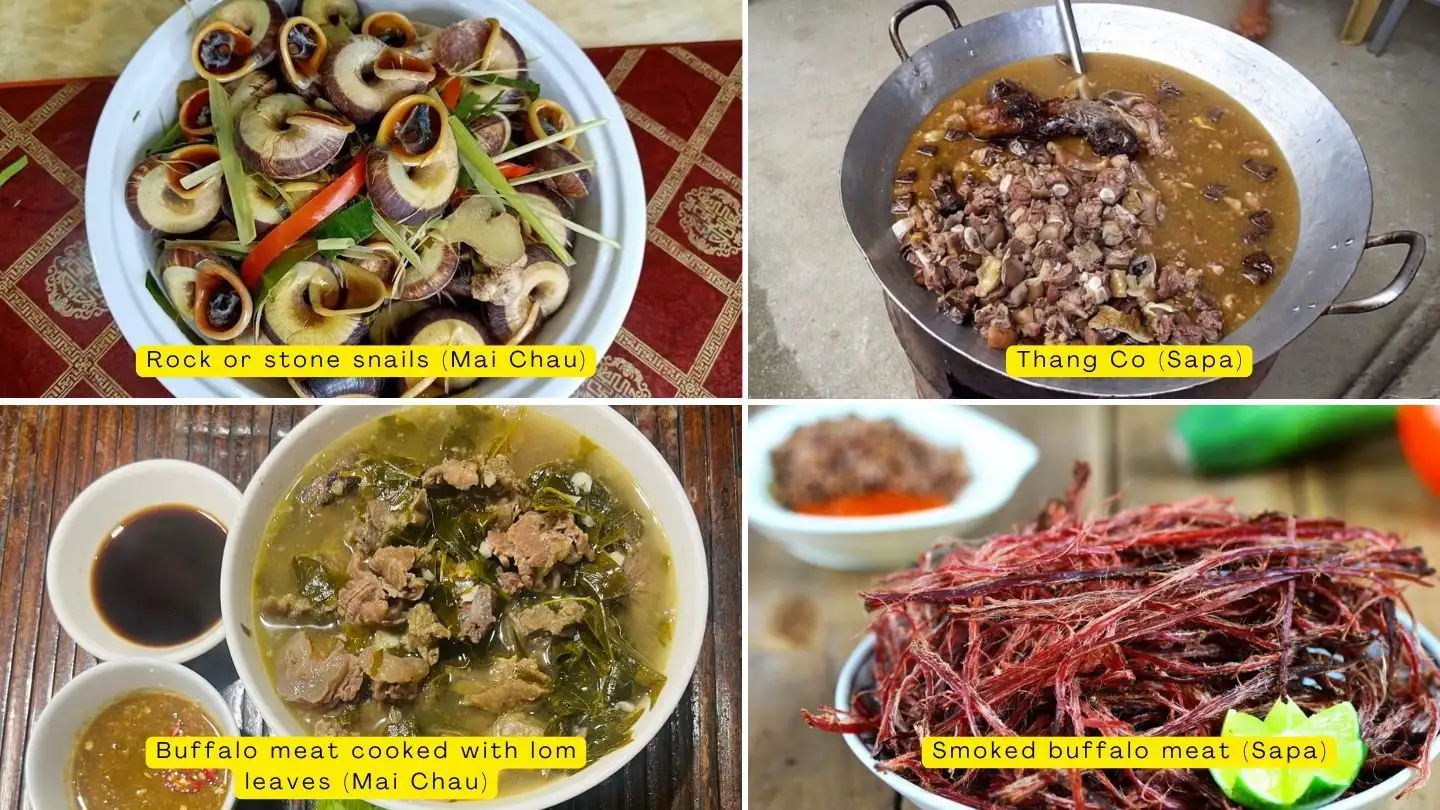
Mai Chau’s food feels like something you’d be served at a family table — grilled stream fish, buffalo cooked with lá lồm, mountain snails, sticky rice with ant eggs, and simple meals shared on a leaf tray.
Sapa goes the other way, with bolder mountain flavors like thắng cố, smoked buffalo, black H’Mong chicken, salmon hotpot, and grilled pork. Neither is better. They simply taste like two different mountains.
Best Time to Visit Mai Chau vs Sapa
For Mai Chau, aim for March–May or September–October — cool, dry, and in October the valley turns harvest-gold. July and August work but sweat: daytime highs push the high 30s°C, so plan short days.
For Sapa, April–May and September–November rarely disappoint. But if the rice terraces are the reason you’re coming, late August to early September is when the valleys are at their most beautiful.
What To Do in Mai Chau vs Sapa?
On sheer choice of things to do, Sapa wins on volume — here is how the days actually fill:
| Activities | Mai Chau | Sapa |
|---|---|---|
|
|
Conclusion
Different tools for different trips. Mai Chau is the exhale — near, flat, gentle. Sapa is the event — higher, harder, and bigger in every direction. Know which trip you’re packing for and the choice makes itself.
→ Leaning Sapa? Start with the best time to visit Sapa guide.
FAQs
Can I visit both destinations in one trip?
Yes, but plan for at least 4–5 days to enjoy both fully.
Is English widely spoken?
In both destinations, English is limited in rural areas; a local guide is recommended.
Which place is better for trekking?
Sapa is renowned for its challenging treks, including routes to Fansipan Peak. Mai Châu offers easier hikes through rice fields and ethnic villages, suitable for casual walkers and families.
Which place is better for photography?
Sapa offers dramatic landscapes with terraced rice fields and misty mountains, ideal for photographers. Mai Châu provides serene valley views, traditional stilt houses, and lively markets — easy pickings for rural photography.
Related Tours & Transport
