


 Sapa Tours & Activities
Hang Da Village: Where the Clouds Come In
Some mornings, after a night of rain and a clear dawn, the valley below Hang Da fills with cloud, and the village floats on top of it. This is what people climb the eight kilometres for — a sea of white where the rice terraces should be, the peaks rising out of it like islands.
What Hang Da village is like
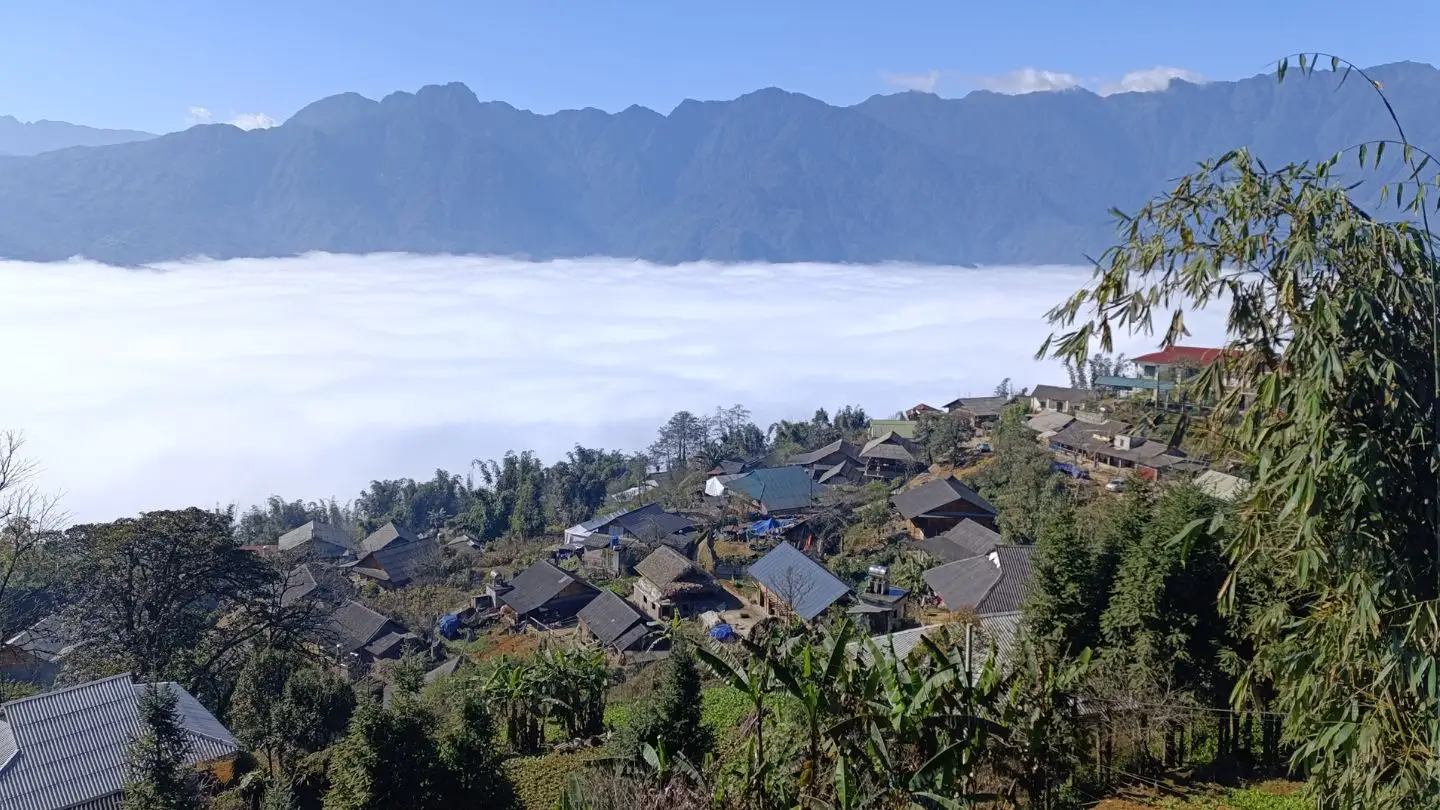
Hang Da Village is a small Black H’mong village in Hau Chu hamlet, Muong Hoa Commune, set among terraced fields and bamboo forest about 8 km from Sapa. Life here moves at the pace of the seasons, with little built for visitors.
It stays quiet because few people make the trip just for a village. Those who do come mostly for one thing: the clouds.
Cloud hunting — the reason to come

Hang Da Village sits high enough to look down on the weather. The trick is timing: the morning after a night of rain, when the sun breaks through, the valley fills with cloud and the village rides above it.
October to March is the season when cool, damp air holds the clouds longest. Get up before dawn and walk out to the edge of the terraces to catch it.
The setting and the trek
Even without the clouds, the setting earns the walk: terraces below, bamboo above, mountains all around. Hang Da sits on the popular trek routes that pass through Ta Van and Lao Chai, so it folds easily into a longer valley walk.
If Hang Da Village has made it onto your Sapa itinerary, you might also like our guided tours. They are an easy way to explore the area while learning more about the villages, landscapes, and local life along the way.


Every day life in Hang Da often unfolds right along the village paths. A woman sits outside embroidering while chatting with a neighbour. A few steps further, someone is repairing clothes in the doorway. Ducklings hurry across the path behind their mother, while chickens wander freely between houses. It is the kind of scene that makes you slow down without even realising it.


Following the paths through Hang Da’s bamboo groves comes with a soundtrack of its own. Wind moves through the leaves overhead while a nearby stream flows quietly somewhere below. The paths themselves are simple, but the combination of rustling bamboo and running water makes them surprisingly memorable.

Best time to visit
For clouds, come October to March, and chase the morning after rain. For the terraces, autumn (August – October) turns them gold and spring fills them with water. Either way, the early hours are the ones worth setting an alarm for.
How to get there from Sapa
Hang Da is about 8 km from Sapa, reached by a winding road through the hills. Most people come by motorbike or private car; you can also walk in as part of a trek. Entry is free.
There is no direct public bus, so ride, drive, or trek. Our Sapa villages guide compares the cloud villages and the rest if you are chasing clouds, set out in the dark to be in place by sunrise.
Tips for visiting Hang Da Village
- Chase clouds the morning after rain, October to March, before dawn.
- Dress warm. The early hours are cold, especially in the cloud season.
- Bring cash in Dong for food or a homestay; entry is free.
- Combine it with a trek through Ta Van or Lao Chai for a fuller day.
Frequently Asked Questions
Is Hang Da Village worth visiting?
Yes, especially for cloud hunting. It is quiet and largely untouched, a calm escape from busy Sapa with one of the area’s best sea-of-clouds views.
When can I see the sea of clouds?
Best from October to March, on the morning after a night of rain when the sun returns. Arrive before dawn.
Who lives in Hang Da Village?
Black H’mong families, in Hau Chu hamlet of Muong Hoa commune, farming the terraces around the village.
How far is it from Sapa?
About 8 km, by a winding road. Come by motorbike, car, or on foot as part of a trek.
Is there an entrance fee?
No entry is free. Among the Sapa villages, only Cat Cat charges a ticket. Bring cash for food or a homestay.
By mid-morning, the sun has the upper hand, and the clouds thin and drain out of the valley until the terraces show through again. The sky empties, the Hang Da village goes back to its fields, and the sea you stood above is just air once more.
