


 Sapa Tours & Activities
Lung Khau Nhin Market: The Quietest Thursday Near Sapa
A Nung woman pours tea on a slope of stalls and watches the road, in no hurry for it to bring anyone. This is the quietest market of the week. You arrive, and for a long moment, you are the most unusual thing all morning.
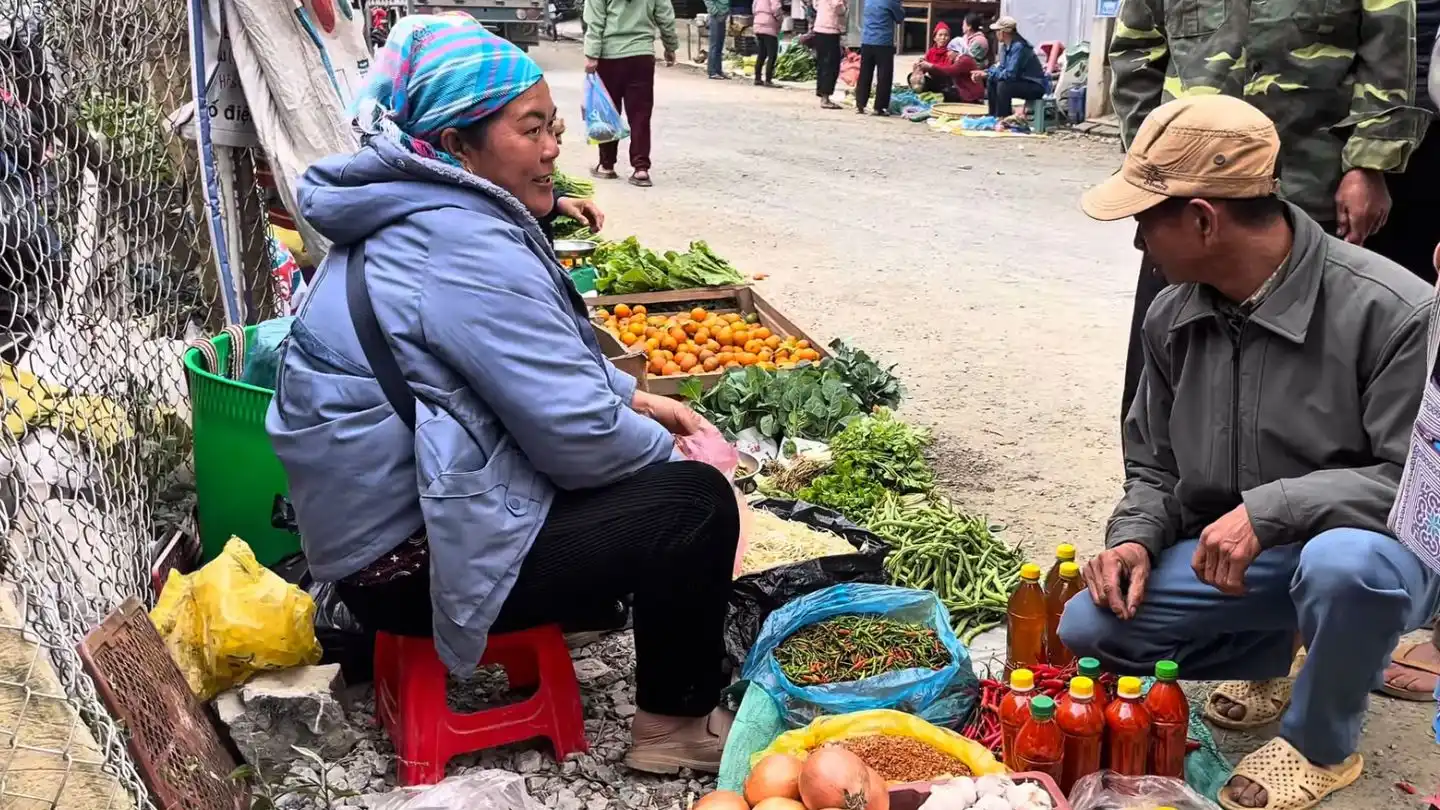
What the market is like
This is trade without performance. The crowd is thin, the talk low, and the morning moves at the pace of a slow conversation. Few tourists come this far, so no one is selling to you.
The stalls hold bright, useful things: brocade and woven stilts, wool and folded blankets, the kind of color you find at Bac Ha without the crowd. Most faces here are Nung, down from the border hills to trade what the week produced.
What to buy
The best way to experience Lung Khau Nhin Market is simply to wander. One row is filled with brocade and indigo cloth, another with vegetables, herbs, and food fresh from the surrounding villages. There is no need to rush or plan too much. Now, let’s have a look around.
The fruit stalls are easy to spot. Depending on the season, you might find plums, peaches, pears, oranges, or dragon fruit piled into baskets. Most people stop, pick out what they need, then carry on through the market.

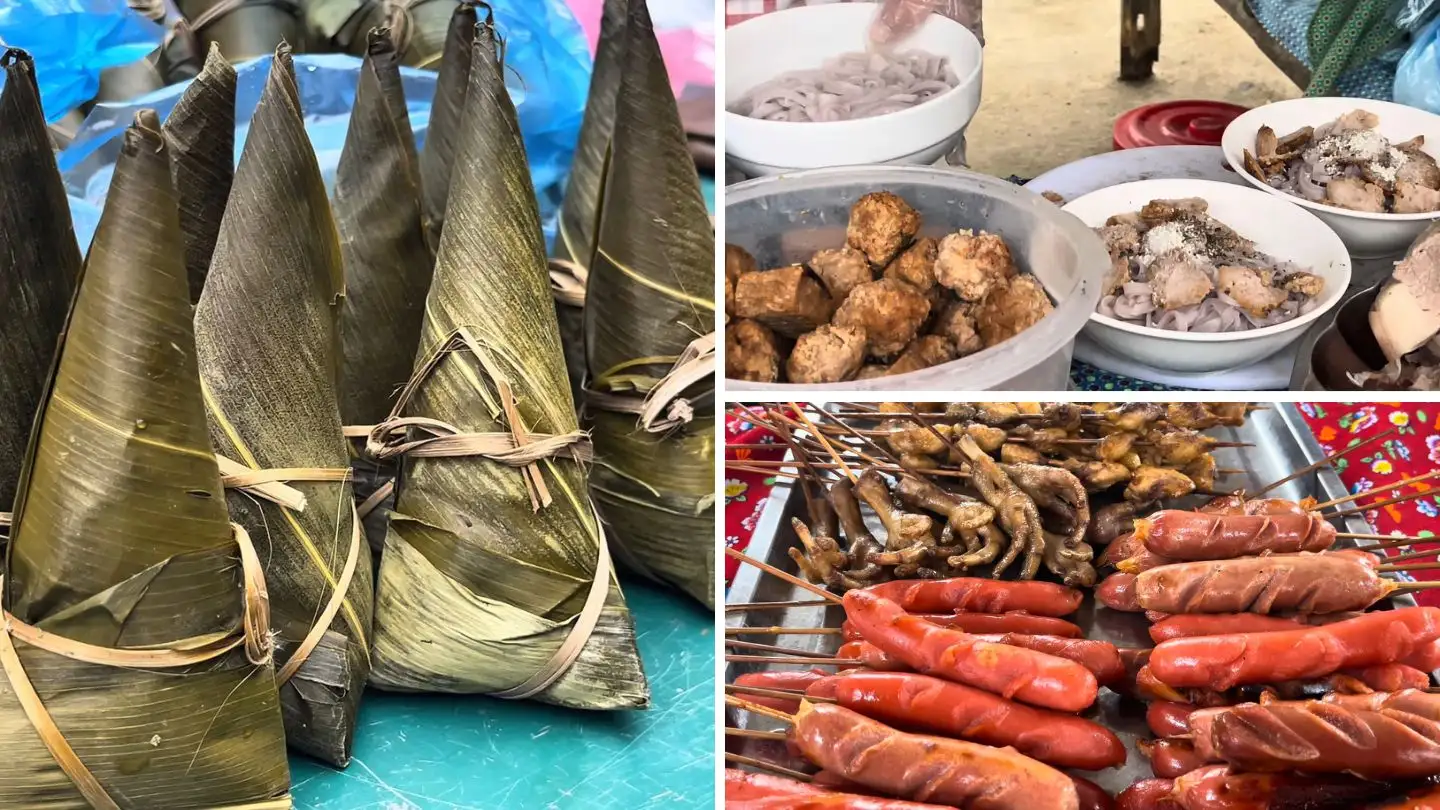
There is always something cooking. One stall serves bowls of red pho, another grills sausages over charcoal, while nearby someone is frying fresh cakes. It is the kind of place where breakfast quickly turns into a second snack.
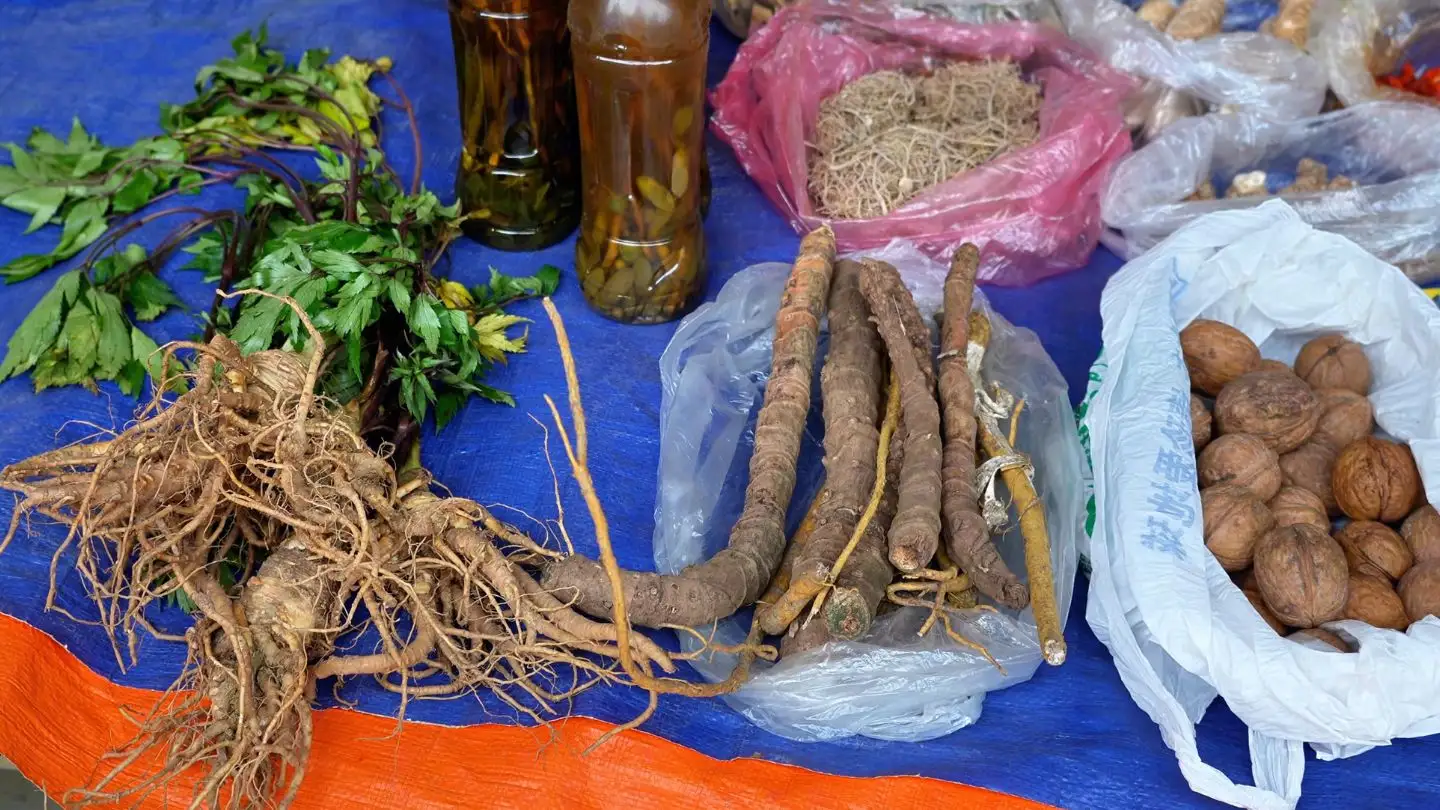
One corner of the Lung Khau Nhin Market is filled with dried roots, bark, and mountain herbs. Some people stop to ask what they are used for. Others already know exactly what they came to buy.
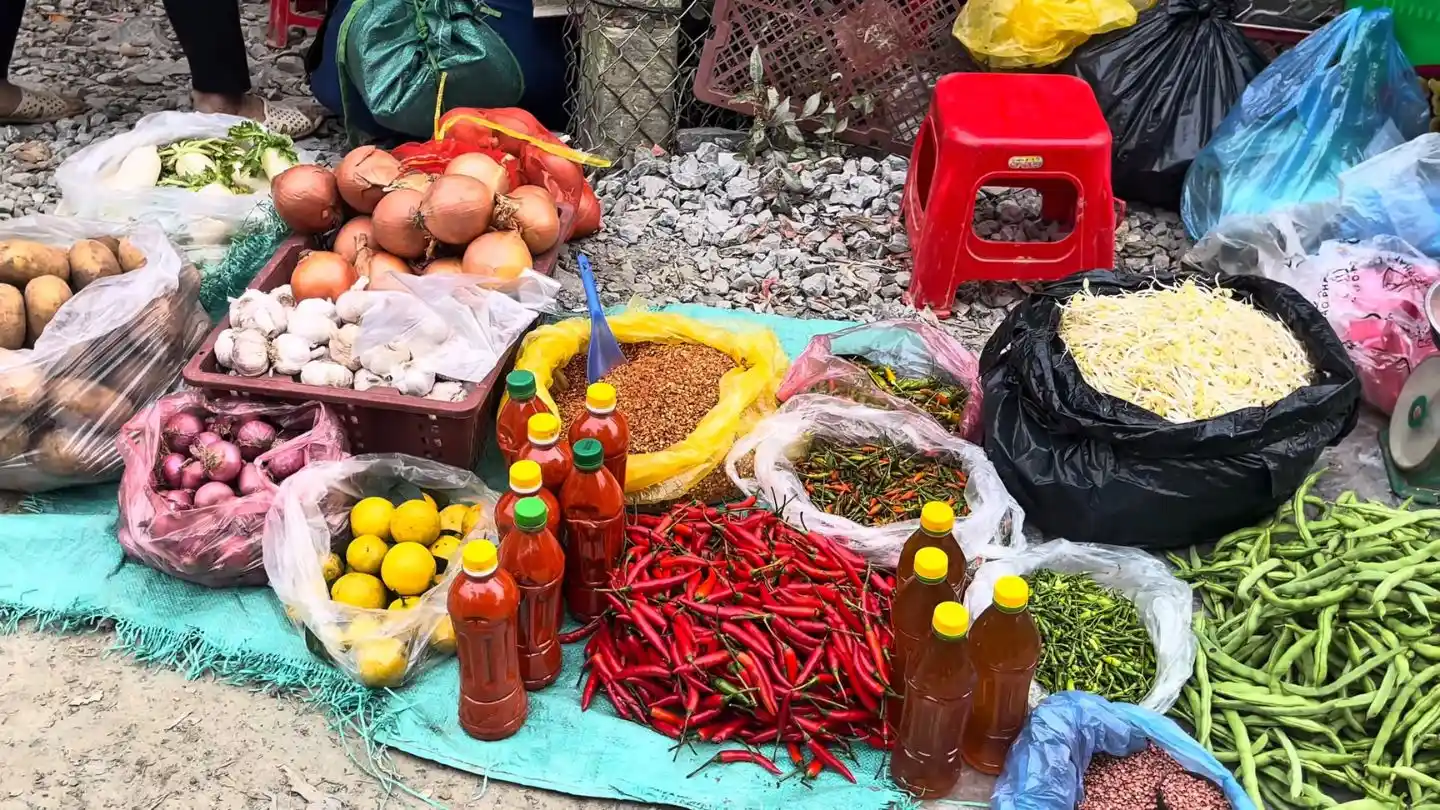
Homemade rice wine is sold at several stalls around the market. Bottles sit on tables beside everyday groceries and household goods. People often stop for a bottle, then stay to chat for a while.

Fresh vegetables fill much of the market. Greens, herbs, beans, and seasonal produce are spread across baskets and tarps. It feels like the morning harvest has come straight from the field.
The livestock area is one of the busiest parts of the market. Buffaloes, cattle, pigs, and other animals are traded throughout the morning. It is also one of the easiest places to see local life up close.

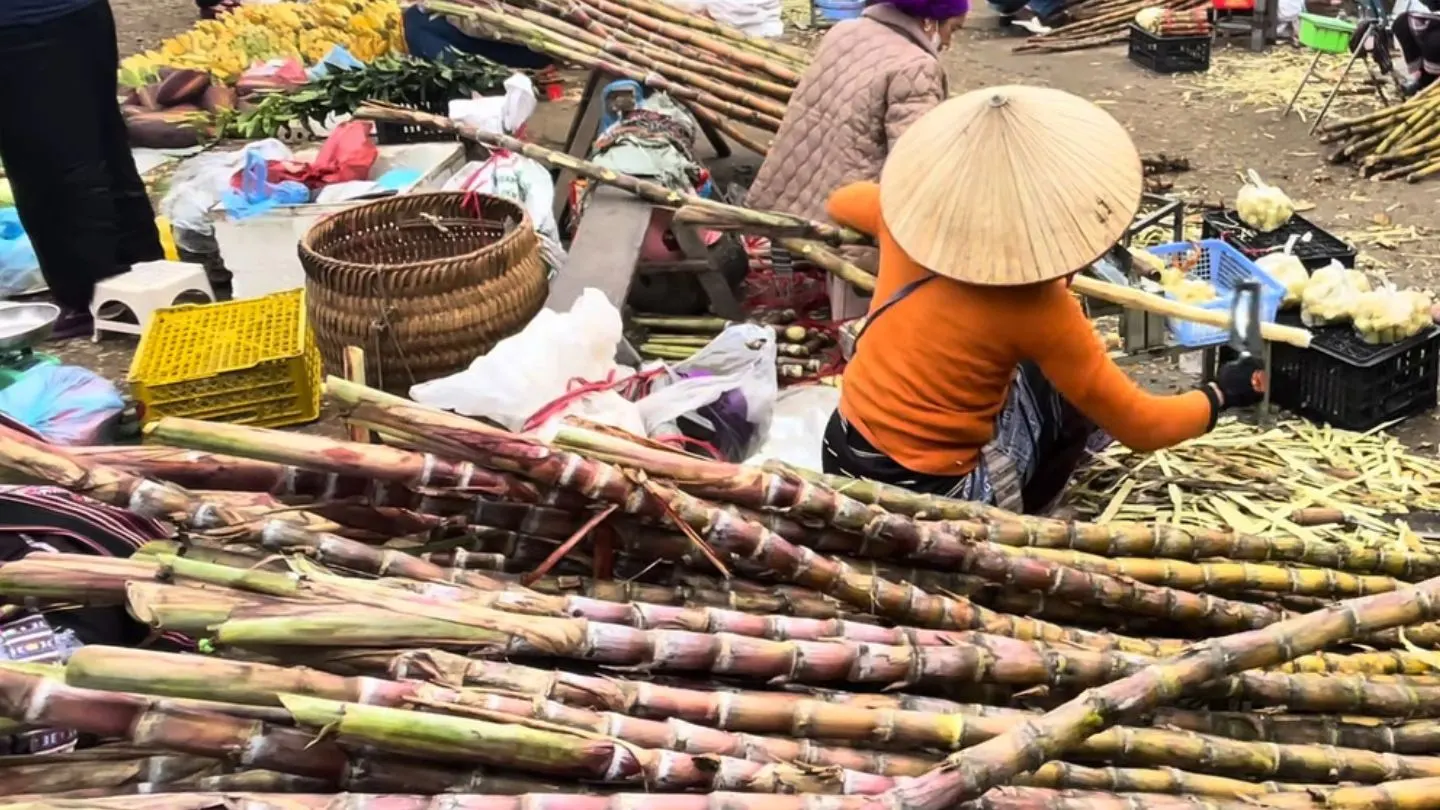
Bundles of sugarcane are stacked beside the walkways throughout the Lung Khau Nhin Market. They are not the first thing people notice, but they are one of the small details that make the market feel local.
Best time to visit
Lung Khau Nhin trades only on Thursday, opening around 7:30 and thinning by early afternoon. Arrive early, while the produce is fresh and the stalls are full. The first hours are also the quietest, which is the whole appeal here.
How to get there from Sapa

Lung Khau Nhin sits about 76 km from Sapa, located in Muong Khuong District, roughly two hours over a winding mountain road. There is no direct tourist transport, so a private car or motorbike is the practical option. The roads can be rough in places, so take them slowly.
From Hanoi, most travelers take the night train to Lao Cai first, arriving early, then continue by road. See our Sapa markets guide for how this fits the wider week.
Tips for visiting
- Thursday only, and early. Open around 7:30; the freshest, quietest hours are first.
- Bring cash in Dong. Vendors do not take cards; small notes are easier.
- Take the road slow. It is winding and rough in places — stop for the views.
Frequently Asked Questions
What day is Lung Khau Nhin Market held?
Every Thursday, from about 7:30 AM to early afternoon. It is fixed, so plan your week around it.
What else can I visit along with the market?
The market is about 76km from Sapa, can be marked on a 2- or 3-day drive along the road overlooking the Vietnam-Lao Cai Border, and visit communes like Muong Khuong, Cao Son, and Sin Cheng.
Can I buy handicrafts there?
Yes — handwoven textiles, brocade, blankets, pottery, and jewelry, bought straight from the makers.
Is it crowded with tourists?
No. It is the week’s quietest market, with very few visitors. Your arrival may draw a curious glance.
How does it compare to Bac Ha?
Similar color and crafts, far fewer people. It feels like Bac Ha with the crowd removed.
Driving back toward Sapa, the road unwinds the same hills you climbed at dawn. The Lung Khau Nhin market is gone behind you, already folding itself away. What stays is the quiet — a long, open silence that no busier place ever leaves you.
Related Tours & Transport
