


 Sapa Tours & Activities
Cao Son Market: The Wednesday Market Few Travelers Reach
On a Wednesday morning, the road climbs past Muong Khuong, then drops into mist. At the bottom, in the half-light, a market is already half awake — traders unrolling mats before the day finds them.
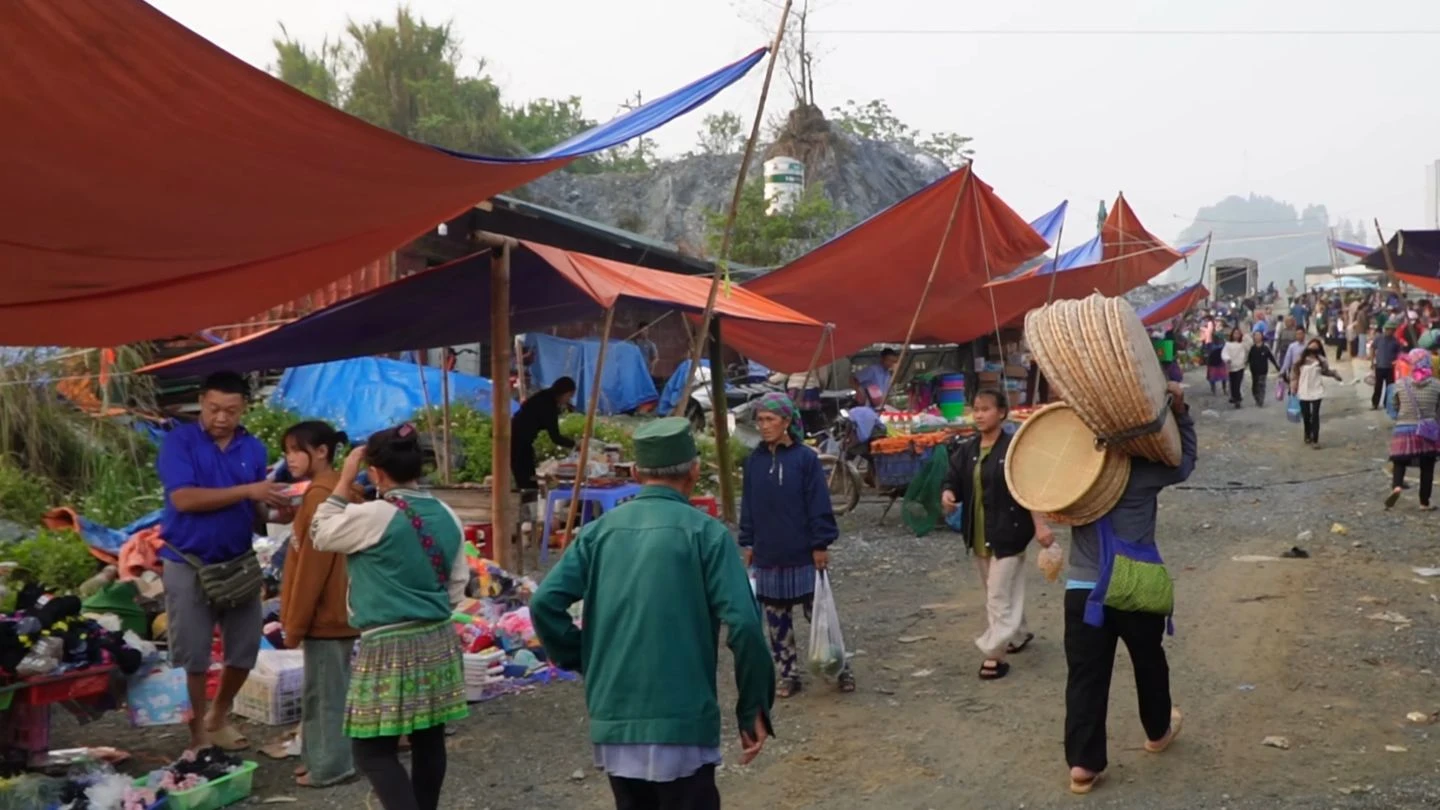
What the market is like
Most ethnic markets fall on weekends; Cao Son market keeps to a Wednesday, which is half the reason it stays so local. The Dao, Tay, and Nung families come down from the surrounding hills before light. The trading is between neighbors, not aimed at a camera.
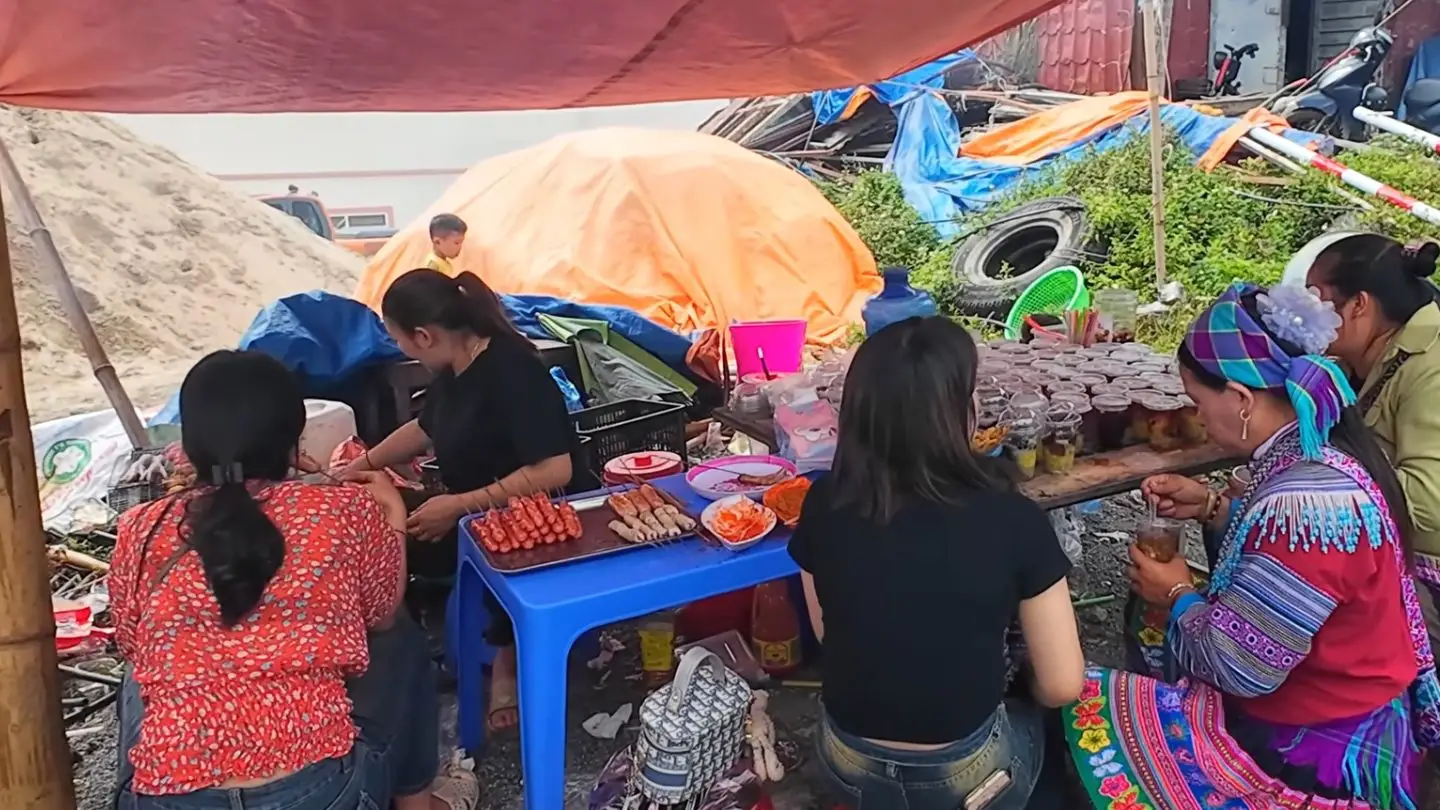
The livestock section holds most of the noise: buffalo, pigs, chickens, and even horses changing hands. Smoke from a cooking fire drifts across the rows. By mid-morning, the crowd thins, so the early hour is the whole point.
What to buy at Cao Son market
There is a clothing and handicraft section — hand-stitched cloth, indigo fabric, and small souvenirs among the everyday goods. It is plainer than the tourist markets, which is the appeal. Bring cash in Vietnamese Dong; no one here takes a card, and small notes are easier.
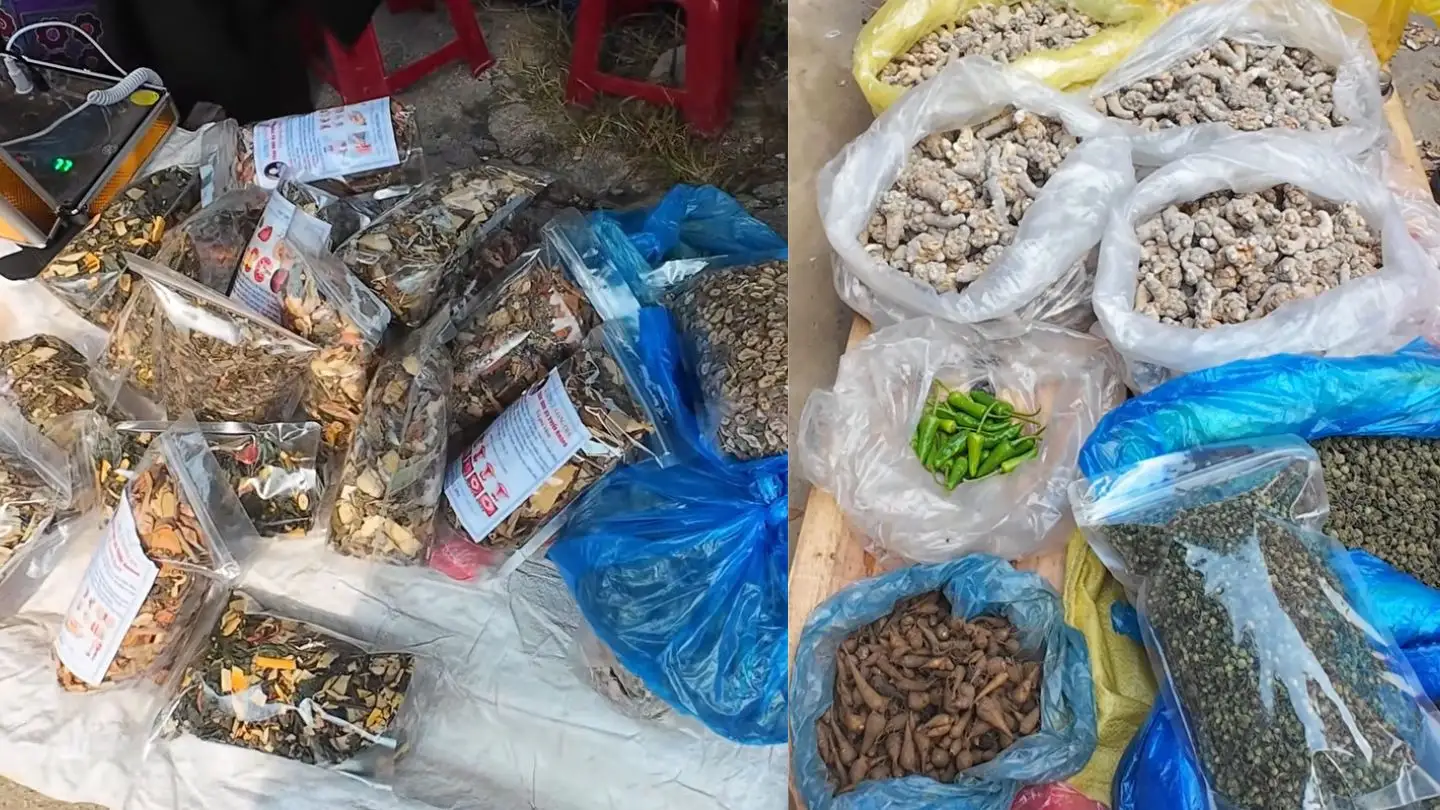
One corner of the market is filled with dried roots, bark, and herbs collected from the surrounding mountains. Even if you are not planning to buy anything, it is worth slowing down for a look. Many of the plants are still used in traditional remedies today.
Fruit stalls appear throughout the market, with the selection changing depending on the time of year. Dragon fruit, watermelon, wampees, kumquats, and other local produce are often sold straight from baskets brought in from nearby farms.

Fresh vegetables are part of almost every market morning here. Walking through the produce section gives a small glimpse into what people in the surrounding villages are growing and eating throughout the season.
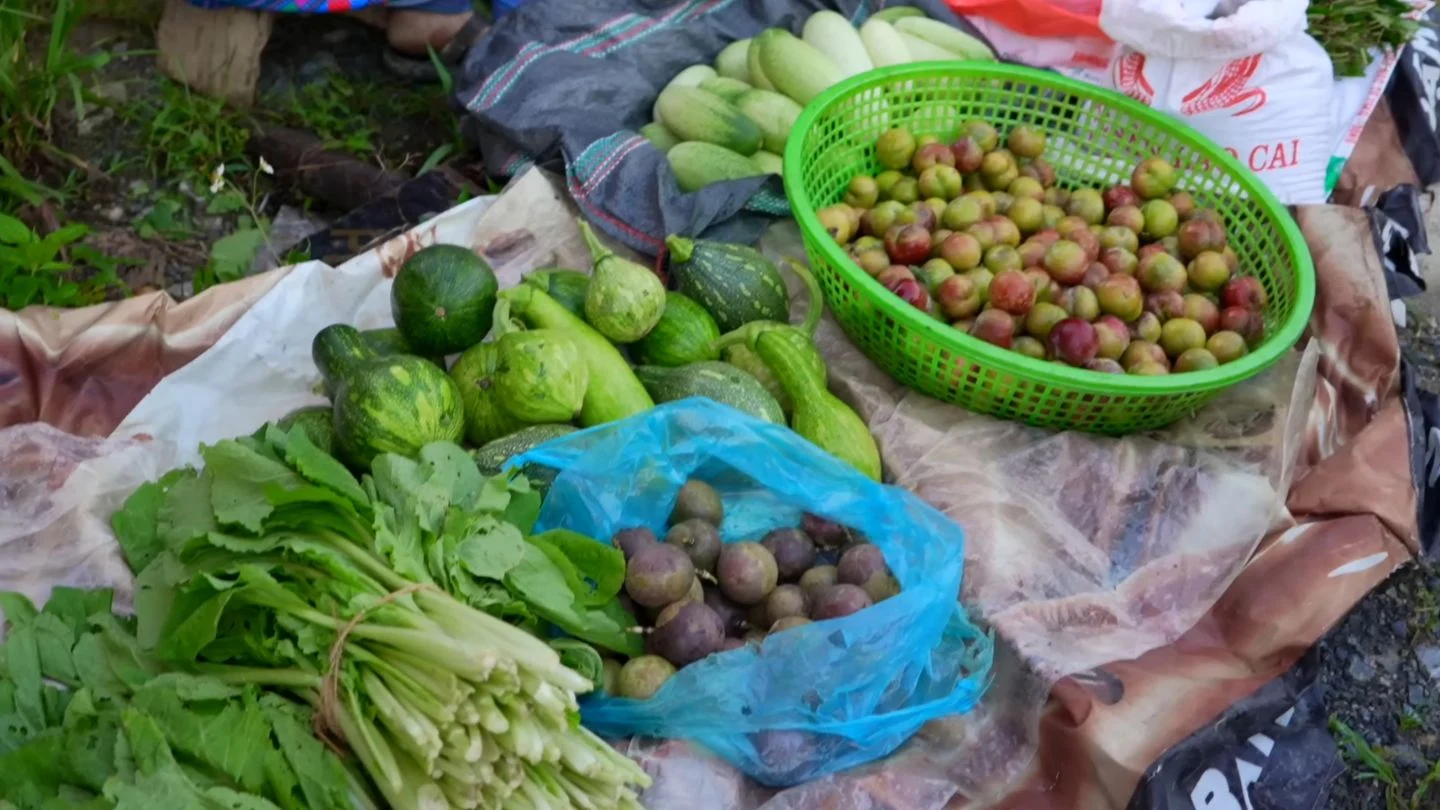
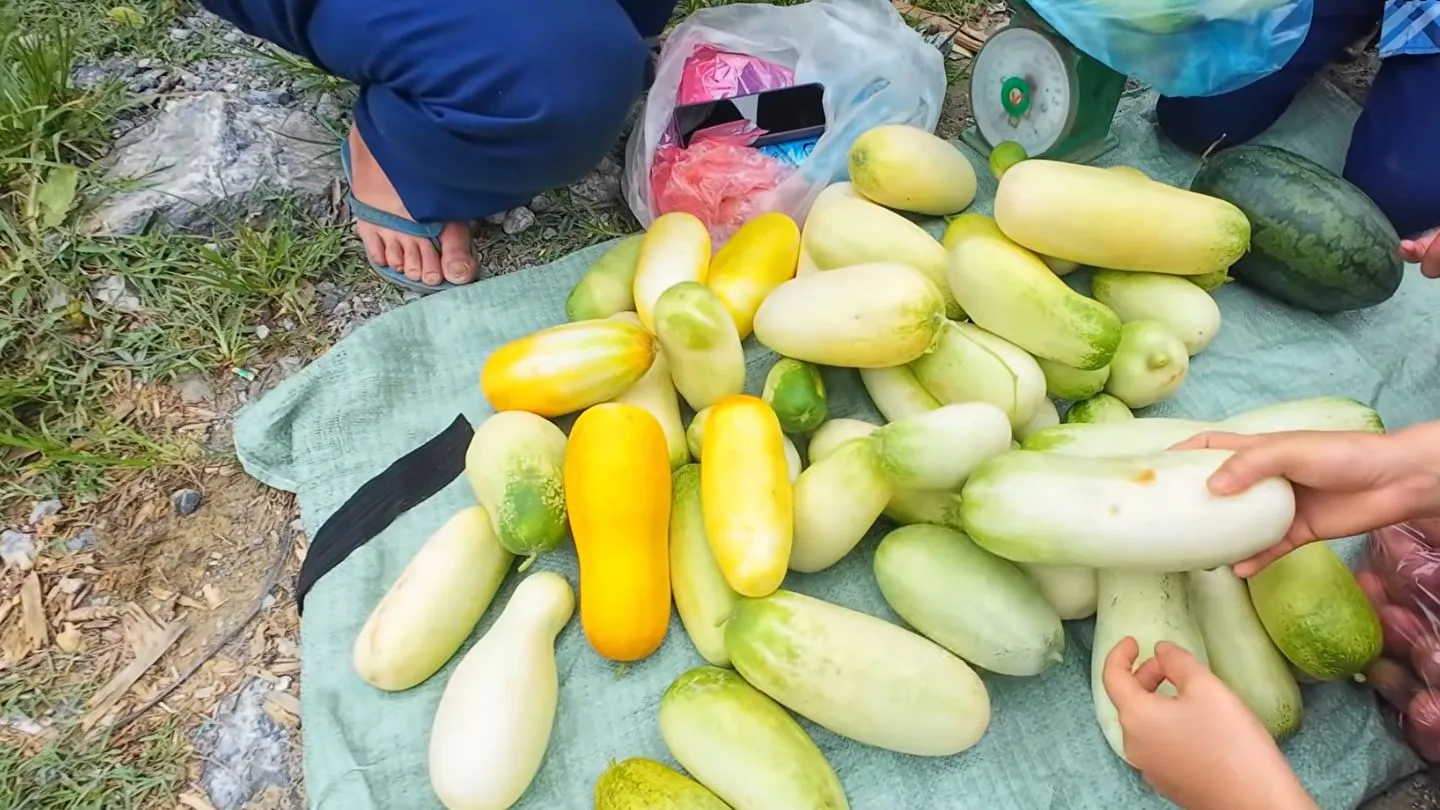
The cucumbers are piled into large baskets and seem to be sold surprisingly quickly. They are not the most eye-catching thing in the market, but they are exactly the sort of everyday produce that locals come here for.
The poultry section is usually louder than the rest of the market. Chickens, ducks, and geese sit in bamboo cages or woven baskets while buyers stop to take a closer look.

What to eat

If you want to spend money, buy food to eat there. Try thang co, the horse-meat stew of the highlands, or a bowl of pho, washed down with the local corn wine. A hot meal among traders on their break is the real thing to take away.
A fried cake is one of the easiest snacks to grab while exploring the market. Fresh batches appear throughout the morning, and the smell alone is usually enough to convince people to stop.

Best time to visit
Cao Son trades only on Wednesday, and the market peaks at dawn. Leave Sapa before 6 AM to reach it while it is full; by mid-morning, the stalls begin folding away. The early hour is not a suggestion here — it is the visit.
How to get there from Sapa
Cao Son sits roughly 74 km from Sapa, around a 2-hour drive into Muong Khuong District along National Road 4D, passing through Lung Khau Nhin on the way. The last stretch is a mountain road, so allow extra time.
There is no easy public route, so most visitors come by private car or motorbike, often with a guide for the early start. Cao Son is the closer of the two Wednesday markets — Sin Cheng is far further. See our Sapa markets guide to plan around the week.
Frequently Asked Questions
What day is Cao Son Market held?
Every Wednesday — unusual among the area’s markets, which mostly fall on weekends. Plan your week around it.
How far is Cao Son Market from Sapa?
About 74 km, or roughly a 2-hour drive, into Muong Khuong District.
Is there a livestock market?
Yes — a lively livestock section with buffalo (not frequently traded), pigs, chickens, and even horses changing hands.
What time should I arrive?
At dawn. The market is busiest in the early morning and fades by midday.
By the time you climb back toward the pass, the stalls are folding away behind you. The long road, the mist lifting off the tea hills — a place that was never waiting for you at all.
