


 Sapa Tours & Activities
Muong Hum Market: The Quiet Sunday Market Near Sapa
The valley narrows before you reach it. Then woodsmoke, the slow clop of hooves, and a hundred voices folding into one. Sunday morning settles into the bowl of the hills, and the market begins.
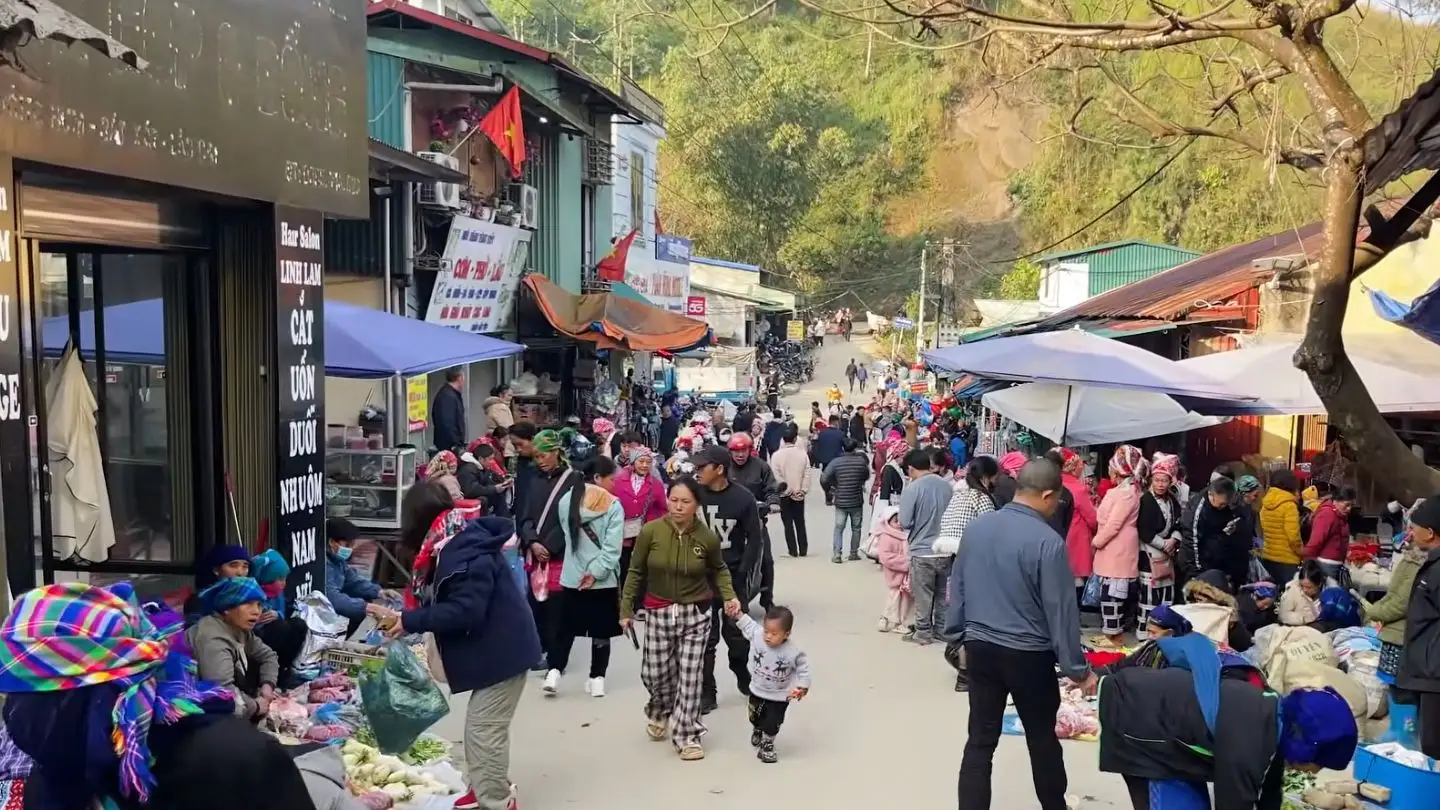
What the market is like
The market sits low, pressed into a tight valley by a stream, with hills rising on every side. It feels close, almost private. Seven communities meet here – H’mong, Giay, Dao, Ha Nhi – to trade, to talk, and, for the young, to quietly meet one another.
You notice small things first: the spice stalls’ sharp and earthy, a woman counting eggs into a leaf-lined basket, indigo cloth with the dye still faint in the air. Almost no one is watching you.
What to buy at Muong Hum market
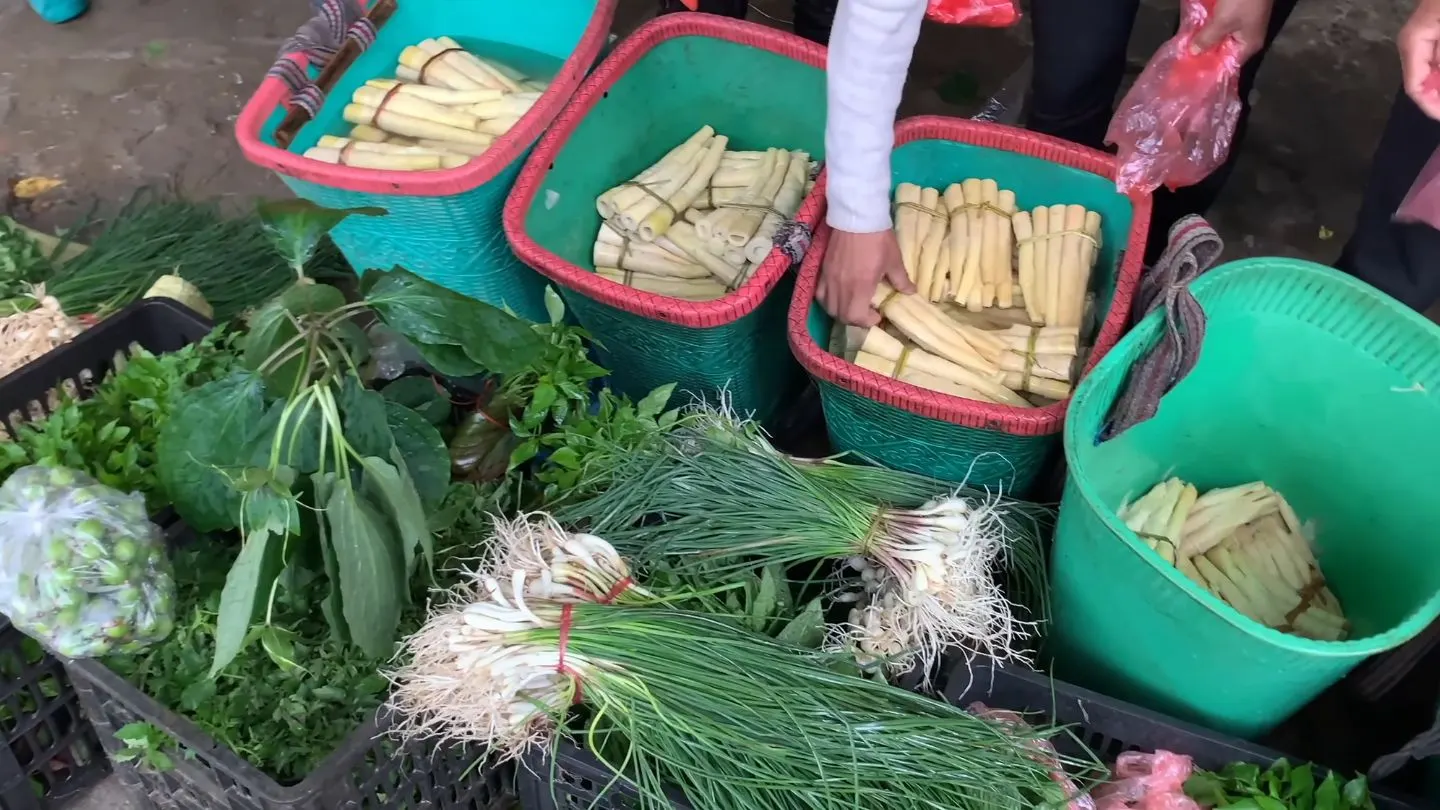
The vegetable area changes with the season. In winter, there are piles of cabbage and mustard greens; at other times, bamboo shoots, pumpkins, herbs, and mountain vegetables take their place. Most have been harvested nearby and brought to the market before sunrise.
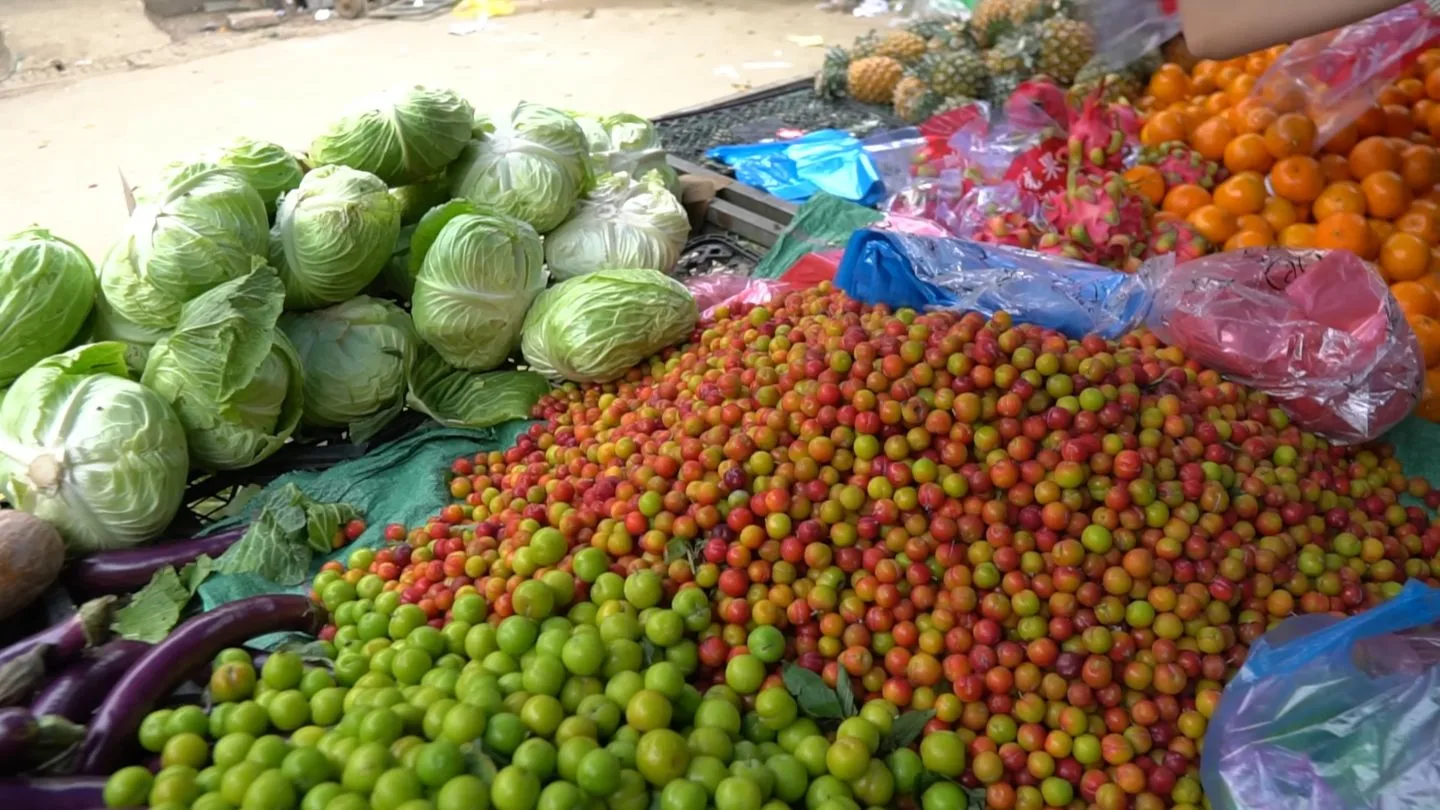
Fruit sellers gather around baskets filled with whatever is in season. Depending on the time of year, that may mean plums, peaches, pears, bananas, or citrus fruits. Unlike larger town markets, the selection here often reflects what is growing in the valleys and hills around Muong Hum market
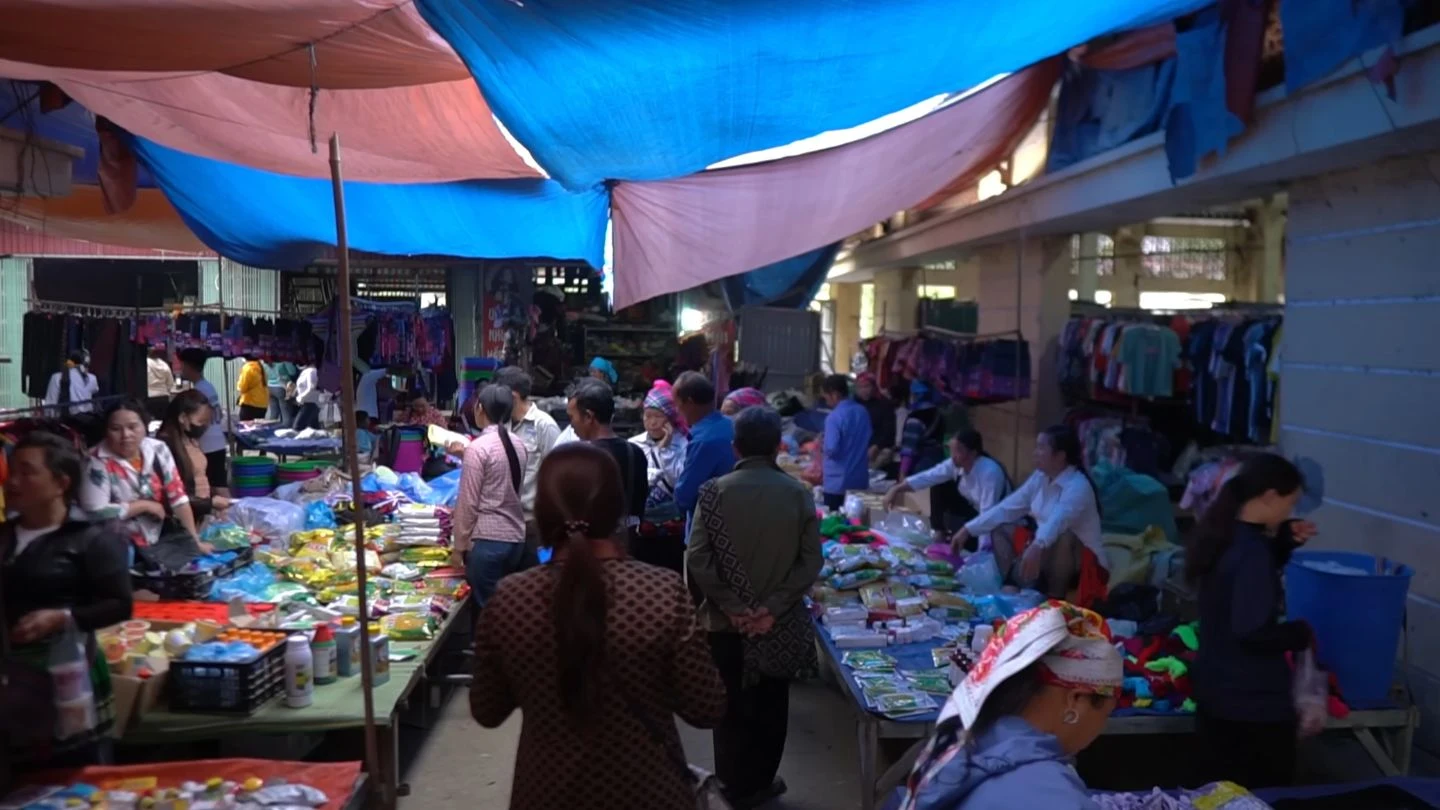
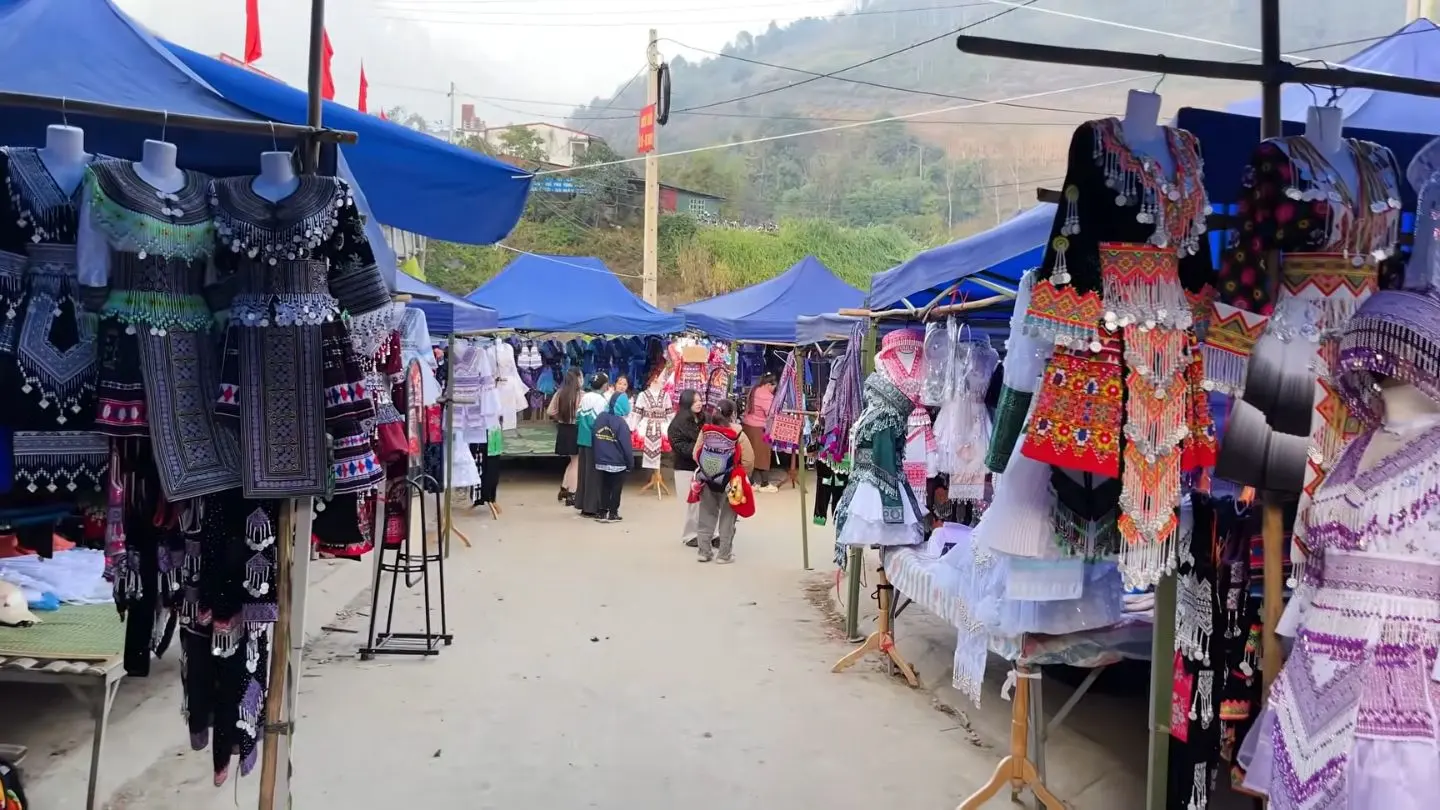
Rows of clothing stalls bring together both traditional and modern styles. Bright embroidered garments hang beside jackets, trousers, and everyday wear. Local ethnic communities still shop Muong Hum market, making it one of the best places to see traditional fabrics being sold for practical use rather than display.
You often hear this section before you see it. Chickens squawk from woven baskets, ducks are tied together in small groups, and pigs wait beside their owners. Many villagers travel for hours to bring livestock here, continuing a trading tradition that has shaped the market for generations.

Bright plastic buckets, coils of hose, and orange sprayers spill out from one stall to the next. It is the sort of place people come with a purpose. A farmer checks the price of a new sprayer. Someone else leaves carrying a bundle of pipe across one shoulder. The crowd moves quickly here, rarely stopping for long.

There are no ATMs at the Muong Hum market, so bring cash in Vietnamese Dong. Small notes make the trading easier.
What to eat

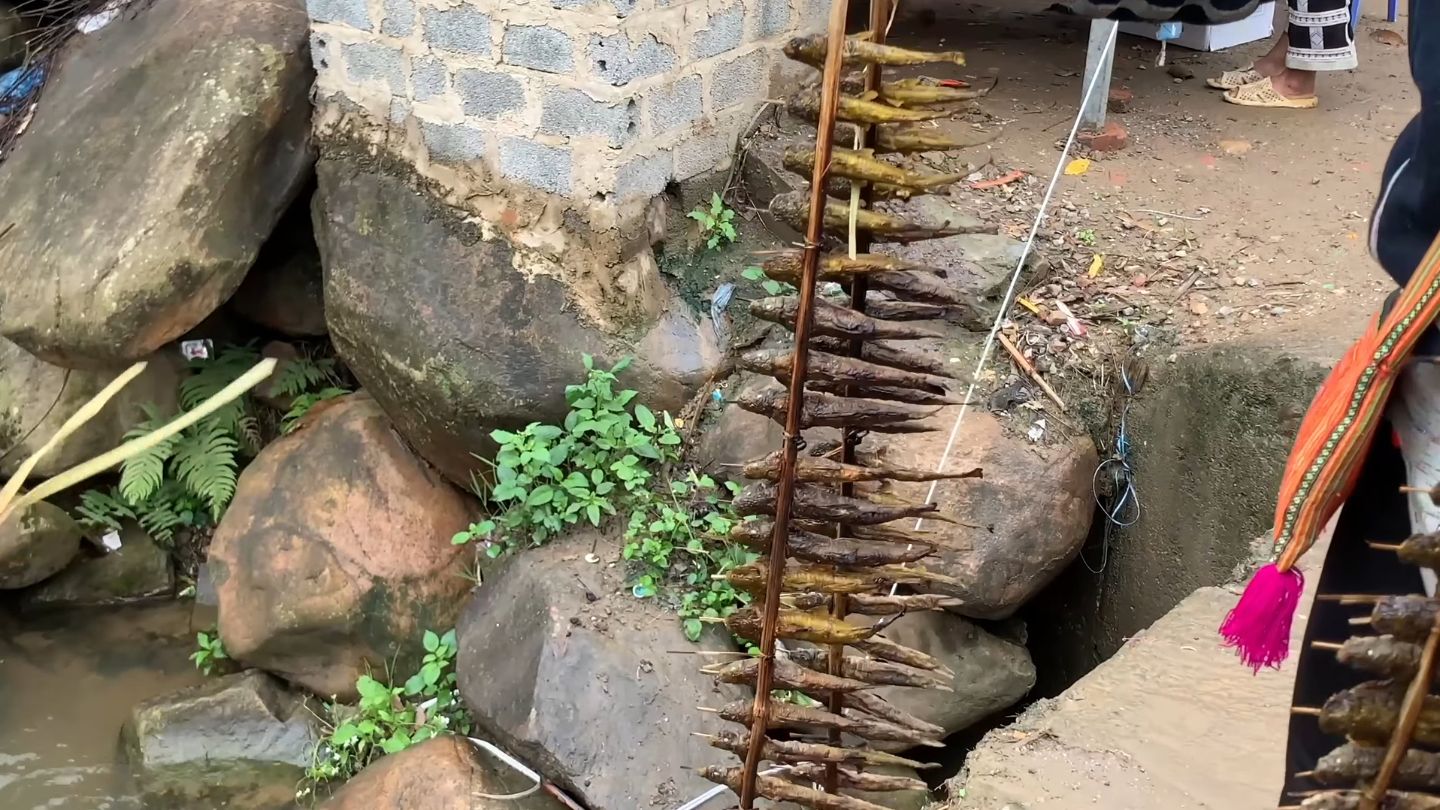
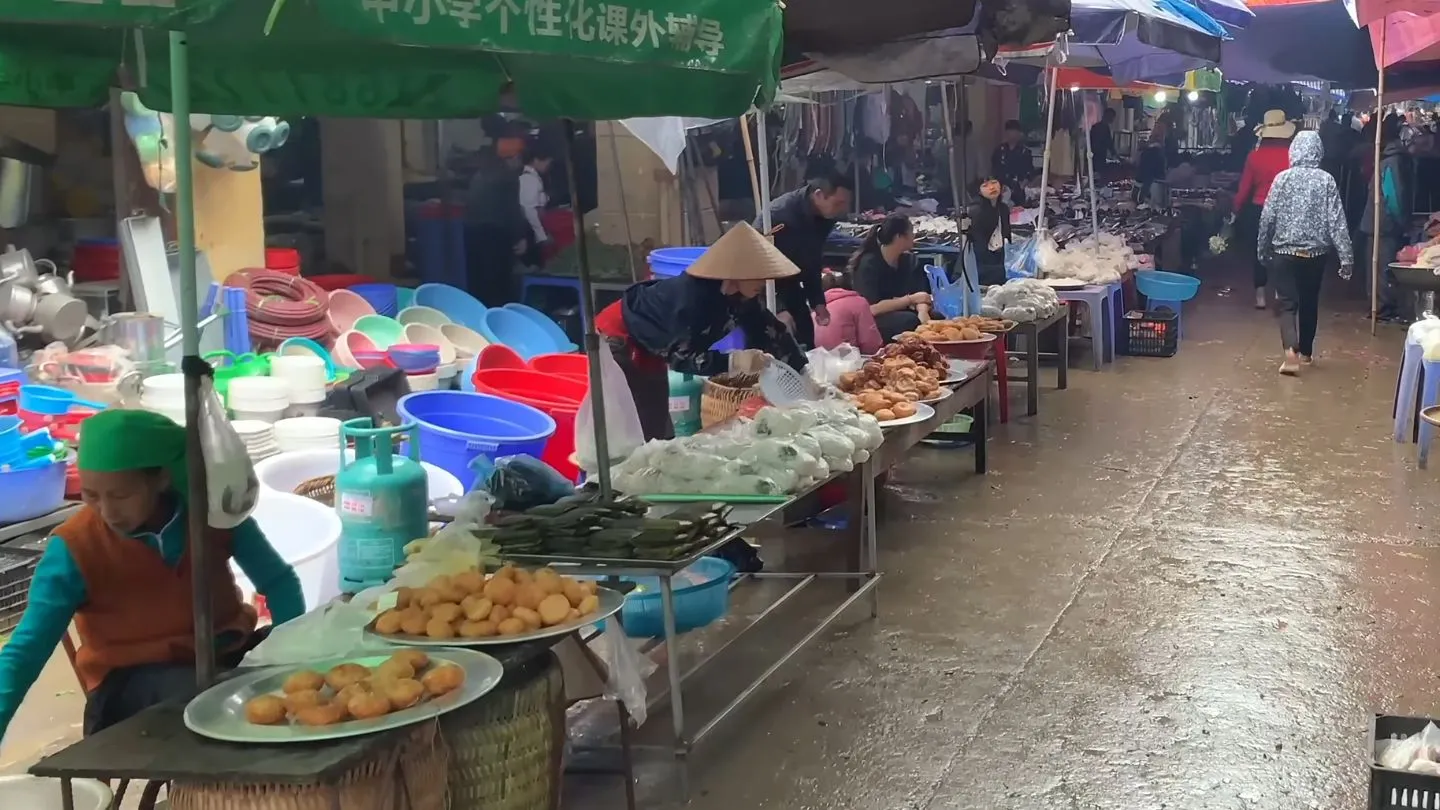
The food corner is where to spend an hour. Try sticky rice and grilled meats, or thang co, the dark H’mong stew you either love or never order twice. Rice wine passes between the low tables, poured warm against the morning chill.

Best time to visit
Muong Hum market trades only on Sunday, opening around 7:00 and winding down by 13:00. The best of it happens before nine, while the stalls are full and the valley is still cool. Arrive early, and you will have the market mostly to yourself.
How to get there from Sapa
Muong Hum Market lies roughly 80 km from Sapa, a drive of about 2 hours and 15 minutes through Bat Xat District. The road climbs and folds, so allow more time than the distance suggests.
Most travelers come by private car or motorbike, since public transport is limited; a guided trip handles the timing. Leave Sapa early. For how this fits the wider region, see our Sapa markets guide.
Tips for visiting
- Sunday only, and early. Open 7:00–13:00; the best trade is before nine.
- Bring cash in Dong. There are no ATMs at the market.
- Go gently. Locals trade more than they perform — ask before photographing.
Frequently Asked Questions
What day is Muong Hum Market held?
Every Sunday, roughly 7:00 to 13:00. Arrive in the morning while trading is busiest.
How far is it from Sapa?
About 60 km, a drive of roughly 2 hours and 15 minutes through Bat Xat District. Plan the road, not just the kilometers.
Which ethnic groups attend the market?
H’mong, Ha Nhi, Red Dao, Giay, Dao Tuyen, Hoa, and Han people, each bringing their own cloth, goods, and produce.
What food should I try?
Sticky rice, grilled meats, thang co (H’mong stew), and warm rice wine from the food corner.
Is it touristy like Bac Ha?
No. Muong Hum sees very few tourists, which makes it a calmer Sunday alternative to Bac Ha.
By midday, the Muong Hum market loosens its hold. Baskets empty, engines start, and the crowd drains back up the slopes it came from. The hills close over an empty square, holding the morning like a held breath until the next Sunday.
Related Tours & Transport
